
Application Scenarios
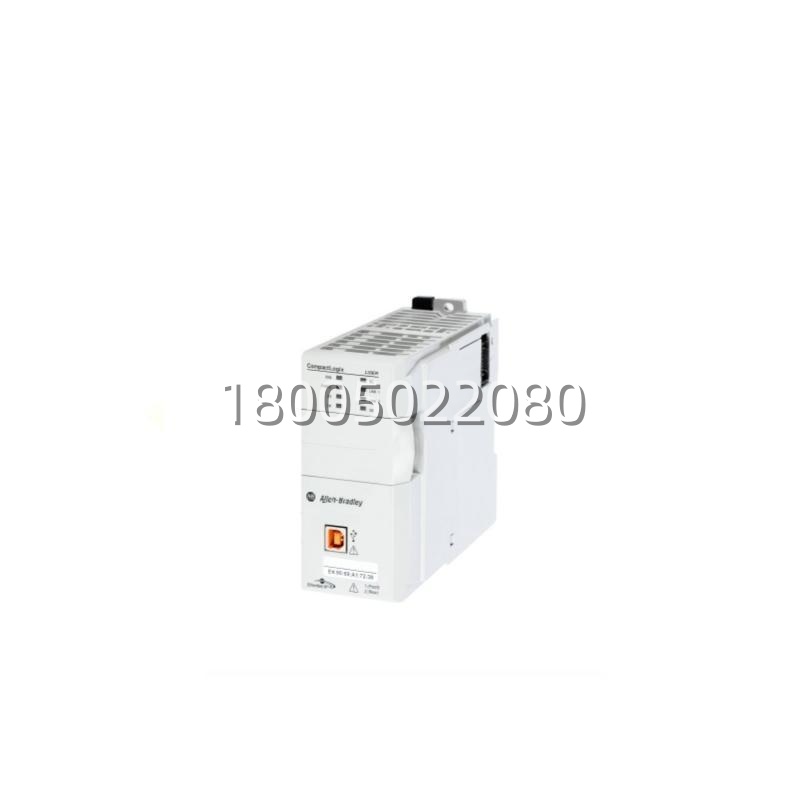
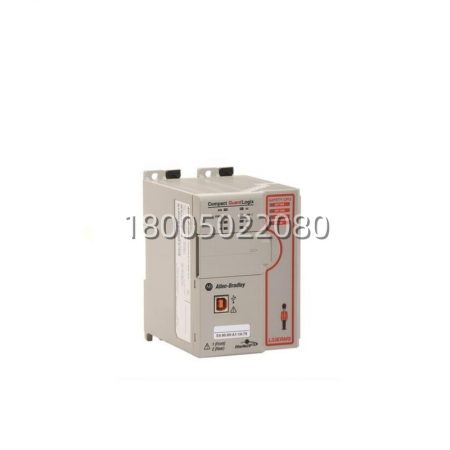
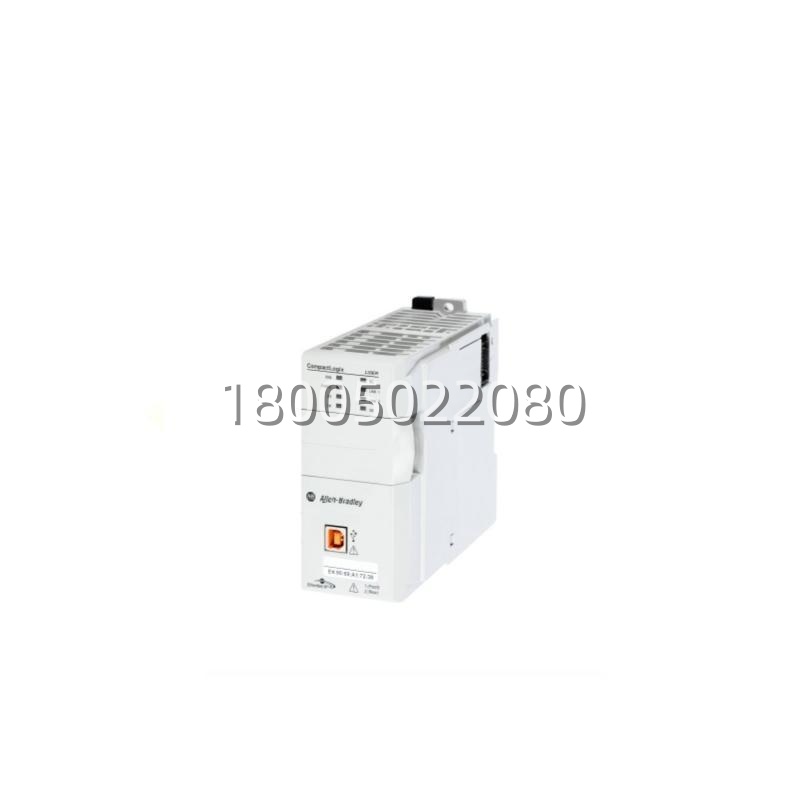
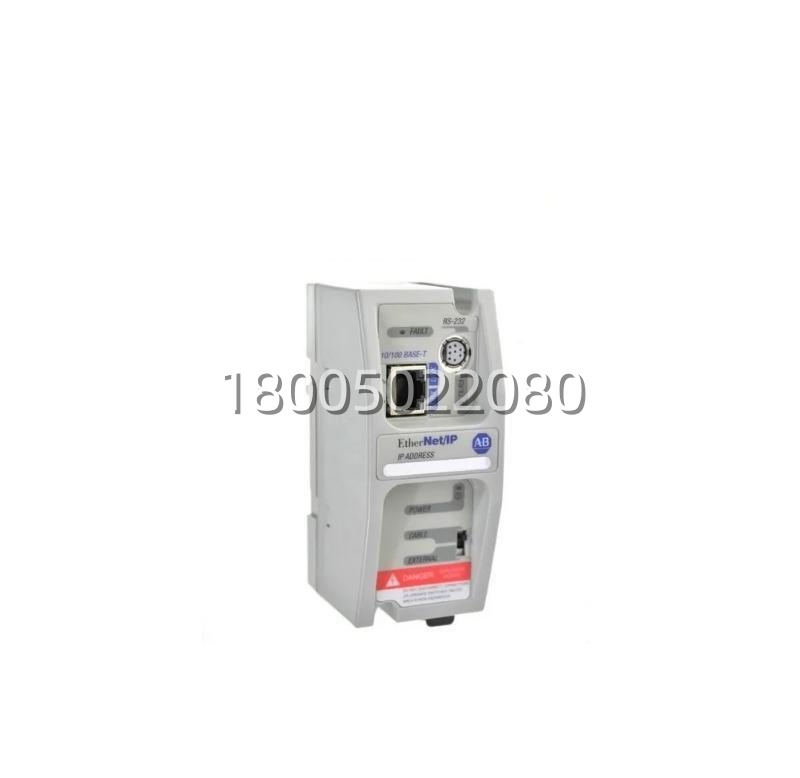
On a ready-to-eat meal packaging line in the Netherlands, the OEM had originally specced a 1769-L33ER for a 12-station rotary filler, but recipe complexity ballooned during commissioning—12 different SKUs, each with its own fill curve, sterilization interlock, and rejection logic. The 2 MB memory ceiling on the L33 started choking when the customer added 200+ HMI faceplates and a local data-logging AOI. Swapping to the 1769-L38ERM solved three problems at once: the 5 MB memory absorbed the tag bloat with headroom, the dual EIP ports let the integrator run Port 1 to the plant MES (via a Stratix 5700) and Port 2 as a DLR ring daisy-chaining four Kinetix 350 servos plus 1734 POINT I/O on the rotating turret—no additional switch needed. Most critically, the 1769-L38ERM‘s 16-axis CIP Motion budget allowed two future filler heads to be designed in without another processor change. Six months later, when the line added a secondary checkweigher and a vision reject, the OEM dropped the new logic into the same 1769-L38ERM project. “We stopped buying processors per machine and started buying one per cell,” the lead controls engineer noted. That’s the 1769-L38ERM story—it’s not the cheapest 1769 CPU, but it’s the one that ends the “we’ll have to upgrade again in two years” conversation.
Parameter
| Main Parameters | Value/Description |
|---|---|
| Product Model | 1769-L38ERM |
| Manufacturer | Rockwell Automation (Allen-Bradley) |
| Product Category | CompactLogix 5370 L3 PAC (Motion-enabled) |
| User Memory | 5 MB (largest in 1769 platform) |
| Integrated Motion | Up to 16 axes CIP Motion (position loop) + kinematics |
| Ethernet Ports | 2 × 10/100 Mbps embedded, DLR capable |
| Local 1769 I/O Modules | Max 30 (960 I/O points) |
| EtherNet/IP Nodes | Up to 80 |
| Non-Volatile Storage | 1 GB SD card included (supports 2 GB 1784-SD2) |
| Backup Power | Internal capacitor (batteryless design) |
| Communication | EtherNet/IP, USB, open socket (Modbus TCP, printers, etc.) |
| Physical Dimensions | 55 × 118 × 105 mm (W × H × D) |
| Software / Firmware | Studio 5000 v31+, Firmware v31.x+ |
| Operating Temp | 0 °C to +60 °C |
Technical Principles and Innovative Values
Innovation Point 1: Batteryless Architecture with Capacitor-Assisted Retain. Unlike earlier Logix generations that nagged you about lithium battery replacement every 18–24 months, the 1769-L38ERM uses a high-capacity internal capacitor to hold retentive data long enough to flush to the onboard SD card during power loss. No battery stocking, no “low batt” PLC fault at 2 AM, no hazardous-material disposal—a quiet but meaningful OPEX win for fleets of machines.Innovation Point 2: Dual-Port EIP with Native DLR. The 1769-L38ERM embeds a 2-port EtherNet/IP switch, so Port 1 can uplink to the plant network while Port 2 runs a Device Level Ring daisy-chain to drives, remote I/O, and cameras. If one cable in the ring breaks, the ring heals in <300 ms—no extra managed switch required for small cells. This is the feature that lets machine builders eliminate one Strato/Stratix per skid.Innovation Point 3: 16-Axis CIP Motion Without Extra Cards. The “M” in 1769-L38ERM means motion is on-board—up to 16 CIP Motion position-loop axes over EtherNet/IP, plus kinematics (robot-style coordinated moves) supported natively. Pair with Kinetix 350 for cost-sensitive axes or Kinetix 5500/5700 for high-performance. No SERCOS card, no motion module in the rack—just axis objects in Studio 5000.Innovation Point 4: Open Socket Capability. Beyond standard EIP/CIP, the 1769-L38ERM supports Rockwell’s open-socket instruction set (MSG with TCP/ISO-on-TCP), meaning you can talk Modbus TCP to a third-party flow computer, push条码 data to a inkjet printer, or POST batch records to a local SQL-lite edge box—all from the same scan cycle that’s running your 16 servos.
Application Cases and Industry Value
A North American automotive seat-assembly cell ran into a classic mid-range dilemma: the integrator wanted ControlLogix-level axis count (12 servos for index, clamp, stitch, and vision positioning) but the corporate standard for benchtop cells capped at CompactLogix for cost reasons. The 1769-L38ERM landed as the compromise that didn’t feel like one. Mounted on a 1769-PA4 supply with 18 local 1769 I/O modules (1769-IQ16/OB16 for clamps, 1769-IF4I for pressure transducers on the stitch heads) and a DLR ring of four 1734-AENTR POINT I/O blocks on the rotating nest, the 1769-L38ERM ran all 12 Kinetix 5500 axes via CIP Motion with 2 ms servo period. The plant’s IT group appreciated the open-socket Modbus TCP link that pushed cycle-count and OEE tags to a cloud edge gateway without an intermediate PC. Eighteen months post-install, the cell added a laser-marking station; the integrator simply dropped a new AOI into the existing 1769-L38ERM project—no rack change, no network redesign. The controls manager’s post-mortem: “We spec’d the L38ERM once, and it’s carried three retrofit rounds without blinking.” In a segment where every servo axis used to demand a $3k motion card, the 1769-L38ERM rewrote the BOM math.
Related Product Combination Solutions
The 1769-L38ERM sits at the center of a 1769 + POINT I/O + Kinetix ecosystem; these are the modules most often specified around it:
- 1769-PA4 / 1769-PB4: 120/240V AC and 24V DC power supplies respectively for the 1769 backplane; the 1769-L38ERM itself draws from the 5 V bus, so tally the full 30-module slice before picking PA4 vs PB4.
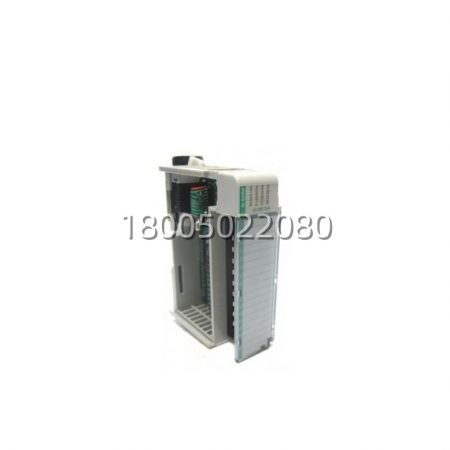
- 1769-IQ16 / 1769-OB16: 16-point digital input/output workhorses populating the local 1769 backplane behind the 1769-L38ERM—the IQ16 handles 24 V DC clamp/home/prox, OB16 sinks solenoid banks.
- 1769-IF4I: The isolated analog input covered earlier; natural fit when the 1769-L38ERM needs 4–20 mA from pressure/flow transmitters on a process skid.
- 1769-SDN: DeviceNet scanner module for legacy DeviceNet drops (powering older ArmorStart, pneumatic valve banks) that the 1769-L38ERM‘s EIP ports don’t natively cover.
- 1734-AENTR / 1734-IB8 / 1734-OB8E: POINT I/O head + slices hung off the 1769-L38ERM DLR ring for distributed I/O on moving carriages or remote station boxes.
- Kinetix 350 / Kinetix 5500: CIP Motion-capable servo drives paired with the 1769-L38ERM; Kinetix 350 for cost-sensitive axes (conveyor, simple index), 5500 for high-dynamic (camming, electronic gearing).
- 1784-SD2: 2 GB SD card upgrade (from the 1 GB shipped default); recommended for the 1769-L38ERM when project + datalog footprint exceeds 1 GB or when you want firmware + project image both stored.
Reviews
There are no reviews yet.