Description
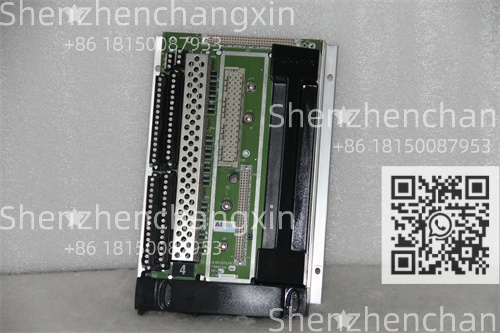
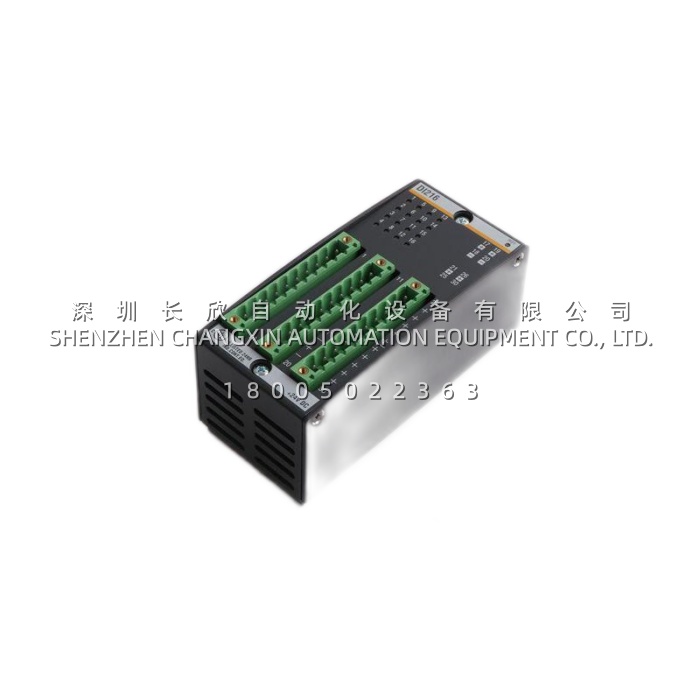
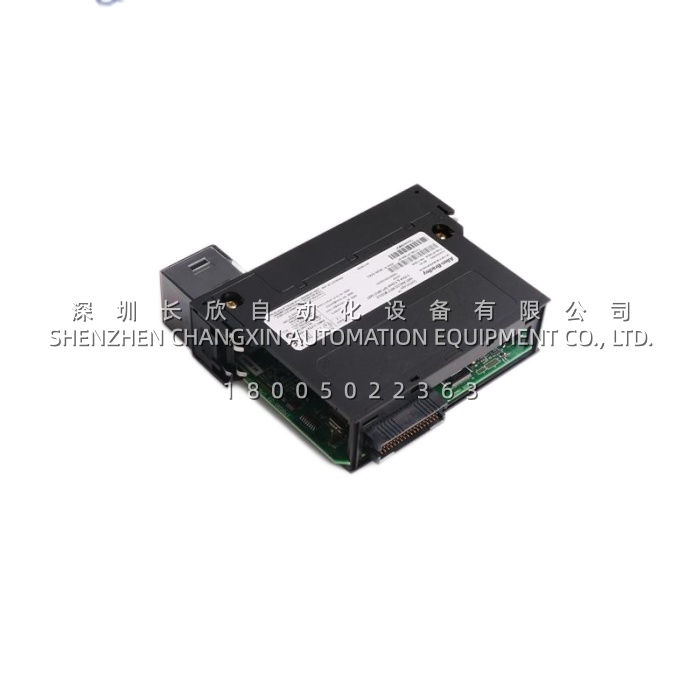
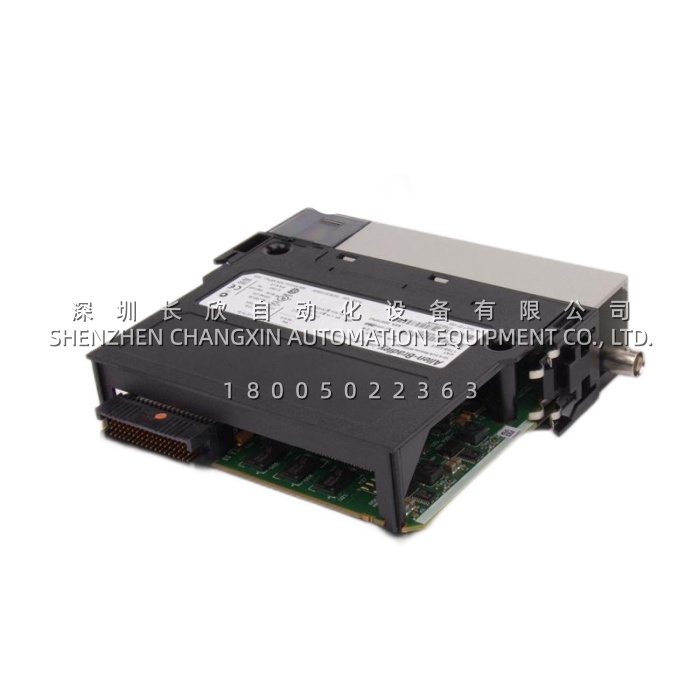
The Triconex AI2351 is a triple-modular redundant (TMR) analog input module engineered for the Tricon® and Triconex® Safety Instrumented Systems (SIS). Designed to acquire critical process signals—such as pressure, temperature, flow, or level—from 4–20 mA transmitters in high-integrity applications, the AI2351 delivers fault-tolerant signal acquisition with continuous self-diagnostics and SIL 3 certification per IEC 61508/61511. Built for industries where safety and reliability are non-negotiable—including oil & gas, petrochemicals, LNG, and power generation—the AI2351 ensures that every analog measurement contributes to a verifiable, fail-safe control decision.
Application Scenarios
At a North American LNG liquefaction train, reactor overpressure protection relied on legacy analog inputs prone to undetected drift. During a routine proof test, one transmitter reading was found to be 8% low—enough to delay a trip during a credible overpressure scenario. The facility upgraded to Triconex AI2351 modules, leveraging their TMR architecture and real-time deviation monitoring. Within weeks, the system flagged a failing transmitter due to inconsistent voting between the three internal channels—preventing a potential safety gap. This case illustrates how the AI2351 transforms analog sensing from a passive data source into an active layer of functional safety.
Parameter
表格
Technical Principles and Innovative Values
Innovation Point 1: The AI2351 implements true hardware-level TMR—each of its 8 channels is sampled by three independent analog-to-digital converters, with real-time voting to detect and isolate faults without interrupting the safety function.
Innovation Point 2: It supports HART digital communication superimposed on the 4–20 mA loop, enabling asset management systems (e.g., AMS) to read transmitter diagnostics during normal operation—without compromising SIS integrity.
Innovation Point 3: Advanced channel deviation diagnostics compare the three internal readings; if any exceeds a user-defined tolerance (e.g., 0.5%), the module logs a diagnostic alarm while maintaining safe operation—enabling predictive maintenance.
Innovation Point 4: Unlike standard DCS analog inputs, the AI2351 provides fail-safe signal validation: on detected open-wire or short-circuit, it forces the input to a pre-configured safe state (e.g., high/low trip value) within one scan cycle.
Application Cases and Industry Value
In a Middle Eastern ammonia plant, the Triconex AI2351 was deployed to monitor catalyst bed temperatures in a high-pressure converter—a critical parameter for preventing runaway reactions. Previously, thermocouple drift went unnoticed until manual calibration. With the AI2351. each 4–20 mA signal from RTD transmitters underwent TMR validation. Over one year:
Zero missed trips due to sensor failure
Proof-test intervals extended by 30% due to >95% diagnostic coverage
Integration with the plant’s SIS dashboard provided real-time health status of all 64 analog inputs
Safety engineers noted that the AI2351’s ability to distinguish between process transients and actual hardware faults significantly reduced nuisance alarms during startups.
Related Product Combination Solutions
Triconex AO2351 / 3504E: Analog output modules—used with AI2351 for closed-loop safety control (e.g., pressure-in → valve-out).
Triconex DI2351 / DO2351: Digital I/O modules—complement AI2351 in hybrid safety logic (e.g., high temp + pump running = trip).
TriStation 1131: Engineering workstation—enables full configuration, simulation, trending, and online diagnostics of AI2351 channels.
Rosemount 3051S: SIL 2/3 certified pressure transmitter—fully compatible with AI2351 and HART-enabled for advanced diagnostics.
Triconex Chassis (e.g., 4400A): High-density mainframe supporting up to 18 I/O modules, including multiple AI2351 units.
AMS Device Manager: Asset management platform—reads HART data from transmitters connected to AI2351 without bypassing SIS logic.
Schneider Foxboro DCS: Can share process data with Triconex SIS via secure OPC or Modbus gateways for coordinated BPCS/SIS response.
Triconex Remote I/O (e.g., 9560): Extends AI2351 functionality to remote skids or hazardous zones using fiber-optic communication.
Installation, Maintenance, and Full-Cycle Support
Installing the Triconex AI2351 requires insertion into a de-energized Triconex chassis, followed by secure backplane seating. Field wiring must use individually shielded twisted pairs, with shields grounded only at the controller end to avoid ground loops. Loop calibration is performed through TriStation 1131 using built-in test functions that verify accuracy at 4. 12. and 20 mA points.
For maintenance, the AI2351 features per-channel LED indicators (green = OK, red = fault) and logs all diagnostic events—including wire-off, deviation, and common-mode errors—in non-volatile memory. While not hot-swappable during live SIS operation, modules can be replaced during planned outages with automatic configuration restore. We rigorously validate every AI2351 for TMR synchronization, EMI immunity (IEC 61000-4 Level 4), and long-term thermal stability. Our support includes SIL verification packages, HART integration services, and lifecycle migration paths from older Triconex models like the AI3501 or AI3511.
Contact us for a tailored functional safety solution—whether you’re designing a new SIL 3 system, modernizing legacy analog inputs, or enhancing diagnostic coverage in your SIS. With deep expertise in Triconex architectures and global project experience, we ensure your AI2351 delivers uncompromising measurement integrity, safety compliance, and operational resilience.