Description
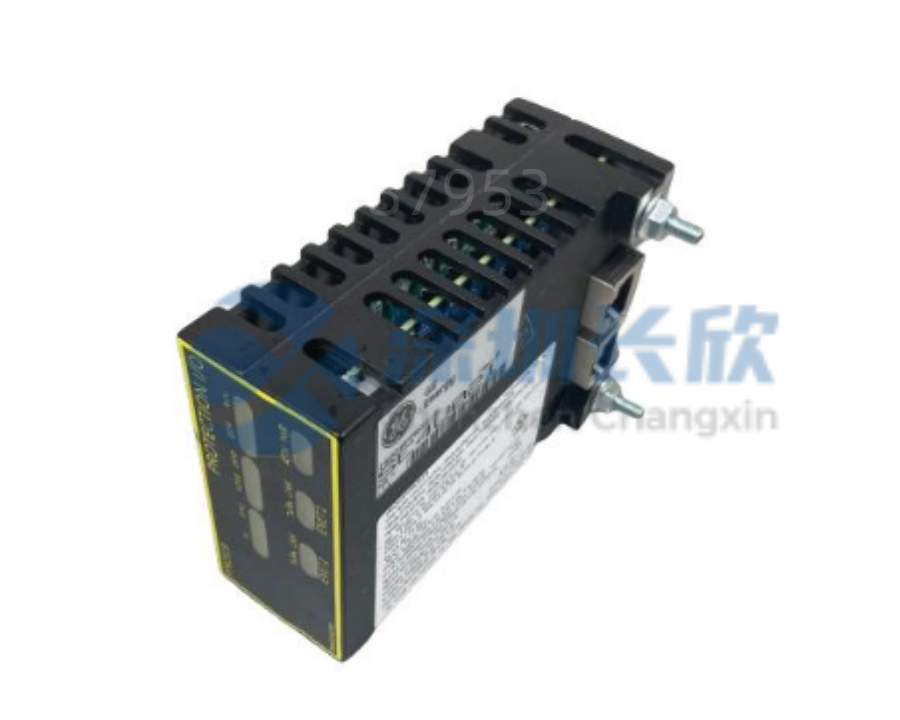
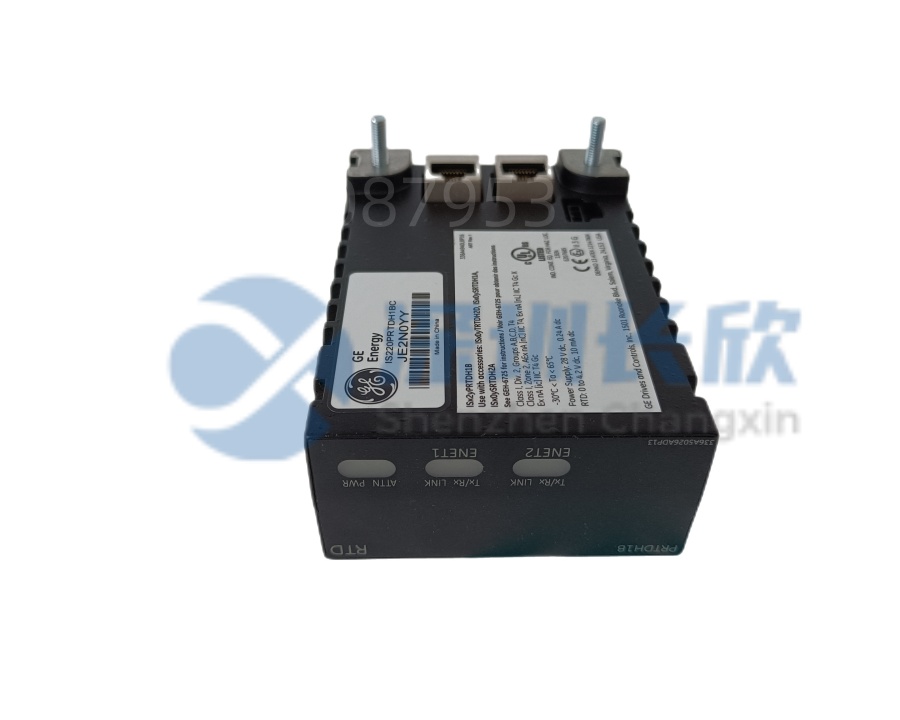
The GE IS220PRTDH1A is a dedicated RTD (Resistance Temperature Detector) Input Terminal Board designed for the GE Mark VIe turbine and industrial control system. It serves as the critical interface between high-accuracy platinum RTD temperature sensors (like Pt100) and the Mark VIe controller, providing precise, reliable temperature measurement for critical machinery protection and process control.
Application Scenarios
In a combined-cycle power plant, the temperature of a gas turbine’s exhaust duct is a vital parameter for efficiency calculations and protective control. A failure or inaccuracy in this measurement can lead to inefficient operation or, worse, a failure to detect an over-temperature condition. The GE IS220PRTDH1A terminal board is deployed to mitigate this risk. Installed in a Mark VIe I/O pack, it connects directly to multiple Pt100 RTDs installed in the duct. The board provides the precise current excitation to the RTDs, measures the millivolt signal representing resistance change, and converts it into a highly accurate digital temperature value for the controller. Its design directly addresses the pain points of signal noise, lead wire resistance errors, and channel failure. By ensuring the integrity of this temperature data, it enables optimal combustion control and provides a reliable trip signal if temperatures exceed safe limits, protecting millions of dollars in turbine hardware.
Technical Principles and Innovative Values
Innovation Point 1: High-Precision Measurement with Lead Resistance Compensation
The GE IS220PRTDH1A excels in measurement accuracy. It is designed to support 2-wire, 3-wire, and true 4-wire RTD connections. The 4-wire method is a key innovation: it uses two wires to deliver the excitation current and two separate wires to measure the voltage drop directly across the RTD. This eliminates the error caused by the resistance of the long lead wires running from the sensor to the control cabinet, a common issue in industrial installations. This ensures the temperature data sent to the Mark VIe controller reflects the true process temperature, which is critical for both efficient control and accurate protection algorithms.
Innovation Point 2: Seamless, Deterministic Integration with Mark VIe Architecture
Unlike generic signal conditioners, the GE IS220PRTDH1A is natively integrated into the Mark VIe ecosystem. It plugs directly into a designated slot in a Mark VIe I/O pack and communicates over the system’s internal high-speed network. This integration provides deterministic data delivery, synchronized sampling with other I/O points, and centralized configuration and diagnostics through the ToolboxSTsoftware. This eliminates the complexity and latency of external analog-to-digital converters and serial networks, offering superior performance and reliability for high-speed turbine control.
Innovation Point 3: Robust Design for Critical Machinery Protection
The module is built for the harsh electrical environment of a power plant or industrial facility. It features high noise immunity, isolation, and dedicated diagnostic circuits that continuously monitor the health of each input channel. It can detect sensor failures (open or short circuit) in real-time and flag the data as invalid in the controller, preventing a faulty sensor from causing an incorrect control action or failing to trigger a needed safety shutdown. This built-in diagnostic capability is essential for maintaining the Safety Integrity Level (SIL) of protection loops.
Application Cases and Industry Value
A large refinery relied on its steam turbine-driven centrifugal compressor for a critical process. The turbine’s thrust bearing temperature, monitored by RTDs, was a key parameter for a protective shutdown. The existing legacy RTD input cards were prone to drift and noise, causing occasional false alarms that threatened unit stability. During a control system upgrade to Mark VIe, they installed the GE IS220PRTDH1A terminal boards. The improvement was immediate. The 4-wire connection to the existing Pt100 sensors eliminated ground loop and lead resistance errors, providing rock-steady temperature readings. The board’s diagnostics also identified one RTD with intermittently high resistance connections before it failed completely. The Control Systems Engineer reported: “Since installing the IS220PRTDH1A boards, the bearing temperature readings have been flawless. The nuisance alarms stopped, giving our operators greater confidence. More importantly, we now have absolute trust in the trip signal’s integrity. The investment in the new I/O system paid off by eliminating uncertainty and providing a maintenance-free, reliable measurement.”
Related Product Combination Solutions
GE IS200/IS215 Controller (e.g., IS215UCVEM06A): The Mark VIe controller that executes the control logic, relying on the accurate temperature data provided by the IS220PRTDH1A.
GE IS220PSSH1A Power Supply Module: Provides conditioned, reliable power to the I/O pack housing the IS220PRTDH1A and other modules.
GE T8431 Triple Modular Redundant Speed Card: A critical protection card; accurate temperature data from the IS220PRTDH1A is used in control algorithms that may interact with speed protection.
GE IS220PAICH1A Analog Input Terminal Board: A complementary module for reading 4-20mA signals (e.g., from pressure or flow transmitters), used alongside the IS220PRTDH1A for comprehensive process monitoring.
GE IS220PDIAH1A Digital Input Terminal Board: Used for reading contact inputs (e.g., pump running status), completing the suite of I/O needed for turbine control alongside the analog RTD inputs.
GE QuickPanel+ HMI: The operator interface that displays the temperature values processed by the IS220PRTDH1A and the Mark VIe controller.
Installation, Maintenance, and Full-Cycle Support
Installation and Maintenance: Installing the GE IS220PRTDH1A requires careful planning. The Mark VIe system must be properly powered down or the specific I/O pack isolated. The module is designed for straightforward insertion into its slot on the I/O pack backplane. The most critical step is the field wiring: for optimal accuracy, 4-wire RTD connections are highly recommended. Wiring must follow separation guidelines to avoid noise interference. Configuration is performed using GE’s ToolboxSTsoftware, where the engineer defines the RTD type (Pt100), connection method, and scaling. The module’s hot-swappable design (in systems configured for it) allows for replacement with minimal downtime. Routine maintenance involves verifying the configuration and monitoring the module’s diagnostic status within the control system software.
We provide end-to-end support for the GE IS220PRTDH1A and the Mark VIe platform. Our services extend beyond supplying the genuine, factory-tested module. Our technical team can assist with configuration file management, wiring best practices for optimal signal integrity, and integration troubleshooting. We understand the critical role of accurate temperature measurement in turbine control and are committed to providing the components and expertise needed to ensure your system’s long-term reliability and performance.