Description
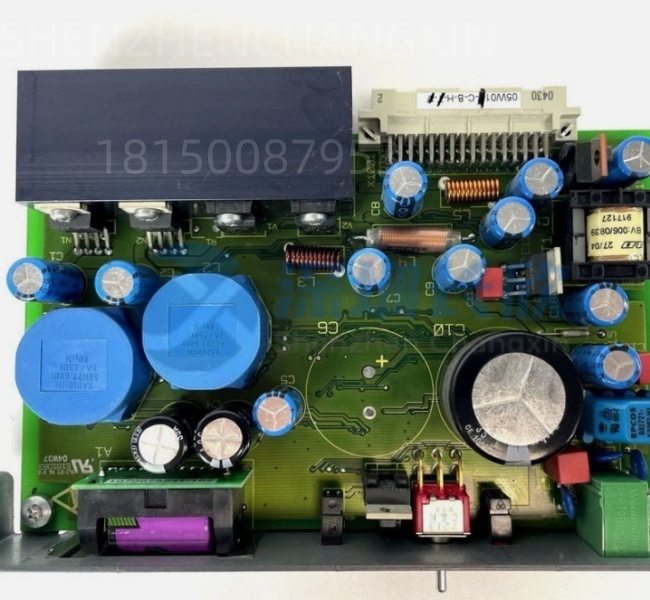
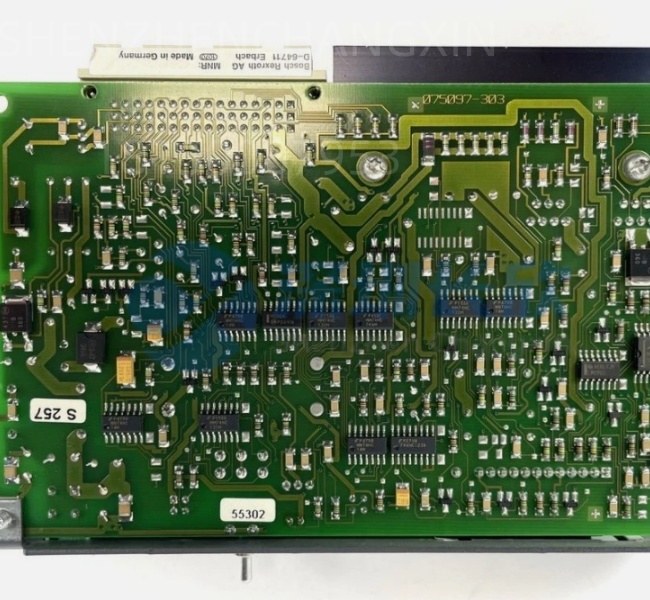
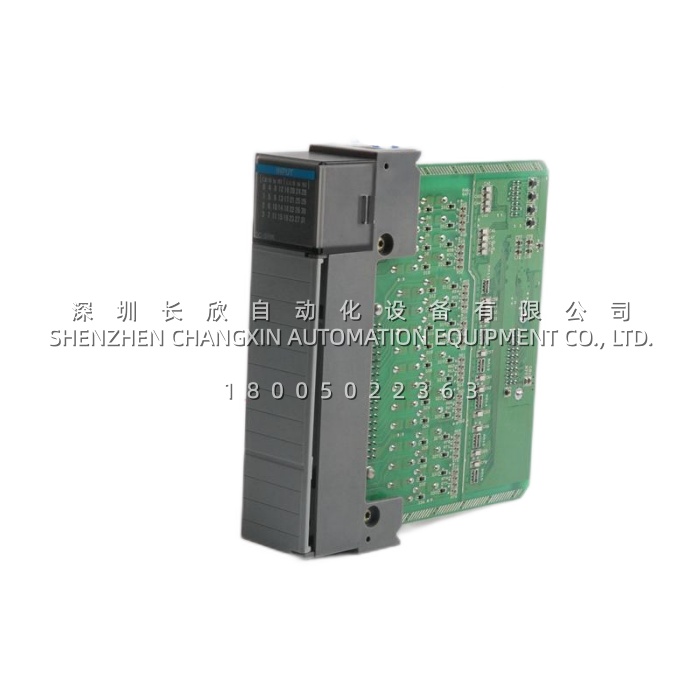
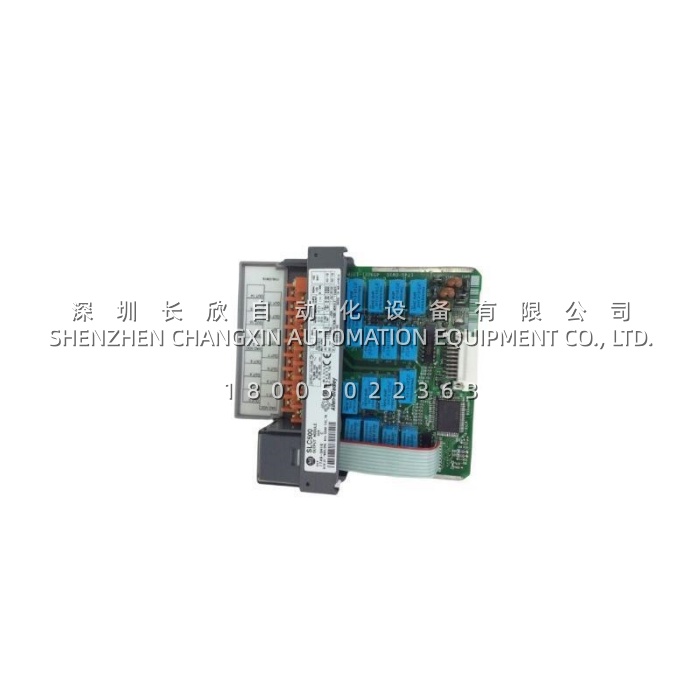
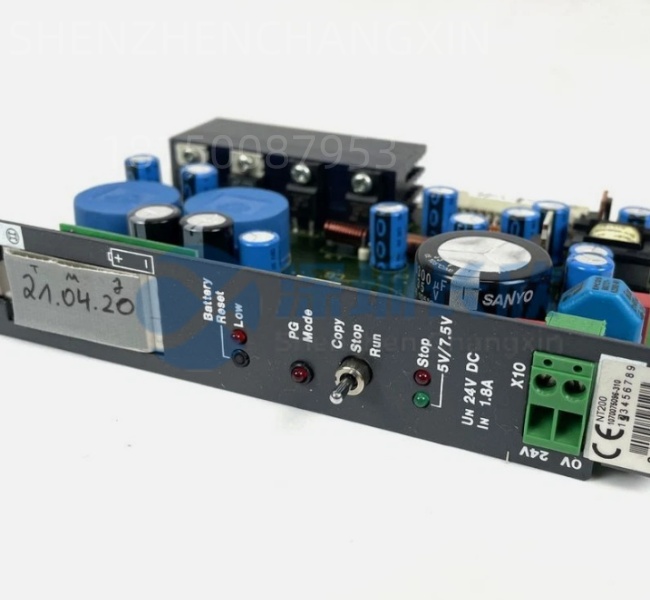
The Bosch CL200 GG3 NT200 is a compact programmable logic controller (PLC) from Bosch Rexroth’s industrial automation portfolio, designed for small to mid-sized machine control applications. Combining integrated digital and analog I/O with flexible communication options, it delivers reliable, real-time control in space-constrained environments—ideal for OEMs and system integrators seeking robust, maintenance-free automation.
Engineered for simplicity and durability, the CL200 GG3 NT200 supports standard IEC 61131-3 programming languages and operates seamlessly in electrically noisy or thermally demanding settings, making it a trusted choice for packaging, material handling, and assembly automation worldwide.
Application Scenarios
In a high-speed bottling plant in the Netherlands, legacy relay-based control panels caused frequent line stoppages due to contact wear and timing drift. The engineering team replaced them with Bosch CL200 GG3 NT200 controllers—one per filling station—to manage bottle detection, valve sequencing, and reject gate actuation. Within weeks, unplanned downtime dropped by 65%. The CL200 GG3 NT200’s 1 ms input filter rejected false triggers from proximity sensors near variable-frequency drives, while its built-in RS485 port enabled direct communication with servo drives—eliminating the need for an external gateway. “This tiny PLC solved our biggest reliability bottleneck,” said the plant automation manager. For applications like this, the Bosch CL200 GG3 NT200 isn’t just a controller—it’s a production stabilizer.
Note: “GG3” denotes the hardware revision; “NT200” indicates firmware/base configuration variant.
Technical Principles and Innovative Values
Innovation Point 1: Unified Hardware Platform with Field-Proven Firmware Stability
The Bosch CL200 GG3 NT200 runs on Bosch Rexroth’s hardened real-time OS, validated across 50.000+ installations. Unlike commodity PLCs prone to watchdog resets under EMI stress, it maintains deterministic cycle times even during voltage sags or RF interference—critical for motion-coordinated tasks.
Innovation Point 2: Dual Communication Backbone (RS485 + CANopen)
While many compact PLCs offer only one protocol, the CL200 GG3 NT200 natively supports both Modbus RTU (for HMIs, VFDs) and CANopen (for servo axes, I/O nodes)—enabling mixed-vendor integration without protocol converters.
Innovation Point 3: Zero-Maintenance Design with Wide Voltage Tolerance
No batteries, fans, or moving parts. The Bosch CL200 GG3 NT200 retains program memory via supercapacitor (≥10 years data retention) and tolerates 18–30 V DC supply fluctuations—ideal for mobile machinery or unstable grids.
Innovation Point 4: Seamless Migration Path within CL200 Family
Programs developed for the NT200 can be reused on higher-end CL200 models (e.g., NT400 with Ethernet/IP), protecting software investment during future upgrades.
Application Cases and Industry Value
A German packaging OEM integrated the Bosch CL200 GG3 NT200 into its vertical form-fill-seal machines sold across Southeast Asia. Operating in high-humidity environments with frequent power cycling, the controller reliably managed film tension, sealing bars, and product indexing—without a single field failure over 18 months. The compact size allowed installation inside the machine frame, eliminating external control boxes. Customer feedback highlighted the intuitive programming environment and the ability to monitor I/O status via the built-in LED indicators during commissioning. Total cost of ownership was reduced by 30% compared to previous Allen-Bradley MicroLogix solutions.
In another case, a U.S. conveyor system integrator used the CL200 GG3 NT200 to retrofit aging sortation lines at a postal hub. The PLC read photoelectric sensors, controlled diverter gates via relay outputs, and reported jam events over Modbus to a central SCADA. Its fast response (<2 ms input-to-output) ensured accurate parcel routing at 2.5 m/s belt speeds. The project was completed 40% faster thanks to pre-tested function blocks provided by Bosch.
Related Product Combination Solutions
Bosch CL200 NT400: Enhanced version with built-in Ethernet (TCP/IP, Modbus TCP) and larger program memory
Bosch CL200 DI16/DO16 Modules: Digital I/O expansion units for scaling beyond base I/O count
Bosch CL200 AI4/AO2: Analog input/output modules for temperature, pressure, or speed control loops
Bosch IndraControl VPP 20: Higher-tier PLC platform for complex motion coordination—compatible with CL200 I/O
Bosch Rexroth MTX Pro Software: Official engineering tool for programming, simulation, and diagnostics
Bosch S20 I/O System: Decentralized I/O nodes that communicate via CANopen with CL200 GG3 NT200
Bosch HMI VT3F: Entry-level operator panel with native CL200 driver support
Bosch Power Supply LRP 24-2.5: DIN-rail 24V PSU optimized for CL200 series stability
Installation, Maintenance, and Full-Cycle Support
Installing the Bosch CL200 GG3 NT200 requires only a standard 35 mm DIN rail, 24 V DC power, and shielded cables for field wiring. The terminal blocks accept stranded wires with ferrules (0.14–2.5 mm²), and all I/O LEDs are visible from the front for quick status verification. Commissioning is accelerated by auto-detection of expansion modules and built-in diagnostic buffers that log the last 100 program cycles— invaluable for troubleshooting intermittent faults.
Maintenance is virtually nonexistent: no battery replacements, no firmware updates for basic operation, and no cooling requirements. Should a unit fail, program backup is automatic via microSD card slot (optional), and replacement takes under 10 minutes—thanks to plug-in design and parameter cloning via USB. Error codes (e.g., “E03: CANopen Timeout”) appear on the status display, guiding technicians to root causes without specialized tools.