
Product Overview
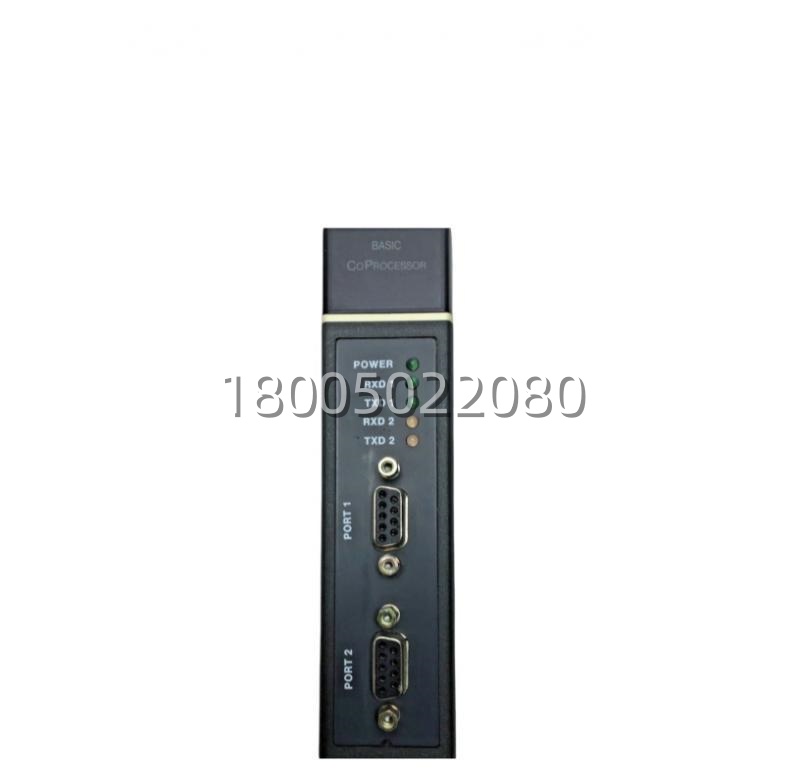
The Siemens 405-15ABM is a high-performance coprocessor module central to the powerful SIMATIC TDC (Technology and Drive Control) automation system. Designed for the most demanding real-time control tasks, the Siemens 405-15ABM functions as the computational powerhouse within a TDC rack, executing complex mathematical algorithms, high-speed closed-loop control, and sophisticated technological functions with extreme precision and speed. Unlike standard PLCs, the SIMATIC TDC system, and specifically the 405-15ABM module, is engineered for applications where cycle times in the sub-millisecond range are required. It operates as a multi-processor system, where the Siemens 405-15ABM can be used in conjunction with other CPU modules to distribute computational loads, enabling parallel processing of tasks such as fast torque control for drives, complex interpolation for multi-axis motion, or rapid model-based predictive control in process industries. Its architecture is optimized for deterministic execution, making it indispensable for high-end automation challenges.As a core component of the SIMATIC TDC platform, the 405-15ABM is not a standalone controller but a specialized computing module that slots into a TDC rack. It is programmed using the high-level language CFC (Continuous Function Chart) within the Siemens engineering framework, allowing control engineers to graphically implement complex control strategies that leverage its raw processing power. The module features high-speed, deterministic communication interfaces like SINEC H1 (based on Industrial Ethernet) and a dedicated fiber-optic bus for ultra-fast synchronization with other TDC modules and drive systems. The Siemens 405-15ABM is the solution of choice when conventional PLCs reach their performance limits. It bridges the gap between standard automation and the high-speed realm of drive technology and advanced process control, providing the deterministic computational muscle needed for applications in metals processing, high-speed packaging, test benches, and large-scale drive systems where synchronization, speed, and accuracy are non-negotiable.
Technical Specifications
| Parameter Name | Parameter Value |
|---|---|
| Product Model | 405-15ABM |
| Manufacturer | Siemens AG |
| Product Type | Multi-Processor Computing / Coprocessor Module (SIMATIC TDC) |
| Architecture | Multi-processor system for parallel task processing |
| Cycle Time Capability | Sub-millisecond (e.g., 100 µs to 400 µs typical) |
| Main Interface | SINEC H1 (Industrial Ethernet-based deterministic bus) |
| Synchronization Interface | Fiber-optic bus for module-to-module sync |
| Programming Language | CFC (Continuous Function Chart) in Siemens SIMATIC environment |
| Memory | Integrated work memory for user program and data |
| Address Area | Configurable within the TDC system’s global address space |
| Operating Temperature | 0°C to 60°C |
| Relative Humidity | 10% to 95%, non-condensing |
| Power Supply | 5V DC (via TDC rack backplane) |
| Dimensions (WxHxD) | Approx. 25mm x 233mm x 220mm (standard TDC module size) |
Main Features and Advantages
Deterministic high-speed processing for critical tasks: The primary advantage of the Siemens 405-15ABM is its ability to execute control algorithms at incredibly fast and deterministic cycle times. While standard PLCs operate in the 10-50ms range, the 405-15ABM is designed for cycles of 400µs, 200µs, or even 100µs. This deterministic performance is achieved through its multi-processor architecture and a real-time operating system baked into the hardware. This allows for the direct, lightning-fast control of physical processes, such as regulating the current and torque of a high-performance motor, calculating precise setpoints for multiple coordinated axes, or executing complex mathematical models in real-time. This capability is not an enhancement but a fundamental requirement for applications where latency directly impacts product quality or system stability.Seamless system integration and scalability: The Siemens 405-15ABM is not an isolated computer; it is a fully integrated component of the SIMATIC TDC ecosystem. It communicates with other TDC CPU and I/O modules over the high-speed, deterministic SINEC H1 backplane bus, ensuring nanosecond-level synchronization between modules. This allows for the creation of powerful multi-CPU systems where tasks can be distributed across several 405-15ABM or other CPU modules, linearly scaling the system’s total processing power. Its integration extends to Siemens drive systems (like SINAMICS) via dedicated interfaces, enabling “clock-synchronous” operation where the controller and drives are perfectly synchronized for flawless motion control. This deep integration simplifies system architecture, reduces communication jitter, and provides a unified engineering and diagnostic environment within TIA Portal or the older SIMATIC Manager, making the management of these complex systems more efficient.Powerful engineering with CFC: Programming the immense power of the 405-15ABM is accomplished using the graphical Continuous Function Chart (CFC) language. This allows control engineers to design complex control strategies by wiring together function blocks that represent control algorithms, mathematical operations, and logic functions. The intuitive nature of CFC makes it easier to design, visualize, and debug intricate multi-variable control loops compared to traditional text-based languages. The engineering system automatically handles the allocation of these charts to the multiple processors within the Siemens 405-15ABM, optimizing the load distribution. This combination of a powerful hardware platform and a sophisticated, accessible engineering tool empowers users to implement cutting-edge control solutions that would be impractical or impossible with standard controller technology.


