Description
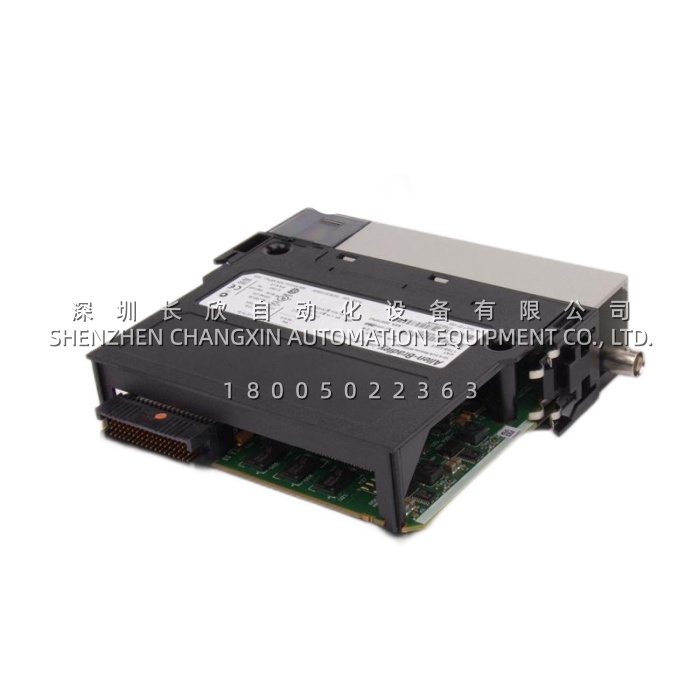
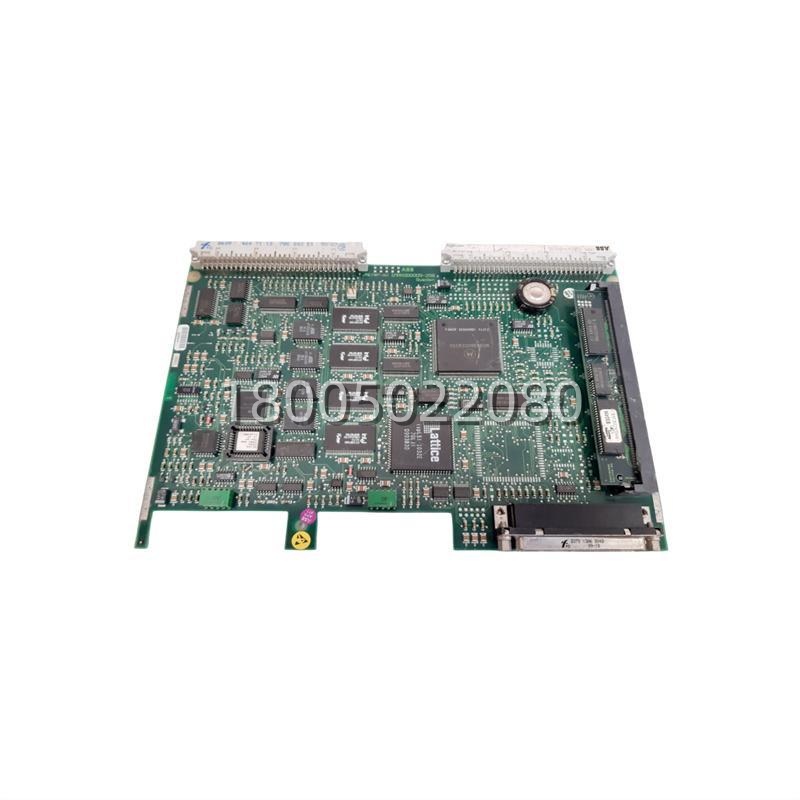
The 1MRK000167-GCR00 (Spare / Index No. 1MRK000005-258) is an industrial-grade Control / Circuit Board (PCB) manufactured by ABB, typically used as a logic-processing or interface mother card inside ABB distributed control system (DCS) extension stations, protection relay cabinets (e.g., RET670 / REL670 family IEDs), or early custom control enclosures. It handles signal conditioning, backplane bus communication (RS-485 / CAN), and dedicated control logic for the host assembly—acting as the electronic core of the sub-unit rather than a general-purpose I/O module.
Application Scenarios
Picture a regional 220 kV substation where an ABB RET670 transformer-protection bay has been in service for 22 years. Following a severe thunderstorm and a subsequent switching surge, the protection IED begins reporting intermittent internal communication faults and refuses to go “In Service.” Diagnostics trace the problem to a degraded logic/interface PCB—the 1MRK000167-GCR00—inside the relay’s internal chassis. Replacing the entire IED would mean re-engineering the bay, re-terminating CT/VT secondary wiring, and a multi-day outage. Instead, the protection engineer powers down the bay, extracts the failed board, and inserts a verified 1MRK000167-GCR00 matching the GCR00 hardware revision and index number 1MRK000005-258. After a cold-boot the IED passes all self-tests, the protection scheme is re-armed, and the bay returns to service in under an hour. The 1MRK000167-GCR00 directly resolves the legacy-spares availability gap for utilities and process plants committed to extending the certified life of proven ABB protection and automation assets.
Parameter
| Main Parameters | Value/Description |
|---|---|
| Product Model | 1MRK000167-GCR00 (Spare / Index No. 1MRK000005-258) |
| Manufacturer | ABB (Sweden / ABB Power & Automation Heritage) |
| Product Category | Industrial Control / Interface Circuit Board (PCB / Circuit Card) |
| Associated Equipment | ABB Protection Relay IED bays (RET670 / REL670 series), DCS extension stations, custom control boxes |
| Operating Voltage | 24 V DC typical (some variants accept 24–250 V AC/DC per carrier supply) |
| Power Consumption | 5–10 W (typical) |
| Communication / Bus | Backplane proprietary bus; onboard RS-485 (Modbus optional) and/or CAN interface per design |
| Isolation Voltage | ≥ 2 kV AC (field-side / bus-to-logic, where applicable) |
| PCB Construction | 6-layer industrial-grade FR-4 with through-hole & SMT components, gold-flashed connectors |
| Onboard Features | Status LEDs (Run / Err), EEPROM for config ID, watchdog timer, RC filtering on I/O lines |
| Operating Temp. | -20 °C to +60 °C (extended-range versions -40 °C to +70 °C) |
| Storage Temp. | -40 °C to +85 °C |
| Mounting | Chassis-slot edge connector or screw-fastened into host IED / control unit backplane |
| Dimensions (Approx.) | 100 × 200 mm (typical; exact per ABB drawing for 1MRK000167 series) |
| Weight (Approx.) | 0.25–0.40 kg |
Technical Principles and Innovative Values
- Innovation Point 1 — System-Specific Logic & Bus Bridge: The 1MRK000167-GCR00 is not a universal I/O card but a purpose-designed processing board that bridges the host IED or DCS rack’s backplane with external subsystems (HMI, annunciator panels, auxiliary devices) via RS-485 / CAN. Its firmware/hardware revision (GCR00) must match the chassis—this tight co-design guarantees deterministic scan times and eliminates protocol-translation latency that generic interface cards introduce.
- Innovation Point 2 — 6-Layer PCB with Noise-Immune Conditioning: A multilayer stack-up with dedicated power/ground planes, combined with hardware-level RC filtering and opto-isolation on critical lines, rejects EMI from nearby CT/VT circuits and VFDs in the same cabinet. This preserves signal integrity for sensitive protection and SOE timing even in electrically hostile switchgear rooms.
- Innovation Point 3 — EEPROM-Based Identity Retention & Plug-Compatibility: Configuration ID and board revision data reside in non-volatile EEPROM. When the 1MRK000167-GCR00 is swapped, the host system reads the board’s identity automatically—no dip-switch re-coding or software download is required (beyond possible firmware-version alignment check via PCM600), reducing MTTR to a simple board exchange during planned outages.