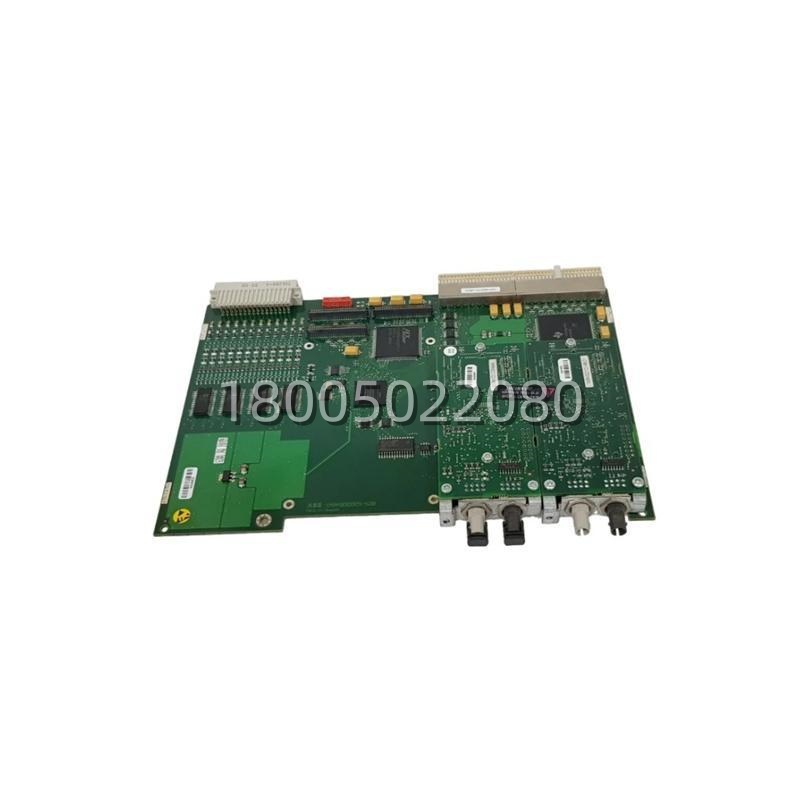
Description:
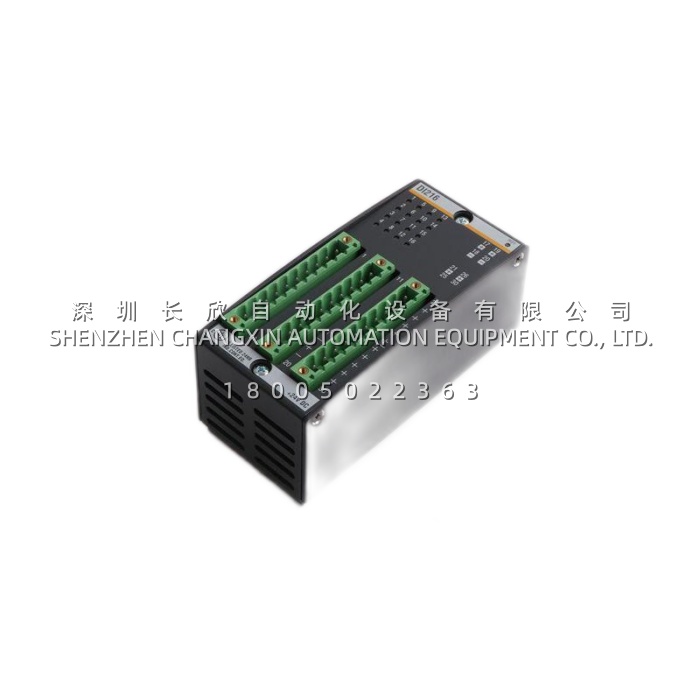
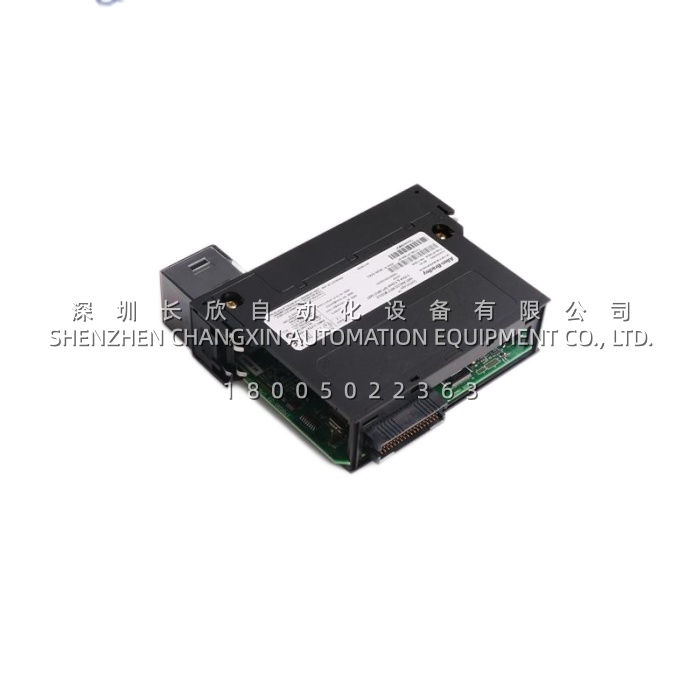
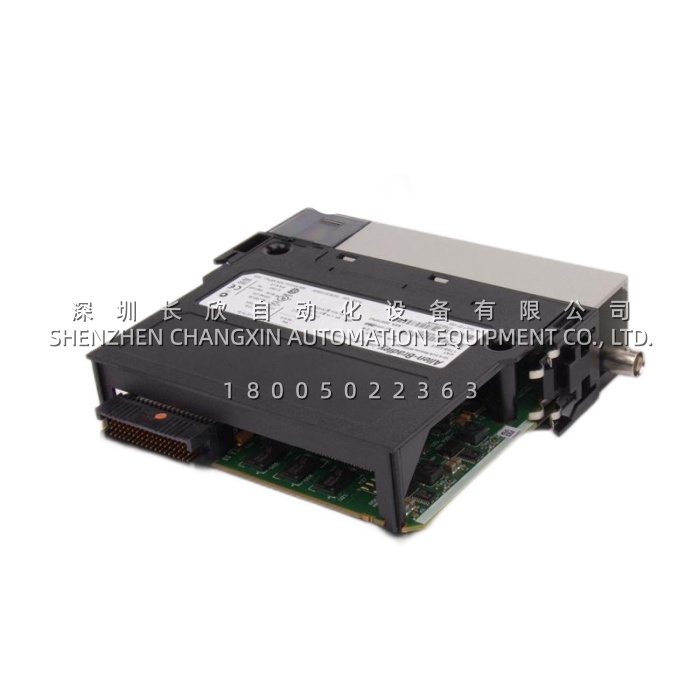
The ABB 1MRK002133-ABR02 (revision ABr02) is a Binary Output Module implemented as a printed circuit board (PCB) within ABB’s 1MRK I/O family, designed for use in ABB RELION® 650/670-series protection and control IEDs, bay controllers, and compatible substation automation racks. It translates digital commands from the protection processor or station bus into eight independent, galvanically isolated electromechanical relay contact closures (typically SPDT Form C), used to drive circuit-breaker trip/closing coils, interposing relays, alarm annunciators, and control-room indications in MV/HV switchyards.
Application Scenarios:
Imagine a 220 kV substation where the afternoon relay self-test logs a “Binary Output Channel 3 — Contact Weld Detected” alarm on the aging output card controlling the line-breaker trip and local horn. The protection engineer confirms the 1MRK002133-ABR02 as the source. During a planned 10-minute outage, the faulty board is released from its DIN-clip or extender-slot latch, field wires (including the common trip-circuit supervision pair) are transferred to the new unit’s screw terminals, and a fresh 1MRK002133-ABR02 is installed. On restoration of 24 V DC auxiliary, the IED recognizes the module, passes its power-on self-test, and a manual close/trip test from the control room verifies correct operation of all eight outputs. Thanks to the 1MRK002133-ABR02‘s optical isolation between the 5 V logic backplane and the 110–220 V DC field contacts, ground-loop-induced spurious operations are prevented even in EMI-heavy GIS enclosures. The key pain point solved: a direct-form-fit PCB swap that restores certified binary-output functionality—complete with contact-weld and open-load diagnostics—without disturbing CT/VT wiring, protection settings, or the IED main unit, getting the bay back to full compliance in minutes.
Parameter:
| Main Parameters | Value/Description |
|---|---|
| Product Model | 1MRK002133-ABR02 (Revision: ABr02 / ABR02) |
| Manufacturer | ABB (Sweden / Switzerland) |
| Product Category | Binary Output Module (BOM) / Digital Relay Output PC Board |
| System Compatibility | ABB RELION® 650 / 670 Series IEDs (REF670, RET670, RED670, REB670) with 1MRK I/O extender; ABB SPA / SPAC systems (select versions) |
| Output Channels | 8 × independent relay outputs (SPDT Form C: 1 NO + 1 NC typical; verify original board label) |
| Contact Rating | 2–5 A @ 30 V DC / 250 V AC (resistive); suitable for tripping duty with series interposing relay or direct low-energy trip coils per IEC 60255 |
| Control / Logic Supply | 24 V DC (from system backplane or external auxiliary per installation) |
| Isolation | ≥ 2.5 kV AC opto-coupler + relay-coil isolation between logic bus and field contacts; group-to-group isolation |
| Response Time | ≤ 20 ms (command → contact closed), typical 10–15 ms |
| Diagnostics | Per-channel open-load detection & contact-weld monitoring; module health reported to host IED / PCM600 |
| Indicators | Green PWR/OK LED + per-channel Operate LED (yellow) on front edge of PCB |
| Mounting | 35 mm DIN rail (via carrier) or dedicated I/O extender slot in ABB bay controller chassis; screw-terminal field wiring |
| Operating Temp. | -25 °C to +70 °C (storage: -40 °C to +85 °C); 5–95 % RH non-condensing |
| Protection Class | IP20 (for installation inside closed cabinet) |
| Certifications | CE, IEC 60255-x (as component of host relay system), RoHS |
Technical Principles and Innovative Values:
The 1MRK002133-ABR02 is the final hardened interface between a protection-algorithm decision and the physical actuation of primary plant equipment, incorporating substation-specific safeguards absent from generic PLC output cards.
- Innovation Point 1: Continuous Contact-Weld & Open-Load Supervision. The 1MRK002133-ABR02 actively compares each relay’s expected vs. actual contact state after a command and during idle periods (via brief test pulses in non-safety states). If a trip-contactor contact welds after clearing a fault, or a broken wire prevents the field device from seeing the command, the module raises a specific diagnostic code to the IED—alerting operations before a real fault goes uncleared. This is a cornerstone of dependable protection schemes.
- Innovation Point 2: Substation-Grade EMI Immunity via Dual-Stage Isolation. Each output group is separated from the microprocessor backplane by high-withstand optocouplers and from other groups by the relay coil/magnetic circuit. This blocks common-mode transients from disconnector switching (often >2–3 kV) and prevents latch-up of the protection processor—a failure mode generic solid-state outputs cannot tolerate in HV environments.
- Innovation Point 3: Protection-Class Deterministic Timing with Minimal Jitter. The 1MRK002133-ABR02 is timed to execute a trip command from the IED’s protection algorithm to physical contact closure in under 20 ms with negligible jitter. This deterministic behavior preserves fault-clearing-time coordination in grading studies and is fundamentally different from scan-based remote I/O blocks that may add 50–100 ms variability.