Description:
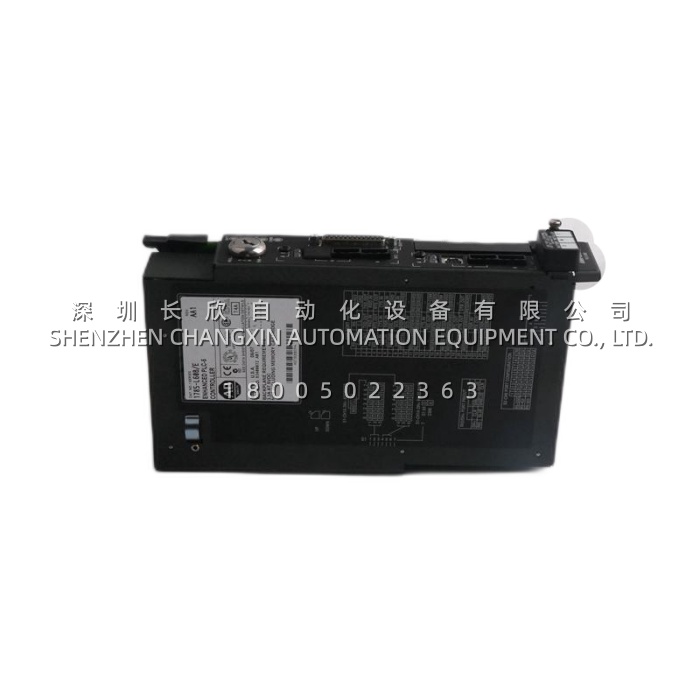
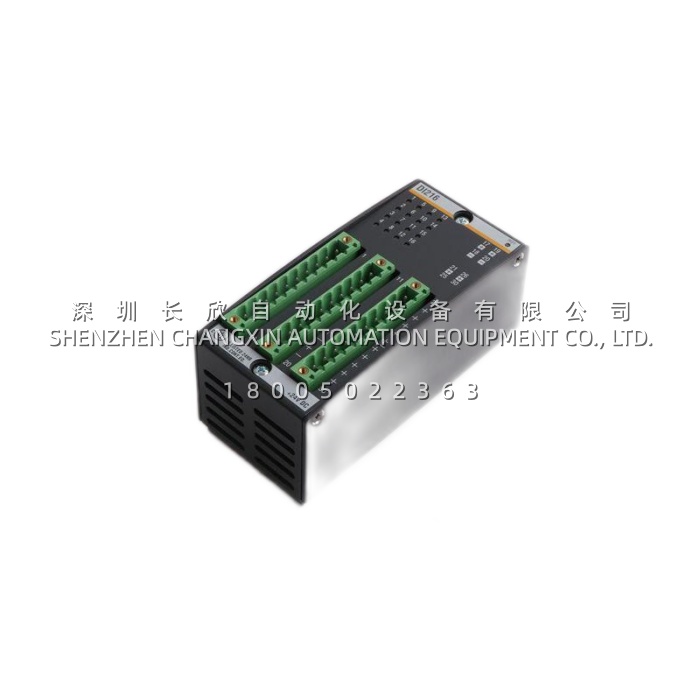
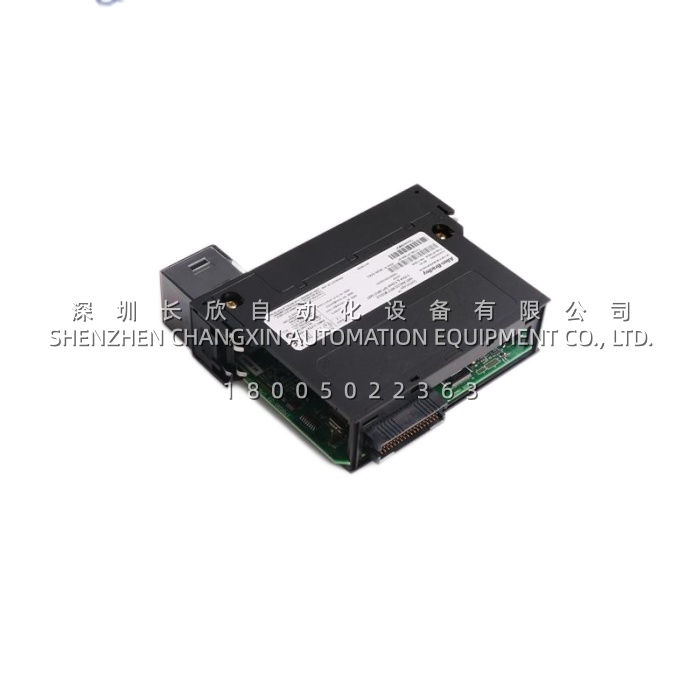
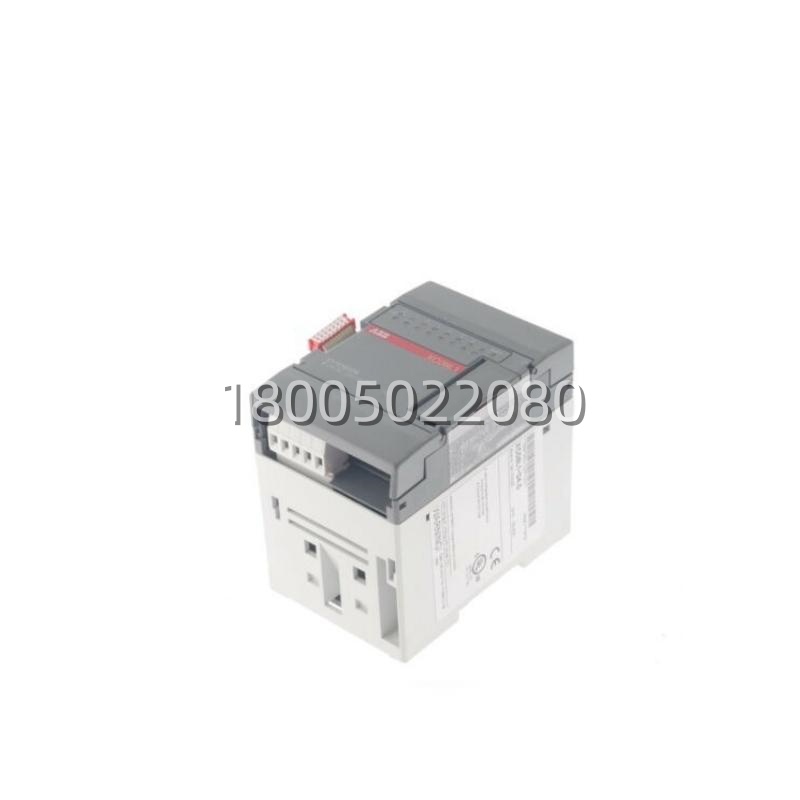
The ABB 1SBP260102R1001, also designated as XC08L1, is a configurable Digital I/O Extension Module within ABB’s AC500 / XC-series automation platform. It provides 8 independent digital channels—each individually software-selectable as a 24 V DC digital input or a 24 V DC transistor output (max. 0.5 A)—and connects to the AC500 CPU or a local I/O head module via the short expansion bus ribbon / plug. Its mixed-signal flexibility makes it ideal for compact machines or retrofit panels where point counts are modest and mixing inputs and outputs on one module reduces spare-parts variety.
Application Scenarios:
Picture a packaging machine OEM that originally designed a control panel with 6 pushbutton/EO-Stop inputs and 4 pilot-lamp / small-solenoid outputs. Rather than stocking both an 8-DI and an 8-DO card—half of whose points would sit unused—the integrator specifies the ABB 1SBP260102R1001 (XC08L1). During commissioning in Automation Builder, channels 0–2 are configured as sinking digital inputs (reading NPN prox sensors and E-Stop contacts), while channels 3–5 are set as sourcing 24 V DC outputs driving 0.3 A indicator beacons and a pneumatic dump valve. The sixth channel is left unused but available for future options. When a machine is later modified in the field to add a guard-door interlock, the maintenance technician simply re-assigns an unused channel to “Input” in the software and wires the contact—no hardware swap required. The per-channel front LEDs let line operators instantly see which sensor or output is active during fault-finding, cutting diagnostic time from minutes to seconds on a busy production floor.
Parameter:
| Main Parameters | Value/Description |
|---|---|
| Product Model | 1SBP260102R1001 (Type: XC08L1) |
| Manufacturer | ABB Automation (Switzerland / Sweden) |
| Product Category | Digital I/O Extension Module (Configurable per Channel) |
| System Compatibility | ABB AC500 Series PLC (PM5xx CPUs) / XC Local I/O Bus |
| Number of Channels | 8 (each individually configurable as DI or Transistor DO) |
| Input Type / Voltage | 24 V DC (sink/source capable), typical threshold ≈ 15 V |
| Output Type / Current | 24 V DC Solid-State (High-Side), max. 0.5 A per channel |
| Process Supply Voltage | 24 V DC (terminals UP/ZP), range 20.4 – 28.8 V DC |
| Response Time | < 1 ms (typical for both DI filtering and DO switching) |
| Isolation | Galvanic isolation between I/O bus side and field terminals |
| Status Indication | 1 × PWR LED, 1 × BUS/RUN LED, 8 × channel LEDs (green = active) |
| Connection Type | Spring-cage or screw terminal block (per sub-version), expansion bus plug |
| Mounting Method | 35 mm DIN rail (EN 60715) |
| Operating Temperature | –25 °C to +60 °C |
| Protection Class | IP20 (for installation inside enclosed control cabinet) |
| Dimensions (approx.) | 102 × 76 × 60 mm (W × H × D), Weight ≈ 0.18–0.22 kg |
| Certifications | CE, cULus, RoHS-compliant per ABB system certification |
Technical Principles and Innovative Values:
- Innovation Point 1: Per-Channel Software-Selectable I/O Direction. Unlike fixed DI or DO modules, the ABB 1SBP260102R1001 lets engineers assign each of the 8 channels independently as input or output in the Automation Builder hardware configuration. This “mix-and-match” capability halves the number of spare module types a plant must stock and adapts to last-minute panel-design changes without hardware rework.
- Innovation Point 2: Individual Channel LEDs for Rapid Troubleshooting. Each I/O point has its own front-panel LED. When a guard-door input closes or an output energizes a solenoid, the corresponding LED lights—enabling first-pass visual verification on the shop floor without a programming laptop or multimeter, a crucial time-saver during unplanned stops.
- Innovation Point 3: Short-Bus Local Expansion with Integrated Diagnostics. The XC08L1 connects via the AC500 local I/O expansion connector (flat-cable or plug-in header), drawing both process power and communication from the bus. Built-in open-load detection on outputs and input-line monitoring report anomalies to the CPU, turning silent field-wiring faults into visible alarms rather than mysterious logic mismatches.