Description
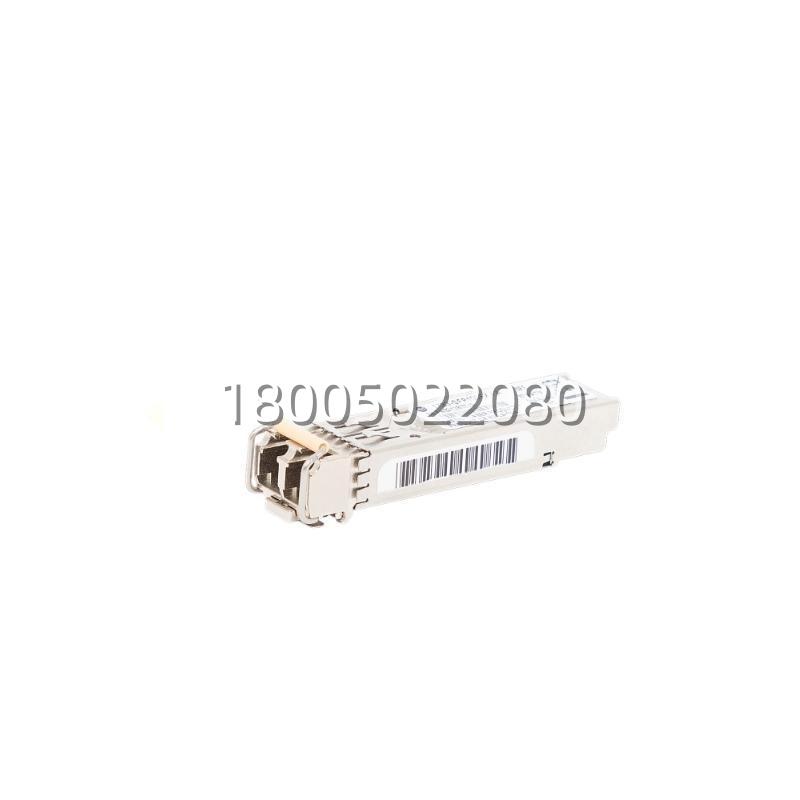
The 1783-SFP100FX is a 100BASE-FX small form-factor pluggable (SFP) optical transceiver manufactured by Allen-Bradley (Rockwell Automation), qualified for use in the Stratix family of industrial Ethernet switches. It provides a 100 Mbps multimode fiber uplink via a duplex LC connector, operating at 1300 nm with a nominal reach of 2 km over OM1/OM2 fiber. Designed to the industrial temperature grade (–40 to 85 °C), the 1783-SFP100FX is the default choice when a Stratix switch needs to jump beyond the 100 m copper limit—or when electrical isolation, EMI immunity, and lightning protection make fiber mandatory between MCC and field panels.
Application Scenarios
At a bulk-ore stacker/reclaimer yard in Northern Ontario, the integrator hung a Stratix 5700 (1783-BMS06SA) on the MCC room wall and a second 1783-BMS06SA on the trolley drive cab 1.4 km down the yard—connected originally with 100 m Cat 6A runs daisy-chained through three outdoor junction boxes. During a summer storm, a nearby lightning strike coupled into the buried copper run and took out both switch uplink ports plus a PowerFlex 755 VFD on the MCC side—$14K in damage and a 26-hour downtime. The rebuild swapped the copper uplinks for 62.5 µm OM1 multimode through existing conduit, terminated into 1783-SFP100FX modules at each end. The 1300 nm FX link gave 1.4 km easily (rated 2 km), and the fiber’s dielectric isolation meant the next strike only tripped the surge arrestor on the mast, not the switch. The pain point—”copper can’t reach, and copper bleeds noise/lightning”—closed in one SFP swap per end. Two years later, zero fiber-related faults, and the maintenance lead keeps two 1783-SFP100FX spares in the yard cabinet because “they’re cheaper than one VFD input stage.”
Parameter
| Main Parameters | Value/Description |
|---|---|
| Product Model | 1783-SFP100FX |
| Manufacturer | Allen-Bradley / Rockwell Automation |
| Product Category | 100BASE-FX SFP Optical Transceiver (Industrial) |
| Data Rate | 100 Mbps (100BASE-FX Ethernet) |
| Wavelength | 1300 nm |
| Fiber Type / Connector | Multimode (OM1/OM2/OM3/OM4), LC duplex |
| Nominal Reach | 2 km (OM1/OM2), 220 m minimum (guaranteed by 100BASE-FX spec) |
| DDMI Support | Yes — digital diagnostic monitoring (temp, Tx/Rx power, voltage) visible in Stratix/Studio 5000 |
| Operating Temp | –40 to 85 °C (industrial grade; commercial SFP alternative would be 0–70 °C) |
| Power Dissipation | < 1 W typical |
| Compatible Switches | Stratix 5700, 8000, 8300, 1783-ETAP; Cisco IE-2000/3000/4000 (Stratix is Rockwell-branded Cisco IE) |
| Certifications | CE, UL, cULus, RoHS; MSA-compliant SFP cage |
Technical Principles and Innovative Values
- Innovation Point 1: MSA-Compliant but Stratix-DDMI-Aware. The 1783-SFP100FX adheres to the multi-source agreement (MSA) SFP mechanical/electrical spec, so it clicks into any standard SFP cage—but Rockwell qualifies it specifically against Stratix IOS/Cisco IOS. Once seated in a Stratix 5700/8300, the DDMI (digital diagnostic monitoring) data—optic temperature, Tx bias, Rx optical power—surfaces in the Stratix web UI and via SNMP, so a degrading fiber strand shows up before the link flaps. Generic third-party SFPs often block DDMI or report garbage on Cisco IOS; the 1783-SFP100FX guarantees clean telemetry.
- Innovation Point 2: Industrial Temp Grade in a Plastic SFP Shell. Most commodity 100BASE-FX SFPs are commercial 0–70 °C, which is fine in a climate-controlled IDF but sketchy in a panel hanging on a reclaimer trolley or a desert well-site MCC that sees –30 °C winter and 70 °C internal. The 1783-SFP100FX is rated –40 to 85 °C, same silicon as Cisco’s industrial IE SFPs. That headroom matters when the panel fan fails in July and the internal ambient creeps to 78 °C—the SFP stays up while a commercial-grade unit might throw Tx-fault.
- Innovation Point 3: LC Duplex + 1300 nm FX = Legacy-Friendly Reach. The LC connector is small (vs. legacy ST/SC on old 100BASE-FX media converters), and 1300 nm FX over OM1 gives the full 2 km without mode-conditioning patches. For plants still running 62.5 µm OM1 installed in the late ’90s (very common in process yards), the 1783-SFP100FX drops in with a simple LC-LC OM1 patch cord—no media converter, no power brick, no DIN-rail real estate lost. Just slide it into the Stratix SFP cage, tighten the LC, and the ring heals.
Application Cases and Industry Value
Case 1 – Automotive Assembly Body Shop (Crane Runway). A body-shop integrator linked a Stratix 8300 in the main MCC to a Stratix 5700 on a 40-ton overhead crane runway, 600 m apart along the bay. Originally specified for 1000BASE-SX (850 nm, 550 m OM2), but the installed fiber was OM1 62.5 µm legacy, and the run needed 600 m—pushed SX out of spec. Swapped to 1783-SFP100FX at both ends (100 Mbps is plenty for the crane’s EtherNet/IP I/O + CIP Safety + HMI, ~12 Mbps peak). The FX link ran clean at 600 m on OM1, DDM showed –16 dBm Rx, and the LC duplex connectors clicked into the existing patch panel without re-terminating. The OEM’s controls engineer noted: “We almost upsold them to singlemode LX, but the 1783-SFP100FX saved the OM1 and kept the BOM $180 lower per crane.”Case 2 – Upstream Oil & Gas Well-Pad Ring. A Permian Basin operator built a 6-pad cluster with Stratix 5700 at each pad, DLR ring daisy-chaining pads over 1–1.8 km legs through existing 72-count OM2 buried trunk. The 1783-SFP100FX handled each leg; the industrial temp rating mattered because pad enclosures are NEMA 4X unconditioned (West Texas summer = 55 °C internal, winter = –10 °C). Lightning mitigation was the bigger driver—each pad has a rod bed, but a copper run between pads would’ve invited side-flashes. Fiber + 1783-SFP100FX made the ring dielectric. Three years in, zero SFP failures across 18 pads; the operator’s standard BOM now lists 1783-SFP100FX as “default for any inter-pad >100 m.”