Product Overview
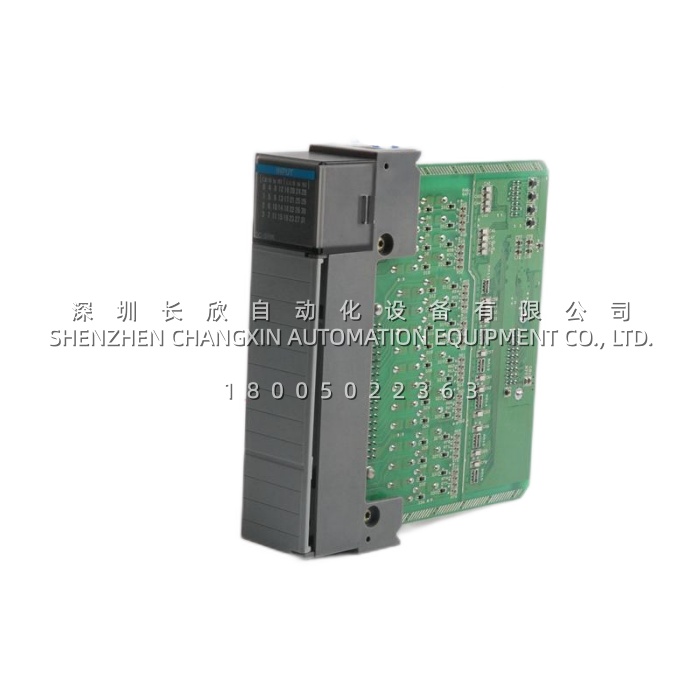
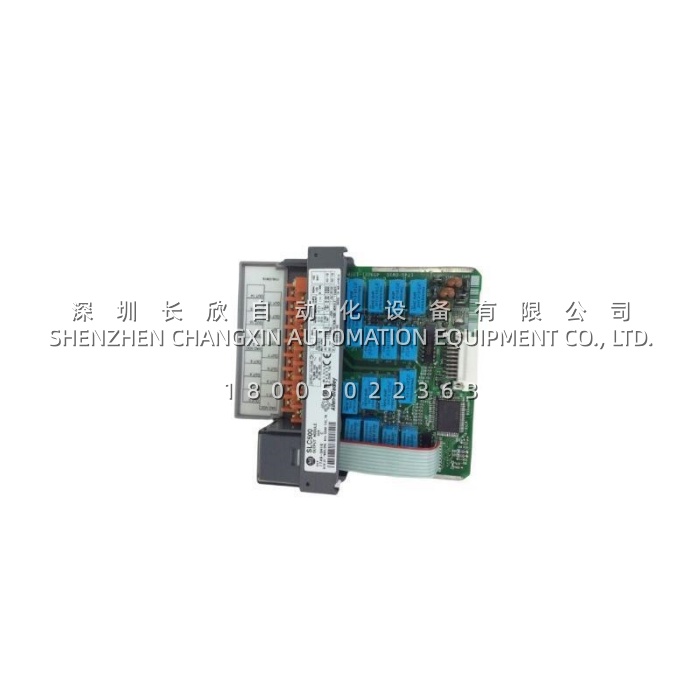
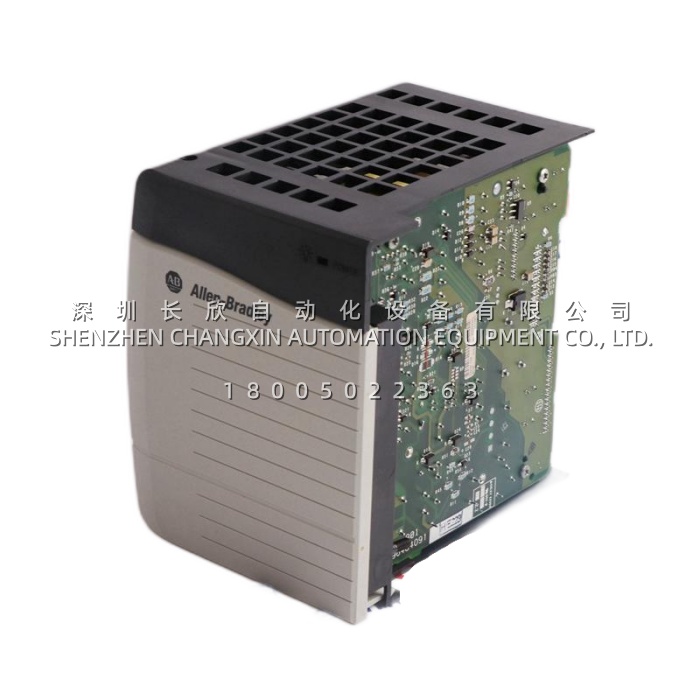
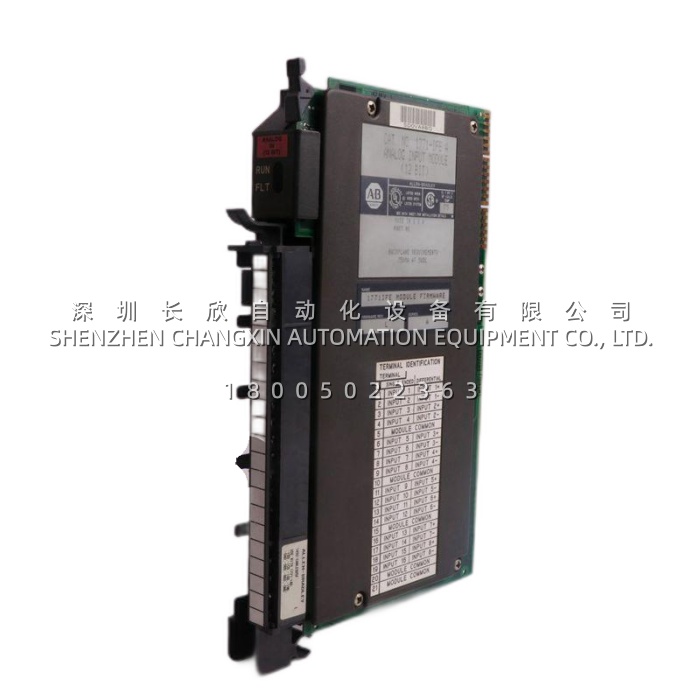
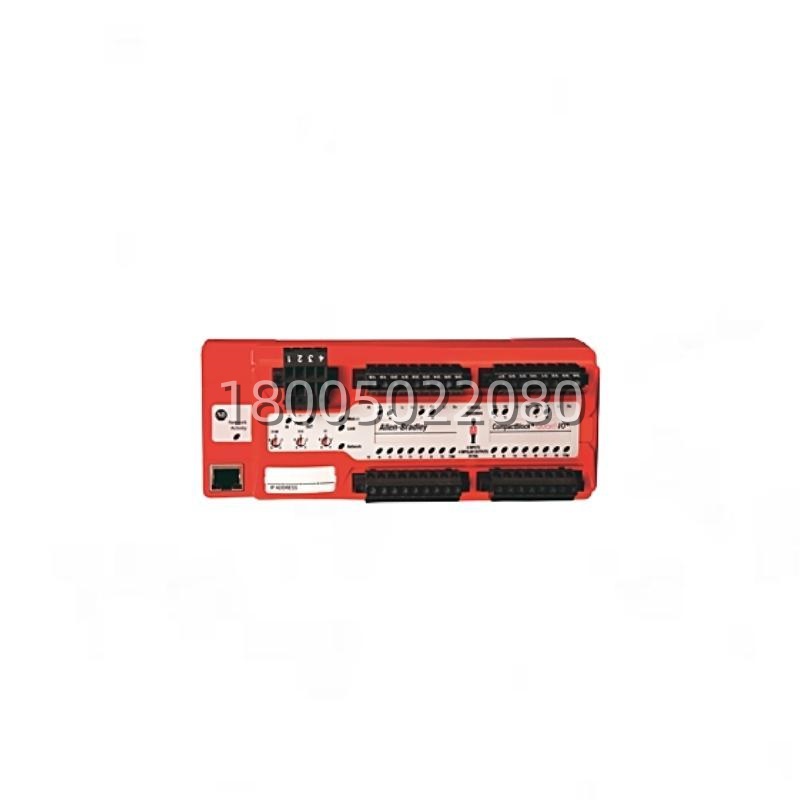
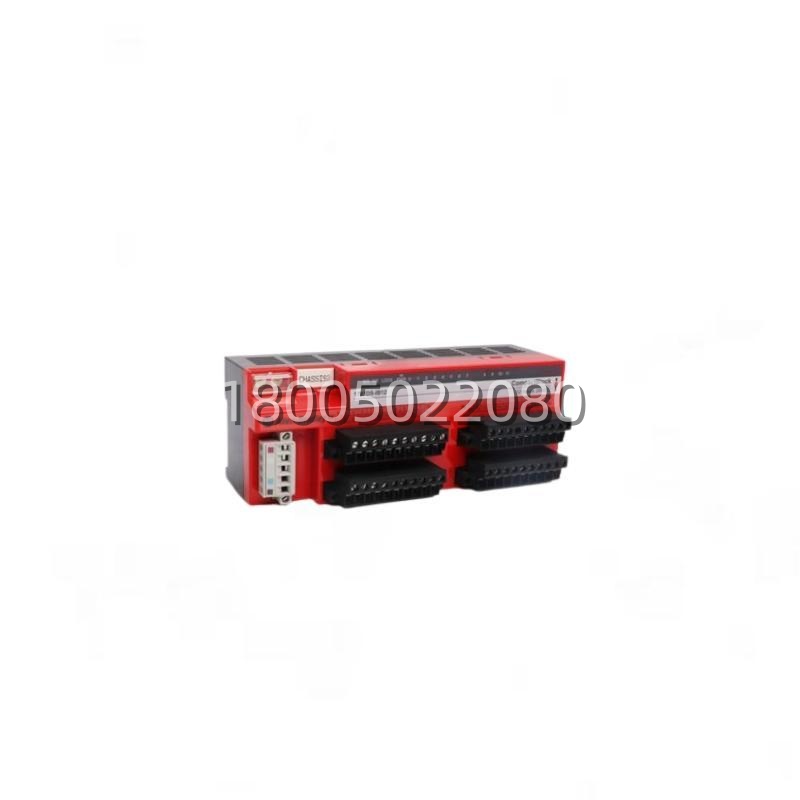
The Allen-Bradley 1791DS-IB12 (Series A) is a 12-point 24 V DC safety input module in Rockwell Automation’s Guard I/O family, designed to bring CIP Safety over DeviceNet to distributed machine-guard applications without stepping up to the larger POINT Guard or FLEX Ex I/O form factors. Part of the 1791 “CompactBlock” Guard I/O line, the 1791DS-IB12 packages twelve safety-rated 24 V DC inputs (sink/source configurable) plus twelve internally paired test-pulse outputs that drive the test-pulse return from OSSD-based safety devices—light curtains, safety laser scanners, safety mats, enabling devices, and emergency-stop strings—allowing the module to validate not just “input closed” but “the OSSD pulse train is intact,” which is the core of SIL 3 / PLe compliance on a DeviceNet safety validator connection. The module communicates natively via CIP Safety on DeviceNet (the “DS” suffix denotes DeviceNet Safety), presenting its twelve safety inputs as validated safety tags to a GuardLogix 5570/5580 controller (or a 1752 SmartGuard 1788-EN2DN gateway) over a DeviceNet Safety validator that runs at the DeviceNet 125 kbps / 250 kbps / 500 kbps data rate, with the safety traffic isolated from standard DeviceNet messaging by the CIP Safety protocol layer.Physically, the 1791DS-IB12 follows the 1791 CompactBlock footprint—approximately 46.5 mm (1.83 in) wide by 109 mm (4.29 in) high by 84 mm (3.31 in) deep—making it narrow enough to tuck beside a CompactLogix 1769 rack, a 1756 ControlLogix panel, or directly onto a machine-frame DIN rail near the guard devices themselves, cutting down on long home-run safety-wire runs back to a central safety relay bank. Wiring options are flexible: the base unit offers a removable terminal-block version, and the same 1791DS-IB12 logic core can mount to an IP67 M12-connectorized base (1791DS-IB12TR / -IB12M12 variants in the family) for wash-down or hose-down machines—food & bev, packaging, pharma—where the panel lives outside the cabinet. The module draws its 24 V DC load power and 5 V DeviceNet bus power from the DeviceNet trunk (standard 5-pin Phoenix or M12 D-coded, depending on base), with a typical 1.5 A @ 5 V DeviceNet load, and is rated SIL 3 per IEC 61508, PLe per ISO 13849-1, and Category 4 under the machinery directive when configured per Rockwell’s validation guidelines. From a system-architect view, the 1791DS-IB12 is the “distributed safety-input concentrator” of choice when a GuardLogix already owns the safety logic centrally but the guard devices (light curtains on three packaging machines, E-stops on five conveyor zones, mats under two palletizers) are scattered such that home-running 12-core cable to a central 1756-IB16S in the MCC room is cost-prohibitive—put a 1791DS-IB12 at each machine, land the guard devices locally, and the DeviceNet Safety trunk carries validated safety status back to the GuardLogix with sub-20 ms reaction when properly configured.
Technical Specifications
| Parameter Name | Parameter Value |
|---|---|
| Product Model | 1791DS-IB12 (Series A) |
| Manufacturer | Rockwell Automation (Allen-Bradley) |
| Product Type | Guard I/O 12-Point 24 V DC Safety Input Module (DeviceNet CIP Safety) |
| Platform | Guard I/O / CompactBlock, DeviceNet Safety (CIP Safety on DeviceNet) |
| Number of Safety Inputs | 12 × 24 V DC (sink/source configurable, 1- or 2-channel wiring) |
| Test Pulse Outputs | 12 (paired internally to inputs, for OSSD feedback validation) |
| Input Voltage Range | 20.4–26.4 V DC (24 V DC nominal) |
| Input Current | ~3 mA per point @ 24 V DC typical |
| Safety Rating | SIL 3 (IEC 61508), PLe / Cat 4 (ISO 13849-1) |
| DeviceNet Data Rates | 125 / 250 / 500 kbps (auto-negotiate) |
| DeviceNet Power Draw | 1.5 A @ 5 V DC (typical from DeviceNet trunk) |
| DeviceNet Connector | 5-pin Phoenix (base dependent) or M12 D-coded (IP67 base variant) |
| Response Time | Sub-20 ms end-to-end (GuardLogix + DeviceNet Safety, typical) |
| Dimensions (W × H × D) | ~46.5 × 109 × 84 mm (1.83 × 4.29 × 3.31 in) |
| Mounting | 35 mm DIN rail (CompactBlock base) or panel; IP67 M12 base optional |
| Certifications | CE, cULus, TÜV SIL 3, ATEX/IECEx (cabinet-mount base), EMC Directive |
Main Features and Advantages
12 safety inputs with paired test-pulse outputs for OSSD validation. The core differentiator of the 1791DS-IB12 versus a standard 1791-IB12 (non-safety) or a generic 24 V DC input card is the test-pulse architecture. Each safety input has an internally paired test-pulse output that drives a low-duty-cycle pulse back to the OSSD source—light curtain, safety scanner, safety mat amplifier—so the 1791DS-IB12 can distinguish “contact closed because the guard is intact” from “contact closed because the OSSD shorted high.” Without test-pulse, a shorted OSSD looks like “safe” to a dumb input; with the 1791DS-IB12, the missing pulse train trips a safety-fault and forces the channel into a safe state. This is the mechanism that earns the module its SIL 3 / PLe rating when wired 2-channel (input + test-pulse return per device) and validated through the DeviceNet Safety connection.CIP Safety over DeviceNet — no separate safety network. The 1791DS-IB12 rides the same DeviceNet trunk that carries standard I/O, VFDs, and HMI nodes, but its safety tags are wrapped in CIP Safety packets with sequence-numbering and CRC that the DeviceNet Safety validator (in GuardLogix or 1752 SmartGuard) checks every scan. This means plants that already have DeviceNet for standard I/O (very common on 1990s–2010s CompactLogix/ControlLogix installs) don’t need to run a second Profisafe or CIP Safety over EtherNet/IP ring just to get distributed safety—the 1791DS-IB12 reuses the existing DN trunk. The trade-off is DeviceNet’s 500 kbps ceiling and limited node count, but for machine-level guard circuits (light curtain at the wrapper, E-stop at the palletizer, mat at the press) that’s plenty.CompactBlock 46.5 mm width conserves DIN real estate. At under 47 mm wide, the 1791DS-IB12 is narrower than a standard 1769 card (35 mm per slot but you need the rack) and way narrower than a 1756 GuardLogix local SIL module + its partner 1756 chassis slot. For OEM machines where the electrical enclosure is size-constrained—think packaging OEM skid, tabletop test stand, small press—the 1791DS-IB12 delivers 12 safety inputs in less horizontal DIN than two 1769 cards side-by-side. Pair it with a 1791DS-OB8 (8-point safety output sibling) and a small DeviceNet trunk drop, and a complete distributed safety node fits in a 200 mm wide micro-cabinet.Rockwell-native integration with GuardLogix and Studio 5000. The 1791DS-IB12 auto-discovers in Studio 5000 as a CIP Safety device when the EDS is loaded; its 12 safety inputs map into the GuardLogix Safety Task’s input image, and the test-pulse configuration (pulse width, polarity, channel-pair cross-check) is done through the module’s safety properties page—no ladder logic needed to manage the pulse. FactoryTalk Asset Centre sees the 1791DS-IB12 as a first-class node, pulling serial number, firmware rev, and safety-validation status. For plants standardized on Rockwell, this is the selling point over a third-party Pilz or SICK distributed safety node that would need a profibus/profinet gateway and a separate safety-config tool.Flexible wiring: terminal block or IP67 M12 base. The 1791DS-IB12 logic module itself clicks onto a base selected per application. The standard base is a removable screw-terminal block (finger-safe, 1791-xx style) for cabinet DIN mounting. For wash-down or high-pressure-clean machines (food & bev, pharma fillers), the same 1791DS-IB12 core clicks onto an IP67 M12-connectorized base (the -M12 / -TR variants in the 1791DS family) mounted outside the cabinet on the machine frame, with M12 D-coded DeviceNet in/out and M12 or 7/8″ power, so the safety inputs land right at the light curtain without a panel penetration. The module electronics are the same; only the base changes—spare logic modules interchange.