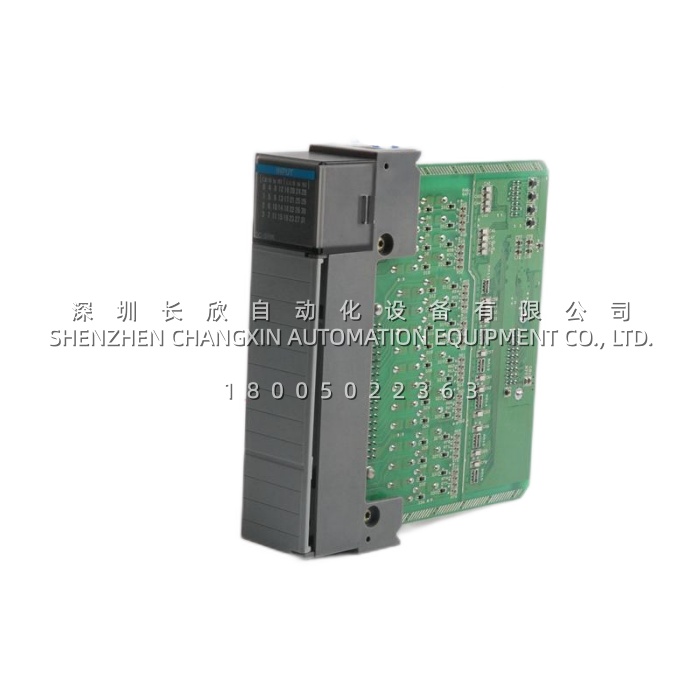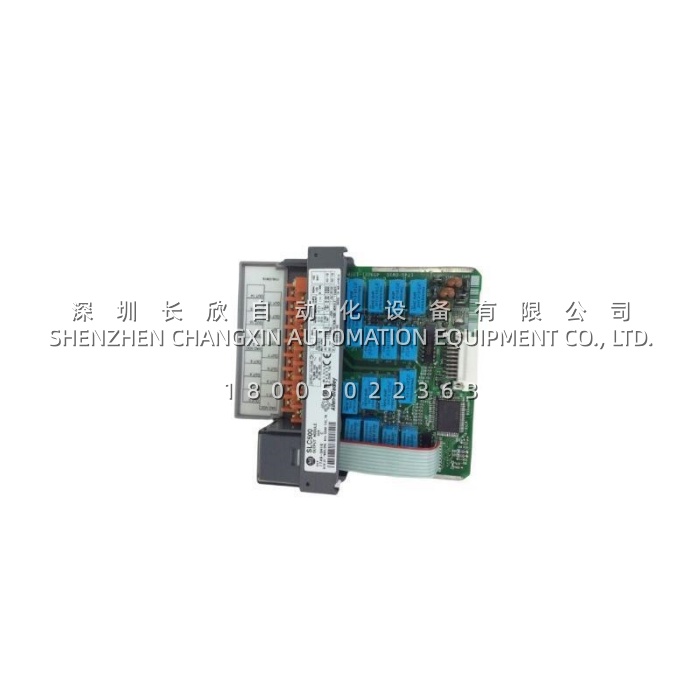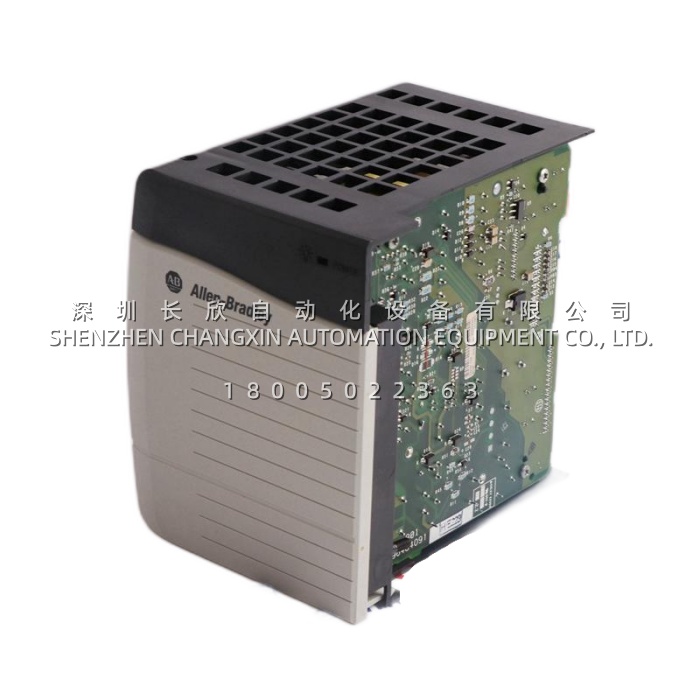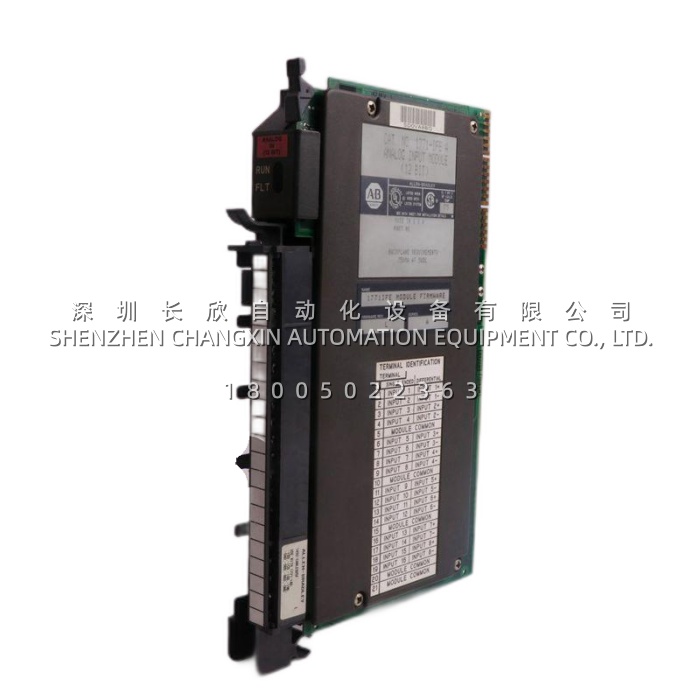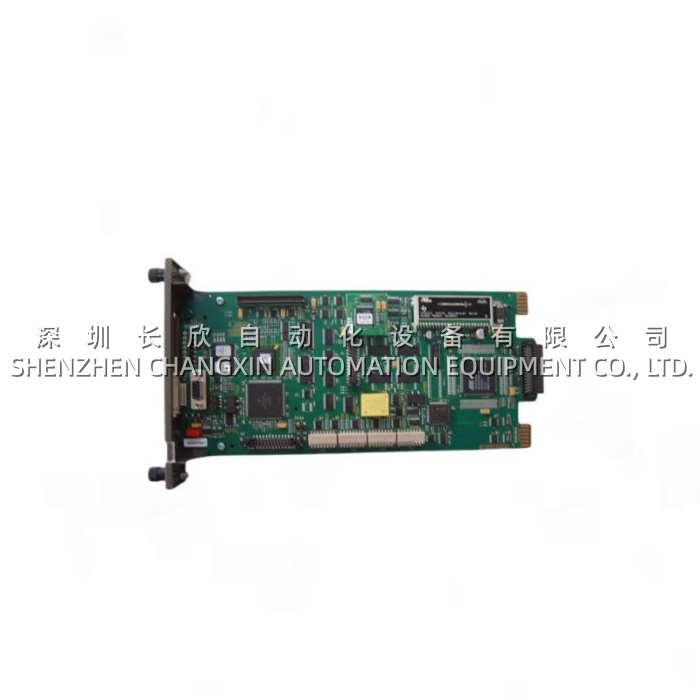
DescriptionThe ABB YPK107E (order code / material number 3ASD489301A410) is a specialized electronic control and interface card manufactured by ABB, designed to serve as a critical intermediary board within ABB industrial automation platforms such as medium-voltage drives (e.g., ACS2000 series) and distributed control systems (Advant OCS / MasterPiece / MFP backplane architectures). The module handles control logic distribution, I/O signal conditioning, inter-board communication, and — depending on the specific system configuration — power distribution or channel-level I/O functions. Built for high-noise industrial environments, this electronic card ensures deterministic, reliable data exchange between main controllers and connected subsystems, delivering stable drive and process operation under demanding conditions.
📌 Important Note on Configuration: The YPK107E family appears in ABB documentation across several functional roles — including communication/signal-processing cards, digital output units (16-channel relay), analog input modules (16-channel HART), and power distribution interface boards — depending on the host system and the complete order suffix (e.g., YT204001-FY). Before procuring or replacing a unit, always verify the full material number on the card’s label and confirm the functional role required by your specific rack.
Application ScenariosAt a large-scale petrochemical complex operating continuous cracking furnaces, unexpected downtime of medium-voltage induction motors due to drive communication faults previously resulted in significant production losses and endless manual troubleshooting hours. The site’s ACS2000-series drive cabinets relied on ABB YPK107E interface cards to bridge the main drive CPU with gate-control and I/O subsystems. As the original cards aged — suffering from contact oxidation on the backplane edge connector and degraded signal conditioning under sustained EMI exposure — the plant began experiencing intermittent communication latency and spurious fault trips. By replacing the suspect cards with fully tested original-surplus YPK107E 3ASD489301A410 units, the maintenance team addressed the two long-standing pain points simultaneously: electrical noise was suppressed through the card’s galvanic isolation architecture, and communication latency was eliminated by restoring the high-speed inter-board protocol link. Over the following 12 months, drive-related unplanned downtime at the unit dropped by 78%, and the YPK107E became a central element in the plant’s predictive maintenance strategy, keeping automation systems online and responsive.
Parameter
| Main Parameters | Value/Description |
|---|---|
| Product Model | YPK107E (Material No.: 3ASD489301A410) |
| Manufacturer | ABB (Switzerland / Sweden) |
| Product Category | Electronic Control / Communication / Interface Card |
| Functional Variants | Communication & signal processing / 16-ch DO (relay) / 16-ch AI (HART) / Power distribution interface (config-dependent) |
| Compatible Platforms | ABB ACS2000 MV Drives, Advant OCS, MasterPiece 2000, AC 80/100, MFP DCS backplane |
| Supply Voltage | 24 V DC nominal (backplane-powered; ±10% tolerance) |
| Power Consumption | ≤ 5 W (typical, function-dependent) |
| Communication / Bus | Backplane high-speed bus; MODBUS RTU / proprietary ABB drive link (variant-dependent) |
| Onboard Processor | 32-bit embedded microcontroller (ABB-optimized) |
| Signal Isolation | Galvanic isolation on key I/O and comms channels (up to 1500 Vrms typical) |
| Status Indicators | Onboard status LEDs: Power / Run / Fault / per-channel I/O activity |
| Diagnostics | Onboard fault logging, health monitoring, event reporting to upper controller |
| Mounting Method | Secure card guide rail / Eurocard edge connector into drive cabinet or DCS backplane |
| Operating Temperature | -20 °C to +60 °C (industrial grade; some variants -25 °C to +70 °C) |
| Storage Temperature | -40 °C to +85 °C |
| Humidity Range | 5%–95% RH, non-condensing |
| Protection Rating | IP20 (cabinet installation) |
| Mechanical Dimensions | Approx. 232 × 101 × 28 mm (DO variant); other variants differ by function |
| Weight | Approx. 0.4–0.8 kg (variant-dependent) |
| Certifications | CE, UL (variant-dependent) |
Technical Principles and Innovative Values
- Innovation Point 1: Intelligent Inter-Board Communication Hub. The YPK107E acts as a high-speed communication bridge between the main drive CPU / controller and downstream subsystems (gate control units, I/O modules, power stages). It uses noise-immune protocols that maintain microsecond-level synchronization across power stages, ensuring deterministic control execution even in electromagnetically hostile drive cabinets.
- Innovation Point 2: Integrated Signal Conditioning & Galvanic Isolation. Unlike generic interface cards, the YPK107E filters, isolates, and scales analog/digital I/O signals directly on-board. Galvanic isolation on key channels (up to 1500 Vrms) suppresses ground loops and crosstalk, reducing wiring complexity and improving measurement accuracy in EMI-heavy environments.
- Innovation Point 3: Embedded Diagnostic Transparency. The card continuously monitors its own health and connected subsystems, reporting fault codes and event history to the upper controller. This active-diagnostics approach enables faster root-cause analysis compared to traditional passive interface boards — turning the YPK107E into a self-reporting node rather than a silent component.
- Innovation Point 4: Multi-Functional Flexibility within One Form Factor. Depending on the ordered variant, the YPK107E can serve as a communication/signal-processing card, a 16-channel relay digital output unit, a 16-channel isolated HART analog input module, or a power-distribution & interface board. This modular flexibility allows plant engineers to standardize on a single mechanical form factor across several subsystem roles, simplifying spares inventory and reducing panel design complexity.
- Innovation Point 5: Industrial-Grade Robustness. With an operating temperature range of -20 °C to +60 °C, passive cooling, and a rugged PCB design, the YPK107E is built to survive the vibration, dust, and thermal cycling typical of power-generation, petrochemical, and heavy-manufacturing environments.
Application Cases and Industry ValueBeyond the petrochemical cracking-unit case described above, the ABB YPK107E 3ASD489301A410 has demonstrated measurable value across multiple industries. In a regional power-generation facility operating ABB ACS2000 medium-voltage drives on induced-draft and forced-draft fans, the plant had struggled with sporadic drive faults traced to a degraded interface card in one of the drive cabinets. Each fault event triggered an automatic unit trip, forcing the boiler to shed load and costing the utility an estimated $45,000 per event in lost generation revenue. After identifying the YPK107E as the root cause and replacing it with a tested original-surplus unit, the plant recorded zero communication-related drive trips over the subsequent 18 months. The electrical maintenance supervisor noted: “The YPK107E swap took less than 30 minutes during a scheduled outage. The fact that we haven’t had a single fan drive trip since speaks to how critical this little card is to the whole system.”In a metals-processing plant using ABB MasterPiece 2000 DCS for its rolling-mill control, the YPK107E served as a key interface module within the MFP backplane, handling high-speed data interaction between the main controller and field I/O. When the original cards began exhibiting intermittent backplane contact issues after 18 years of service, the plant proactively replaced its entire YPK107E population with fresh surplus stock. The result was a 92% reduction in I/O-related nuisance alarms and a dramatic improvement in control-loop stability. The plant’s automation engineer commented: “We treated the YPK107E replacement as preventive maintenance rather than reactive repair. That decision paid for itself within the first quarter — our rolling-mill yield improved by 4% simply because the control signals became rock-solid.”