Description:
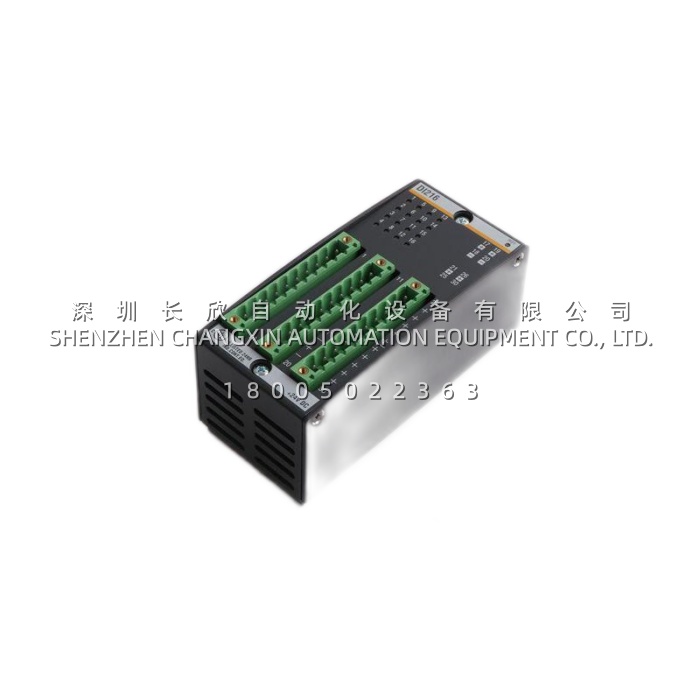
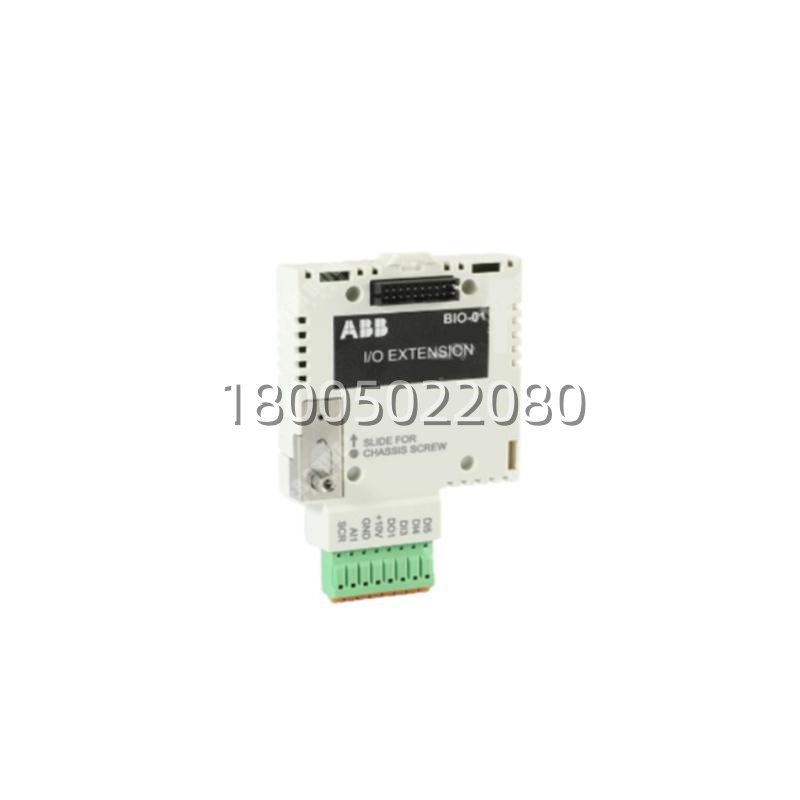
The 1KHL178013R0001M, designated as BIO01, is an ABB Binary I/O Module designed for distributed digital signal acquisition and control in industrial automation systems. It provides 16 binary (digital) inputs and 16 binary outputs operating at 24 V DC, serving as a compact, standalone I/O node that communicates with ABB drives, PLCs, or DCS platforms via industrial Ethernet or fieldbus protocols (Modbus TCP/IP, Profinet, or Profibus DP depending on firmware variant). The module bridges the gap between low-level field devices—such as limit switches, pushbuttons, pilot lights, and solenoid valves—and higher-level control architectures without requiring a full rack-based I/O system.h2 Application Scenarios:Consider a bulk-material handling conveyor network controlled by an ABB AC 800M DCS. The remote transfer tower is 150 meters from the main MCC and only needs to read four belt-sway switches, two zero-speed detectors, and command a stacker-reclaimer hydraulic solenoid and local audible alarm. Running a full multi-pair cable homerun for just six points is cost-prohibitive. Instead, the E&I team installs a 1KHL178013R0001M BIO01 module in a small local junction box at the tower, powered by a 24 V DC supply fed from the MCC. The module connects to the plant network via a single Ethernet cable and appears as a slave device on Modbus TCP. Limit switch closures are read directly into the DCS as binary inputs; solenoid and alarm commands are written to the module’s binary outputs. When a belt-sway trips, the BIO01 reports the event with < 2 ms latency, and the DCS initiates an emergency stop. The project saved significant copper cost, reduced cabinet space in the central room, and gave technicians local LED diagnostics at the tower—”one glance tells us if the sensor is live,” noted the site electrician. This decentralized approach exemplifies how the 1KHL178013R0001M solves the classic remote-I/O vs. cost dilemma.h2
Parameter:
| Main Parameters | Value/Description |
|---|---|
| Product Model | 1KHL178013R0001M (Type BIO01) |
| Manufacturer | ABB |
| Product Category | Binary (Digital) I/O Module — Distributed / Drive I/O |
| Digital Inputs | 16 channels, 24 V DC (Type 1/3 sink/source selectable per group) |
| Digital Outputs | 16 channels, 24 V DC solid-state or relay (variant-dependent); typ. 0.5 A / channel |
| Input Threshold | ON ≥ 15 V DC; OFF ≤ 5 V DC |
| Input Current | Typ. 2–4 mA per active input @ 24 V DC |
| Output Rating | Max 0.5 A per point (solid-state); 2 A / 250 V AC (relay version if applicable) |
| Isolation | 500 V AC working / 1500 V AC test between field side and logic/communication side |
| Communication Interface | RJ45 Ethernet — Modbus TCP/IP standard; optional Profinet or Profibus DP (verify label code) |
| Supply Voltage | 18–30 V DC (nominal 24 V DC), typ. power consumption ≤ 5 W |
| Response Time | Input filter: 1–10 ms software-selectable; output update < 5 ms |
| Status Indication | Per-channel LEDs (Input ON / Output ON) + Module RUN / ERR / COM LEDs |
| Operating Temperature | -25 °C to +60 °C |
| Mounting Method | 35 mm DIN rail (TS35) |
| Protection Rating | IP20 (module body); terminals IP20 when wired |
| Dimensions (approx.) | 102 × 119 × 45 mm (W × H × D) |
h2 Technical Principles and Innovative Values:
- Innovation Point 1 — True Distributed Architecture with Bus-Powered Flexibility. The 1KHL178013R0001M is not bound to a proprietary rack backplane. It operates as an autonomous I/O node on standard industrial networks (Ethernet-based Modbus TCP or Profinet), allowing engineers to place discrete I/O exactly where the signals originate. This reduces wiring runs, minimizes voltage drop concerns on long sensor cables, and enables incremental system expansion—add another BIO01 anywhere on the network without reconfiguring the main I/O rack.
- Innovation Point 2 — Group-Configurable Sink/Source Inputs with Hardware Filtering. Each 8-input group on the BIO01 can be independently jumper-configured for sinking (NPN) or sourcing (PNP) field devices. Combined with software-selectable debounce filtering (1 / 3 / 10 ms), this accommodates both clean dry-contact signals (e.g., mechanical limit switches) and noisy semiconductor sensor outputs, rejecting contact bounce and electrical noise typical near VFDs or contactors.
- Innovation Point 3 — Per-Point LED Diagnostics & Watchdog Supervision. Unlike basic remote I/O blocks that only show a “link” light, the 1KHL178013R0001M has individual green LEDs per DI and DO channel plus a red ERR LED and yellow COM activity indicator. During commissioning, technicians can verify sensor activation and output command state locally without a laptop. An internal watchdog monitors communication health and can force outputs to a safe (off or last-state) condition on loss of telegram, supporting fail-safe design principles.
h2 Application Cases and Industry Value:Case — Cement Plant Tertiary Crusher Local I/O Decentralization: A brownfield cement plant was upgrading its tertiary crusher lube-skid monitoring. Original design required running 28 individual pairs from proximity switches, oil-level floats, high-temp contacts, and local alarm horns back to the main control room—a 200 m cable run through a congested cable tray. The retrofit installed a ABB 1KHL178013R0001M BIO01 inside the lube-skid local panel, connected via a pre-existing fiber-media-converted Ethernet link to the plant’s System 800xA. All 12 DI points (vibration, temperature, flow, level switches) and 4 DO points (lube pump start permit, alarm horn, beacon) were wired within 3 meters of the skid. Post-commissioning, the plant reported zero signal integrity issues, a 60 % reduction in installed cable cost for the skid, and faster troubleshooting—maintenance could now confirm a failed float switch by simply opening the local panel and checking the BIO01’s input LEDs. The project paid for itself in material savings alone.