Product Overview
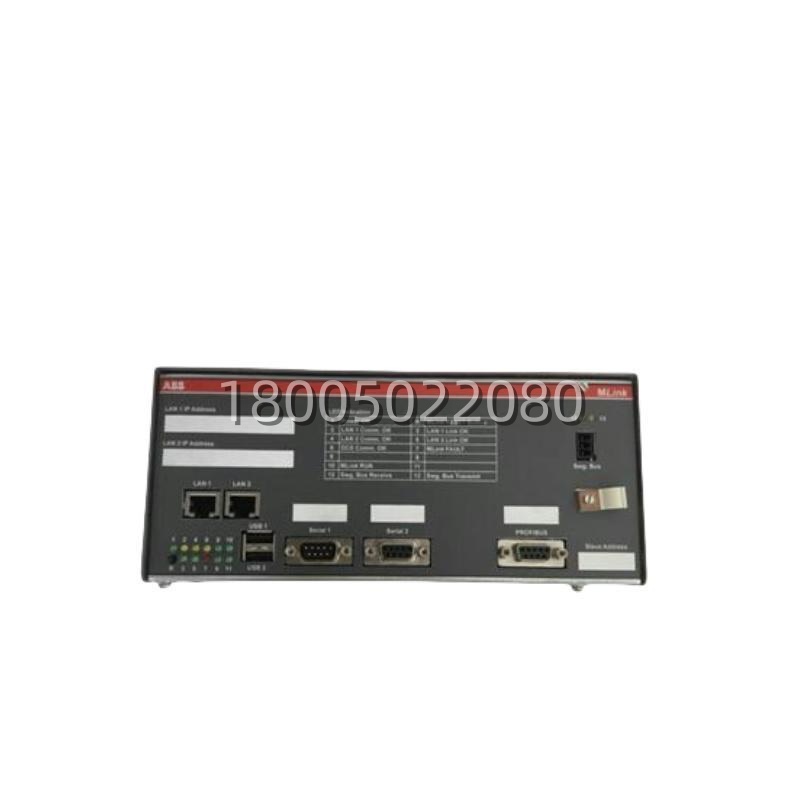
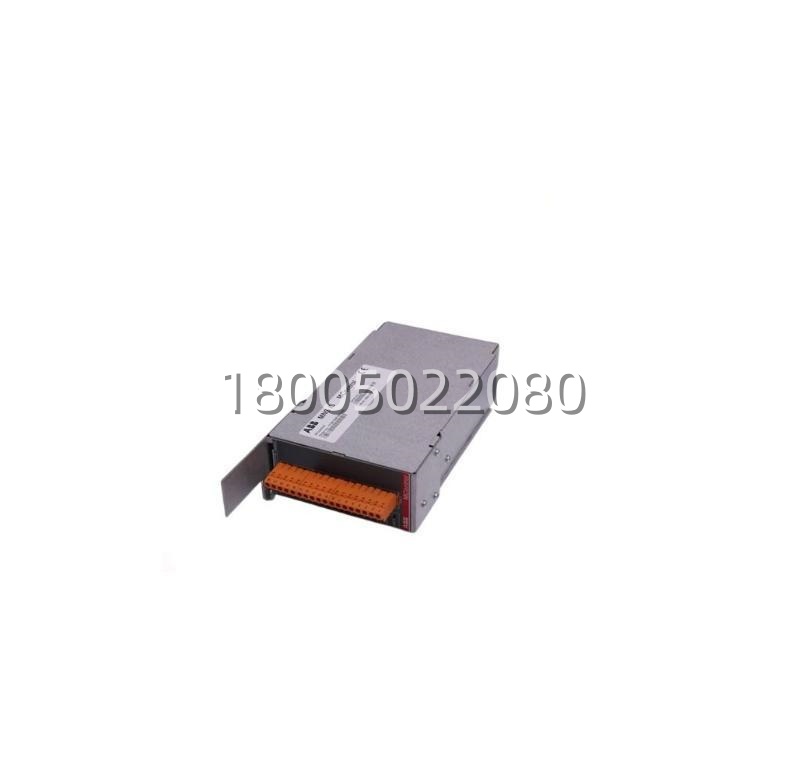
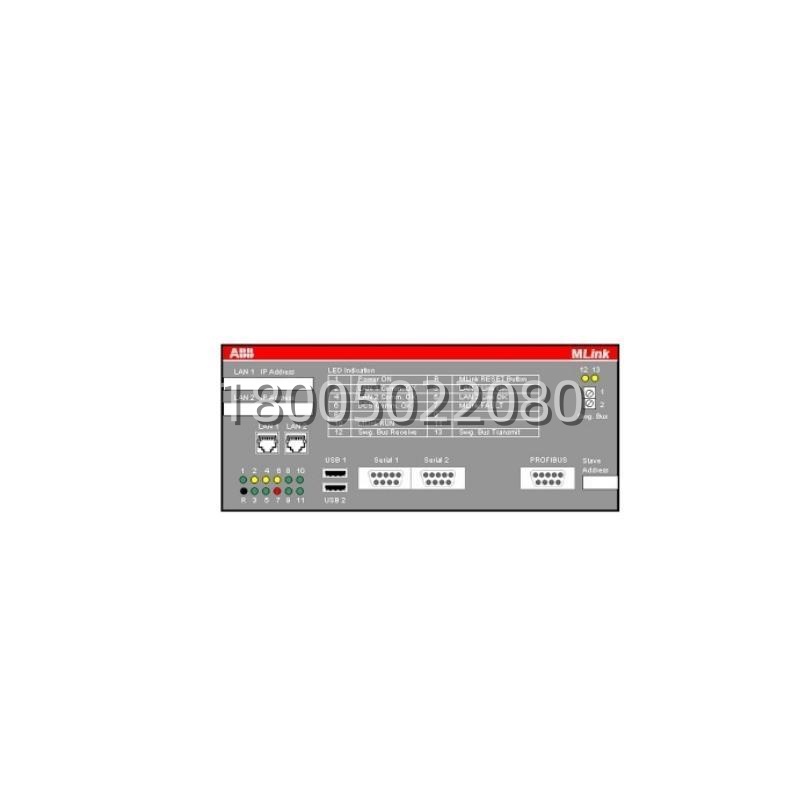
The ABB 1TGE102009R1001 is an interface (communication gateway) module purpose-built for ABB’s MNS iS series of intelligent low-voltage switchgear — the “translator” that sits between the MNS drawer-internal mLINK private bus (hung with ABB Ekip electronic trip units on Emax 2 / Tmax / Formula breakers, contactor status modules, and motor controllers) and the upstream industrial network, where it speaks Profibus DP and Modbus RTU / TCP (build-dependent) to the plant PLC, BMS, or SCADA. In plain terms: the 1TGE102009R1001 lets a data-center LV lineup, a hospital main-distribution switchboard, or a petrochemical MCC room’s MNS iS cabinets dump breaker-alarm, trip-current, contactor-state, and energy data to the control room without a pile of auxiliary wiring and separate protocol gateways.Physically the ABB 1TGE102009R1001 appears in two form-factor flavors under the same catalog number: a compact PCB/module build (~35 × 90 × 65 mm, ~0.2–0.5 kg) that plugs onto the MNS drawer’s rear rail, and a fuller MNS-drawer assembly version (~139 × 68 × 139 mm, up to ~1.0 kg) that includes the housing and front-facing ports. Both share the same 24 V DC control supply (drawn from the MNS control busbar or an external 24 V DC PSU in the switchboard), the same -25°C to +70°C operating envelope, and the same IP20 (cabinet-interior) rating. Power draw varies by build: ≤ 5 W for the basic RS-485/Modbus builds, up to ≤ 12–15 W for the Ethernet/Profibus-full-feature builds. Communication-side, the ABB 1TGE102009R1001 handles up to 247 Modbus slaves (RTU addressing) or 126 Profibus DP slaves, baud up to 115.2 kbps on RS-485, and 100 Mbps on the Ethernet-enabled variants. LED status indicators on the faceplate show power, MLink-bus activity, and Profibus/Modbus link health — stand at the switchboard instrument-compartment door and you know whether the gateway is talking before you open a laptop.For maintenance and facility engineers running MNS iS lineups — data-center LVPD, hospital main-distro, airport terminal boards, continuous-process MCC rooms — the ABB 1TGE102009R1001 is the hot-swappable spare: the MNS rear-rail design lets you extract and re-insert the module without de-energizing the MNS bus segment (the upstream SCADA sees a station-drop alarm, the replacement 1TGE102009R1001 auto-reconnects, no reloading of parameters needed). That “no-power-cut swap” is the single biggest selling point in 24/7/365 facilities, and it’s why the ABB 1TGE102009R1001 gets specified in hospitals, semiconductor fabs, and Tier-IV data centers where “breaker-comms down for 20 minutes” is still a write-up.
Technical Specifications
| Parameter | Value |
|---|---|
| Product Model | 1TGE102009R1001 |
| Manufacturer | ABB |
| Product Type | Interface Module / mLINK Communication Gateway (MNS iS) |
| Host System | ABB MNS / MNS iS intelligent LV switchgear |
| Supply Voltage | 24 V DC (MNS control busbar or external PSU) |
| Power Consumption | ≤ 5 W (basic RS-485) to ≤ 12–15 W (Ethernet/Profibus build) |
| Downlink Bus | ABB mLINK (private, to Ekip trip units, contactors, motor controllers) |
| Uplink Interfaces | RS-485 (Modbus RTU/ASCII), Profibus DP; Ethernet (100 Mbps, Modbus TCP on enabled builds) |
| Protocols | Modbus RTU, Modbus ASCII, Modbus TCP (build-dep.), Profibus DP (requires GSD) |
| Max Slave Address | 247 (Modbus) / 126 (Profibus) |
| Baud Rate (RS-485) | 1,200 – 115,200 bps |
| Operating Temperature | -25°C to +70°C |
| Storage Temperature | -40°C to +85°C |
| Humidity | 5%–95% RH, non-condensing |
| Mounting | MNS drawer rear rail (plug-in); also DIN/panel on standalone builds |
| Dimensions (compact) | ~35 × 90 × 65 mm (W×H×D, module only) |
| Dimensions (drawer assy) | ~139 × 68 × 139 mm (W×H×D, housed) |
| Weight | ~0.2–0.5 kg (module) / up to ~1.0 kg (assy) |
| Protection Class | IP20 (within switchboard) |
| Hot-Pluggable | Yes (MNS bus-segment live swap) |
| Certifications | CE (per batch; MNS iS system-level compliance) |
Main Features and Advantages
mLINK ↔ Profibus/Modbus gateway in one MNS-native module: The core value of the ABB 1TGE102009R1001 is that it eliminates the “protocol-gateway sprawl” that plagues intelligent LV switchgear retrofits. Without it, you’d need an MLink-to-Profibus gateway box, a separate Modbus bridge, possibly a 24 V PSU for each, and a terminal strip to land them — all external to the MNS drawer. The 1TGE102009R1001 slides onto the MNS rear rail, pulls 24 V DC from the same MNS control busbar that feeds the Ekip trip units, and presents every breaker’s trip-alarm, overcurrent record, contactor state, and energy register as Profibus DP slave data or Modbus registers to the PLC/SCADA. One module, one spare SKU, zero extra panel space.Deep Ekip ecosystem integration, zero extra wiring: ABB’s Ekip electronic trip platforms (Emax 2, Tmax, Formula, LineGuard, MNS Motor Manager) speak mLINK natively. The ABB 1TGE102009R1001 polls them over the drawer-internal MLink without a single additional wire — current magnitude, trip class, alarm bitmap, energy (kWh/kVARh), and device health all land on the upstream bus automatically. For a data-center LVPD with 40+ Emax 2 frames per lineup, that’s 40 fewer terminal-block runs and 40 fewer points of failure compared to a hardwired-alarm retrofit.Hot-swappable on live MNS bus — the 24/7 facility feature: The MNS rear-rail mechanical design lets the 1TGE102009R1001 be extracted and re-inserted while the MNS control-bus segment remains energized. The upstream SCADA logs a station-drop alarm; the replacement module auto-reconnects (mLINK discovery + Profibus/Modbus re-poll) within seconds; no reloading of parameters, no reboot of the MNS bus controller. For data centers, hospitals, airport terminals, semiconductor fabs — anywhere “can’t trip the bus” is a policy — this is the feature that justifies stocking the ABB 1TGE102009R1001 as a hot-spare, not a “order-when-failed” item.Multi-protocol coverage for old-plant and new-plant: The 1TGE102009R1001 covers both legacy-plant (Profibus DP to Siemens PCS7 / ABB 800xA / Rockwell Logix over Profibus) and modern-plant (Modbus TCP to BMS, MQTT-bridge-ready architectures) in one SKU. Some builds add Ethernet 100 Mbps alongside RS-485; the module label stays 1TGE102009R1001, the firmware/build differentiates. That makes the spare-shelf conversation simple: “keep one R1001 per MNS iS lineup” — the protocol build can be checked from the label photo before dispatch.Industrial EMC for switchboard-real-estate: MNS iS cabinets sit next to VFDs, soft-starters, and utility-transformers in many plants — the EMI envelope is not gentle. The ABB 1TGE102009R1001 is built to industrial EMC levels (switchboard-grade, not office-IT), so the MLink-poll and the Profibus/Modbus uplink stay clean even when the adjacent VFD kicks a 4 kHz carrier. The -25°C cold-start rating also covers unconditioned electrical rooms (data-center chiller plants, Arctic utility buildings) where the switchboard sees winter shutdowns.LED diagnostics at the instrument-compartment door: Power, mLINK activity, and uplink-comm (Profibus/Modbus) LEDs on the 1TGE102009R1001 faceplate let a facilities electrician tell “24 V DC dead,” “mLINK bus broken (loose Ekip Com cable?),” or “Profibus GSD mismatch” without a laptop inside the live switchboard. In a hospital where the LV room is card-key access and the PLC guy is three buildings over, that saves the second walk — and possibly the second work-order.Form-factor flexibility: The same ABB 1TGE102009R1001 catalog number covers both the bare plug-on module (compact, ~35 mm depth, for MNS rear-rail only) and the housed drawer-assembly (139 mm footprint, front-accessible ports). For retrofit into an existing MNS iS drawer that already has the rear-rail footprint, the compact module is the swap; for a new MNS iS drawer build or a replacement where the housing also aged, the assembly version goes in. Both carry the same R1001 label — confirm the “module-only vs assembly” when ordering.