Application Scenarios
A chemical plant’s 355 kW extruder drive—an ABB ACS880-104—began experiencing repeated blowing of its 630 A input fuse on cold starts, accompanied by occasional welding of the SCR pre-charge contactor. Maintenance engineers used DriveWindow to trend the DC-bus ramp-up and observed an abnormally steep dV/dt during the first 200 milliseconds. The investigation traced the problem to the original pre-charge resistor, which had drifted in resistance due to age and repeated thermal stress . Replacing the faulty component with a new ABB 3AFE64803689 CBHX165C 5R 414 charging resistor restored the system to health. Post-replacement, the DC bus ramped smoothly to 540V DC over approximately 0.8 seconds, with inrush current effectively limited to a safe operating range. The plant has logged zero pre-charge faults or fuse failures in the subsequent 18 months. The plant’s E&I lead noted: “The 3AFE64803689 is a cheap part that prevents an expensive problem. We now include it on our 5-year PM spare-parts list for every ACS800/ACS880 drive above 132 kW” .
Parameters
| Main Parameters | Value/Description |
|---|---|
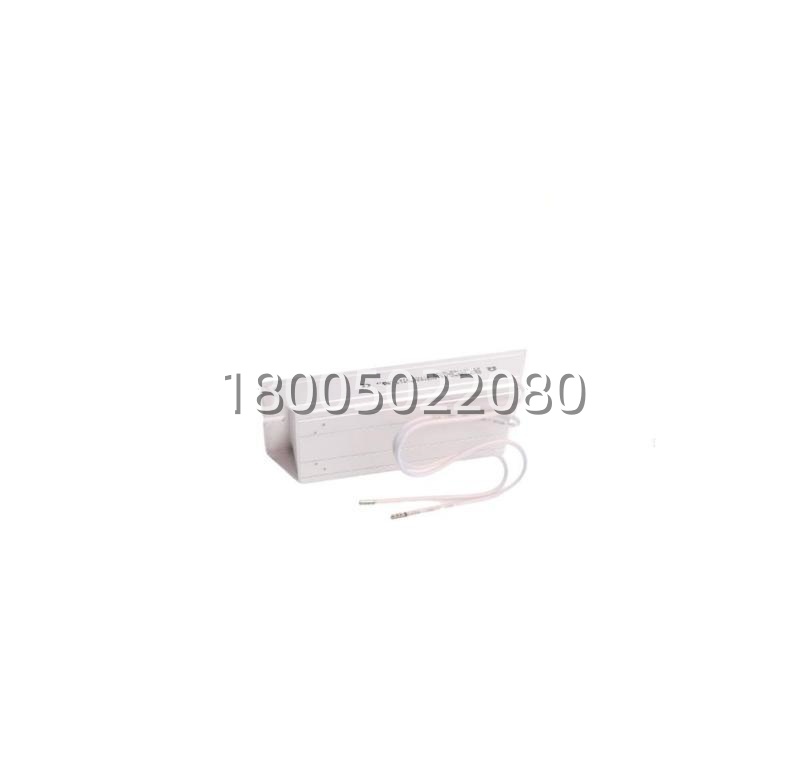
| Product Model | 3AFE64803689 (CBHX165C 5R 414) |
| Manufacturer | ABB |
| Product Category | DC-Link Pre-Charge / Inrush Limiting Resistor |
| Resistance Value | 5 Ω (±5% typical) |
| Power Rating (Pulse) | 414 W (short-duration pre-charge duty) |
| Voltage Class | 165 V DC nominal (model-dependent) |
| Construction | Aluminum-housed wirewound element |
| Mounting Type | Panel mount / chassis mount (M4/M5 bolts) |
| Dimensions | 16.5 cm x 6 cm x 3.2 cm |
| Weight | Approx. 0.4 – 0.54 kg |
| Operating Temperature | -25°C to +70°C (storage -40°C to +85°C) |
| Protection Rating | IP20 (cabinet installation) |
Technical Principles and Innovative Values
Innovation Point 1: Pre-Charge Circuit Protection
The core technical principle of the 3AFE64803689 lies in its role within the drive’s pre-charge circuit. When power is first applied to a drive, the large DC-link capacitors act almost as a short circuit. The charging resistor is temporarily placed in series with the rectifier to limit this initial surge current . Once the capacitors charge to approximately 85% of the nominal bus voltage, a contactor or thyristor bypasses the resistor, allowing full current to flow . The 3AFE64803689 is specifically sized (5Ω) for this transient duty, ensuring the inrush current is kept below the diode surge rating and preventing nuisance tripping of upstream MCCBs .
Innovation Point 2: Matched to Drive Time Constant
The resistance value of the 3AFE64803689 is carefully matched to the DC-link capacitance of its target drive frame. This ensures the pre-charge time constant (τ = R × C) is in the optimal range of 0.3 to 1.0 seconds. This timing is critical: the ramp-up must be slow enough to limit peak inrush current to <10-15% of the diode’s surge rating, yet fast enough that the bypass contactor closes before the resistor overheats . Using a non-approved resistor value risks either insufficient inrush limiting, which can blow fuses, or excessive pre-charge time, which can trigger “Pre-charge Fail” faults .
Innovation Point 3: High-Pulse-Energy Wirewound Element
The 3AFE64803689 utilizes a nickel-chromium (NiCr) wire wound on a ceramic former and housed in a finned aluminum case. This specific construction is designed to withstand the repeated, short-duration energy pulses (E = ½CV² per pre-charge cycle) without drifting in resistance or fracturing . Unlike carbon-composition resistors that degrade under similar pulsed loads, the wirewound design ensures thermal stability and long-term reliability, with a low temperature coefficient of ≤ ±50 ppm/°C .
Innovation Point 4: Direct Drop-In Replacement
As an ABB-qualified spare, the 3AFE64803689 is a direct form-fit-function replacement for the original component . The hole spacing, stud size, and resistance tolerance are identical to the factory-installed part, meaning no bracket modification, no series/parallel combination of generic resistors, and no re-engineering of the pre-charge circuit is required . This simplifies maintenance and ensures the system is restored to its exact original specifications.