Product Overview
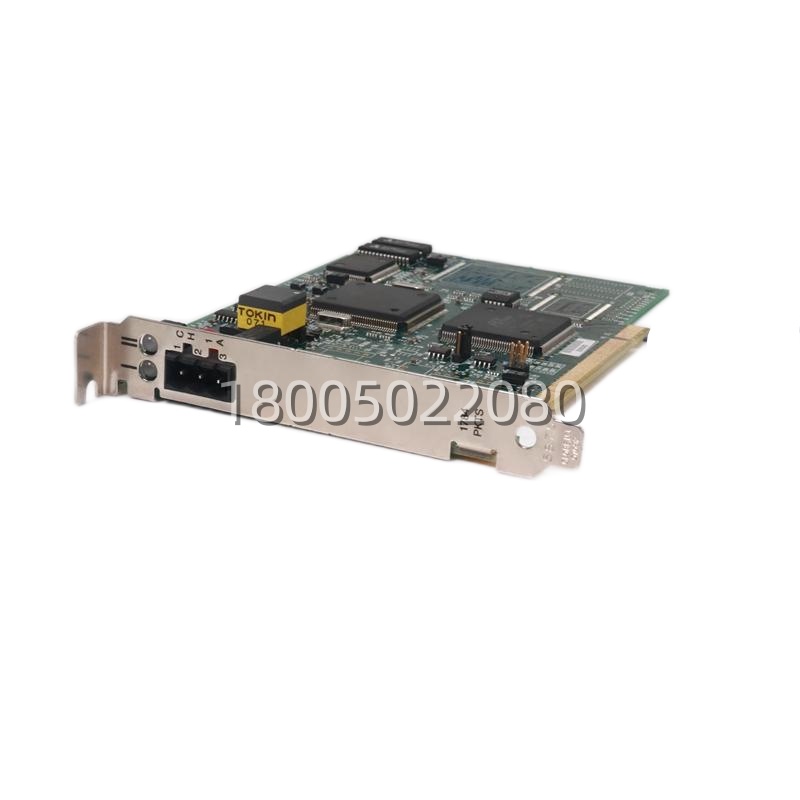
The Allen‑Bradley 1784‑PKTS is a high‑performance PCI bus industrial communication interface card engineered to enable standard industrial personal computers to function as Remote I/O (RIO) scanners on Allen‑Bradley Universal Remote I/O networks. As a member of the 1784‑PKTx family of PCI communication cards, the 1784‑PKTS (also designated 1784‑PKTS/A for Revision A) is specifically optimized for scanner applications, distinguishing it from its multi‑protocol siblings by providing a dedicated, single‑channel interface that allows a PC to directly read from and write to remote I/O blocks as if they were locally attached to the computer . This capability is fundamental for implementing PC‑based control architectures, soft PLC solutions, and high‑speed data acquisition systems that leverage the processing power of industrial computers while maintaining deterministic communication with distributed I/O infrastructure.
The Allen‑Bradley 1784‑PKTS leverages PCI Bus Specification Revision 2.3 technology and incorporates Plug and Play functionality, automating the configuration of base memory addresses and interrupt requests to eliminate the complex jumper settings that plagued earlier ISA‑based communication cards . The module provides a single 3‑pin Phoenix connector (Channel 1A) dedicated to Remote I/O scanner operation, supporting network baud rates of 57.6K, 115.2K, and 230.4K bits per second, with maximum cable lengths extending to 10,000 feet at the lowest data rate—ensuring expansive connectivity options for large‑scale industrial installations . The 1784‑PKTS is designed to operate within legacy Windows environments including Windows 95, NT, 2000, and XP, configured through Rockwell Software’s RSLinx Classic or the 6001‑RIO Toolkit for custom driver development . Although superseded by modern Ethernet‑based communication platforms, the Allen‑Bradley 1784‑PKTS remains a critical component for maintaining and extending legacy automation systems where PC‑based RIO scanning is required.
Technical Specifications
| Parameter Name | Value |
|---|---|
| Product Model | Allen‑Bradley 1784‑PKTS / 1784‑PKTS/A |
| Manufacturer | Rockwell Automation (Allen‑Bradley) |
| Product Type | PCI Industrial Communication Interface Card |
| Primary Function | Remote I/O (RIO) Scanner (PC as Master) |
| Host Interface | PCI Bus (Rev 2.3, 32‑bit, 5V), Plug and Play |
| Supported Protocols | Allen‑Bradley Remote I/O (RIO) Scanner |
| Physical Ports | 1x 3‑pin Phoenix (Channel 1A) for RIO |
| RIO Data Rates | 57.6K, 115.2K, 230.4K bps |
| RIO Maximum Cable Length | 10,000 ft (3,048 m) @ 57.6K bps |
| RIO Maximum Cable Length | 5,000 ft (1,524 m) @ 115.2K bps |
| RIO Maximum Cable Length | 2,500 ft (762 m) @ 230.4K bps |
| Recommended Cable | Belden 9463 (twinaxial) |
| Status Indication | 1 diagnostic/status LED per channel |
| Configuration Software | RSLinx Classic, 6001‑RIO Toolkit |
| Supported Operating Systems | Legacy Windows (95, NT, 2000, XP), MS‑DOS |
| Maximum Modules per System | 4 (specified by jumper on card) |
| Operating Temperature | 0°C to 50°C |
| Storage Temperature | ‑40°C to 85°C |
| Humidity | 5‑95% non‑condensing |
Main Features and Advantages
PC as a Programmable Controller with RIO Scanner Firmware
The defining innovation of the Allen‑Bradley 1784‑PKTS is its dedicated RIO Scanner firmware, which allows a standard industrial PC to emulate the scanning function traditionally performed by a PLC‑5 or SLC processor . This enables soft PLC architectures where the control logic resides entirely within the PC, typically implemented using Rockwell’s 6001‑RIO Toolkit or third‑party SCADA systems. By eliminating the need for a dedicated PLC processor, the 1784‑PKTS reduces hardware costs while simplifying integration with upper‑level MES and ERP systems, as both control and data logging functions can be consolidated on a single computing platform. For data‑intensive applications, the 1784‑PKTS provides a direct, high‑speed path between the remote I/O rack and the PC’s system memory via the PCI bus, bypassing the slower message‑based communication of DH+ and enabling real‑time monitoring and control of I/O states with predictable scan times—a critical advantage for process control and high‑speed machine diagnostics .
Multi‑Protocol PCI Integration with Plug and Play Convenience
Although the Allen‑Bradley 1784‑PKTS is primarily a scanner‑only interface, it is part of a family that supports multiple legacy Allen‑Bradley network protocols, including RIO, Data Highway Plus (DH+), and DH‑485 . The PKTS variant provides a single‑channel solution optimized for RIO scanner applications, making it an ideal choice for PC‑based control systems that do not require the additional protocol flexibility of the 1784‑PKTX or 1784‑PKTXD models . The card’s PCI form factor and Plug and Play design eliminated the complex configuration challenges associated with older ISA‑based cards, significantly reducing installation time and configuration errors during system deployment and maintenance. The 1784‑PKTS features a single diagnostic/status LED that provides immediate visual confirmation of channel communication status, enabling rapid troubleshooting without requiring software diagnostics .
Deterministic Data Acquisition and Legacy System Support
The Allen‑Bradley 1784‑PKTS excels in applications requiring deterministic scanning of remote I/O racks with minimal latency. In legacy steel mill applications, for example, a PC equipped with the 1784‑PKTS scans a remote 1771‑ASB adapter module located hundreds of meters away in a high‑temperature zone, reading thermocouple data from analog input modules and controlling water valves through digital output modules . This architecture allows the PC to execute control logic directly while polling I/O racks in real‑time over the robust twinaxial RIO network, providing deterministic control without requiring a separate PLC‑5 processor. The 1784‑PKTS supports up to four modules per system via jumper configuration, enabling scalable solutions for larger RIO networks. For custom applications, the 6001‑RIO Toolkit allows developers to design tailored scanner drivers, while the 1784‑DP5 specifications support driver development for MS‑DOS, Windows 3.x, and other operating systems, ensuring the 1784‑PKTS can be deployed across diverse computing platforms .