Description:
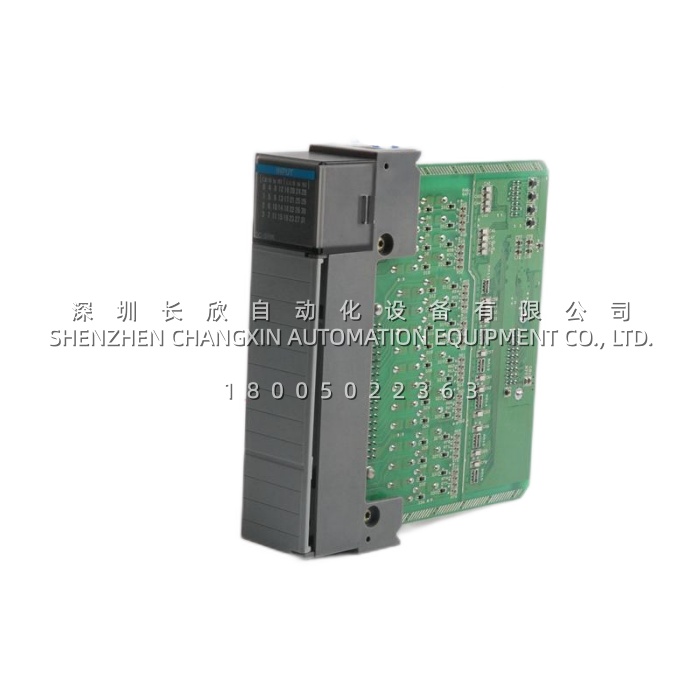
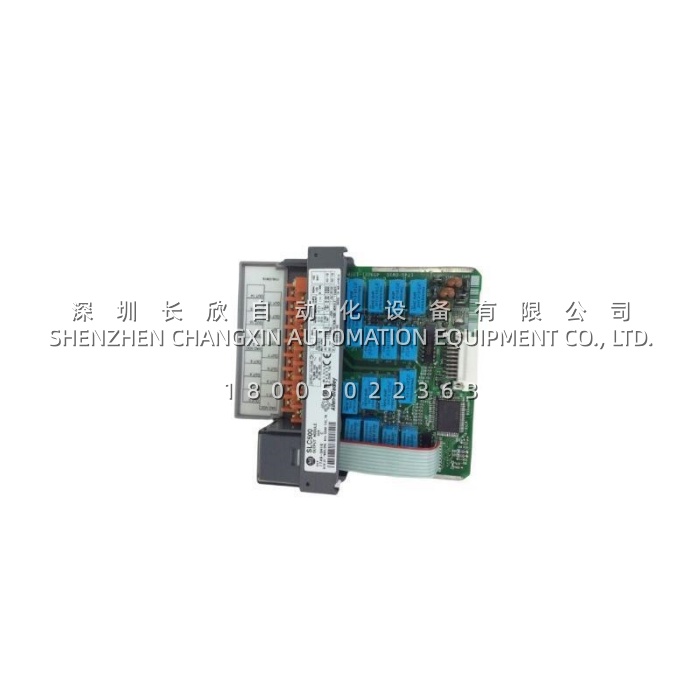
The 1791DS-IB16/A is a CompactBlock Guard I/O safety input module manufactured by Allen‑Bradley (Rockwell Automation). It is designed for DeviceNet Safety networks and provides 16 single‑channel safety inputs (24V DC sinking) with integrated pulse test outputs. This module is used to monitor critical safety devices like E‑stop buttons, safety gates, and light curtains, transmitting safety data over a DeviceNet network to a safety controller (e.g., GuardLogix, SmartGuard). The “Series A” revision indicates the initial release of this hardware variant.Application Scenarios:In an automotive welding line, multiple 1791DS-IB16/A modules are distributed along the conveyor to monitor safety door switches and area scanners. They connect via a single DeviceNet trunk cable, drastically reducing wiring compared to hardwired safety relays. The integrated test pulses continuously verify the integrity of the field wiring, ensuring compliance with Category 4 / SIL 3 safety standards without the need for external test relays.
Parameter:
| Main Parameters | Value/Description |
|---|---|
| Product Model | 1791DS-IB16/A (Series A) |
| Manufacturer | Allen‑Bradley (Rockwell Automation) |
| Module Type | DeviceNet Safety Digital Input |
| Number of Inputs | 16 (single‑channel, configurable as 8 dual‑channel pairs) |
| Input Voltage | 24V DC (19.2 – 28.8V DC range) |
| On-State Voltage | ≥ 11V DC |
| Test Outputs | 16 (sourcing, for input circuit verification) |
| Safety Standards | SIL 3 (IEC 61508), PL e (ISO 13849-1), Category 4 |
| Communication | DeviceNet (CIP Safety protocol) |
| Baud Rate | 125 / 250 / 500 kbps |
| Power Consumption | ~85 mA @ 24V DC |
| Operating Temperature | -20°C to +60°C |
| Mounting | DIN rail (35 mm) |
| Status Indicators | Network (OK/Flashing/Fault), Input LEDs |
Technical Principles and Innovative Values:The 1791DS-IB16/A operates on the CIP Safety protocol layered over DeviceNet, ensuring safe data transmission even in the presence of network errors.
- Innovation Point 1: Integrated Pulse Testing: Unlike standard I/O, each of the 16 inputs has a dedicated test output. The safety controller sends periodic test pulses through these outputs to detect dangerous faults like short circuits to 24V or cross-channel shorts, which are common failure modes in traditional safety circuits.
- Innovation Point 2: Dual-Channel Flexibility: The 16 inputs can be configured in software as 16 independent single‑channel points or grouped into 8 dual‑channel pairs. This allows the same hardware to be used for both simple E‑stops (single‑channel) and high‑reliability applications like two‑hand controls (dual‑channel with cross‑monitoring).
- Innovation Point 3: Distributed Safety Architecture: By placing the safety I/O directly on the machine (distributed I/O), the module eliminates long runs of hardwired safety signals back to a central cabinet. This reduces wiring costs by up to 70% and simplifies troubleshooting through individual channel status LEDs.