Description
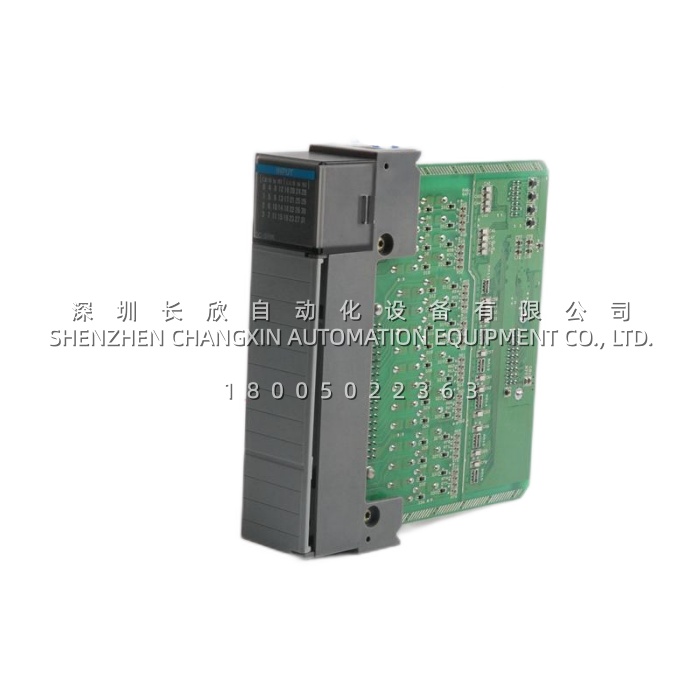
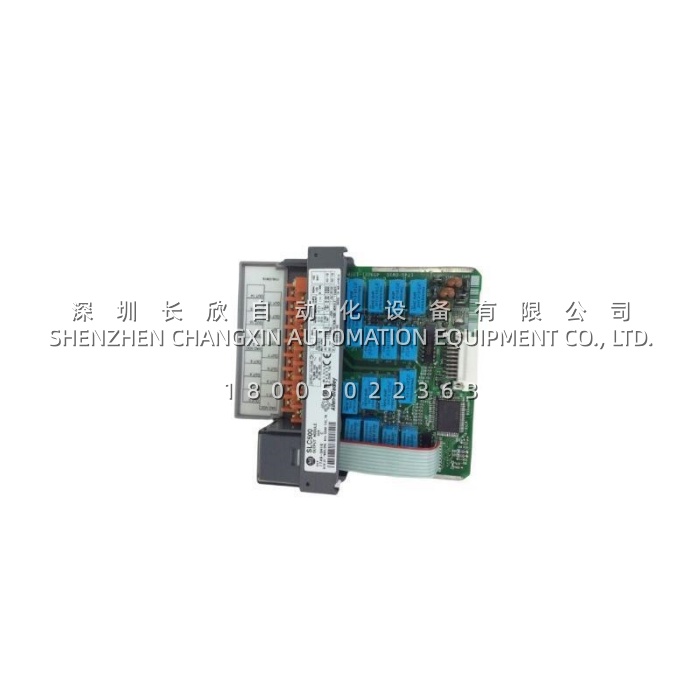
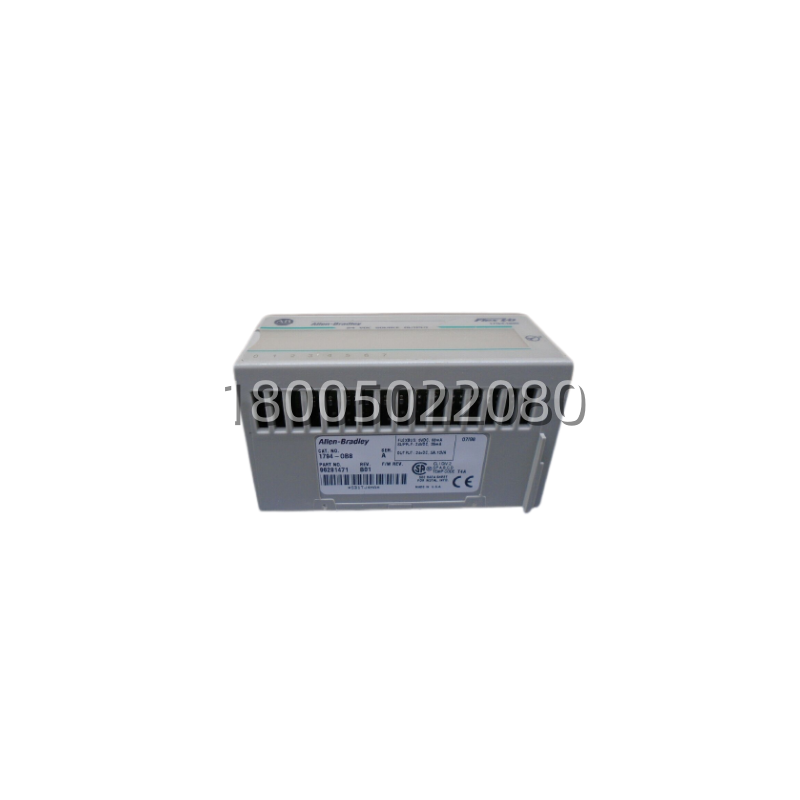
The Allen‑Bradley 1794‑OB8 is an 8‑point digital DC output module from the FLEX I/O 1794 series, engineered to provide sourcing outputs for distributed control systems requiring modularity and a compact footprint . Manufactured by Rockwell Automation, this module drives 24V DC field devices such as actuators, solenoids, indicator lamps, and small relays directly from the control system .
As a key component of the flexible 1794 I/O platform, the 1794‑OB8 interfaces with the Flexbus and mounts onto a compatible terminal base unit (such as 1794‑TB3, 1794‑TB3S, or 1794‑TBKD) to establish connections between field wiring and the I/O bus . Its sourcing output architecture supplies voltage from the DC common bus to the connected load when activated, ensuring straightforward integration with standard industrial loads .
Application Scenarios
In a material handling system, maintenance engineers needed to control eight solenoid valves for directing packages along different conveyor paths. The Allen‑Bradley 1794‑OB8 was deployed to provide reliable 24V DC sourcing outputs directly to the valves. The module’s Removal and Insertion Under Power (RIUP) capability allowed a faulty unit to be replaced without shutting down the entire conveyor line, minimising production interruptions . This addressed the key pain point of unplanned downtime in a fast‑paced distribution centre.
The 1794‑OB8 excels in applications requiring reliable digital output control—from packaging machinery and conveyor systems to assembly lines and material handling equipment. Its compatibility with various network adapters (ControlNet, DeviceNet, EtherNet/IP) makes it suitable for both centralised and distributed control architectures .
Parameters
| Main Parameters | Value/Description |
|---|---|
| Product Model | 1794‑OB8 |
| Manufacturer | Allen‑Bradley / Rockwell Automation |
| Product Category | FLEX I/O Digital DC Output Module |
| Number of Outputs | 8 sourcing outputs |
| Output Voltage Nominal | 24V DC |
| Operating Voltage Range | 10‑31.2V DC (with 5% AC ripple) |
| Output Current per Channel | 0.5A maximum |
| Output Current per Module | 4A maximum |
| On‑state Voltage Drop | 0.5V DC maximum |
| Off‑state Leakage Current | 0.5mA maximum |
| Isolation Voltage | 50V continuous (basic insulation type, channel‑to‑backplane) |
| Flexbus Current | 60mA @ 5V DC |
| Power Dissipation | 3.3W maximum @ 31.2V DC |
| Operating Temperature | 0 to 55°C (32 to 131°F) |
| Mounting | Snaps onto terminal base (DIN rail) |
| Status Indication | 8 yellow LEDs (1 per channel) |
| Compatible Terminal Bases | 1794‑TB3, 1794‑TB3S, 1794‑TBKD |
Technical Principles and Innovative Values
Innovation Point 1: Sourcing Output Architecture for Standard Load Control
The 1794‑OB8 uses a sourcing configuration, meaning it provides a regulated voltage from the DC common bus to the connected load when the output is activated. This standard industrial configuration simplifies wiring and ensures compatibility with common field devices such as indicator lights, small relays, and solenoids. The output current rating of 0.5A per channel and 4A per module provides sufficient capacity for a wide range of loads .
Innovation Point 2: Removal and Insertion Under Power (RIUP) for Zero‑Downtime Maintenance
The 1794‑OB8 supports RIUP, allowing the module to be replaced or inserted while the system remains powered and operational . This feature is achieved because the I/O module itself has no direct wiring—connections are made through the terminal base unit. In facilities where production uptime is critical, this eliminates costly system shutdowns during module replacement or maintenance.
Innovation Point 3: Hazardous Location Certifications for Versatile Deployment
The 1794‑OB8 is certified for both European (ATEX Zone 2, II 3G Ex nA IIC T3 Gc) and North American (Class I Division 2 Groups A, B, C, D) hazardous locations . This expands its applicability to chemical plants, oil and gas facilities, and other environments where explosive atmospheres may occur infrequently, without requiring expensive explosion‑proof enclosures .
Innovation Point 4: Opto‑Isolation for Electrical Noise Protection
The 1794‑OB8 incorporates opto‑isolation between the field side and the system backplane, shielding internal logic from electrical interference and potential transients that are common in industrial environments . This design enhances signal integrity and protects the controller from damage caused by voltage spikes or ground loops on the output side.
Innovation Point 5: Flexible Terminal Base Compatibility
The 1794‑OB8 is compatible with multiple terminal base units (1794‑TB3, 1794‑TB3S, 1794‑TBKD) , providing flexibility in wiring configuration. The terminal bases feature screw connections and support daisy‑chaining of power and common to adjacent bases, simplifying system expansion and reducing wiring complexity .
Application Cases and Industry Value
Case 1: Conveyor System Valve Control
A logistics automation integrator upgraded a package sorting facility’s conveyor control system using the 1794‑OB8 to drive solenoid valves for directing packages. The module’s 8 sourcing outputs each controlled a directional valve, allowing the system to sort packages across multiple lanes. The integrator chose the 1794‑OB8 for its reliable 24V DC sourcing capability, which eliminated the need for interposing relays. The 0.5A per channel rating was sufficient for the solenoid valves, and the module’s compact footprint allowed mounting in space‑constrained control cabinets. Facility operators reported reduced maintenance downtime due to the RIUP feature, which permitted module swaps without halting the entire sorting process.
Case 2: Packaging Machine Actuator Control
A packaging OEM integrated the 1794‑OB8 into their wrapping machines to control eight pneumatic actuators through solenoid valves. The module’s yellow LED status indicators provided immediate visual feedback on each output’s state, simplifying troubleshooting during commissioning and maintenance. The 1794‑OB8‘s 50V isolation rating protected the controller from electrical noise generated by nearby motor drives. The OEM standardised on the 1794‑OB8 across multiple machine configurations, reducing spare parts inventory and training requirements.