Description
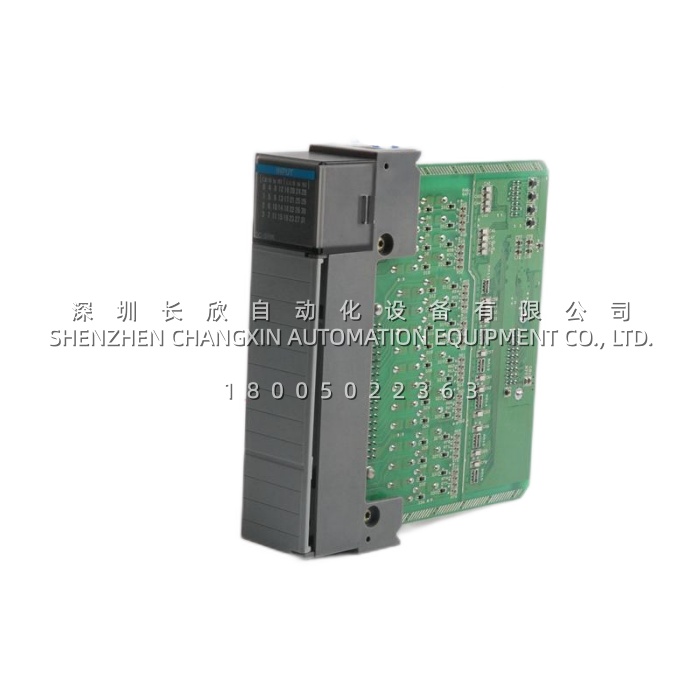
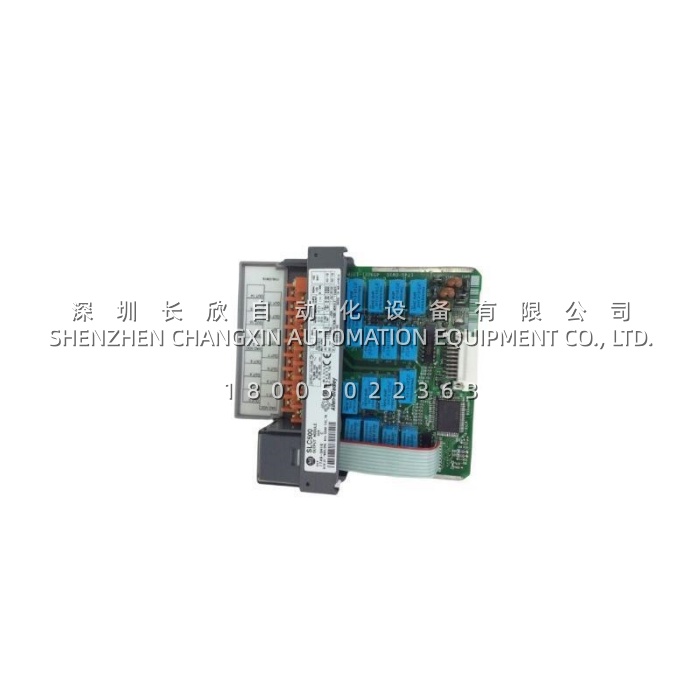
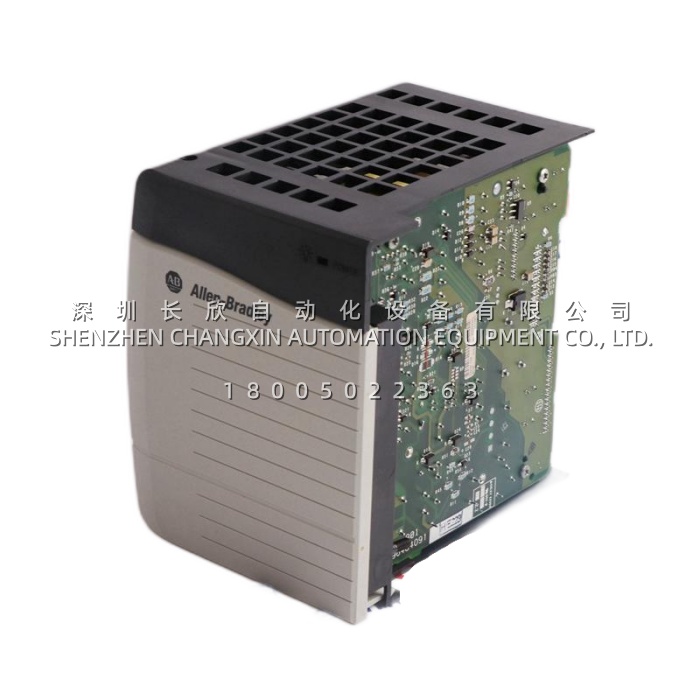
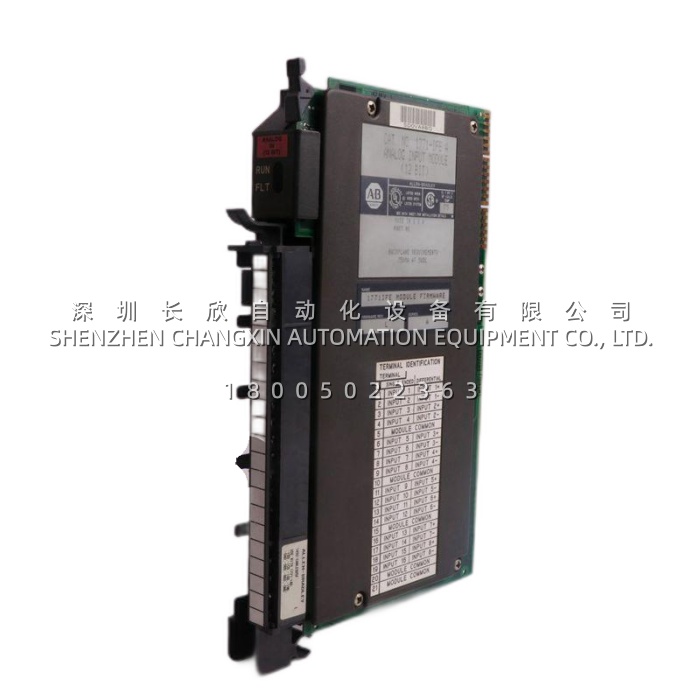
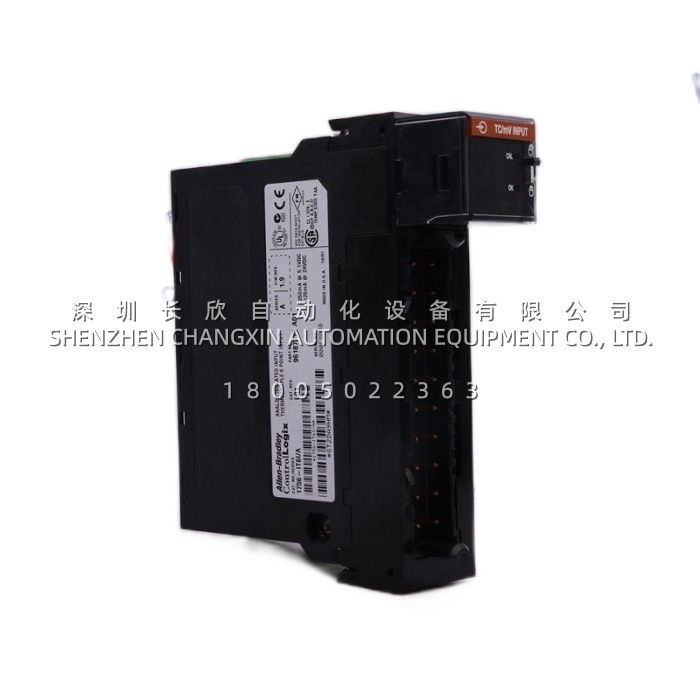
The Allen-Bradley 1797-IRT8 is an 8-channel intrinsically safe analog input module from the FLEX Ex I/O series, designed for temperature monitoring in hazardous locations (Zone 1/21, Class I Div 1). It supports thermocouple (TC), RTD, and millivolt (mV) signals with 16-bit resolution and software-configurable input types. As part of the ControlNet Ex ecosystem, it enables direct connection of field sensors in explosive atmospheres while providing cold junction compensation (CJC) and open wire detection for process reliability. Critical Note: This module has been discontinued by Rockwell Automation (end-of-life announced in 2017) and is now primarily encountered in legacy system support or replacement scenarios.
Application Scenarios
In a petrochemical refinery, the 1797-IRT8 is deployed to monitor reactor vessel temperatures in a Zone 1 hazardous area. The module is installed in a non-hazardous control cabinet (safe area) or an Ex-approved enclosure at the boundary, connected to intrinsically safe (IS) Pt100 RTD sensors located inside the explosive atmosphere. The ControlNet Ex network transmits the temperature data to a ControlLogix controller, enabling precise thermal control of the catalytic cracking process while maintaining intrinsic safety barriers between the field and control system.
Parameter
| Parameter | Specification |
|---|---|
| Manufacturer | Rockwell Automation (Allen-Bradley) |
| Model | 1797-IRT8 |
| Series | FLEX Ex I/O |
| Product Type | Intrinsically Safe Analog Input Module |
| Input Channels | 8 channels (non-isolated, multiplexed) |
| Input Signals | Thermocouple (J, K, T, E, N, R, S, B), RTD (Pt100, Pt200, Ni100), mV |
| Signal Range | -40 to +100 mV (TC/mV), 0 to 485 Ω (RTD) |
| Resolution | 16-bit |
| Conversion Time | 8 ms (settling to 99% of final value) |
| Cold Junction Compensation | Built-in CJC sensor (configurable) |
| Diagnostics | Open wire detection, overrange/underrange, CJC fault |
| Intrinsic Safety | Ui < 9.5 V DC, Ii < 1 A, Pi < 1.6 W (Zone 1/21) |
| Field-Side Power | 1.6 W consumption |
| Communication | ControlNet Ex (via 1797-ACN15 adapter) / FLEX Ex Backplane |
| Operating Temperature | -20°C to +70°C (-4°F to 158°F) |
| Mounting | DIN Rail (35 mm) or Panel Mount |
| Terminal Base | Requires 1797-TB3 or 1797-TB3S terminal base unit |
| Status | Discontinued (End-of-Life) |
Technical Principles and Innovative Values
The 1797-IRT8 is engineered to bridge the gap between high-density temperature acquisition and hazardous area safety standards. Its core innovation lies in combining intrinsic safety (IS) parameters with flexible signal conditioning in a modular I/O form factor.
- Innovation Point 1: Intrinsic Safety by Design. Unlike conventional I/O that requires external safety barriers, the 1797-IRT8 is designed with energy-limiting circuits that ensure the field-side voltage (Ui) and current (Ii) remain below ignition levels for hazardous gases (Ui < 9.5V, Ii < 1A). This allows direct connection of sensors in Zone 1 areas without the need for bulky Zener barriers or isolators, simplifying cabinet design.
- Innovation Point 2: Universal Input Flexibility. The module features software-configurable input types per channel. A single module can simultaneously handle J-type thermocouples, Pt100 RTDs, and mV signals from pressure transducers without physical jumpers or hardware changes. The built-in Cold Junction Compensation (CJC) sensor automatically corrects for ambient temperature variations at the terminal block, ensuring thermocouple accuracy.
- Innovation Point 3: ControlNet Ex Integration. As part of the FLEX Ex system, the module leverages the ControlNet Ex deterministic network for data transport. This provides noise-immune communication in electrically noisy industrial environments and supports RIUP (Removal and Insertion Under Power) for module replacement without shutting down the entire network, critical for high-availability processes.