Description:
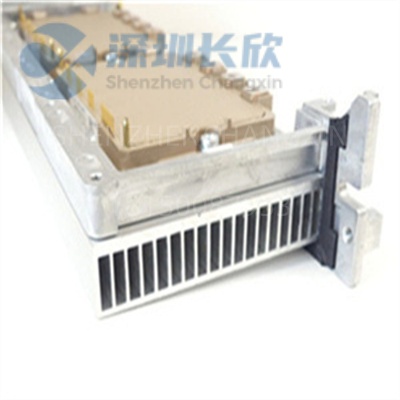
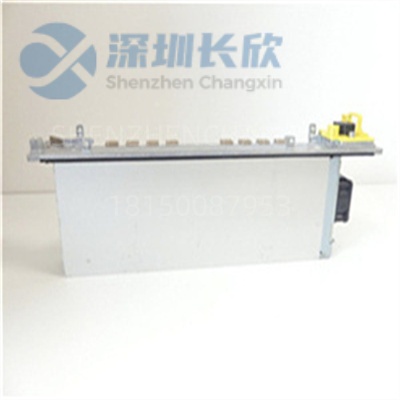
The FANUC A06B-6290-H207 is a Double Axis Servo Amplifier (model aiSV 40/40HV-B) from FANUC’s αi-S series, serving as a core component in industrial automation systems such as CNC machine tools and industrial robots . It functions as a high-performance drive module that converts control signals from the CNC system or controller into precise power output to drive two servo motors simultaneously, enabling accurate control over position, speed, and torque . Its design emphasizes high precision, fast response, and high reliability, making it a critical element for achieving stable and efficient motion control in demanding applications .
Application Scenarios:
In a high-speed machining center, precise and synchronized movement of multiple axes (e.g., X, Y, Z) is crucial for machining complex parts. The spindle and feed axes require high dynamic response and torque control.
The FANUC A06B-6290-H207 dual-axis servo amplifier is installed within the machine’s electrical cabinet. It receives digital motion commands (position/speed references) via a high-speed serial communication interface (e.g., FANUC’s proprietary bus) from the main CNC unit (like a FANUC Series 30i/31i/32i). The amplifier then drives two separate servo motors—for instance, one controlling the X-axis ball screw and another controlling the Y-axis—providing the necessary current and voltage. Its fast current loop and advanced control algorithms ensure minimal following error during rapid contouring movements, resulting in high surface finish quality and dimensional accuracy of the machined workpiece. Its built-in diagnostic functions (monitoring for overcurrent, overload, overheating) help prevent unexpected downtime .
Key Parameters:
Note: Some specific electrical parameters (e.g., input voltage range, peak current) should be verified with the official FANUC A06B-6290-H207 datasheet for the exact variant.
Technical Principles and Innovative Values:
The FANUC A06B-6290-H207 operates based on closed-loop vector control principles. It receives high-resolution digital command values from the upper-level controller, compares them with real-time feedback from the servo motor’s encoder (position/speed), and uses sophisticated algorithms (like PID and feedforward) to calculate the precise voltage and current required by the motor to minimize error .
Innovation Point 1: High-Performance Dual-Axis Integration. The module integrates control and power circuits for two servo axes within a single compact unit (aiSV 40/40HV-B) . This high-density design saves valuable cabinet space, reduces inter-axis wiring complexity, and improves system reliability by minimizing connection points. It allows for coordinated control of two closely related axes, such as two gantry axes or a rotary and linear axis pair.
Innovation Point 2: Advanced Control and High-Speed Communication. It employs vector control technology, enabling independent and precise control of motor torque and magnetic flux, resulting in excellent low-speed torque characteristics, fast dynamic response, and high-speed stability . It communicates with the main CNC via a high-speed serial bus (like FANUC’s FSSB), ensuring low-latency, high-bandwidth data exchange for synchronized multi-axis motion, which is critical for complex contouring and high-speed machining.
Innovation Point 3: Comprehensive Diagnostics and Robust Protection. The amplifier features extensive self-diagnostic functions that can detect and report various fault conditions (e.g., overcurrent ALM1. communication error ALM3. overheating ALM5) through status LEDs or system alarms . It incorporates multiple layers of hardware and software protection (overload, overheat, short-circuit) to safeguard both the amplifier and the connected motors from damage under abnormal conditions, enhancing system uptime and safety .
Application Cases and Industry Value
Case Study: Enhancing Precision in a Robotic Welding Cell.
An automotive parts manufacturer used a robotic welding cell for chassis components. The existing servo drives on two critical robot axes (wrist rotation and tool tilt) exhibited occasional torque ripple and required frequent tuning, leading to inconsistent weld bead quality and occasional path deviation.
They replaced the drives with FANUC A06B-6290-H207 dual-axis amplifiers, paired with matching αi-S series servo motors. The amplifiers’ precise current control and high-speed response provided smoother torque output. The integrated control of the two wrist axes allowed for better dynamic coordination during complex welding paths.
Result: Weld path accuracy improved by approximately 15%, significantly reducing rework rates. The system’s built-in vibration suppression function minimized mechanical resonance, leading to a smoother robot motion and extended mechanical life. The reduction in manual tuning and troubleshooting downtime increased overall equipment effectiveness (OEE) by an estimated 8%. The plant engineer noted that the robust design and reliable performance in the electrically noisy welding environment justified the investment.
Related Product Combination Solutions
The FANUC A06B-6290-H207 is part of FANUC’s comprehensive motion control ecosystem.
CNC Systems: FANUC Series 30i/31i/32i, 0i-F, etc., which provide the trajectory planning and high-level commands.
Servo Motors: FANUC αi-S series servo motors (e.g., A06B-xxxx-Bxxx), which are optimally matched to the amplifier for performance.
Spindle Drives: FANUC αi I/O Link spindle amplifiers (e.g., A06B-62xx-Hxxx) for controlling the main spindle.
Power Supply Units: FANUC Power Supply Modules (e.g., A06B-62xx-Hxxx) that provide regulated DC bus voltage to the servo amplifiers.
I/O Modules: FANUC I/O Units (A02B/A03B series) for connecting sensors and actuators.
Control Software & Cables: FANUC servo tuning software and dedicated high-voltage power cables, feedback cables (encoder cables), and control signal cables.
Installation, Maintenance, and Full-Cycle Support
Installation: The amplifier is designed for DIN rail or panel mounting within a well-ventilated control cabinet . Installation involves securing the unit, connecting the three-phase AC input power, DC bus link (if separate), motor power cables (U, V, W) for each axis, motor encoder feedback cables, and the high-speed serial communication cable from the CNC. Proper grounding and shielding are critical to prevent electrical noise interference .
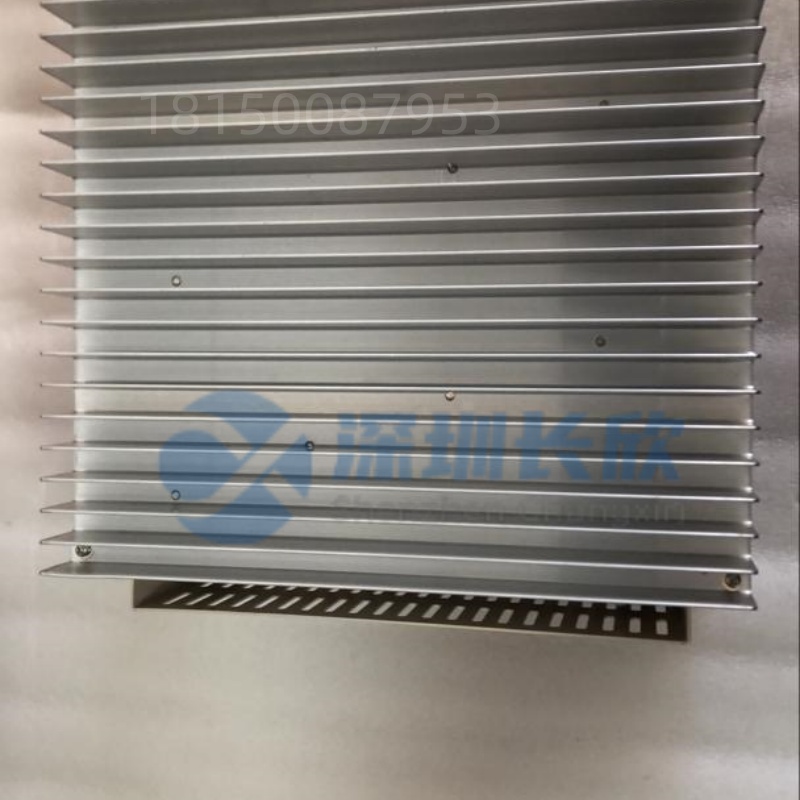
Maintenance: Primary maintenance involves regular cleaning of cooling fans and heatsinks to prevent overheating . Periodic inspection of electrical connections for tightness is recommended. The amplifier’s status LEDs and the CNC’s alarm screen provide immediate fault indications. Common troubleshooting steps include checking input power, verifying communication link integrity, and inspecting motor/encoder cables . For complex faults like internal IGBT failure, professional repair or module replacement is advised.
We provide comprehensive support for the FANUC A06B-6290-H207 and related FANUC system components. This includes technical consultation, supply of genuine parts, system integration guidance, parameter setup assistance, and after-sales maintenance services to ensure your automation system achieves optimal performance and reliability.