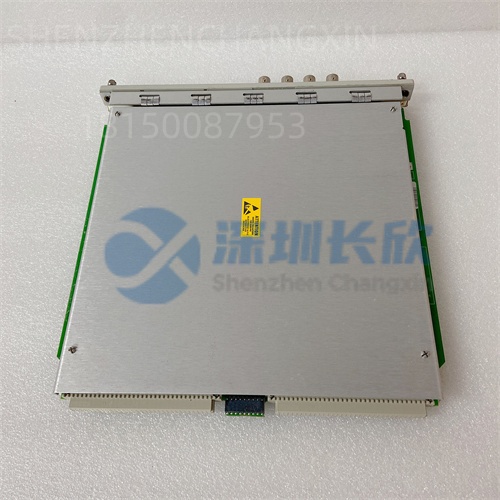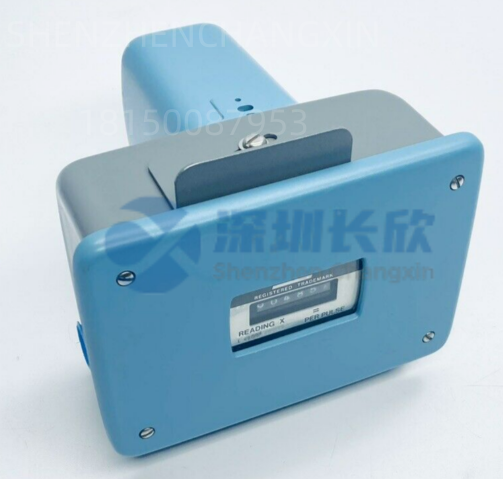
Description:
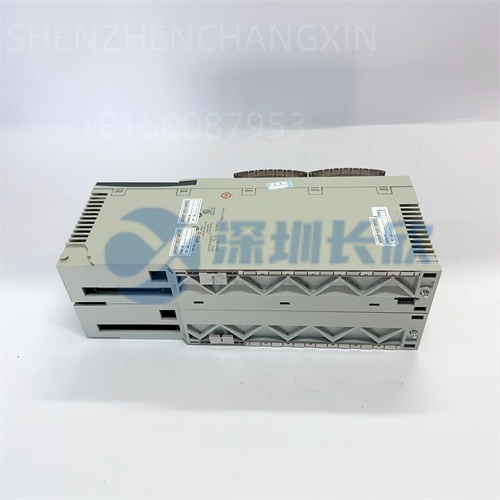
The FOXBORO 14A-FR is a legacy analog input module designed for the Foxboro I/A Series distributed control system (DCS). It served as a critical field interface component, responsible for receiving and conditioning multiple analog current signals from process instrumentation, converting them into digital data for the control system. It represents the robust, high-density I/O technology that supported decades of reliable process automation.
Application Scenarios:
In a large petrochemical complex, thousands of field instruments—pressure transmitters on distillation columns, temperature sensors on reactor beds, and flow meters on pipelines—continuously feed 4-20 mA signals back to the control room. Before the era of highly distributed I/O, these signals were aggregated in main marshalling cabinets. The FOXBORO 14A-FR module was a workhorse in these cabinets, installed in a dedicated I/O shelf. Each of its 16 channels would be wired to individual field instruments, providing signal conditioning, isolation, and analog-to-digital conversion. This allowed the Foxboro I/A Series control processors to reliably monitor the entire plant’s state. Its high channel density reduced the footprint needed for I/O, and its robust design ensured reliable operation in the control room environment, forming a foundational layer of data acquisition for critical monitoring and control loops.
Technical Principles and Innovative Values:
The FOXBORO 14A-FR was designed for an era demanding reliability, signal integrity, and efficient use of control room space in large-scale DCS applications.
Innovation Point 1: High-Density, Isolated Signal Acquisition. In its time, the 14A-FR’s ability to handle 16 analog input channels in a single module package represented significant space savings and wiring simplification compared to lower-density alternatives. Each channel typically incorporated galvanic isolation, protecting the sensitive system backplane from ground loops, voltage spikes, or noise that could be present on field wiring. This isolation was crucial for maintaining the integrity of the entire control system.
Innovation Point 2: Seamless Integration with the I/A Series Ecosystem. The module was not a standalone device but an integral component of the proprietary Foxboro I/A Series architecture. It communicated directly with the system’s fieldbus and control processors via the backplane of its carrier. This tight integration ensured deterministic data scanning, reliable status reporting, and simplified configuration within the Foxboro control software, creating a cohesive and dependable I/O layer.
Innovation Point 3: Ruggedized Industrial Design. Built to withstand the continuous operation demands of process plants, the 14A-FR featured a robust physical design suitable for the controlled but long-term environment of a DCS cabinet. Its design prioritized mean time between failures (MTBF) and serviceability, often allowing for replacement without disturbing adjacent modules, which supported high system availability.
Application Cases and Industry Value:
Case Study: Lifecycle Support in a Power Generation Plant
A combined-cycle power plant, commissioned in the early 1990s, relied on a Foxboro I/A Series DCS for its entire balance-of-plant control. The system, filled with FOXBORO 14A-FR and similar I/O modules, had operated flawlessly for decades. As the plant embarked on a phased modernization, a key challenge was maintaining the existing control system’s reliability while planning for its eventual replacement. Spare 14A-FR modules became critical assets.
When a 14A-FR module in the condenser cooling water system began reporting intermittent faults, the maintenance team had a tested spare on hand. The module was swapped during a scheduled turbine wash, avoiding any forced outage. The plant’s I&C engineer commented, “The 14A-FR modules are the unsung heroes. They’ve been reading those pump bearing temperatures and valve positions for 30 years without fuss. Having reliable spares and knowing how to integrate them is as crucial as any new technology for keeping this plant online. They provide the stability that allows us to plan our migration strategically.”
Related Product Combination Solutions:
Foxboro I/A Series Control Processors (e.g., CP60. CPxx): The central processing units that rely on data from the 14A-FR and other I/O modules.
Foxboro FBM Series I/O Carriers/Backplanes: The physical shelves and carriers (e.g., FBMxxx series) into which the 14A-FR and other fieldbus modules are installed.
Foxboro PSS (Power Supply System): Provides the conditioned power to the I/O shelves housing the 14A-FR modules.
Foxboro Analog Output Modules (e.g., 14B series): Complementary modules that take control signals from the processors and output 4-20 mA signals to field actuators.
Foxboro Digital I/O Modules (e.g., 15A series): Modules for handling discrete (on/off) signals, used alongside the 14A-FR in a complete I/O suite.
Foxboro I/A Series Workstations & Control Software: The operator and engineering interface (e.g., Foxboro AW51x) used to configure, monitor, and maintain the I/O points associated with the 14A-FR.
Modern Foxboro/Emerson Migration Tools: Products and services designed to facilitate the transition from legacy I/O like the 14A-FR to modern, supported platforms like the Emerson DeltaV or Foxboro Evo system.
Installation, Maintenance, and Full-Cycle Support:
Installation of the FOXBORO 14A-FR is integrated into the Foxboro I/A Series hardware architecture. The module is carefully inserted into its designated slot on the appropriate FBM carrier within a system cabinet. Proper electrostatic discharge (ESD) precautions are mandatory. Field wiring from the terminal assemblies is connected to the module’s front or side connectors according to detailed loop diagrams. Configuration, including assignment of I/O addresses and scaling, is performed within the Foxboro I/A Series control software, linking the physical channel to a software process variable.
Maintenance primarily involves monitoring for fault indicators on the module and addressing any channel failures noted in the system diagnostics. Due to the age of this technology, a proactive lifecycle management strategy is essential. This includes securing quality spares, maintaining a controlled environment for I/O cabinets, and having access to legacy documentation. When a module fails, it is typically replaced as a unit. The system may need to be taken offline or the specific I/O bus segment de-energized (if designed for hot swap) to safely remove and insert the new module.
We provide specialized support for legacy Foxboro systems, including the FOXBORO 14A-FR. Our services range from supplying rigorously tested and guaranteed legacy spares to offering technical consultation on system health and migration pathways. We understand the critical need to maintain operational continuity in legacy environments and can help you manage risk and plan for the future of your control system infrastructure.