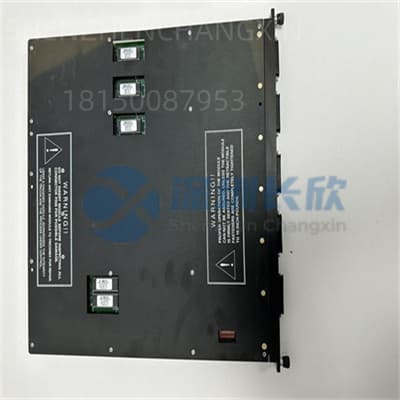
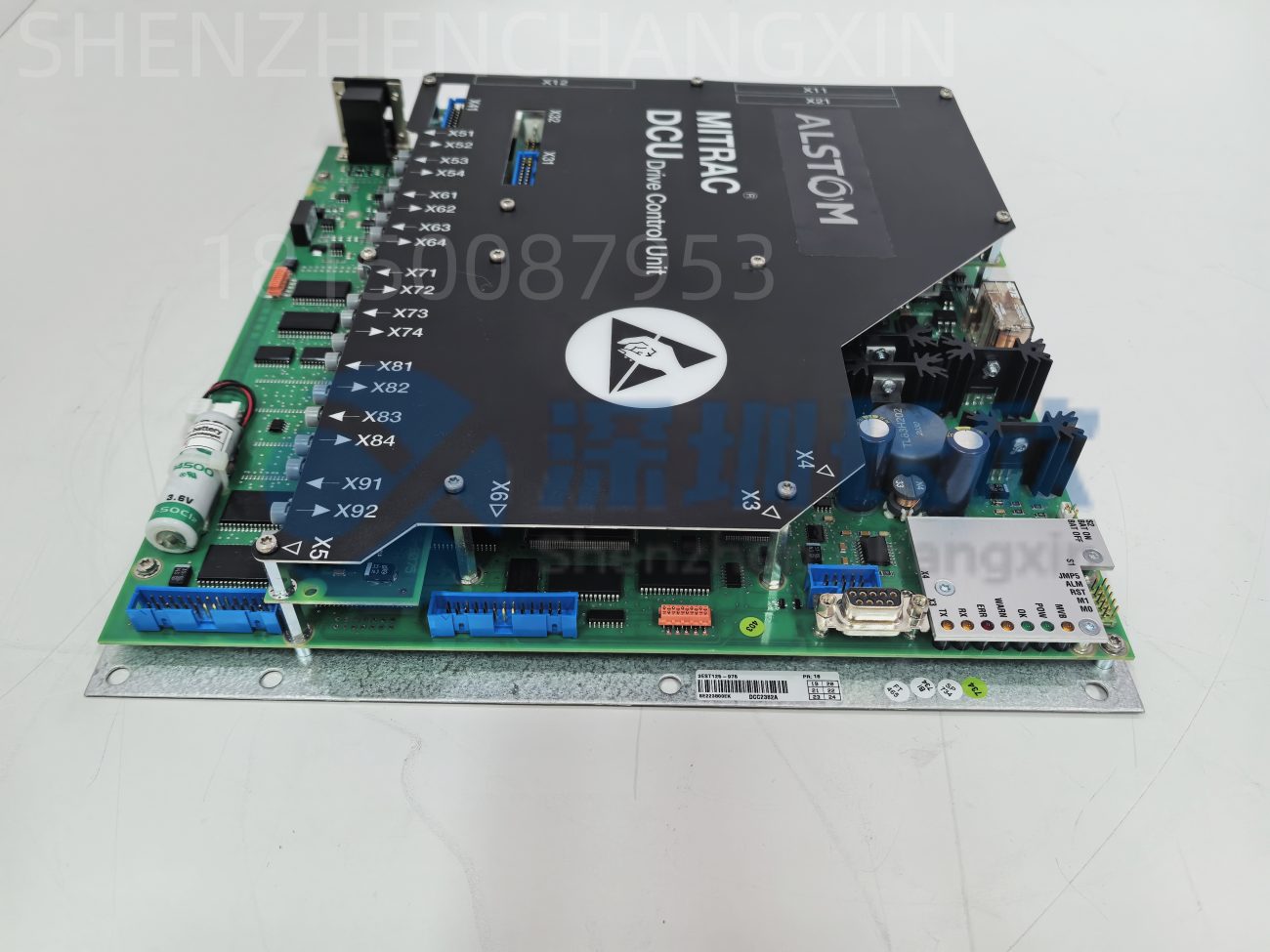
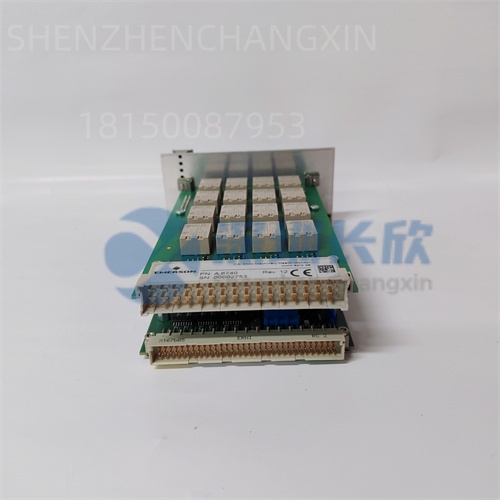
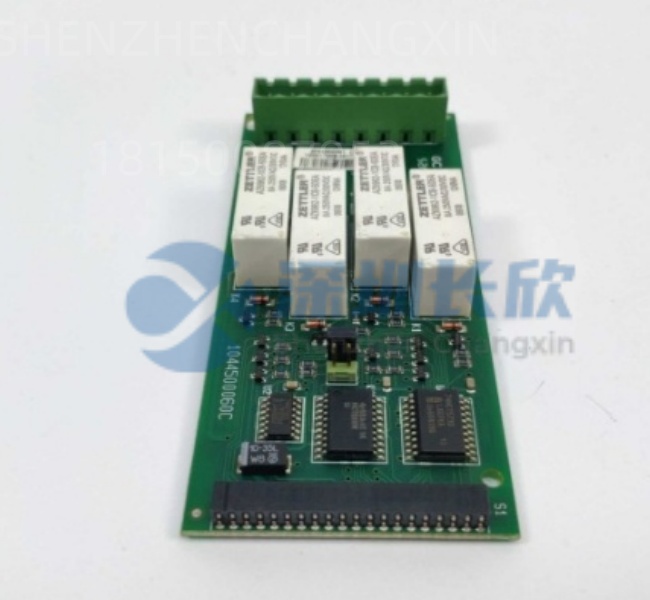
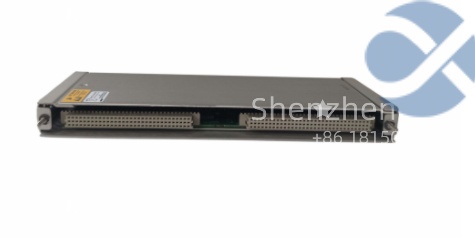
.jpg "FOXBORO RH928AW: High-Density Remote I/O for Scalable and Reliable Process Automation插图")
In the evolving landscape of distributed control systems (DCS), the ability to extend I/O capacity reliably—without compromising performance or increasing engineering complexity—is a critical requirement for modern process facilities. The FOXBORO RH928AW remote I/O module, part of Schneider Electric’s (formerly Invensys) FOXBORO I/A Series ecosystem, addresses this need with a robust, high-density design tailored for demanding applications in power generation, chemical processing, oil & gas, and water/wastewater treatment. As a 16-channel isolated analog input module supporting both voltage and current signals, the RH928AW delivers precision measurement, advanced diagnostics, and seamless integration into existing DCS architectures—enabling engineers to scale their control strategies while maintaining signal integrity across long distances and harsh environments.
Precision Measurement in Challenging Industrial Environments
The FOXBORO RH928AW is engineered for accuracy and resilience. Each of its 16 channels provides galvanic isolation (up to 500 VAC) between field devices and the system backplane, effectively eliminating ground loops—a common source of noise-induced drift in analog measurements. This isolation is particularly valuable in facilities with extensive cabling runs, such as combined-cycle power plants or pipeline compressor stations, where potential differences between grounding points can corrupt low-level sensor signals.
The module supports a wide range of input types:
Current: 4–20 mA (with optional 0–20 mA)
Voltage: ±10 V, 0–10 V, 1–5 V
With 16-bit resolution and an accuracy of ±0.1% of span (typical), the RH928AW captures subtle process variations—essential for applications like boiler drum level control, reactor temperature profiling, or effluent pH monitoring. Its built-in open-wire detection automatically flags broken sensor loops, reducing troubleshooting time and preventing undetected measurement failures that could lead to unsafe conditions or product quality issues.
Moreover, the module operates reliably across an industrial temperature range (0°C to +60°C) and features conformal coating options for deployment in high-humidity or corrosive atmospheres—common in offshore platforms or coastal water treatment plants.
Seamless Integration into the FOXBORO I/A Series Architecture
One of the RH928AW’s greatest strengths lies in its native compatibility with the FOXBORO I/A Series DCS. It mounts directly into RH9xx-series remote I/O bases, which connect to the main controller (e.g., CP60 or CP80) via redundant FOXNET or Ethernet-based communication links. This allows I/O to be distributed close to field devices—reducing cable costs, minimizing signal degradation, and simplifying cabinet layouts.
Configuration is handled through FOXBORO’s Engineering Studio or legacy Composer software, where each channel is assigned engineering units, scaling parameters, alarm limits, and diagnostic thresholds. Once deployed, all data—including real-time values, quality status (e.g., “GOOD,” “BAD”), and fault flags—appears natively in operator displays, trends, and alarm summaries without custom scripting or OPC tunneling.
This tight integration also enables hot-swap capability: if a module fails, it can be replaced during live operation. The system automatically reinitializes the new unit and restores I/O mapping—minimizing downtime in continuous processes.
Real-World Deployments: From Refineries to Renewable Energy
Petrochemical Crude Unit – Gulf Coast USA
A major refinery upgraded its atmospheric distillation column instrumentation using RH928AW modules to monitor tray temperatures, reflux flow, and pressure differentials. With over 200 analog inputs consolidated into just 13 RH928AW units, the team reduced marshaling panel complexity by 60%. More importantly, open-wire detection caught a failing thermocouple extension cable before it caused a false low-temperature reading that could have triggered an unnecessary shutdown. “It turned passive wiring into an active diagnostic layer,” said the senior controls engineer.
Biomass Power Plant – Northern Europe
In a facility burning wood chips for district heating, flue gas oxygen and temperature sensors are exposed to high particulate loads and thermal cycling. Previous I/O systems suffered from intermittent signal dropouts due to connector corrosion. After installing RH928AW modules in sealed enclosures with conformal-coated PCBs, the plant achieved 18 months of uninterrupted operation. “Even during winter startups with condensation risks, the readings stayed stable,” reported the automation manager.
Municipal Wastewater Facility – Australia
A treatment plant used RH928AW units to digitize analog signals from dissolved oxygen probes, sludge blanket detectors, and chemical feed meters across three remote pump stations. By locating I/O racks near the sensors and communicating back to the central DCS over fiber-optic Ethernet, they eliminated over 5 km of analog cabling. Maintenance crews now receive automatic alerts when a DO probe fouls—based on implausible rate-of-change detected at the module level. “We’re not just measuring—we’re interpreting,” noted the SCADA coordinator.
Expert Recommendations for Optimal Performance
“Don’t treat the RH928AW like a generic AI card. Leverage its per-channel diagnostics—they’re your first line of defense against silent sensor failures.”
— DCS Specialist, Global EPC Firm
Field-tested best practices include:
Use shielded, twisted-pair cables for all analog inputs; ground shields at the I/O rack only.
Enable open-wire detection during commissioning—it adds negligible overhead but prevents undetected faults.
Avoid mixing high-power AC and low-level analog signals in the same conduit; EMI can induce offsets even in isolated modules.
Label spare channels clearly in configuration software to prevent accidental reuse during future modifications.
Long-Term Value in a Legacy-to-Modern Transition Era
Although the FOXBORO I/A Series is a mature platform, Schneider Electric continues to support the RH928AW with firmware updates, spare parts, and migration paths to newer systems like EcoStruxure Foxboro DCS. Many operators choose to retain RH928AW-based remote I/O during partial upgrades because of its reliability and the high cost of replacing field wiring.
This longevity makes the module a strategic asset—not just a component. For facilities balancing operational continuity with digital transformation, the FOXBORO RH928AW offers a proven, scalable way to extend the life of existing infrastructure while laying groundwork for future enhancements.
Conclusion: Intelligence at the Edge of the Control Loop
The FOXBORO RH928AW exemplifies how thoughtful I/O design can elevate system-wide performance. By combining high-density analog capture, galvanic isolation, and embedded diagnostics within a trusted DCS framework, it transforms raw sensor data into actionable, trustworthy information. In an age where data quality underpins everything from predictive maintenance to regulatory compliance, this module remains a quiet but vital enabler of safe, efficient, and resilient industrial operations.
.jpg "FOXBORO RH928AW: High-Density Remote I/O for Scalable and Reliable Process Automation插图1")