Description
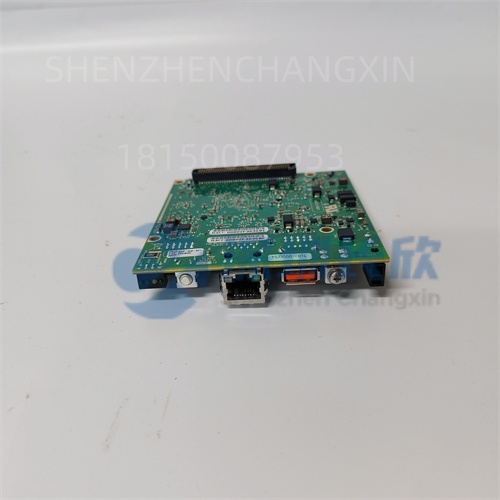
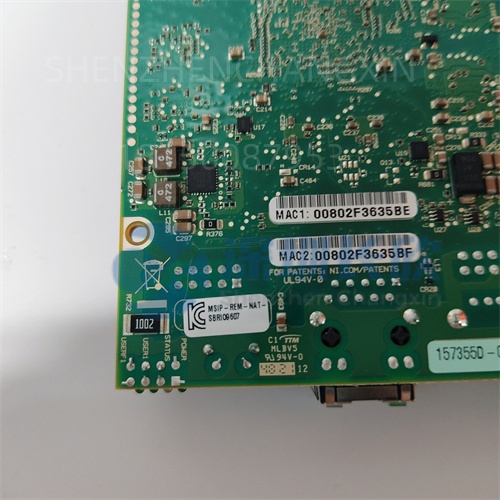
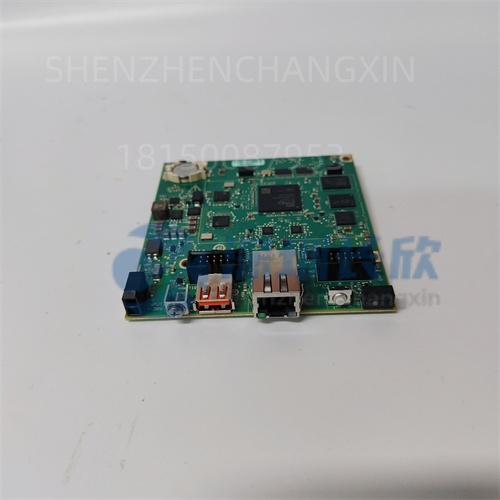
The NI SBRIO-9607 is a high-performance, single-board controller from National Instruments (now Emerson Test & Measurement) that integrates a real-time processor and a powerful Xilinx Kintex-7 FPGA onto a compact, rugged PCB—eliminating the need for a traditional CompactRIO chassis. Designed for embedded monitoring, machine control, hardware-in-the-loop (HIL) simulation, and industrial IoT applications, the NI SBRIO-9607 delivers deterministic performance, flexible I/O expansion, and standalone operation in space-limited or cost-sensitive deployments.
With built-in connectivity, onboard storage, and support for multiple programming environments, the NI SBRIO-9607 bridges the gap between traditional PLCs and high-end embedded systems.
Application Scenarios
At an automotive battery test lab in Germany, engineers needed a portable, high-speed system to emulate electric vehicle (EV) battery behavior during charger validation. Traditional rack-based HIL systems were too bulky and expensive for field deployment. They deployed the NI SBRIO-9607 with a custom analog mezzanine card to simulate cell voltages and thermal responses at 50 kHz update rates. The Kintex-7 FPGA handled real-time battery model calculations, while the dual Gigabit Ethernet ports streamed data to a cloud dashboard. The entire system fit inside a 19″ carry-on case—and ran for weeks unattended on 24VDC power. Thanks to the NI SBRIO-9607. the lab cut test setup time by 70% and now ships validation kits globally.
Technical Principles and Innovative Values
Innovation Point 1: True Standalone Operation Without Chassis – Unlike modular CompactRIO systems, the NI SBRIO-9607 integrates power regulation, processing, and FPGA on one board—reducing cost, size, and points of failure while enabling deployment in enclosures as small as 200×150×100 mm.
Innovation Point 2: Kintex-7 FPGA for High-Complexity Algorithms – The NI SBRIO-9607’s FPGA is 3–5× more powerful than older Virtex-5 or Spartan-6 variants, enabling real-time execution of advanced control laws, FFTs, or neural network inference at microsecond-level determinism.
Innovation Point 3: Multi-Language Development Flexibility – Program the real-time processor in LabVIEW, C/C++, or Python; develop FPGA logic in LabVIEW FPGA or VHDL—ideal for teams transitioning from legacy codebases or adopting AI at the edge.
Innovation Point 4: Deterministic I/O via Mezzanine Ecosystem – Though it lacks built-in analog I/O, the NI SBRIO-9607 supports over 60 C Series modules (e.g., NI 9205 for ±10V analog input) via its mezzanine connector, ensuring microsecond-accurate timing through direct FPGA routing—no backplane latency.
Application Cases and Industry Value
In a U.S. wind turbine manufacturer, the NI SBRIO-9607 serves as the core of a pitch-system emulator for factory acceptance testing. Mounted directly inside the nacelle simulator cabinet, it replicates blade angle feedback, hydraulic pressure, and fault conditions using custom FPGA logic—all synchronized to the main controller via CANopen. The system reduced test cycle time from 8 hours to 45 minutes and eliminated the need for external signal generators. Field service teams now use identical NI SBRIO-9607 units for on-site troubleshooting, thanks to their ruggedness and portability.
In a semiconductor wafer inspection tool, the NI SBRIO-9607 controls high-speed motion stages and processes camera triggers with sub-millisecond jitter. Its deterministic Linux RT kernel ensures stage movement never interferes with image capture—a critical requirement previously met only by costly proprietary controllers. The OEM estimates a 40% BOM reduction by switching to the NI SBRIO-9607 platform.
Related Product Combination Solutions
NI 9205: ±10V analog input module—plugs into NI SBRIO-9607 mezzanine for high-speed voltage measurement.
NI 9264: 16-bit analog output module—enables precision actuator control when paired with NI SBRIO-9607.
NI cRIO-9045: For comparison—modular chassis-based alternative when >4 I/O modules are needed.
NI 9870: RS-485/422 serial module—adds industrial comms to NI SBRIO-9607 for legacy device integration.
NI 9881: CANopen interface—extends NI SBRIO-9607 into motion and automotive networks.
NI LabVIEW Real-Time Module: Primary development environment—fully supports NI SBRIO-9607 project templates.
NI VeriStand: For HIL users—automatically deploys models to NI SBRIO-9607 FPGA and real-time targets.
NI 9149: Not required—but referenced as the chassis-based counterpart; NI SBRIO-9607 replaces it in compact designs.
Installation, Maintenance, and Full-Cycle Support
Installing the NI SBRIO-9607 requires mounting it in a ventilated enclosure (even though fanless, airflow aids thermal performance above 50°C), connecting 9–30VDC power, and attaching a mezzanine I/O module if needed. Configuration begins with imaging the eMMC or microSD card using NI’s System Configuration utility, followed by deployment of LabVIEW or C applications via Ethernet.
Maintenance involves periodic firmware updates (delivered through NI Package Manager) and SD card health checks in high-write-cycle applications. The NI SBRIO-9607 features watchdog timers, FPGA bitstream integrity checks, and automatic reboot on OS hang—ensuring years of unattended operation. Diagnostics are accessible via SSH, web dashboard, or programmable status LEDs.
We supply every NI SBRIO-9607 as factory-sealed new surplus or current stock, fully tested for boot, Ethernet, USB, and FPGA configuration. Each unit includes a certificate of conformance and is backed by a 24-month warranty. Our engineering team provides LabVIEW project templates, BSP (Board Support Package) guidance, and migration support from legacy PXI or cRIO systems.