Product Description:
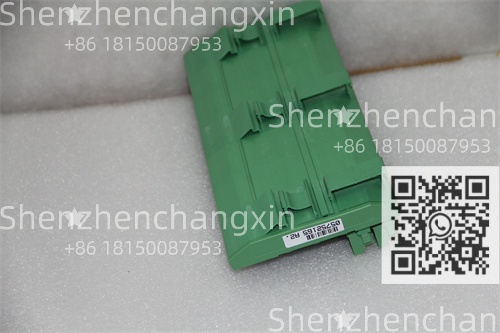
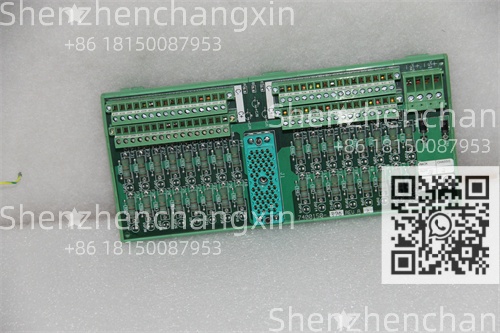
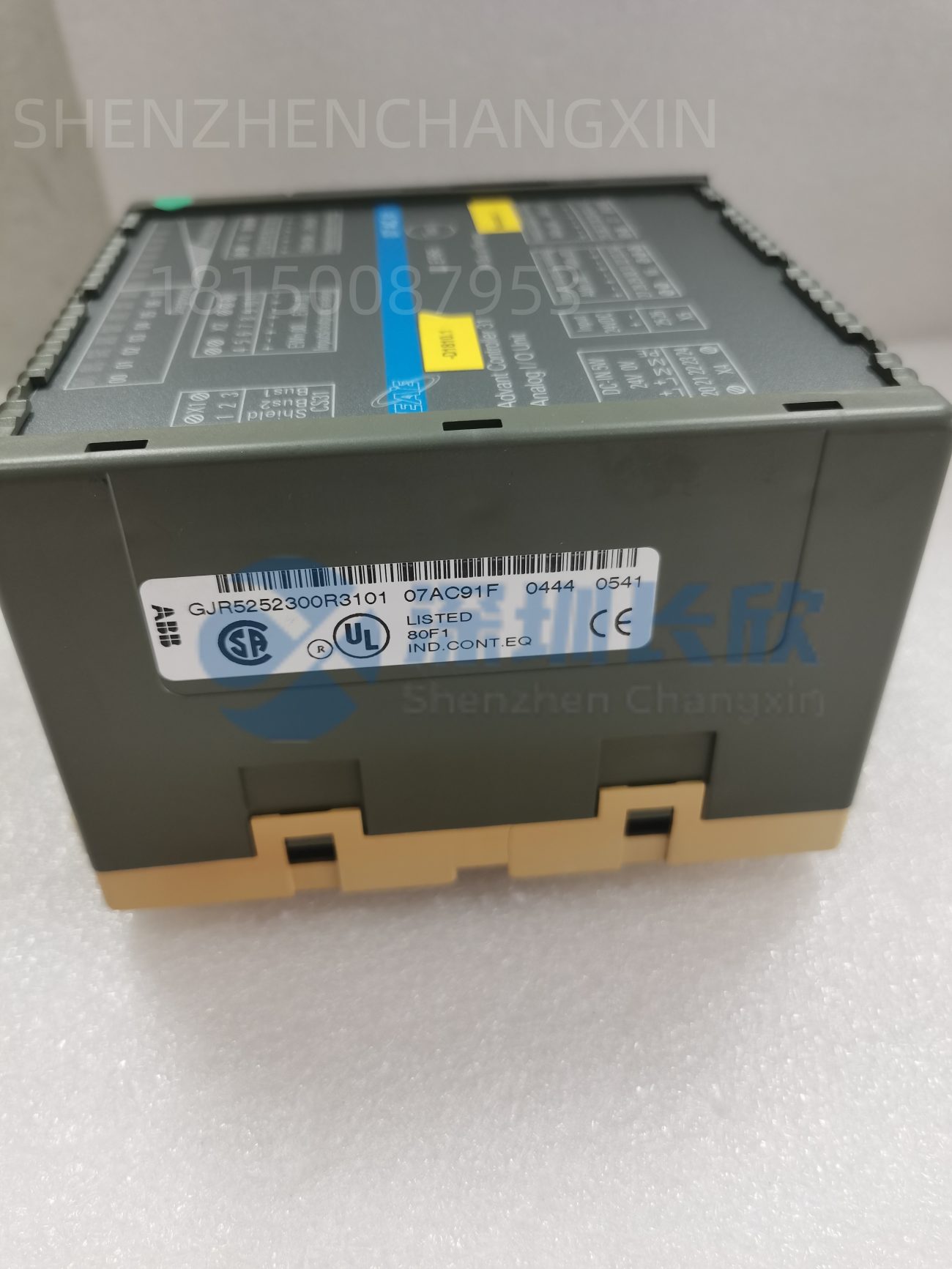
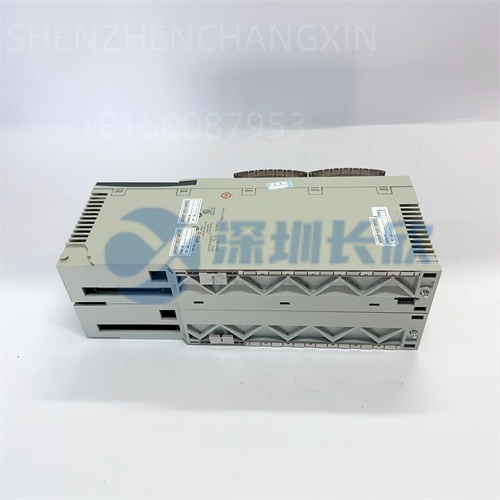
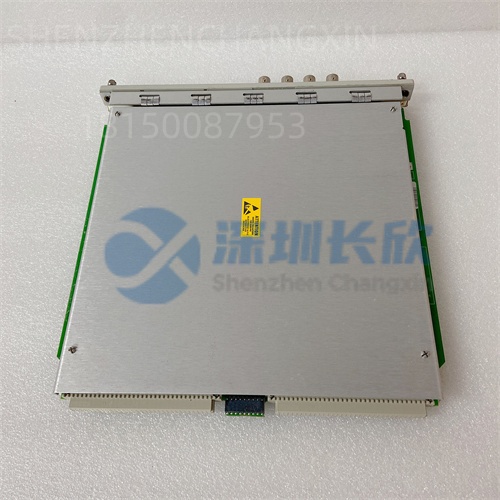
The TRICONEX 9566-8 is a critical communication module that functions as a Bus Interface or Bus Controller within the Tricon v9 and compatible safety instrumented systems. It is not an I/O module that directly connects to field devices. Instead, it serves as the vital communication gateway between the main Tricon processor chassis and remote I/O racks, or between multiple main chassis. It manages the deterministic, fault-tolerant exchange of data—sending input statuses to the processors and delivering output commands to the remote I/O modules—ensuring the entire distributed safety system operates as a cohesive, high-integrity unit.
Application Scenarios:
In a sprawling offshore oil and gas platform, safety-critical sensors and valves are distributed across multiple process areas, sometimes hundreds of meters apart. Installing all I/O in a single central location is impractical due to wiring costs and signal integrity issues. In this setup, a main Tricon controller chassis is located in the central control room, while several remote I/O racks are placed near the wellheads, separators, and compressors. A TRICONEX 9566-8 module resides in the main chassis, managing a high-speed, triplicated communication bus (like the TriBus) that connects to these remote racks. It continuously and reliably polls the remote I/O modules (like the 3008. 3503E, 3604E) for input data and broadcasts output commands, ensuring that a pressure spike detected at a remote wellhead is communicated to the main processors in real-time, and an emergency shutdown command is reliably sent back to the remote valve, all with the fault tolerance required for a SIL 3 safety system.
Detailed Parameter Table:
Technical Principles and Core Innovations:
The TRICONEX 9566-8 enables the scalable, distributed architecture that is a hallmark of the Tricon system, moving beyond a single chassis limitation.
Innovation Point 1: Deterministic, High-Integrity TMR Communication Protocol: The module manages a specialized communication bus that is not a standard network like Ethernet. This bus is designed for determinism (guaranteed scan times) and ultra-high reliability. It uses a triplicated or highly fault-tolerant protocol to send three copies of the data. The receiving end (another 9566-8 or a remote bus receiver) performs voting on this data, ensuring that a transient error on the communication cable does not cause an incorrect input to be seen or an erroneous output to be executed. This is essential for maintaining the system’s Safety Integrity Level (SIL).
Innovation Point 2: Enabling Scalable, Geographically Distributed Architecture: The primary value of the 9566-8 is that it breaks the physical constraint of the main chassis. By allowing I/O to be placed in remote racks closer to the field devices, it drastically reduces the cost, complexity, and potential failure points associated with long home-run field cables. It allows a single safety system to protect an entire facility from a central logic solver, simplifying engineering and maintenance.
Innovation Point 3: Seamless Integration and Synchronization: The module works in lockstep with the main TMR processors. It handles the precise timing of data acquisition from remote I/O and the delivery of output commands. This synchronization is critical to ensure that the logic solver has a consistent, time-aligned view of the entire process, allowing complex safety functions that depend on inputs from multiple remote locations to be executed correctly and predictably.
Typical Application Cases:
Case 1: Large Refinery Distributed ESD System: A major refinery implemented a plant-wide Emergency Shutdown (ESD) system using a single, centralized Tricon v9 controller. Over 20 remote I/O racks were installed in different units (crude, cracking, utilities). Each remote rack was connected back to the central controller chassis via a TRICONEX 9566-8 module and fault-tolerant communication trunks. This architecture saved thousands of hours in cable pulling and conduit installation. The reliability of the 9566-8 managed communication network was proven when a backhoe damaged one of the two redundant communication cables. The system seamlessly continued operation on the remaining cable without any loss of data or function, and an immediate alarm notified maintenance of the fault.
Case 2: Pipeline Compressor Station Protection: A series of compressor stations along a gas pipeline, each with its own local I/O rack for ESD valves and fire & gas detection, were all tied back to a single master Tricon controller at the main station via 9566-8 modules and fiber-optic communication links. This allowed centralized monitoring and control of safety functions for the entire pipeline section. The deterministic nature of the 9566-8’s communication ensured that a critical shutdown command issued from the master station would reach the remote station within a guaranteed, very short timeframe, meeting the safety requirement specification (SRS) for response time.
Related Product Combination Solutions:
Main Tricon Processor (e.g., MP 3008): The central processing unit that the 9566-8 module reports to and receives commands from.
Tricon Chassis/Backplane: The 9566-8 is installed in a slot in the main or communication chassis.
Remote I/O Pack (e.g., with 9565-810 module): The remote chassis that houses field I/O modules. It contains a complementary communication module (like a 9565-810 remote bus receiver) that communicates with the 9566-8.
Communication Media: Specialized triaxial cables, fiber optic cables, or other media that form the physical link between the 9566-8 and the remote nodes.
Tricon I/O Modules (e.g., 3008. 3503E, 3625): The actual input and output modules that are housed in the remote racks, whose data is transported by the network managed by the 9566-8.
TriStation 1131 Engineering Software: Used to configure the communication parameters, network topology, and scan times for the system that includes the 9566-8.
Redundant Power Supply (8312): Provides clean, reliable power to the chassis housing the 9566-8. as communication integrity is paramount.
Installation, Maintenance, and Full-Cycle Support:
Installation requires strict adherence to system design. The module is inserted into a designated slot in the main chassis. Critical attention must be paid to the communication cabling: correct cable type, termination, routing (away from power cables), and grounding as per Tricon installation manuals. Configuration of network addresses, scan rates, and diagnostics is performed within the TriStation 1131 project.
Maintenance is primarily proactive. The module’s status LEDs and system diagnostics should be monitored regularly. The module is typically hot-swappable. In the event of a suspected failure, the faulty 9566-8 can be replaced online by carefully following the hot-swap procedure, which usually involves placing the specific communication bus in a “safe” or “degraded” mode before replacement. It is critical to replace it with a module of the exact same part number and firmware revision. We supply the genuine TRICONEX 9566-8 module. Our technical support can assist with compatibility verification and provide guidance on the replacement procedure to ensure the integrity of your safety network is maintained.
Contact us for the genuine TRICONEX 9566-8 communication module to ensure the robust and reliable data backbone of your distributed safety instrumented system.