Product Overview
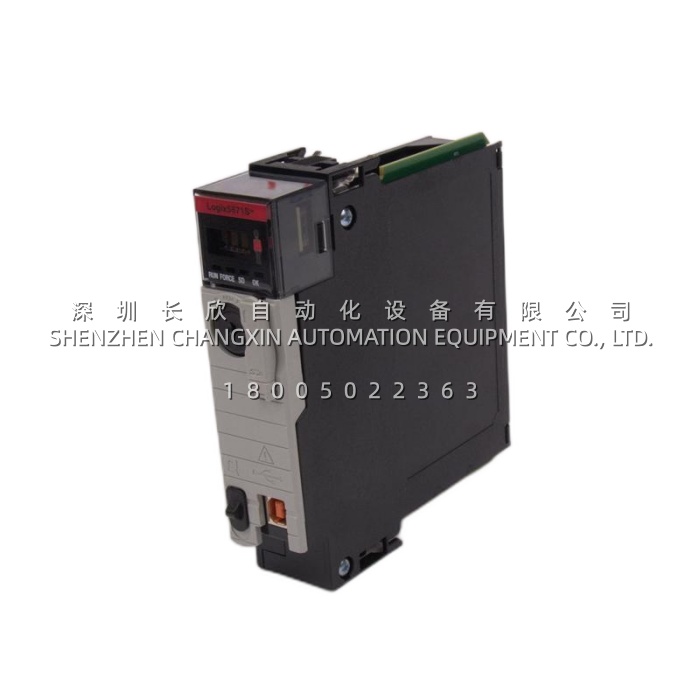
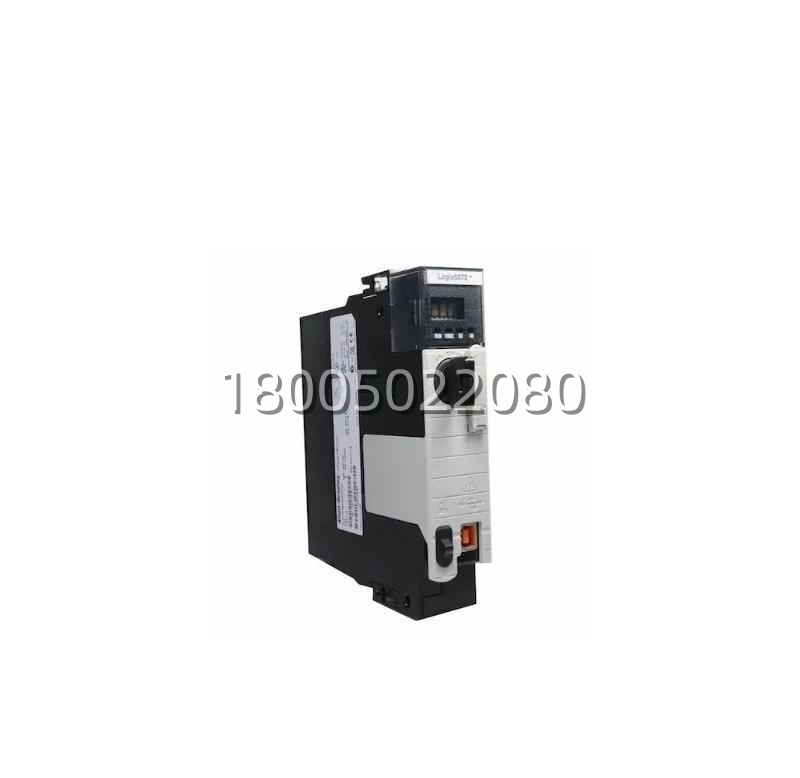
The Allen-Bradley 1756-L71 is a high-performance ControlLogix controller, a central processing unit (CPU) within Rockwell Automation’s premier ControlLogix 5560 series programmable automation controller (PAC) family. It is engineered to serve as the computational brain for the most demanding and complex automation systems, seamlessly blending capabilities traditionally associated with separate programmable logic controllers (PLCs), distributed control systems (DCS), motion controllers, and safety systems. The Allen-Bradley 1756-L71 executes the control strategy stored in its user memory, managing logic execution, data handling, communication coordination, and specialized functions like motion control and integrated safety. Its core value proposition is providing a unified, multi-discipline control platform that simplifies architecture, reduces lifecycle costs, and enhances system performance and information flow across an entire plant or production facility.As part of the ControlLogix platform, the 1756-L71 is a modular controller installed in a 1756 chassis. The “L71” model specifically denotes a controller with 2 MB of user memory and an integrated dual-port 10/100 Mbps Ethernet interface, along with a serial port. This controller is designed for scalability and integration; it can handle tens of thousands of I/O points, coordinate multiple servo axes, execute process PID loops, and manage safety interlocks—all within a single, synchronized control environment using Rockwell’s Studio 5000 Logix Designer software. In a modern distributed control system (DCS) architecture, the Allen-Bradley 1756-L71 often acts as a unit controller or area supervisor, orchestrating lower-level controllers and intelligent devices while providing a unified data model for superior visualization, analytics, and enterprise connectivity. Its robustness, extensive communication options (via network modules), and powerful processing make it a cornerstone for mission-critical applications where reliability, deterministic performance, and seamless information integration are paramount. The 1756-L71 is not merely a controller; it is a strategic platform for achieving integrated control and information objectives.
Technical Specifications
| Parameter Name | Parameter Value |
|---|---|
| Product Model | 1756-L71 |
| Manufacturer | Allen-Bradley / Rockwell Automation |
| Product Type | ControlLogix Series 5561 Programmable Automation Controller (CPU) |
| Series | ControlLogix 5560 |
| User Memory | 2.0 MB |
| I/O Capacity | Up to 250 connections (mix of local, remote, produced/consumed tags) |
| Backplane Speed | Supports ControlLogix XT (high-speed) and standard backplanes |
| Integrated Ports | Dual 10/100 Mbps Ethernet (Dual IP), 1 RS-232 Serial (DF1, DH-485) |
| Motion Capability | Supports up to 16 axes of coordinated motion (Kinetix integrated motion) |
| Integrated Safety | Supports up to 8 GuardLogix safety partner axes (with appropriate firmware) |
| Tasks/Programs | Supports multiple continuous, periodic, and event-driven tasks |
| Communication | Native support for EtherNet/IP, ControlNet, DeviceNet via communication modules |
| Real-Time Clock | Battery-backed |
| Programming Software | Studio 5000 Logix Designer |
| Operating Temperature | 0 to 60°C (32 to 140°F) |
| Power Supply | Powered by the 1756 chassis backplane (requires 1756 power supply) |
Main Features and Advantages
The Allen-Bradley 1756-L71 ControlLogix controller distinguishes itself through its unparalleled integration capabilities and robust performance. Its most significant feature is the unified programming and tag-based database within Studio 5000 Logix Designer. This allows developers to create logic for discrete control, process control (PID, sequence), motion, and safety in a single project with a common set of tags, eliminating the need for complex mappings between separate controllers and dramatically reducing programming, commissioning, and troubleshooting time. The controller’s 2 MB of user memory supports large, complex applications, and its powerful processor ensures fast, deterministic scan times for time-critical control loops and high-speed motion.Advanced Networking and Scalable Architecture: The integrated dual-port Ethernet interface is a major advantage. It provides device-level ring (DLR) capability for network resiliency and allows for direct connection to plant networks for HMI, SCADA, and MES/ERP system integration without additional hardware. The 1756-L71 seamlessly communicates with a vast ecosystem of Allen-Bradley I/O (Point, ArmorBlock, FLEX), drives (PowerFlex, Kinetix), and other devices over EtherNet/IP, creating a truly integrated architecture. Its support for produced/consumed tags enables high-performance, deterministic data sharing between multiple controllers without complex messaging logic. Furthermore, the controller supports integrated motion, allowing it to directly command Kinetix servo drives over EtherNet/IP for precise coordination, and integrated safety (GuardLogix), enabling safety and standard control to co-reside, sharing data natively for simpler and more intelligent safety functions. This combination of raw power, deep integration, and network-centric design makes the Allen-Bradley 1756-L71 a future-proof platform capable of evolving with changing production needs.