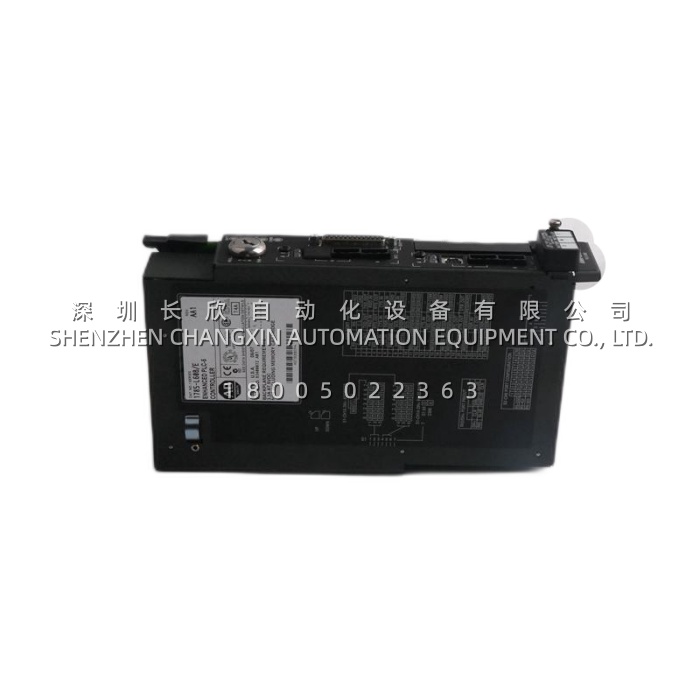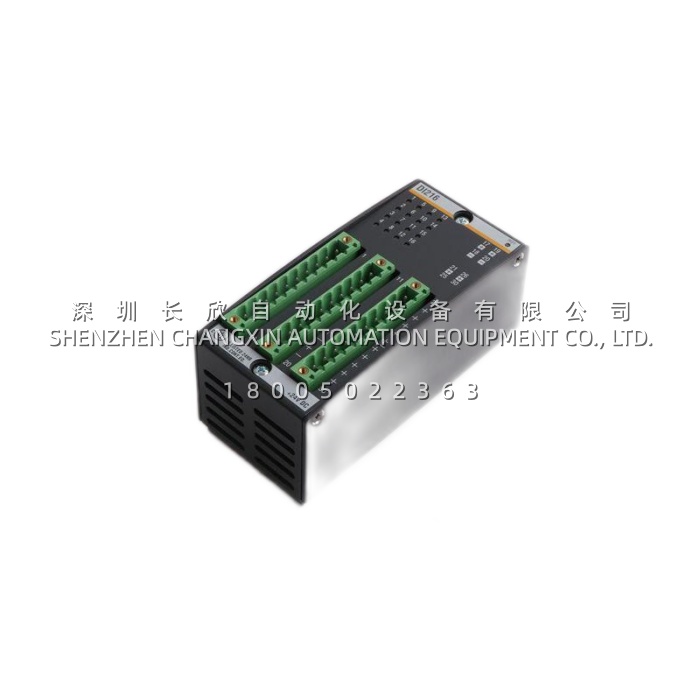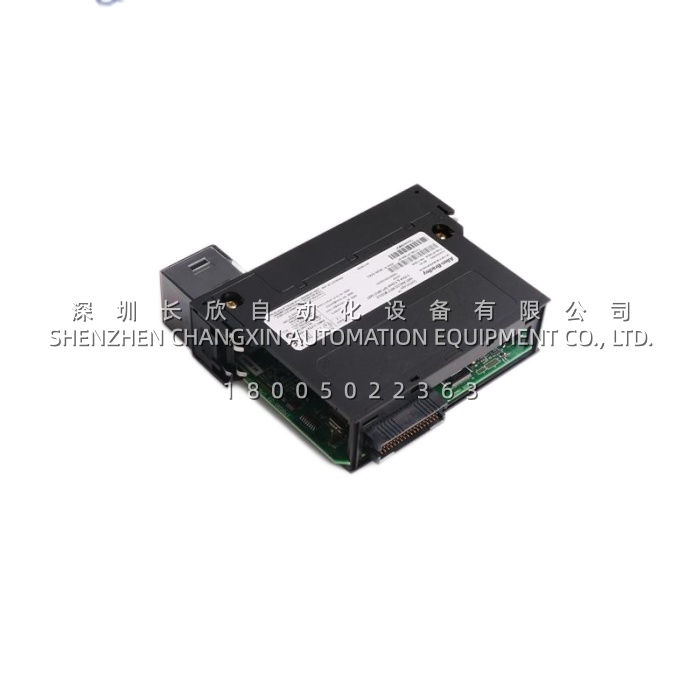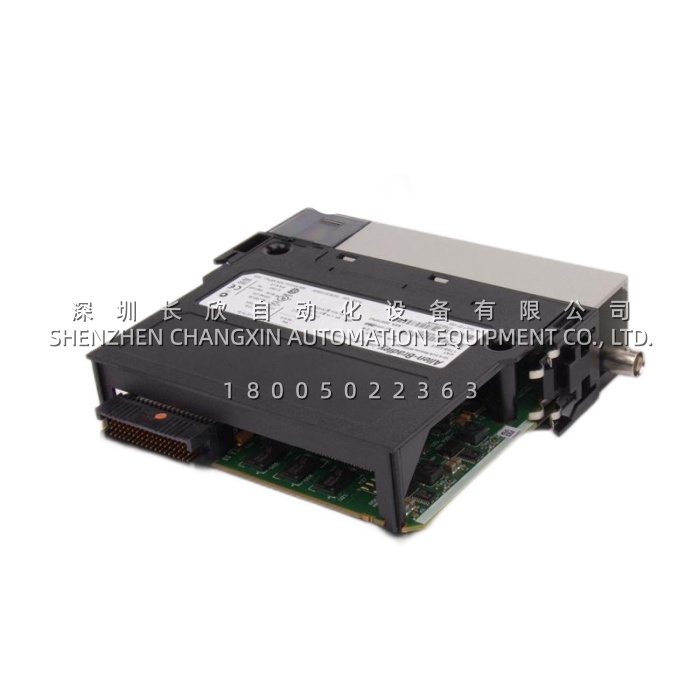
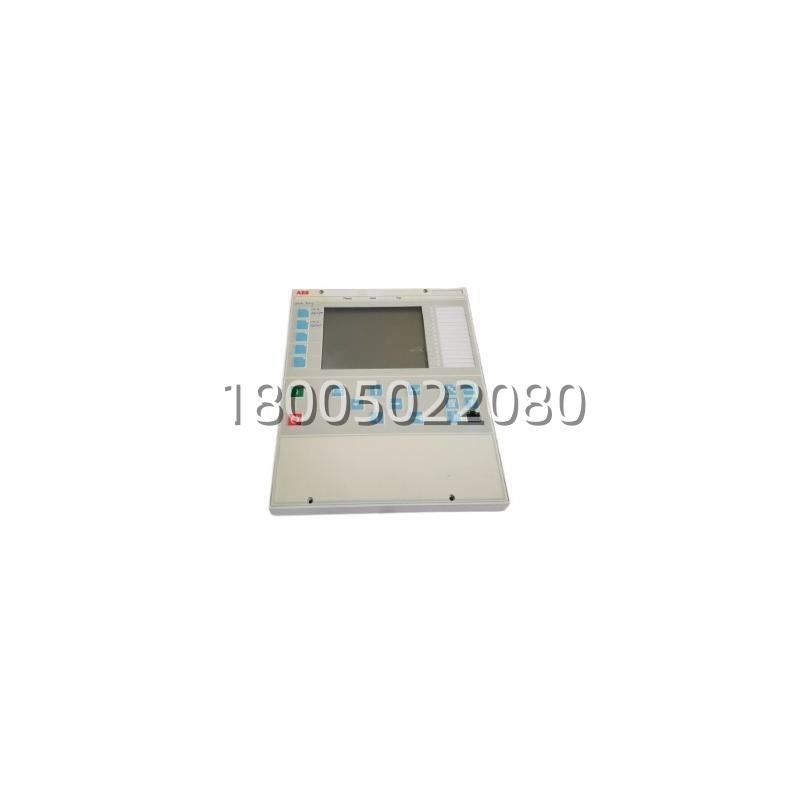
DescriptionThe ABB A0810V2 (commonly referenced as the AO810V2, order code 3BSE038415R1) is an 8-channel analog current output module belonging to ABB’s S800 I/O series, designed for use with AC 800M controllers and ABB Freelance systems. It converts digital control values from the controller into precise 0–20 mA or 4–20 mA analog current signals to drive field devices such as control valves, variable frequency drives, and indicating meters, with group-wise galvanic isolation and comprehensive onboard diagnostics.h2 Application ScenariosPicture a continuous pharmaceutical blending process where three jacketed reactors require tight modulation of steam-control valves and cooling-water throttling valves via 4–20 mA signals. The plant’s AC 800M DCS originally used an S800 I/O rack with an ABB A0810V2 (AO810V2) driving all eight analog loops. After 12 years, one channel begins to drift and fails the open-circuit self-test, flagging a channel error on the control room HMI. Rather than re-engineering the I/O layout, the maintenance team sources a functionally tested A0810V2, powers down the MTU, extracts the old module, and inserts the replacement. The DCS automatically recognizes the module via the ModuleBus; no download or re-addressing is required. Within minutes, all eight valve loops resume accurate positioning with the module’s Override Set Point (OSP) and open-circuit detection actively monitoring loop integrity—eliminating spurious valve drops during brief communications interruptions. This scenario highlights the A0810V2‘s practical value: it keeps mature S800 I/O architectures running with minimal MTTR and zero disruption to the control strategy.h2
Parameter
| Main Parameters | Value/Description |
|---|---|
| Product Model | A0810V2 (AO810V2) |
| ABB Order Code | 3BSE038415R1 |
| Manufacturer | ABB (S800 I/O Series) |
| Product Category | Analog Output Module (Current, 8 Channels) |
| Output Signal | 0–20 mA / 4–20 mA DC (selectable per channel group) |
| Number of Channels | 8 (group-wise isolated) |
| Resolution | 14-bit D/A conversion |
| Accuracy | ±0.1 % of Full Scale (at 0–500 Ω load) |
| Output Load (Max) | ≤ 500 Ω (L1+ supply) / 250–850 Ω (L2+ supply option) |
| Isolation | Galvanically isolated from ground / ModuleBus (group-wise) |
| Update Time | ≤ 2 ms (all channels) |
| Diagnostics | Open-circuit detection, process power supervision, module self-test |
| Rated Insulation Voltage | 50 V |
| Power Dissipation | Typ. 2.3 W |
| Operating Temperature | 0 °C to +55 °C (IEC 61131-2) |
| Mounting | Plugs into S800 MTU (TU810 / TU812 / TU830 / TU833 etc.) |
| Dimensions (W×D×H) | 45 × 102 × 119 mm |
| Weight | ≈ 0.18 kg |
h2 Technical Principles and Innovative ValuesThe A0810V2 is engineered for high-integrity analog signal generation in distributed control environments.
- Innovation Point 1 – 14-Bit High-Resolution D/A with Read-Back Verification: The A0810V2 uses a precision 14-bit digital-to-analog converter per channel group and performs serial read-back of D/A register data every cycle. This verifies that the commanded value was correctly latched into the converter, catching communication errors before they can affect field devices.
- Innovation Point 2 – Active Open-Circuit & Process Power Supervision: Each channel continuously monitors the loop current. If the output is commanded above 1 mA but the measured current falls below a threshold (indicating a broken wire or disconnected transmitter/actuator), the module reports a channel error. Process power supply to the output stage is also supervised—any under-voltage is flagged as a module fault, enabling proactive maintenance.
- Innovation Point 3 – Override Set Point (OSP) on Communication Loss: The A0810V2 supports configurable OSP—upon detection of ModuleBus communication failure, outputs can freeze, go to a predefined safe value, or follow a last-good-value hold. This prevents uncontrolled valve movement during controller or network faults, a critical safety and continuity feature in continuous-process applications.