Description
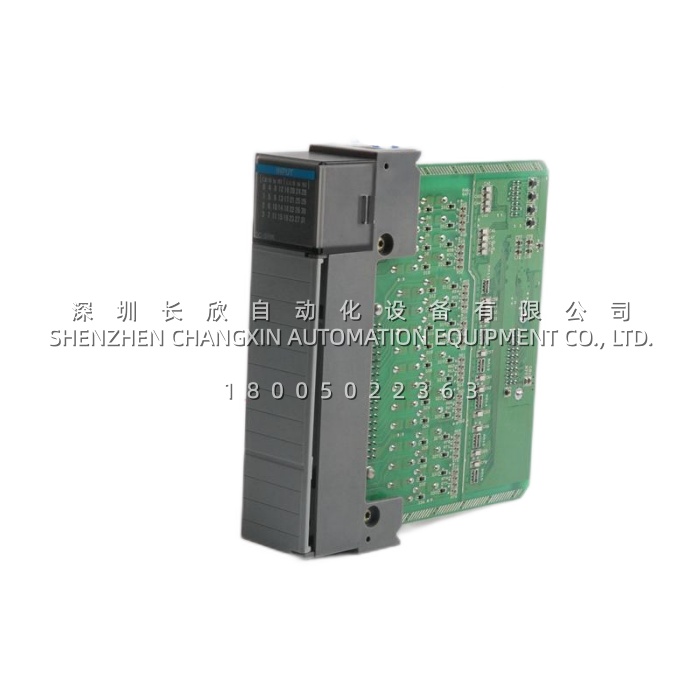
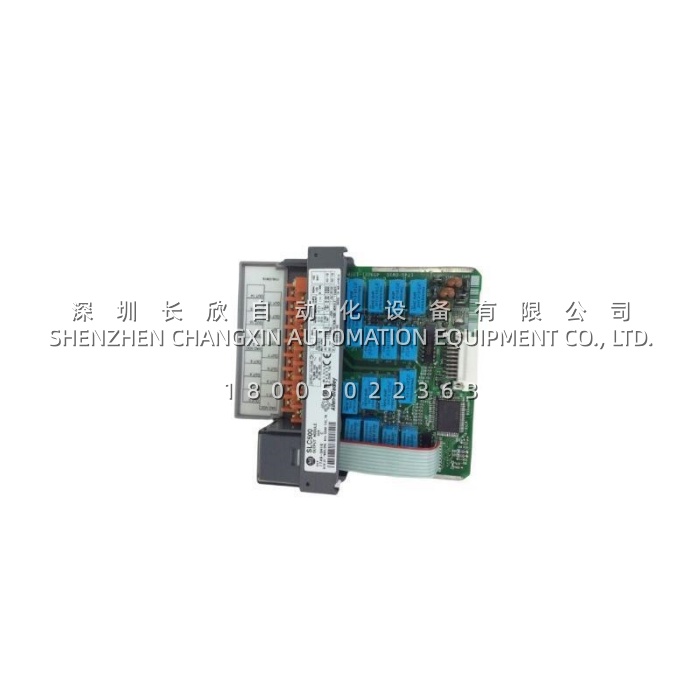
The 1794-IB32 is a 32-point, 24V DC sinking input module within the Allen-Bradley 1794 FLEX I/O family, manufactured by Rockwell Automation. It packs 32 discrete DC inputs into a single 1794 slot by organizing them into four electrically isolated groups of eight, each with its own common. Rated for 10–31V DC field voltage (24V DC nominal), the 1794-IB32 is built for high-point-count applications where cabinet real estate matters—packing twice the density of the 1794-IB16 and pairing naturally with 1794-OB32 outputs in FLEX I/O racks hanging off EtherNet/IP, DeviceNet, ControlNet, or Remote I/O adapters.
Application Scenarios
On a parcel-sortation tilt-tray line in a regional distribution hub, the integrator originally specced 1769-IQ16 (16 pt, 24V DC) chunks on a CompactLogix 1769-L33ER local rack for the 96 photo-eye sensors along the tray—six 16-pt modules, two full 1769 banks, plus expansion cables. When the line was extended by another 64 trays (adding 64 more PE sensors for zone accumulation), the 1769 rack ran out of slots, and adding a second 1769 chassis + 1769-PA4 + expansion cable was getting expensive per point. The fix was a 1794-AENT EtherNet/IP adapter with two 1794-IB32 modules on a short FLEX rail, mounted right on the catwalk truss 40 m from the main panel. 64 inputs in two FLEX slots, 1794-TBN terminal bases carrying the 24V DC PNP prox wiring—no rewiring if a module ever swaps, because the 1794 electronics snap off the TB. The 1794-IB32 2 ms input filter rejected the EMI spikes from the adjacent 480V VFD tray drives, and the four group commons let the integrator partition: group 0 = induction zones, group 1 = accumulate zones, group 2 = divert-ready, group 3 = spare. The cabinet space saved let them add a 1794-OB32 32-pt output module in the same FLEX arm for the divert-solenoid bank. The maintenance lead’s comment after six months: “We’ve swapped one 1794-IB32 during a PM—unscrewed the TB lid, popped the module, snapped the new one, 4 minutes. Didn’t touch a single PE wire.”
Parameter
| Main Parameters | Value/Description |
|---|---|
| Product Model | 1794-IB32 |
| Manufacturer | Allen-Bradley / Rockwell Automation |
| Product Category | FLEX I/O 24V DC Sinking Input Module |
| Inputs | 32 × 24V DC sink (10–31V DC range), 4 groups × 8 pts |
| Input Current | ~4 mA @ 24V DC per point (typical) |
| Response Time | OFF → ON: 2 ms max; ON → OFF: 2 ms max (hardware filter) |
| Backplane Current Draw | 120 mA @ 5V DC; 120 mA @ 24V DC (to adapter) |
| Isolation | 1500V AC field-to-backplane; 500V AC group-to-group |
| Terminal Base | Requires 1794-TBx (TBN, TB3, TB2, etc.) — field wiring lands on TB, module snaps on |
| Compatible Adapters | 1794-AENT (EtherNet/IP), 1794-ACN15 (ControlNet), 1794-ASB (RIO), 1794-AND (DeviceNet) |
| Operating Temp / Rating | -20 to 55 °C, IP20 (with TB), cULus, CE, ATEX Zone 2 |
| Mounting | 35 mm DIN rail (1794 rail or 1794-UM fold-out) |
Technical Principles and Innovative Values
- Innovation Point 1: 32 Inputs in One FLEX Slot via 4 × 8 Grouping. The 1794-IB32 doubles the point density of the 1794-IB16, making it the go-to for machines with sensor counts in the 64–128 range where a 1769 or 1756 rack would burn 4–8 slots. The four group commons (8 pts each) aren’t just a wiring convenience—they let you partition sensor power: e.g., group 0 on a fused 24V spur for safety-rated PEs, groups 1–3 on a separate spur for general prox. That partitioning is harder to achieve on a 1794-IB16 (2 × 8) without burning extra modules.
- Innovation Point 2: Snap-On Electronics over a Stay-Put Terminal Base. Like all 1794, the 1794-IB32 separates “electronics” from “wiring.” The 1794-TBN or 1794-TB3 terminal base carries the 32 sensor wires + 4 group commons + 24V/0V field power. The module itself snaps onto the TB with a latch. Swap a faulty 1794-IB32 and the screwdriver never comes out for the field wires. On a high-density sortation line with 32 PEs per module, that “no-rewire swap” pays for the FLEX premium over point-IO or 1769 the first time a module fails during peak season.
- Innovation Point 3: 2 ms Hardware Filter Matched to VFD-Heavy Environments. The 2 ms ON/OFF response on the 1794-IB32 is a deliberate hardware debounce, not a software timer. It rejects contact bounce from mechanical limit switches and, more importantly, the 480V VFD noise that couples into 24V DC sensor cables running in the same tray. A faster input (like 0.5 ms) would catch those noise spikes as false transitions; the 1794-IB32 filters them without eating CPU scan time. For applications needing faster, the 1794-IB16 (1 ms) or 1794-IJ (1 ms) exist—but for general PE/prox duty, 2 ms is the sweet spot.
Application Cases and Industry Value
Case 1 – Automotive Seat-Track Assembly (Discrete). An integrator built a 12-station dial with 38 24V DC PNP prox (part-present, cylinder-extended, clamp-closed, eject-verify) plus 12 dry-contact e-stop/guard strings. They used one 1794-IB32 (32 pts) + one 1794-IB16 (16 pts) on a 1794-AENT arm mounted on the dial rotor, connected back to the main panel via a 100 m Cat 6A single-run EtherNet/IP (no ControlNet coax, no blue hose RIO). The four group commons on the 1794-IB32 were wired: group 0 = e-stop/guard string (monitored by safety relay, then into the IB32 for logging), groups 1–3 = part-present + cylinder PEs partitioned by station banks. When a seat-track supplier changed one prox to a 2-wire PNP that drew more leakage current, the 1794-IB32‘s 4 mA nominal pull-up held it clean while the old 1794-IB16 on another cell false-triggered—leading to a BOM update: all new cells standardized on 1794-IB32 even where 16 pts would suffice, for the slightly stronger input circuit.Case 2 – Bulk-Bag Unload Station (Process). A chemical blender had 8 bulk-bag unload stations, each with 4 float switches (low/low-low/high/high-high) on the day-tank, plus 4 paddle-probes on the screw-feeder, plus 4 pushbutton+EO (emergency-override) = 12 DC inputs per station. Instead of 8 × 1769-IQ16 local racks, they went with 8 × 1794-AENT + 1794-IB32 (one per station, 12 pts used, 20 spare for future). The FLEX arm lived in a NEMA 4X box on the unload platform; the EtherNet/IP home run went back to the ControlLogix 1756-EN2T in the main MCC 200 m away. When one station’s float-switch wiring got chewed by a forklift (short to 24V), the 1794-IB32 group-common fuse blew—only that group went dark, the other three groups on the same module stayed alive. The plant engineer called that “fault containment you don’t get on a 1769-IQ16 single-common.”