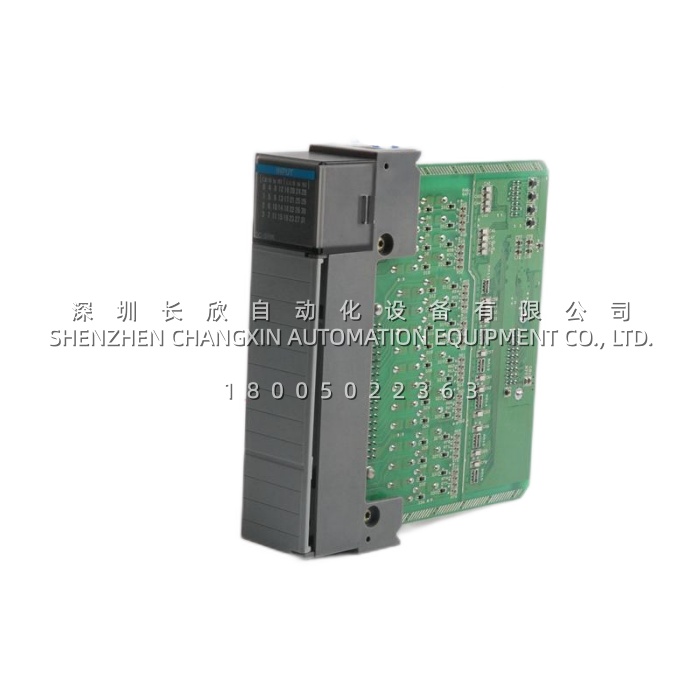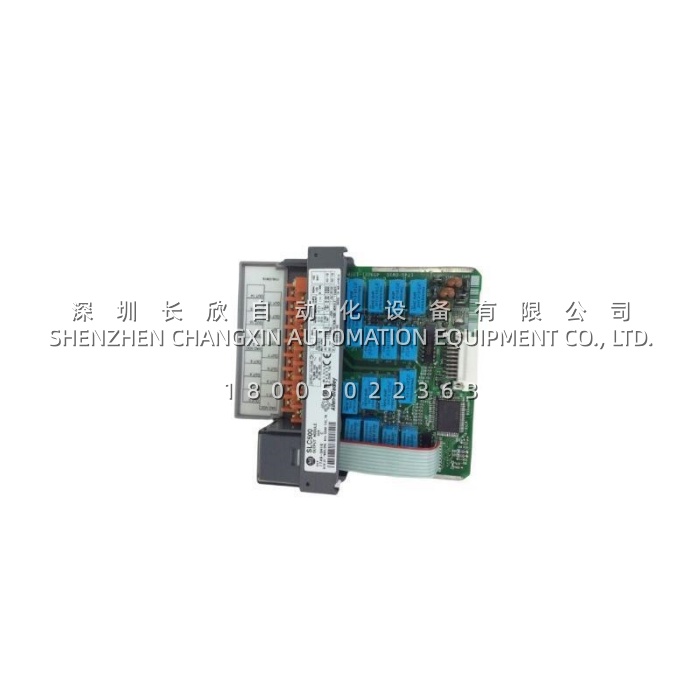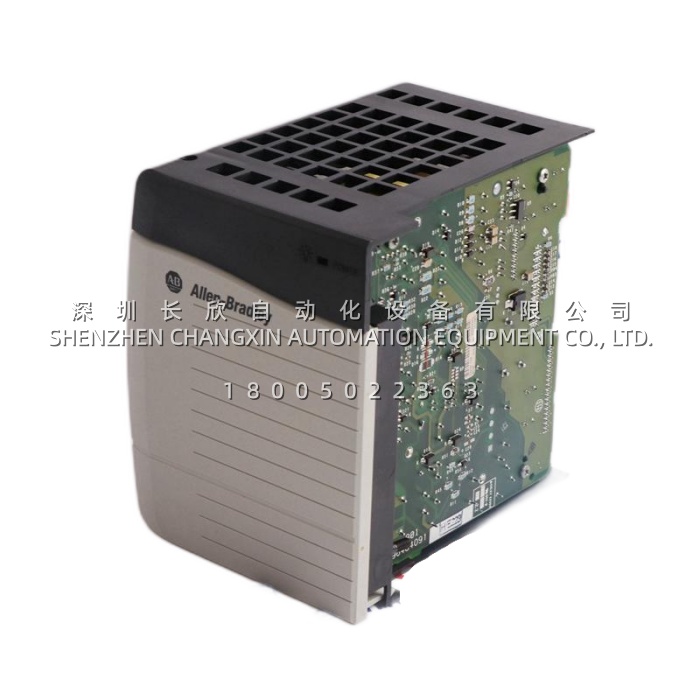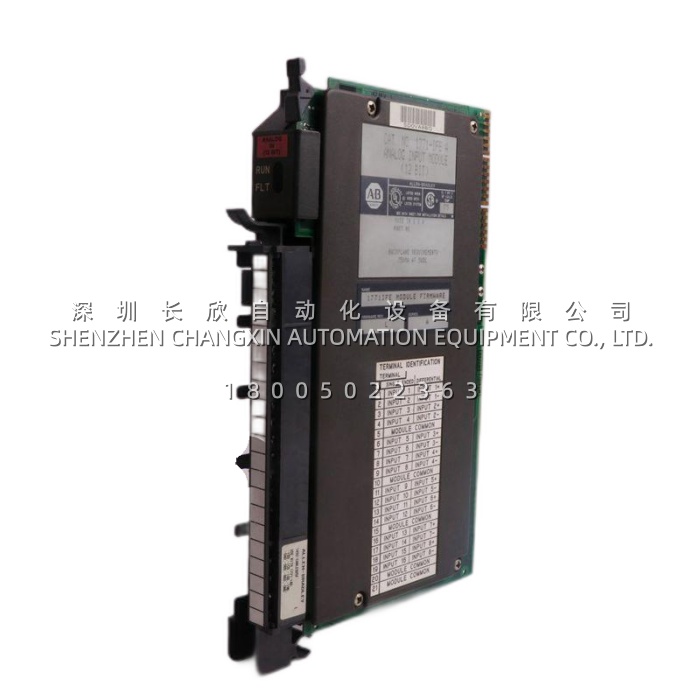
Product Overview
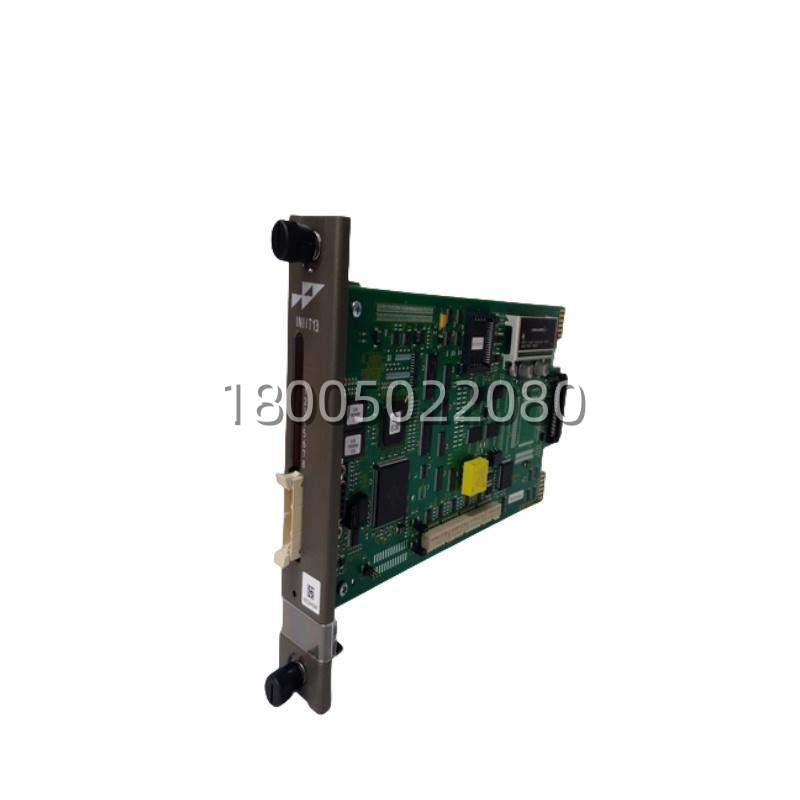
The ABB PPC907BE101 (order No. 3BHE024577R0101) is the high-performance central processing unit (CPU) in ABB’s AC 800M controller family, positioned as the direct evolutionary replacement for the PM864 and PM866 processors and as a peer to the PM891 in the AC 800M / 800xA / Freelance 800F ecosystem. Where the earlier PM864/PM866 topped out on memory and Ethernet throughput for plants trying to run Model Predictive Control (MPC) layers, large recipe sets, and months of on-controller trend data, the PPC907BE101 arrives with a dual-core PowerPC-class embedded processor at 800 MHz, 512 MB RAM, and 1 GB Flash — enough headroom that the control-task scheduler isn’t the bottleneck anymore. The module seats in a standard AC 800M rack (the same 19″/DIN hybrid rack that carries the CI communication interface units, the SB redundant PSUs, and the S800 remote-I/O links), draws DC from the rack backplane, and talks to the world through 2× 10/100/1000 Mbps Ethernet (control net + service/engineering) plus 2× serial (RS-232/485) — the same physical I/O complement as the PM866 it replaces, but with GigE instead of 10/100 and substantially more RAM/Flash.What makes the ABB PPC907BE101 land on MRO spare lists is the PM864→PM866→PPC907BE101 migration path that most AC 800M plants are now mid-way through. The PPC907BE101 is register- and footprint-compatible with the PM866 slot — same mechanical, same backplane connector, same CI854A/CI873 companion modules — so upgrading a rack from PM866 to PPC907BE101 is a slide-out-slide-in with a Control Builder M download, no rewiring, no I/O reshuffle. For plants standardized on 800xA (refinery crude-unit DCS, pulp-machine DCS, power-gen balance-of-plant) or on Freelance 800F (skid fleets, packaged-boiler UCPs, water plants), the ABB PPC907BE101 is the “future-safe” CPU SKU — it supports >50 000 I/O points per controller, 1 ms minimum scan when the task is configured tight, and 1:1 hot-standby via redundant backplane + sync fiber/cable so the standby CPU mirrors the primary’s data table and cuts over on a fault without a process bump. The BE101 suffix is the revision code — ABB uses BE, BF, BG etc. to track firmware/component stepping on the PPC907 base, and while BE101 is backward-compatible to PM866 BOMs, mixing BE101 and a newer BE10x in the same redundant pair is not recommended (sync protocol expects matched firmware across primaries).One honest ambiguity to flag before we go deeper: some distributor listings also attach “PPC907BE101” to ABB ACS6000 MV-drive gate-driver boards or AMC34/ACS2000/DCS800 drive-control PCBs under the same 3BHE024577R0101 order number — those are different BOM loads of the same PCB artwork (drive version = fiber up/down to GDU, ±15 V backplane, <12 W, no Ethernet) vs. the DCS version (Ethernet, RAM/Flash, 24 V backplane, 15 W class). Since you tagged this “pcb dcs module,” this listing leads with the AC 800M CPU identity; if your host is a drive cubicle not a DCS rack, stop here and re-confirm the BOM — the drive-version PPC907BE101 and the DCS-version PPC907BE101 share the order number but not the function, and swapping one for the other will not end well.
Technical Specifications
| Parameter Name | Parameter Value |
|---|---|
| Product Model | PPC907BE101 |
| Order Number | 3BHE024577R0101 (user input “3_e024577r0101” normalizes to 3BHE) |
| Manufacturer | ABB |
| Product Type | AC 800M High-Performance CPU / Processor Module (DCS) |
| Processor | Dual-core PowerPC-class embedded, 800 MHz |
| RAM | 512 MB |
| Flash (Program Storage) | 1 GB (some docs cite 256 MB on early builds — confirm per unit label / BOM) |
| I/O Scan Cycle | Configurable, minimum 1 ms |
| Max I/O Capacity | > 50 000 I/O points per controller (distributed) |
| Communication Interfaces | 2 × 10/100/1000 Mbps Ethernet (control + service/engineering); 2 × Serial (RS-232 / RS-485) |
| Supported Protocols | Modbus TCP, Profibus DP (via CI module), Ethernet/IP, others per CI selection; IEC 61850 via 800xA |
| Redundancy | 1:1 hot-standby supported (primary + standby CPU, sync over fiber or sync cable, redundant backplane PSU recommended) |
| Programming / Engineering | ABB Control Builder M, System 800xA environment |
| Compliance | IEC 61131-3, IEC 61508 (SIL 2 ready), IEC 62443, IEC 61000-6-2/4 |
| Power Supply | AC 800M rack backplane DC (typical 24 V DC per rack PSU; some AC800M base rack configs use 5 V / ±12 V — confirm your rack manual) |
| Typical Power Dissipation | ~15 W (some sources cite 4.5–5 W idle, ~15 W load — verify per BOM) |
| Operating Temperature | 0 °C to +60 °C (some docs –25 to +70 for extended; confirm per unit label) |
| Storage Temperature | –40 °C to +85 °C |
| Humidity | 5–95% RH, non-condensing |
| Protection | IP20 (rack interior, control cabinet) |
| Mounting | AC 800M standard rack slot (guided insertion, retaining screws) |
| Certifications | CE, UL, cUL |
| Dimensions (approx.) | AC 800M CPU form factor (~220 × 150 mm class typical for PPC/PM-class; confirm per mechanical drawing) |
| Weight (approx.) | 0.30–0.38 kg (typical for AC800M CPU-class PWA) |
Main Features and Advantages
800 MHz dual-core + 512 MB / 1 GB = headroom for MPC and big recipes. The ABB PPC907BE101 exists because PM864/PM866 started hitting ceiling on plants that wanted MPC on the controller (not on a side-car OPC server), or wanted 6 months of 1-second trends stored locally, or wanted 200+ AO loops with PID+ratio+cascade on one controller. The 800 MHz dual-core PowerPC and the 1 GB Flash mean the PPC907BE101 can hold multiple配方 (recipes), months of compressed trend, and a Modelon/MATLAB-generated MPC kernel without the task scan jittering. For a refinery crude-unit DCS or a pulp-machine wet-end DCS where the controller already carries 3000+ I/O and 40+ PID blocks, the PM866 was breathing hard; the PPC907BE101 takes the shoulder off.GigE instead of 10/100. The two Ethernet ports on the ABB PPC907BE101 are 10/100/1000, which matters when the controller talks to: (a) a remote S800 I/O rack over ModuleBus/Profinet at high packet rate, (b) the 800xA Connectivity Server moving 10 000 events/min, (c) an Engineering WS doing a full download of a 50k-I/O application. On PM866, a big download could stretch minutes; on PPC907BE101 the pipe is 10× wider. For plants doing frequent online modifications (pharma batch recipe churn, refinery turnaround re-commissioning), that throughput shows up on the Gantt.Drop-in for PM866 — same slot, same CI, same S800. The ABB PPC907BE101 keeps the PM866 mechanical envelope, backplane pinout, and serial/ETH faceplate layout, so the migration path from PM866 → PPC907BE101 is: slide old PM866 out, slide PPC907BE101 in, boot, Control Builder M download, done. No CI854A/CI873/CI873 change, no S800 MTU re-looming, no I/O module swap. For MRO planners this means the “PM866 spare” SKU on the storeroom list can migrate to “PPC907BE101” over 12 months without obsoleting the CI/S800/SB racks around it. The BE101 suffix is the dispatch detail — ABB may step to BE102/BExx over time, and while BE101 → BE102 is usually firmware-forward-compatible, mixing BE101 primary + BE102 standby in a redundant pair is not recommended (sync expects matched firmware major.minor). Photograph the removed CPU label, match the BE1xx suffix, order.1:1 hot-standby with sync fiber. In AC 800M redundant configs, two PPC907BE101 CPUs sit in the same rack (or adjacent racks via extended sync), each on its own SB801/SB802 redundant PSU, linked by a sync fiber or sync cable that mirrors the primary’s data table to the standby at scan boundary. On a primary fault (CPU, backplane, PSU side A), the standby takes over without a process bump — the plant doesn’t see the DCS node blink. The ABB PPC907BE101 supports this natively; no extra license, no extra hardware beyond the second CPU + sync cable + redundant SB PSU. For power-gen balance-of-plant, refinery alkylation, pharma reactor — anywhere an SIL2 / high-availability node is specified — the PPC907BE101 redundant pair is the standard.SIL 2 ready, IEC 62443. The ABB PPC907BE101 is not a SIL-3 full-loop solution by itself (that needs S800 SIL-rated I/O + certified application), but the CPU itself is IEC 61508 SIL 2 capable and the rack/ethernet stack is IEC 62443 aligned, which matters for plants under NERC-CIP, IEC 62443 audits, or pharma 21 CFR 11 adjacent validation. The BE101 revision also tightened EMI/ESD tolerance over earlier PPC/PM builds — not something the operator sees, but the reliability log sees it at year 7.Honest limitations & dual-identity warning. The ABB PPC907BE101 is AC 800M only — it will not drop into an AC 800F (Freelance, that’s PM8xx/AC 700F/AC 800F — different rack), will not drop into an ACS6000 drive rack (that’s the other PPC907BE101 BOM load with fibers and ±15 V), and will not run 800xA if the FW license key doesn’t match (Control Builder M license ties to CPU serial). If your BOM says “PPC907BE101” but the host is a drive cubicle not a DCS rack, re-verify — the order number 3BHE024577R0101 alone doesn’t disambiguate drive-load vs DCS-load without the BOM context. Also: BE101 vs PM866 — the BE101 is the successor, not necessarily firmware-identical; a PM866 application downloads to BE101 fine, but a BE101-created application with features that didn’t exist on PM866 FW may not download backward to a PM866 if you’re mixing. Keep primaries and standbys on same suffix.