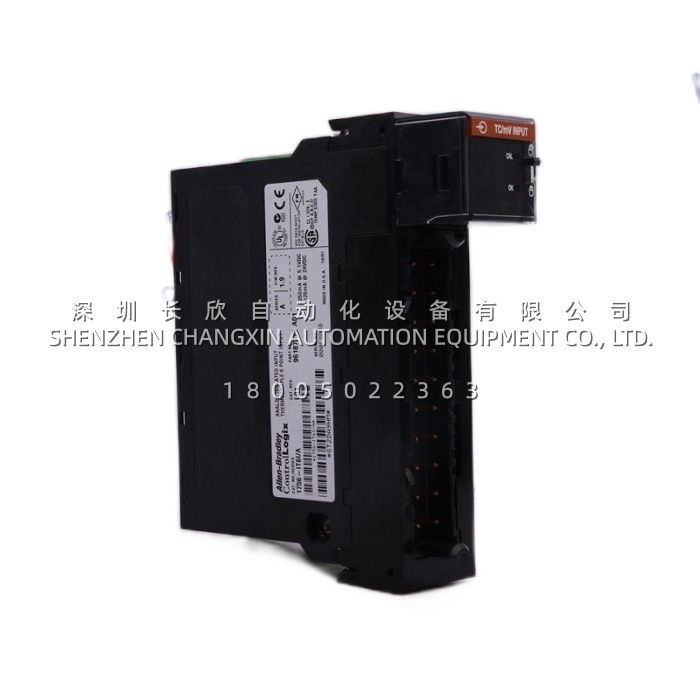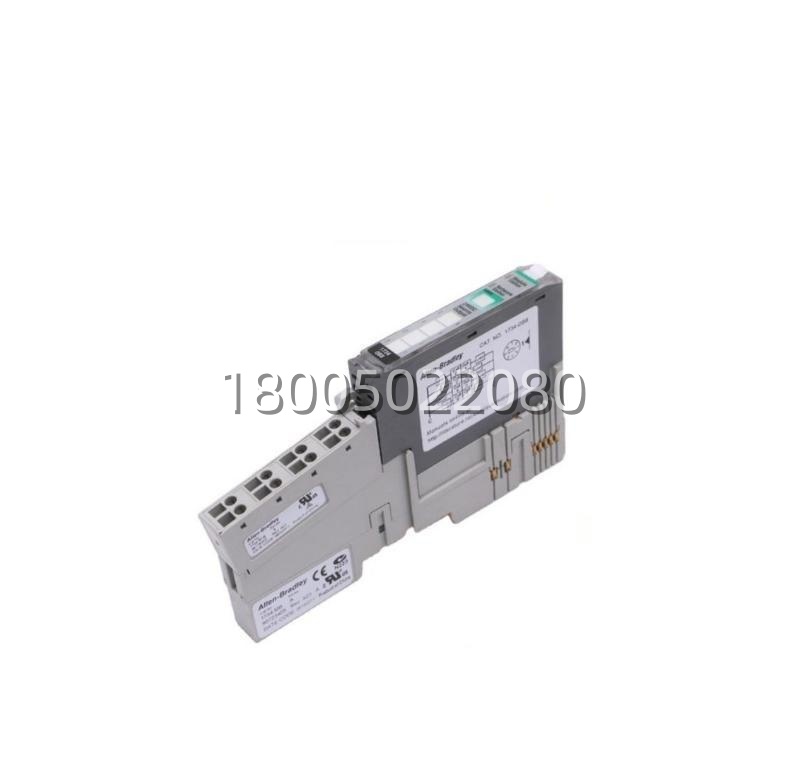
Product Overview
The Allen-Bradley 1785-CHBM is a ControlNet Bridge Module (CHBM) designed to occupy a standard chassis slot beneath a PLC-5 processor, providing the PLC-5 rack with a native ControlNet (CNet) node for I/O control, peer messaging, and network supervision. Within the PLC-5 ecosystem, processors such as the 1785-L40C, L60C, L80C, and L86C carried built-in ControlNet ports, but earlier or cost-tiered PLC-5 configurations without embedded CNet could add the 1785-CHBM to gain ControlNet connectivity without migrating to a ControlLogix chassis. The module interfaces via the 1785/1771 chassis backplane to the PLC-5 processor and presents a ControlNet media port (typically BNC coax on early revisions; later revisions may support RJ45 depending on CHBM sub-revision — verify per-unit) operating at the standard ControlNet 5 Mbps scheduled/unscheduled protocol. The 1785-CHBM can act as a ControlNet Keeper (network scheduler source) when configured, allowing the PLC-5 rack to serve as the CNet network’s timing master for a segment of ControlNet I/O adapters (1794-FLEX CNet, 1734-IB8S/OB8S CNet variants, 1756-CNB remote chassis, etc.) and peer PLC-5/ControlLogix/Smart devices.Architecturally, the 1785-CHBM communicates with the PLC-5 processor via the chassis backplane using block-transfer-like mechanisms and dedicated CNet handler firmware — the PLC-5 ladder/logic doesn’t see “ControlNet frames” directly but rather mapped I/O image tables and MSG instructions targeting CNet peers. The module draws chassis power from the 1785 rack’s AC/DC supply (shared with the PLC-5 processor and other 1785/1771 modules) and occupies a single full-size PLC-5 chassis slot. Rockwell released the 1785-CHBM during the PLC-5 ControlNet era (mid-1990s through 2000s) as ControlLogix was ramping; by the time Rockwell fully pivoted to ControlLogix/1756-CNB as the ControlNet standard, the 1785-CHBM entered maturity and eventual discontinuation alongside the broader PLC-5 platform. Today, the 1785-CHBM exists almost exclusively in the MRO/spare-parts channel: process plants, batch chemical skids, water/wastewater SCADA, and legacy automotive/metal lines commissioned in the 1995–2005 window that ran PLC-5 as CNet Keeper with 1785-CHBM as the physical CNet port, and where migrating to ControlLogix + 1756-CNB would require a panel/code rewrite the plant isn’t ready to fund. For those accounts, a spare 1785-CHBM on the shelf is cheaper than aPlatform migration.
Technical Specifications
| Parameter | Value |
|---|---|
| Product Model | 1785-CHBM |
| Manufacturer | Allen-Bradley (Rockwell Automation) |
| Product Type | PLC-5 ControlNet Bridge Module (CHBM) |
| Chassis Compatibility | 1785 PLC-5 chassis (A/B/C/E) under PLC-5 processor (L40C/L60C/L80C/L86C or non-C PLC-5 + CHBM combo) |
| Network Protocol | ControlNet (CNet), 5 Mbps, scheduled + unscheduled |
| Media Interface | BNC coax (early) / RJ45 (verify revision); standard ControlNet media |
| Keeper Function | Yes — can serve as ControlNet Keeper (schedule source) when configured |
| Backplane Interface | 1785/1771 chassis backplane to PLC-5 processor |
| Slot Width | Single full-size PLC-5 chassis slot |
| Power | From 1785 chassis backplane (120/220V AC rack supply) |
| Operating Temperature | 0 °C to 60 °C |
| Certifications | UL, CE (per PLC-5 chassis system certification) |
| Lifecycle Status | Discontinued (PLC-5 platform obsolete; MRO/spare only) |
| Companion Processors | 1785-L40C, L60C, L80C, L86C (built-in CNet) + non-C PLC-5 with CHBM added |
Main Features and Advantages
Adds ControlNet to PLC-5 Racks Without Processor SwapThe primary value of the 1785-CHBM is retrofit: a plant running a 1785-L40E (Ethernet-only) or L40L (DH+/Remote I/O) that later needed ControlNet for a FLEX I/O skid or a PowerFlex 700 CNet drive could drop a 1785-CHBM into an empty PLC-5 chassis slot and gain CNet without swapping the processor to an L40C. This protected the existing ladder logic, DH+ networking, and panel layout — a common 1998–2005 upgrade path before ControlLogix became the default.Keeper Capability for CNet Segment MasteryThe 1785-CHBM can be configured as the ControlNet Keeper — the node that broadcasts the CNet schedule (NUT — Network Update Time) at 5 Mbps, coordinating the 2–4 ms scheduled-band windows for I/O adapters and the unscheduled-band windows for messaging (MSG instructions, HMI polling). In many PLC-5 CNet installs, the 1785-CHBM (or the PLC-5 processor’s built-in CNet port on L40C/L60C/L80C) is the sole Keeper for a 10–20 node CNet segment serving FLEX I/O racks, PowerFlex CNet drives, and a PanelView 1400e CNet. If the Keeper dies, the CNet segment stalls — which is why a spare 1785-CHBM lives on the critical-spare shelf for any PLC-5 CNet line still sustained.Backward Compatibility With PLC-5 Ladder & MSG InstructionsBecause the 1785-CHBM maps CNet I/O into the PLC-5 processor’s I/O image (via rack/group/slot addressing familiar from Remote I/O) and handles CNet MSG instructions (meaning the PLC-5 ladder can MSGto a ControlLogix peer over CNet, or read a PowerFlex 700 CNet drive’s parameter table), the learning curve for maintenance staff is flat — they already know PLC-5 ladder, they already know MSG. The 1785-CHBM just makes CNet “appear” as another I/O rack to the processor.Legacy MRO PositioningWith Rockwell’s PLC-5 platform fully discontinued (last shipments ~2015, repair channel limited), the 1785-CHBM is purely an MRO line-item. Plants in water/wastewater, batch chemical, food & beverage, and metals that commissioned PLC-5 CNet in the late 1990s–early 2000s often still run those racks because “it fills tanks and prints batch reports, don’t touch it.” The 1785-CHBM failing is one of those “entire CNet segment goes red” events that gets a midnight call — hence the MRO stocking rationale. The module is solid-state, passive cooling, no moving parts, and the most common failure mode is the BNC coax connector center-pin wearing (coax CNet is fussy about termination — 75Ω BNC, T-connectors, terminators at both ends) or the backplane gold fingers oxidizing in humid panels.