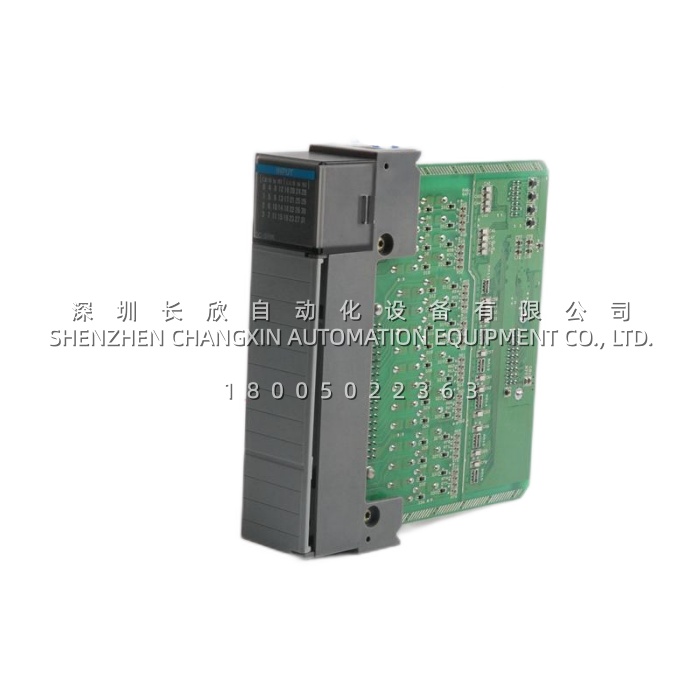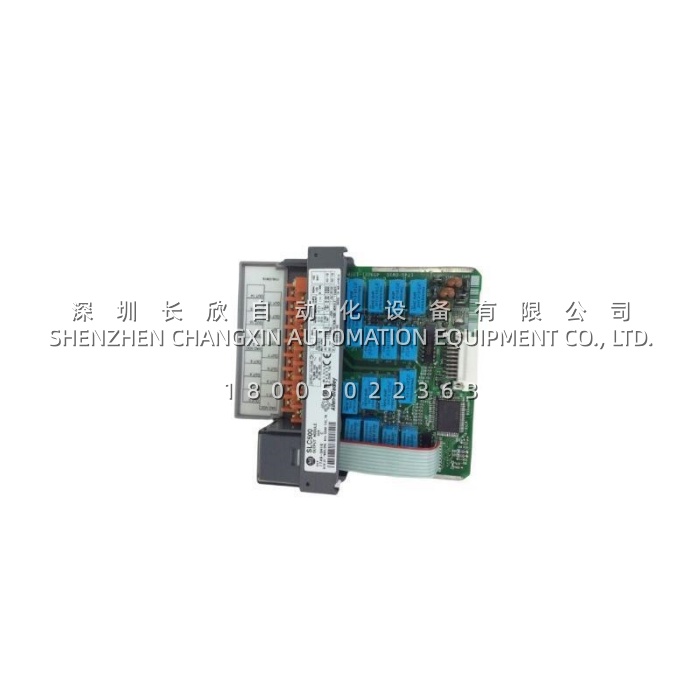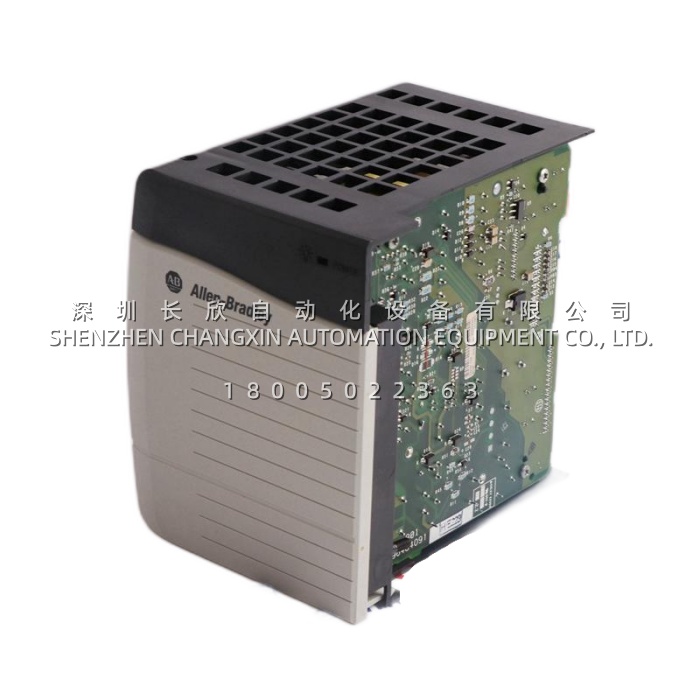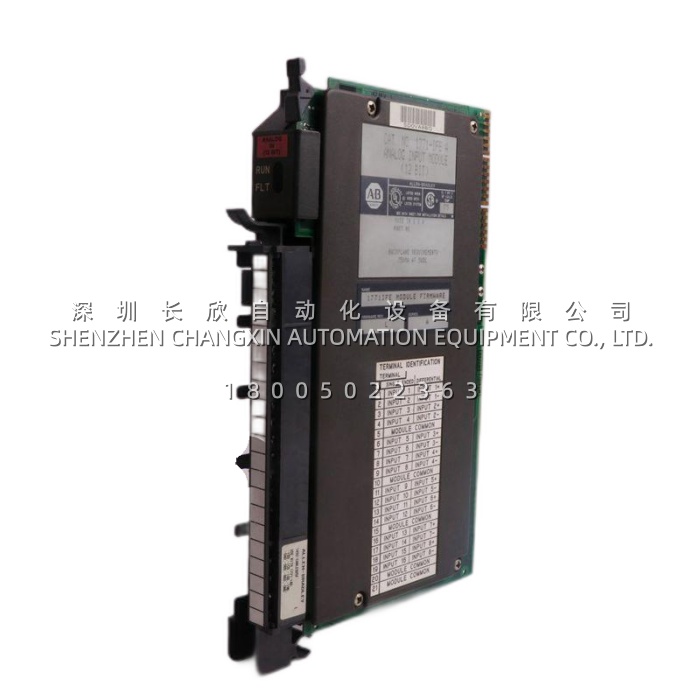
Application Scenarios
On a 320 MW coal-fired unit in Eastern Europe (original Procontrol P14 install, circa 2004), the mill-primary-air damper loop lived on a 83SR04D-E in rack B3 of the turbine-deck P14 cabinet: 4DI reading damper-open/closed/auto-select/local-ESTOP, 1AI reading the Doyle-positioner 4–20 mA feedback, 1AO driving the 4–20 mA to the damper actuator, 2DO firing the open/close contactors via the onboard relays. Summer 2022, the cabinet ambient near the forced-draft fan VFD wall hit 63 °C during a heatwave—the D-rev’s –20 to +60 °C rating was breached, and the AI channel started showing ±1.2 % drift on the position loop, triggering repeated “damper-follow-error” trips and three soot-blower over-pressure events. The fix was a like-for-like swap to 83SR04E-E—same GJR2390200Rxxxx footprint, same X11 (48-pin station bus) / X21 (32-pin process I/O) DIN41612 connectors, but the E-rev’s –25 to +65 °C envelope and tighter EMI filtering handled the FD-fan VFD hash without a cabinet A/C upgrade. The “hybrid” architecture meant that one 83SR04E-E still carried binary + analog on a single P14 slot—previously the plant had considered splitting to a dedicated binary SOE card + analog PI card (P13-style), which would have eaten a second slot and needed re-wiring. Post-swap, position-loop drift dropped to ±0.15 %, and the unit ran through the next two summers without a damper trip. The instrument engineer’s note: “The 83SR04E-E is the D-rev with a summer coat. If your P14 cabinet sees >60 °C, don’t wait for the D to fail—swap to E.”
Parameter
| Main Parameters | Value/Description |
|---|---|
| Product Model | 83SR04E-E (GJR2390200R1310) |
| Manufacturer | ABB (Sweden) |
| Product Category | Procontrol P14 DCS Hybrid (Binary + Analog) Control Board |
| I/O Configuration | 4 × DI, 2 × DO (relay, 2 A / 250V AC), 1 × AI (4–20 mA / 0–10V), 1 × AO (4–20 mA / 0–10V) |
| Power Supply | 85–264V AC wide-range (≈1.5 W consumption) |
| Communication | RS-485 Modbus RTU (station bus, X11 48-pin DIN41612) |
| Connectors | X11: 48-pin (station bus, DIN41612); X21: 32-pin (process I/O, DIN41612) |
| Functional Modes | 3 modes: Binary-primary + analog-aux / Analog-primary + binary-aux / Signal-conditioning with interference-bit |
| Mechanical | 6U, DIN41612, 160 × 100 × 34 mm, ~0.55 kg |
| Operating Temp | –25 to +65 °C (E-rev, +5 °C vs. D-rev) |
| Certifications | CE, UL, cULus, SIL 3 |
| Predecessor | 83SR04D-E (GJR2390200R1210); 83SR04A-E (GJR2390200R1010) |
Technical Principles and Innovative Values
- Innovation Point 1: Hybrid Binary + Analog on One 6U P14 Slot. The Procontrol P14 rack uses 6U DIN41612 modules where most competitors split binary and analog into separate cards. The 83SR04E-E crams 4DI + 2DO relay + 1AI + 1AO onto one board, with the firmware supporting three operational modes: (a) binary-primary with analog辅助 (think: motor starter with a 4–20 mA temp feedback), (b) analog-primary with binary辅助 (PID loop with start/stop/interlocks), and (c) signal-conditioning mode with an interference-bit output for filtered/isolated transducer duty. That flexibility means one spare SKU covers damper loops, lube-oil pump controls, and transducer-conditioning—three different P14 slot-types collapsed into one.
- Innovation Point 2: E-Revision Thermal & EMI Headroom. The 83SR04E-E is a targeted re-spin of the D-rev: operating window pushed from –20…+60 °C to –25…+65 °C, EMI rejection tightened (important in turbine-deck cabinets next to 6 kV FD/ID fan VFDs), and temperature-coefficient drift on the analog section reduced. For plants still on Procontrol P14—mostly 2000s-era installs now in their third refit cycle—the E-rev is a drop-in that buys another 8–10 years before a Symphony Plus migration. The “1” suffix in some distributor listings (83SR04E-E1) typically denotes a sub-revision or regional packaging variant; functionally it’s the same GJR2390200R1310 footprint.
- Innovation Point 3: SIL 3 on a Legacy 6U Architecture. Getting SIL 3 certification on a 2000s-vintage DCS board is non-trivial—the 83SR04E-E achieves it through redundant signal paths on the analog section, self-diagnostics on the relay drivers, and watchdog supervision from the Procontrol station CPU. For power-gen applications (turbine lube-oil pump auto-start, HPCI suction-loop interlocks), that SIL 3 rating lets the 83SR04E-E sit in safety-related loops without an external safety relay—something the older 83SR04A-E lacked.
Application Cases and Industry Value
Case 1 – Combined-Cycle GT Auxiliary Lube-Oil Skid (Power Gen). A 2×1 CCGT plant ran Procontrol P14 on both GT and ST auxiliary skids. The lube-oil pump “Lead/Standby/Auto-Start on Low Pressure” logic lived on a 83SR04E-E: 4DI = Pump-1-Run-FB, Pump-2-Run-FB, Low-Press-Switch (2× redundant DP cells, wired OR), ESTOP; 1AI = lube-pressure 4–20 mA (for analog-primary PID monitoring, even though the actual pump start is binary); 1AO = 4–20 mA to the local panel’s pressure gauge re-transmit; 2DO = Pump-1 Start Contactor, Pump-2 Start Contactor (via onboard 2 A relays, interposing to the 120V AC contactor coils). The SIL 3 rating mattered for the “auto-start on low pressure” — plant NERC/FP&L audit required SIL-capable logic for the lube-loop. When the plant did a P14 spare audit in 2023, they found three of their eight 83SR04E-E boards were still A-rev (2006 date codes, out of SIL cert renewal). Swapped all eight to E-rev in a planned outage—zero logic changes, same X11/X21 backplane seating, just firmware re-download. The I&C lead: “The 83SR04E-E is one of those ‘if it ain’t broke’ cards—except the E-rev fixed the drift we’d been seeing on hot days at the ST skid.”Case 2 – Pulp Mill Chip-Feeder Conveyor (Process). A kraft mill ran Procontrol P14 on the wood-yard chip-feeder conveyors. One 83SR04E-E per conveyor: 4DI = zero-speed (from a 4–20 mA speed pick-up, wired through a window-comparator to DI), local hand-off-auto, estop-string; 1AI = belt-load 4–20 mA (from the weightometer); 1AO = 4–20 mA speed command to the conveyor VFD; 2DO = conveyor start/stop contactors. The “signal-conditioning mode” on the 83SR04E-E was used here: the AI channel applied a rolling-average filter + interference-bit (if the weightometer 4–20 mA spiked >22 mA for >500 ms, the interference-bit went high and the AO held last-good value instead of passing the spike to the VFD). The plant’s wood-yard had a lot of RF hash from the two-way radios the operators carried—the E-rev’s EMI filter rejected that better than the D-rev they’d had previously (D-rev used to false-interference-bit on every radio key-down; E-rev stopped that).