Description
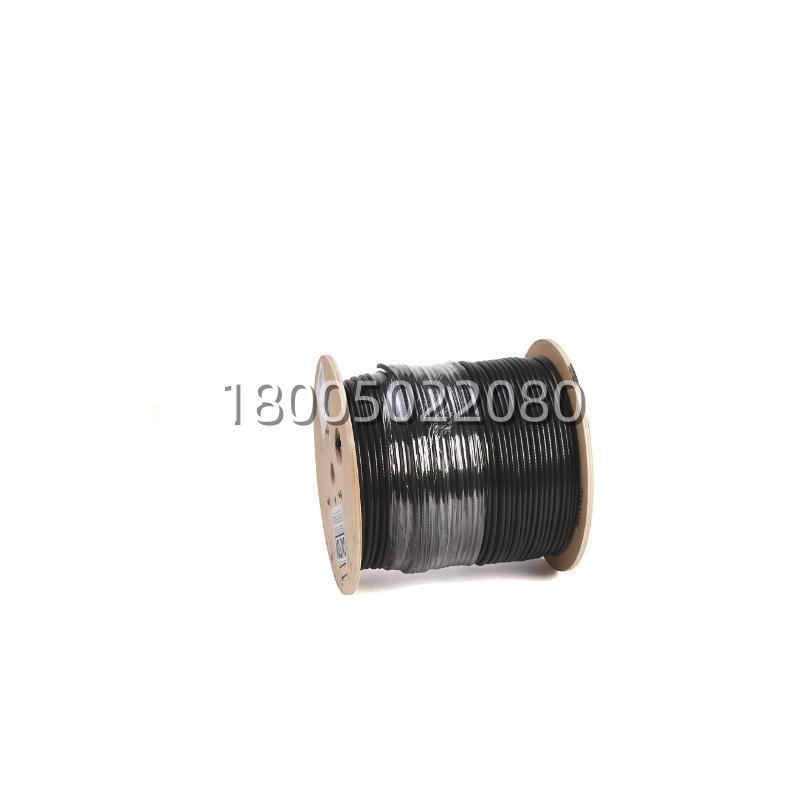
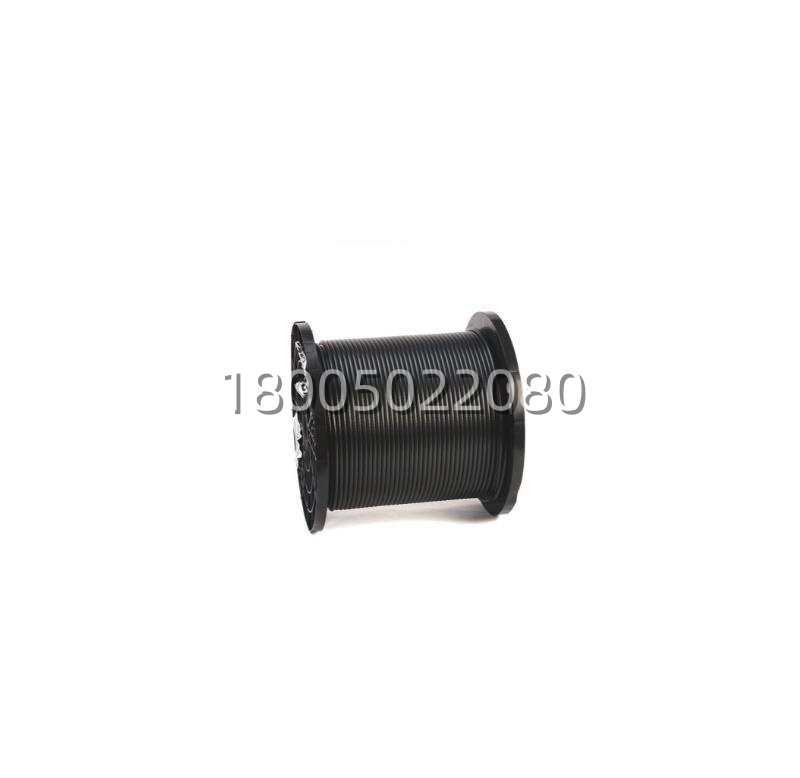
The 1786-RG6 is Rockwell Automation’s branded RG6 quad-shield coaxial cable purpose-built for ControlNet coax-trunk networks. Rated 75 Ω and constructed with an 18 AWG solid bare copper center conductor, dual foil wraps, and dual 60 % tinned-copper braids, this cable is the physical-layer backbone that carries ControlNet’s deterministic 5 Mbit/s token-passing traffic through the same cabinets that house VFDs, arc welders, and medium-voltage motor starters. While Rockwell has pushed ControlNet over RJ45 (1786-CFG series) and EtherNet/IP for greenfield, the 1786-RG6 remains the specified spare for thousands of PLC-5/ControlLogix cells where the coax trunk was installed in the late ’90s through 2010s and still delivers uptime the plant isn’t willing to gamble with.
Application Scenarios
At a Canadian kraft pulp mill, the #2 recovery boiler’s burner-management cell runs a ControlNet coax trunk with 34 taps—spread across the firing floor, the sootblower deck, and the forced-draft fan MCC—all hanging off a pair of 1756-CN2/B modules in a ControlLogix 5560 rack. After a 2019 VFD retrofit on the ID fans, the cell started throwing intermittent “NUT exceeded” (Network Update Time) faults every time all four ID fans ramped together—usually during a load swing that the boiler DCS cared about. The plant electrician’s first move was to check the CNB module; the second was to wiggle BNCs. The real culprit turned out to be the original installer’s “value-engineered” RG59 trunk someone had run 15 years prior—single shield, foam PE, 20 AWG CCS. Under the new VFD dI/dt, the RG59’s shield was acting as an antenna and corrupting the token at the 28th tap. Swapping the full 280 m run to 1786-RG6 (quad shield, solid BC, 75 Ω tight) killed the NUT faults on the first ramp test. The controls lead’s note in the CMMS: “Token rock solid. Should’ve done this before the VFD job.” The 1786-RG6 didn’t speed up the network—ControlNet is locked at 5 Mbps—but it stopped the noise from stealing tokens, which in a recovery-boiler BMS is the difference between a clean shift and a 4 a.m. turbine trip.
Parameter
| Main Parameters | Value/Description |
|---|---|
| Product Model | 1786-RG6 (also available: 1786-RG6P plenum, 1786-RG6W white, 1786-RG6B black) |
| Manufacturer | Rockwell Automation (Allen-Bradley) |
| Product Category | ControlNet RG6 Quad-Shield Coaxial Cable |
| Impedance | 75 Ω ± 3 Ω (matched to ControlNet PHY) |
| Center Conductor | 18 AWG (1.02 mm) solid bare copper (BC) |
| Dielectric | Gas-injected cellular PE, Ø 4.57 mm |
| Shield | Quad: 1st aluminum foil + 1st 60% TC braid + 2nd foil + 2nd 60% TC braid |
| Outer Jacket | PVC (CMR riser rated), black standard (RG6B) |
| Reel Length | 1000 ft (305 m) standard; cut-to-length available |
| Velocity of Propagation | 82% |
| Capacitance | 16.2 pF/ft (53 pF/m) |
| Attenuation | ~6.0 dB/100 ft @ 100 MHz (RG6 nominal) |
| Operating Temp | -20 °C to +75 °C (installation), -40 °C to +80 °C (static) |
| Compliance | UL CMR, CSA, RoHS |
Technical Principles and Innovative Values
Innovation Point 1: Quad-Shield for 5 Mbps Determinism in High-EMI Plants. ControlNet’s 5 Mbit/s Manchester-encoded baseband doesn’t care about bandwidth—it cares about signal-to-noise at the tap. The 1786-RG6 stacks two foil + two braid layers so the transfer impedance stays low even when a 480 V VFD 6 m away is switching 600 A. That’s why Rockwell explicitly calls out “quad shield” in the ControlNet coax spec—single-shield RG6 or RG59 might pass a bench ping test but will fail on a melt-shop floor.Innovation Point 2: 18 AWG Solid BC Center for Tap Contact Reliability. Cheap RG6 (CATV grade) often drops to 20 AWG CCS (copper-clad steel) to save cents. The 1786-RG6 stays at 18 AWG solid BC because the T-tap (1786-TPR) bites through the dielectric to contact the center conductor—steel work-hardens and can fracture under the tap pin; BC cold-welds. On a 34-tap trunk, that reliability compounds.Innovation Point 3: 75 Ω Matched Impedance with Low Capacitance. ControlNet’s transformer-coupled PHY expects 75 Ω. The 1786-RG6 holds ±3 Ω across the reel, and the 16 pF/ft capacitance keeps the rise-time clean at the tap stub (max 1 m drop). Mismatched impedance = reflections = NUT errors under load.Innovation Point 4: CMR Riser Rating for Tray Runs Between MCC and Control Room. The 1786-RG6 PVC jacket is UL CMR, meaning it can run in cable trays between floors without conduit in most jurisdictions—important when the ControlLogix rack is three levels up from the VFD lineup and the trunk has to climb a tray.