Description
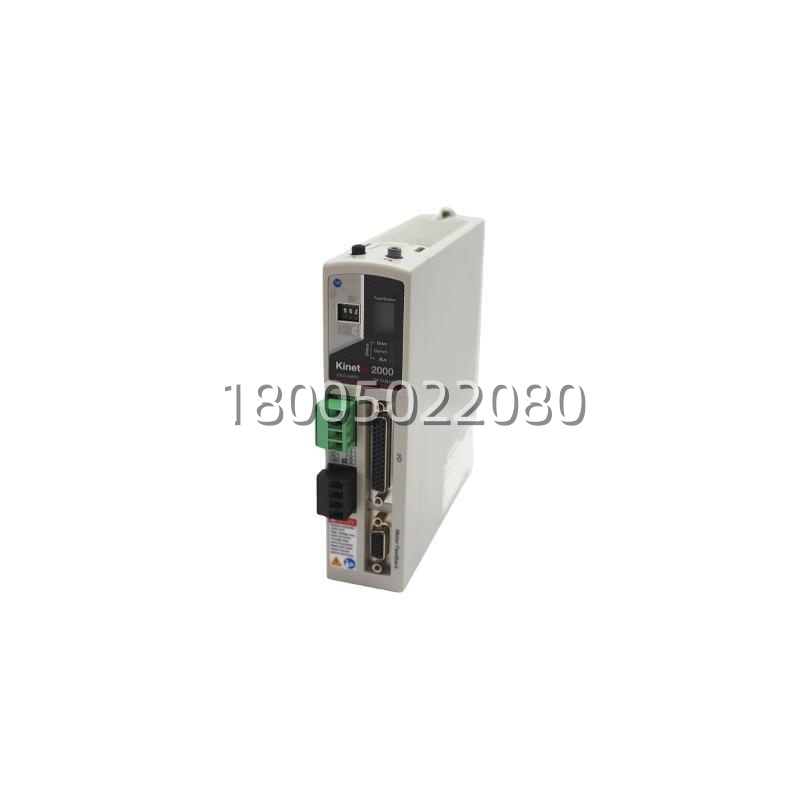
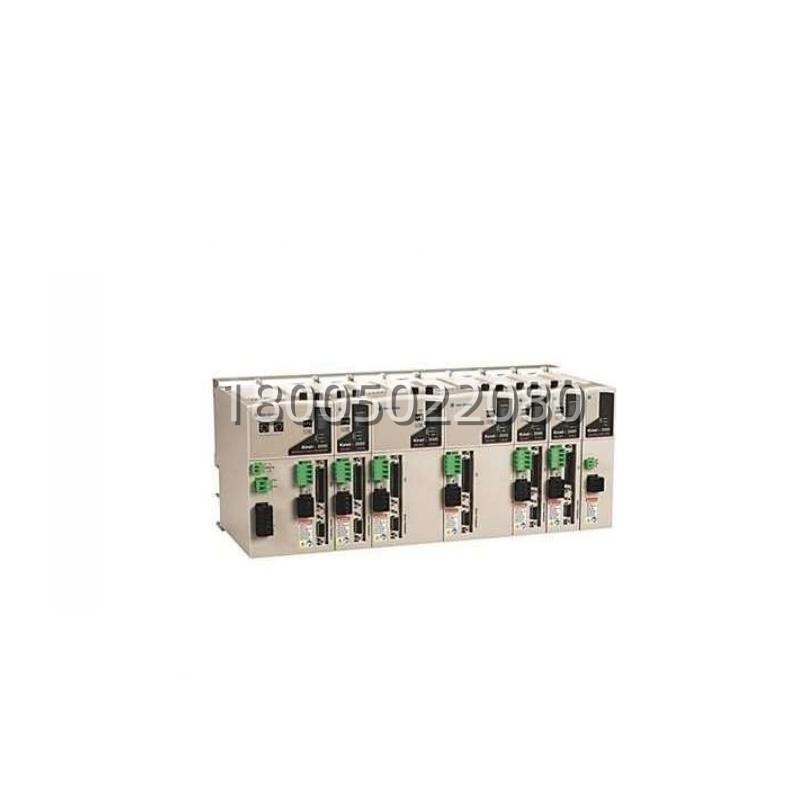
The Allen‑Bradley 2093‑AM02 is a Kinetix 2000 multi-axis servo drive axis module designed to provide a Kinetix Integrated Motion solution for applications with medium power requirements. Manufactured by Rockwell Automation, this double‑width module serves as a shared 230V DC bus power inverter, mounting on a Kinetix 2000 power rail to drive servo motors in multi‑axis configurations.
As a flexible building block of the Kinetix 2000 system, the 2093‑AM02 integrates with Allen‑Bradley Logix controllers via SERCOS fiber‑optic communication, enabling coordinated motion control across multiple axes. Its 3.0 kW continuous output power and 9A current rating make it suitable for demanding automation tasks, from robotics to packaging machinery.
Application Scenarios
In a high‑speed packaging line, engineers faced challenges coordinating multiple servo axes for film feeding, sealing, and cutting operations. By integrating the Allen‑Bradley 2093‑AM02 into their Kinetix 2000 system, they achieved precise, synchronized motion control over the various axes through a single SERCOS network. The module’s shared DC bus architecture reduced overall drive costs, while its 500 Hz speed loop bandwidth ensured rapid response to dynamic production demands.
The 2093‑AM02 excels in applications requiring high‑precision multi‑axis motion coordination—from robotic arms and CNC machine tools to automated assembly systems and material handling equipment. Its compatibility with Allen‑Bradley Y‑Series motors (such as the Y‑3023‑2 motor pairing) demonstrates its versatility in various industrial contexts.
Parameters
| Main Parameters | Value/Description |
|---|---|
| Product Model | 2093‑AM02 |
| Manufacturer | Allen‑Bradley / Rockwell Automation |
| Product Category | Kinetix 2000 Axis Module (Multi‑Axis Servo Drive) |
| Width | Double‑width module (occupies 2 slots on power rail) |
| Rated Voltage | 230V AC (converted to 325V DC bus) |
| Continuous Current (RMS) | 9‑9.5A |
| Peak Current (RMS) | 28.5A |
| Continuous Power Output | 3.0 kW nominal |
| Peak Power Output | ~5.7 kW (based on peak current) |
| PWM Frequency | 8 kHz – reduces torque fluctuation and ensures smooth motor operation |
| Speed Loop Bandwidth | 500 Hz – enables rapid response and high precision |
| Communication Interface | SERCOS fiber‑optic (4 and 8 Mbps data rates) |
| Operating Temperature | 0°C to 50°C |
| Dimensions (H×W×D) | 225 × 80 × 192 mm (approx.) |
| Weight | 0.91‑1.3 kg |
| Capacitance | 540 μF (capacitive energy absorption: 20 J) |
| Efficiency | 98% |
Technical Principles and Innovative Values
Innovation Point 1: Shared DC Bus Architecture for Multi‑Axis Efficiency
The 2093‑AM02 operates as an inverter module on a shared 230V DC bus, allowing multiple axes to draw power from a common supply. This architecture improves energy efficiency by enabling regenerative energy sharing between axes—decelerating axes return energy to the bus for use by accelerating axes—reducing overall power consumption and cooling requirements.
Innovation Point 2: High‑Bandwidth Control Loops for Precision Motion
With a speed loop bandwidth of 500 Hz and current loop bandwidth of 860 Hz, the 2093‑AM02 delivers exceptional dynamic response. The 8 kHz PWM frequency reduces torque ripple, providing smooth motor operation essential for precision applications such as CNC machining and robotic articulation.
Innovation Point 3: SERCOS Fiber‑Optic Communication for Real‑Time Control
The 2093‑AM02 utilizes the SERCOS (Serial Real‑time Communication System) protocol over fiber‑optic cables, supporting data rates of 4 or 8 Mbps. This deterministic, noise‑immune communication ensures synchronized control across multiple axes—critical for applications requiring coordinated motion, such as gantry systems or robotic arms.
Innovation Point 4: Quick‑Connect Cable System for Simplified Wiring
The 2093‑AM02 features integrally molded, bayonet‑style quick‑connect connectors at the motor end and flying leads at the drive end for motor power, feedback, and brake cables. This design reduces installation time and minimizes wiring errors, a distinct advantage over terminal‑based drives in multi‑axis systems.