Product Overview
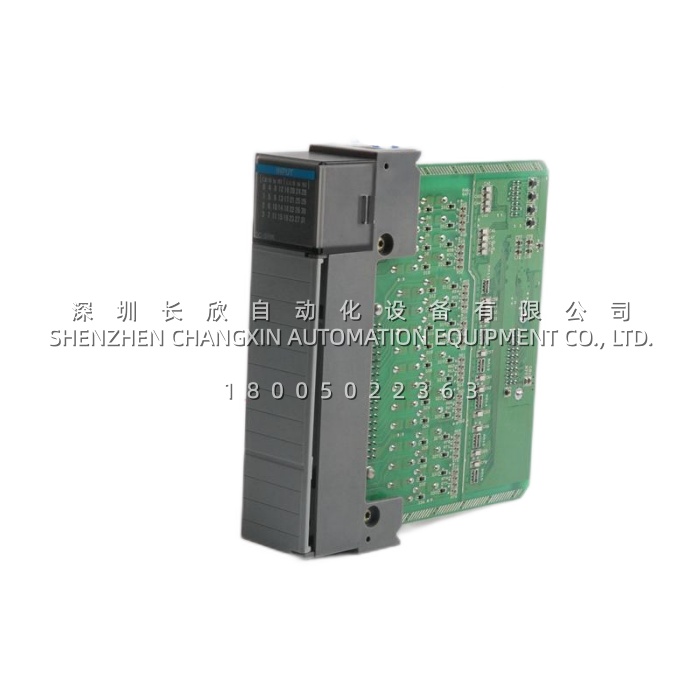
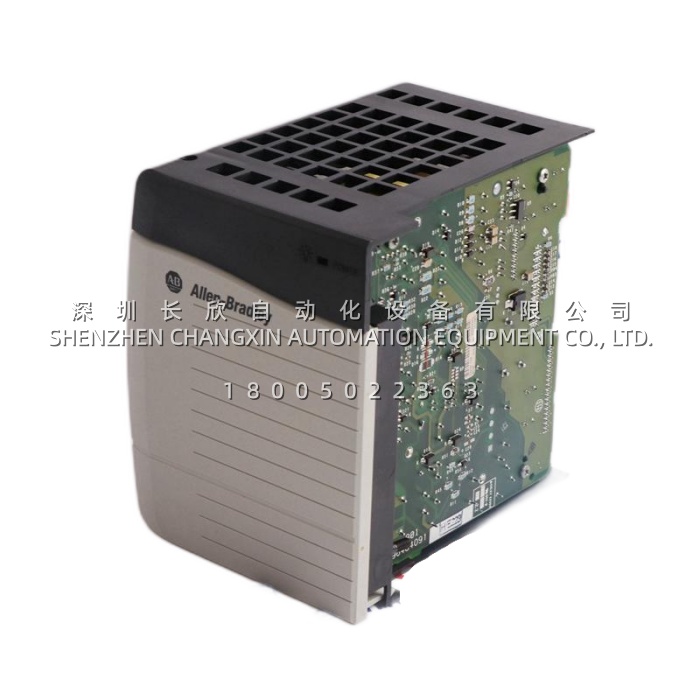
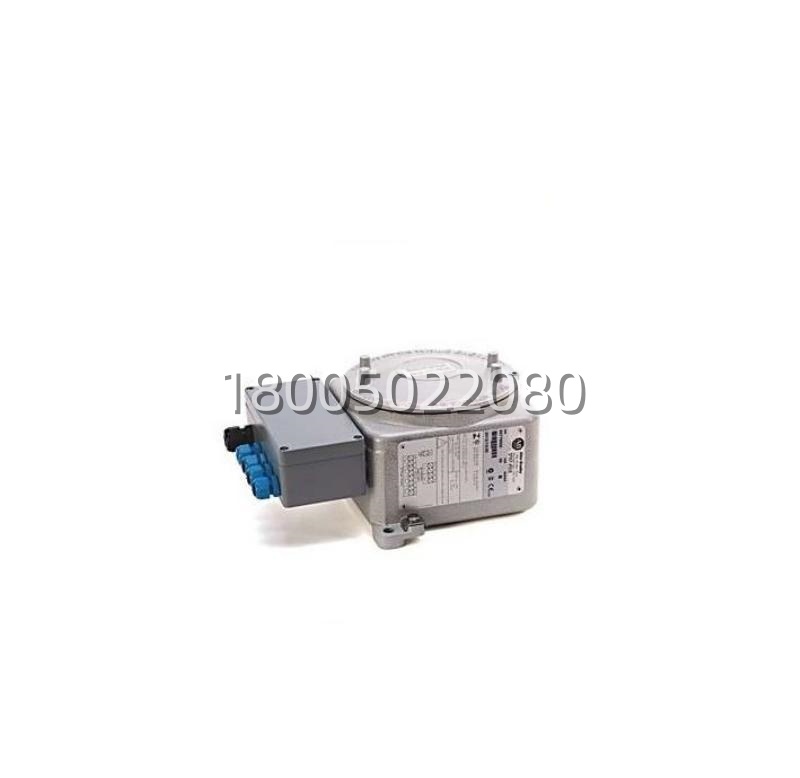
The Allen-Bradley 1797-PS1E is the intrinsically safe (IS) power supply module at the heart of Rockwell Automation’s 1797 FLEX Ex remote I/O system—a platform purpose-built for process and hybrid industries where field I/O must live in Zone 1 / Zone 22 classified areas (ATEX/IECEx) while the control architecture remains standard ControlLogix or CompactLogix on the safe side. Unlike a conventional 24 V DC DIN-rail PSU, the 1797-PS1E is a certified energy-limiting device: it takes a wide-range 85–253 V AC mains feed (47–63 Hz, ~0.9 A @ 85 V, 55 W input power) and produces four galvanically isolatedintrinsically safe output channels, each capped at ≤ 9.5 V DC open-circuit voltage (U₀) and ≤ 1 A short-circuit current (I₀, IIC group), delivering 8.5 W per channel (34 W total). The four isolated loops mean a ground fault or short on one Flex Ex I/O segment doesn’t propagate to the others—a critical resilience property in offshore-platform and hydrocarbon-processing layouts where a single loop trip shouldn’t dark the whole rack.Physically, the 1797-PS1E lives in a flameproof (Ex d) cast enclosure with increased-safety (Ex e) terminal chambers, IP65-rated, 174 × 174 × 140 mm (H × W × D), ~6.9 kg module weight (7.7 kg packaged). Input cabling lands through an M20 × 1.5 gland (6–12 mm cable), output through M16 × 1.5 glands (4–8 mm), and the “E” suffix denotes metric-thread glands (the “N” sibling, 1797-PS1N, carries NPT threads for North American hazardous-area conduit). The module is mounted via its own foot-mount lugs (not DIN-rail in the conventional sense—this is a standalone Ex enclosure, not a rail-snapped card), and Rockwell has marked the 1797-PS1E discontinued since ~2017, but it remains heavily in-service across upstream oil & gas, petrochemical, pharmaceutical, and bulk-chemical sites that standardized on 1797 Flex Ex during the 2000s–2010s and are running “repair-not-replace” doctrines.System-role-wise, the 1797-PS1E feeds the 1797 Flex Ex I/O modules—1797-IB8 (8-point DI), 1797-OB8 (8-point DO), 1797-AI (analog in), 1797-RTD, 1797-AO—mounted in the same 1797 Ex d rack or distributed via IS field cable runs. The adapter module (1797-AEx variants) bridges the Flex Ex rack back to ControlNet, DeviceNet, or EtherNet/IP on the safe side, so the 1797-PS1E + 1797 I/O + 1797 adapter forms a complete Zone-1 I/O drop: field devices (pressure transmitters, solenoid valves, proximity switches) wire into the 1797 I/O in Zone 1, the 1797-PS1E powers them via IS-limited energy, and the adapter tunnels process data back to the control room over standard Rockwell networks. The value prop vs. traditional “Zener barrier panel in the safe area + Ex e field raceway” is compaction: the 1797-PS1E integrates the energy-limiting inside the same Ex d envelope that houses the I/O, eliminating a separate barrier cabinet and shrinking the safe-area footprint.
Technical Specifications
| Parameter Name | Parameter Value |
|---|---|
| Product Model | 1797-PS1E (Series B) |
| Manufacturer | Rockwell Automation (Allen-Bradley) |
| Product Type | FLEX Ex Intrinsically Safe Power Supply Module |
| Input Voltage | 85–253 V AC, 47–63 Hz |
| Input Current | ~0.9 A @ 85 V AC (55 W input power) |
| Number of Outputs | 4 channels, galvanically isolated |
| Output Voltage (U₀) | ≤ 9.5 V DC (intrinsically safe limited) |
| Output Current (I₀) | ≤ 1 A (IIC group, intrinsically safe limited) |
| Output Power per Channel | 8.5 W (max), 34 W total |
| Isolation | Input-to-output opto + galvanic; channel-to-channel galvanic |
| Enclosure Rating | IP65, Flameproof (Ex d) + Increased Safety (Ex e) terminals |
| Hazardous Area Certification | ATEX / IECEx Zone 1, Zone 22 (gas & dust) |
| Input Cable Gland | M20 × 1.5 (6–12 mm cable) |
| Output Cable Gland | M16 × 1.5 (4–8 mm cable) |
| Dimensions (H × W × D) | 174 × 174 × 140 mm (6.9 × 6.9 × 5.5 in) |
| Weight | ~6.9 kg module / ~7.7 kg packaged |
| Power Dissipation | 21 W (71.67 BTU/hr thermal) |
Main Features and Advantages
Four galvanically isolated IS output channels. The headline differentiator of the 1797-PS1E versus a standard PSU with a common 24 V bus is the quad-isolation architecture: each of the four output loops is transformer-isolated from the others and from the AC input, so a short or ground fault on loop 3 (say, a pressure-transmitter 4–20 mA circuit in a sour-gas knock-out skid) cannot drag down loop 1 (solenoid valves on the export pump) or loop 2 (temperature RTDs on the separator). For process units where “one loop down = one unit down” is unacceptable, the 1797-PS1E lets maintenance isolate and rectify a single IS segment without de-energizing the whole Flex Ex drop. This also simplifies loop-by-loop commissioning—land one segment, power it, validate, move to the next—without risking back-feed between channels.Integrated energy limiting eliminates external Zener barriers. A traditional IS install feeds a safe-area 24 V PSU, runs the 24 V into a Zener-barrier cabinet (one barrier per field device pair), and the barrier-limited energy then travels into Zone 1. The 1797-PS1E bakes the current-limiting (≤ 1 A I₀) and voltage-limiting (≤ 9.5 V U₀) circuits inside the same Ex d enclosure, certified to IEC 60079-11 intrinsic safety. The output of the 1797-PS1E isthe IS source—you land the field cable directly from the 1797 I/O (which is also Ex-rated) or from the 1797-PS1E output glands straight to the field IS devices, and the energy ceiling is enforced at the source. No separate barrier panel, no barrier wiring, no barrier spare-parts SKU. For revamps where the safe-area panel is space-constrained, this compaction is decisive.Wide-range 85–253 V AC input absorbs site-power variance. The 1797-PS1E accepts essentially the full global single-phase spectrum: 100 V Japan, 120 V NA, 208–240 V EU/UK, even 253 V upper tolerance. The 47–63 Hz window covers 50 Hz process-site mains and 60 Hz OEM-packaged kits. This means a single 1797-PS1E BOM line serves both a Norwegian North-Sea platform (230 V / 50 Hz) and a Gulf-Coast refinery utility (120 V / 60 Hz) without a buck/boost transformer. Input current peaks ~0.9 A at 85 V low-line, so the upstream feeder breaker (typically 2 A or 5 A in the safe-area panel) sizes easily.Ex d + IP65 field-rugged enclosure. The 1797-PS1E isn’t going in a clean DIN-rail panel—it’s either wall-mounted in a Zone 2/Zone 1 transition area or bolted inside a larger Ex d marshalling cabinet on the skid. The cast-flameproof housing contains an internal arc without transmitting ignition to the outside atmosphere, and the IP65 rating (dust-tight, hose-down resistant) means the module survives offshore salt spray, desertevaporation-pond chemical sheds, and wash-down pharma suites without an extra protective enclosure. M20 input / M16 output cable glands (metric—”E” suffix; “N” suffix swaps to NPT) give certified sealing paths; the 1797-PS1E must be installed with the correct gland torque and compound (if site spec calls for it) to preserve the IP65 + Ex d rating—this is not a “snap in and go” DIN module.Thermal and dissipation discipline. At 55 W input and 34 W delivered to the four IS outputs, the 1797-PS1E burns ~21 W as dissipation (71.67 BTU/hr). The Ex d cast housing acts as the heatsink—no fan, no vents (those would break IP65). In high-ambient sites (Middle East, boiler-deck, tropical offshore), the -20…+70 °C operating envelope gives headroom, but the 1797-PS1E should be mounted with clearance on all sides per the installation drawing (the 1797 Flex Ex system drawing calls out minimum spacing for convection) and not buried behind a solid panel blank. The 7.7 kg mass isn’t just ruggedness—it’s thermal mass that damps temperature spikes during transient overloads on one IS loop.