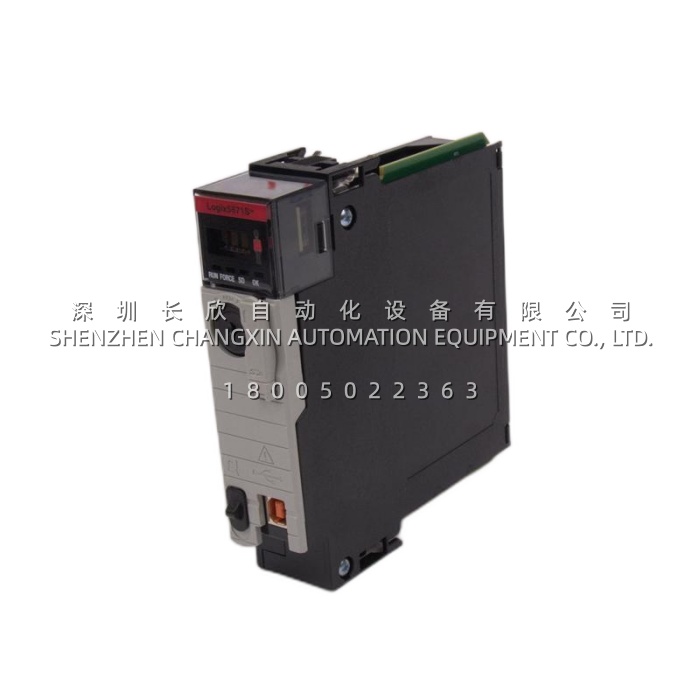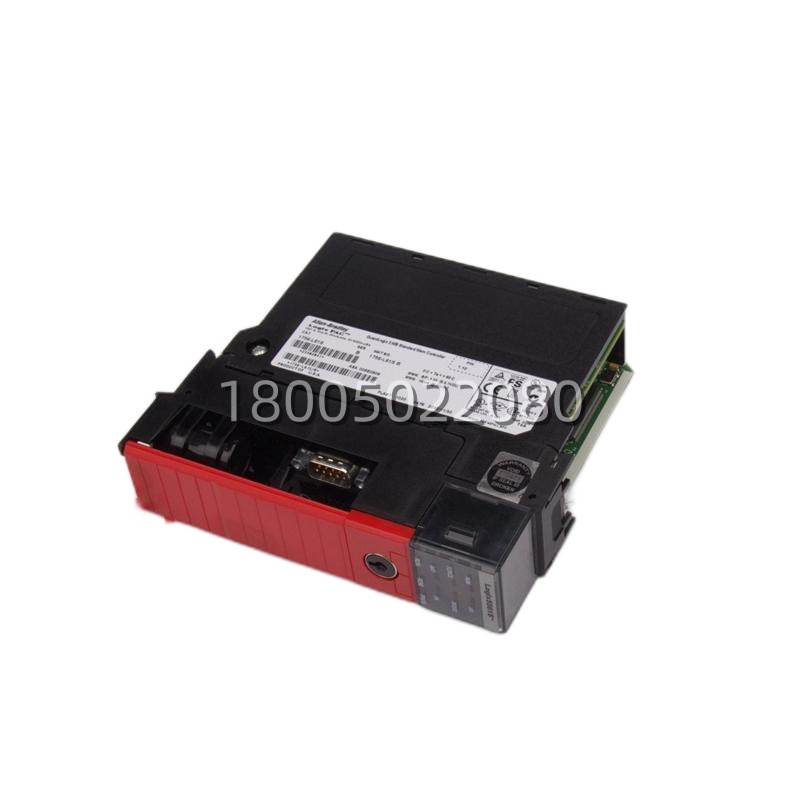
Product Overview
The Allen-Bradley 1747-SCNR is a high-performance ControlNet scanner and communication module specifically engineered for the Allen-Bradley SLC 500 series of programmable logic controllers. This advanced module serves as a critical network gateway, enabling an SLC 500 processor to act as a scanner (master) on a ControlNet network—a deterministic, high-speed industrial fieldbus. The primary function of the Allen-Bradley 1747-SCNR is to manage the exchange of I/O data and explicit messaging between the SLC 500 controller and other devices on the ControlNet network, such as remote I/O racks (e.g., 1747-ASB adapter in remote chassis), drives, operator interfaces, and other controllers. It effectively extends the local SLC 500 backplane across a robust, media-redundant network, allowing for the creation of distributed control systems where I/O and intelligent devices can be located far from the central processor, overcoming the limitations of a single, centralized chassis.Installed in any available I/O slot of an SLC 500 chassis (except slot 0, which is reserved for the processor), the 1747-SCNR module operates as a co-processor, offloading the complex network communication tasks from the main SLC CPU. It handles all ControlNet protocol responsibilities, including scheduled (deterministic) I/O data transfers and unscheduled (message-based) communications. The module provides two standard Bayonet Neill–Concelman (BNC) connectors for connecting to redundant coaxial trunklines, supporting the intrinsic media redundancy of ControlNet for high-availability applications. The Allen-Bradley 1747-SCNR is configured using Rockwell Automation’s RSNetWorx for ControlNet software, where the network scheduler is created, defining the update times and connections for all devices. This module was a key component for building medium to large-scale automation systems with the SLC 500 platform, providing deterministic performance suitable for interlocking, sequential control, and distributed process applications where precise timing and data consistency across multiple nodes are essential. It represents the bridge between the proven SLC 500 logic execution and the powerful peer-to-peer capabilities of the ControlNet network.
Technical Specifications
| Parameter Name | Parameter Value |
|---|---|
| Product Model | 1747-SCNR |
| Manufacturer | Allen-Bradley (Rockwell Automation) |
| Product Type | ControlNet Communication Scanner Module |
| Compatible Controller | SLC 5/03, SLC 5/04, SLC 5/05 Processors |
| Chassis Slot | Any slot except slot 0 (CPU slot) |
| Network Protocol | ControlNet (CIP) |
| Data Transfer Rates | 5 Mbps |
| Communication Modes | Scheduled (I/O) and Unscheduled (Messaging) |
| Network Connections | 2 x BNC connectors (for redundant coaxial media) |
| Max Scheduled Connections | 64 connections |
| Max Nodes per Network | 99 addressable nodes |
| Max Cable Distance | 1000m (with repeater, up to 30,000m) |
| Backplane Current Load | 650 mA @ 5 VDC (from chassis power supply) |
| Memory | 64K words for ladder logic (mapped) |
| Status Indicators | Module Status (OK, Flashing, Fault), Network Status (OK, Fault), Active (A/B) Channel LEDs |
| Network Power | Does not supply network power; requires external 1747-PIC or equivalent |
| Operating Temperature | 0°C to 60°C (32°F to 140°F) |
| Configuration Software | RSNetWorx for ControlNet |
Main Features and Advantages
Deterministic Performance and High-Speed I/O Control: The core advantage of the Allen-Bradley 1747-SCNR is its ability to provide deterministic, repeatable I/O control over a distributed network. ControlNet uses a Concurrent Time Domain Multiple Access (CTDMA) method, which guarantees bandwidth and latency for scheduled I/O data exchanges. This means I/O updates between the SLC 500 scanner and its remote adapters occur at precisely defined intervals, ensuring predictable system performance critical for high-speed machine control and precise process interlocks. The module supports high-speed data transfer (5 Mbps), allowing for the efficient control of numerous remote I/O points spread across a large area, all synchronized to the same network update time (NUT).Robustness and System Integration: The 1747-SCNR supports media redundancy via its dual BNC ports, allowing the creation of a redundant coaxial trunkline. If a cable break or interference occurs on one leg, communication automatically switches to the other, maximizing network availability. The module acts as a powerful bridge, allowing the SLC 500 to seamlessly communicate not only with remote I/O but also with other ControlNet-compatible devices like PowerFlex drives, PanelView HMIs, and even other controllers (e.g., CompactLogix, ControlLogix) for peer-to-peer messaging. This transforms the SLC 500 from a standalone controller into a node within a larger, integrated control architecture. Configuration and monitoring are centralized through the industry-standard RSNetWorx software, providing powerful tools for network design, optimization, and diagnostics. The Allen-Bradley 1747-SCNR effectively future-proofed SLC 500 systems by enabling integration with one of the industry’s most robust deterministic networks, extending the capabilities and physical reach of the controller far beyond its local chassis.