Description:
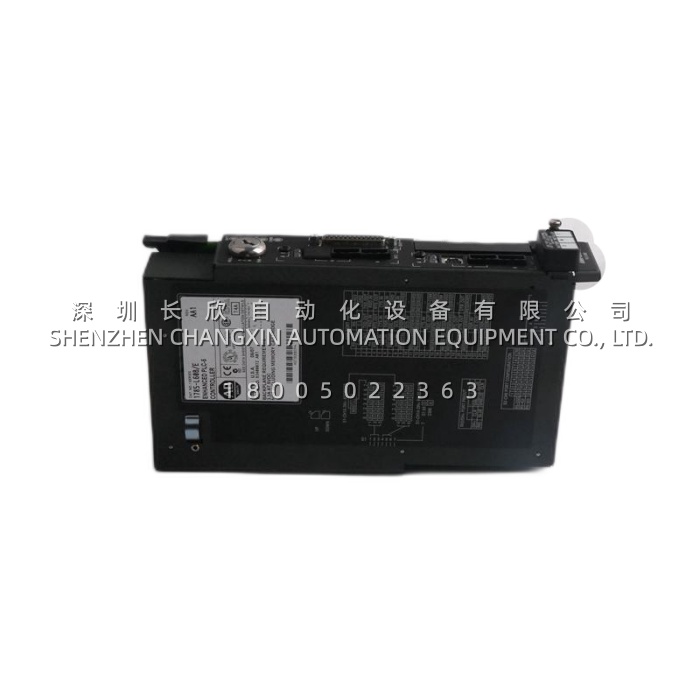
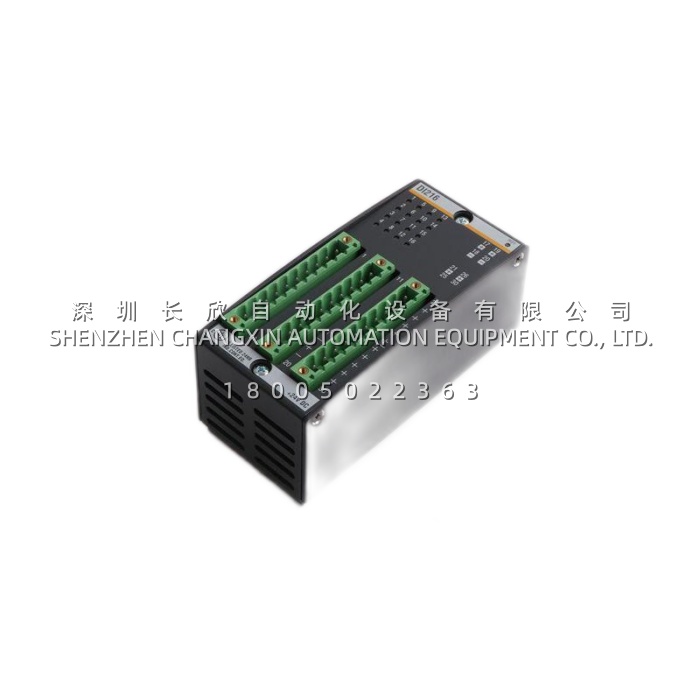
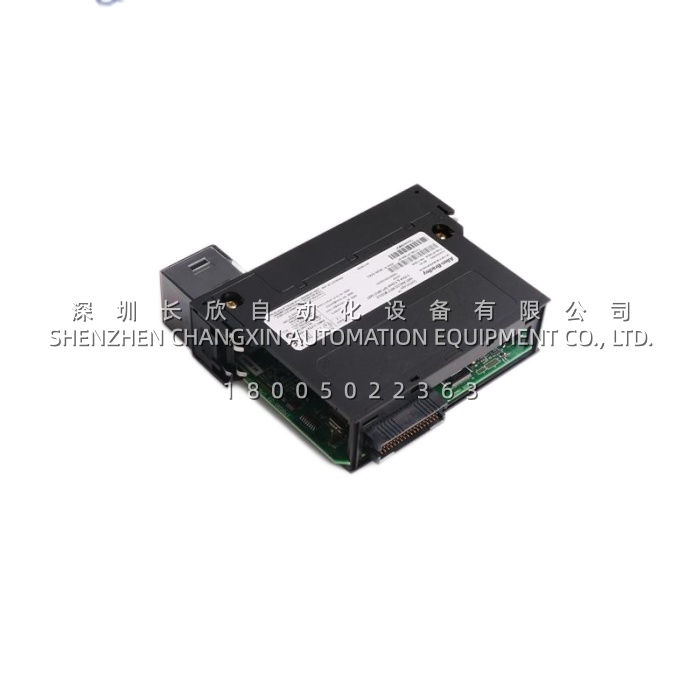
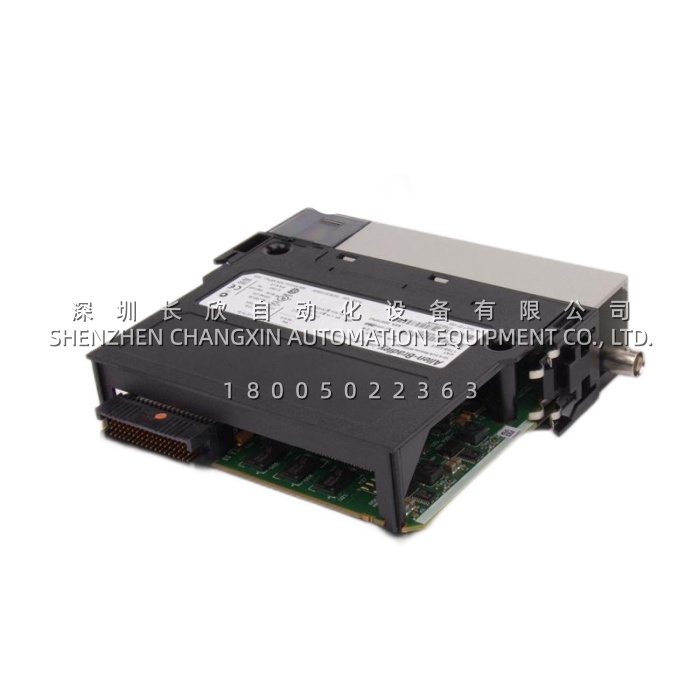
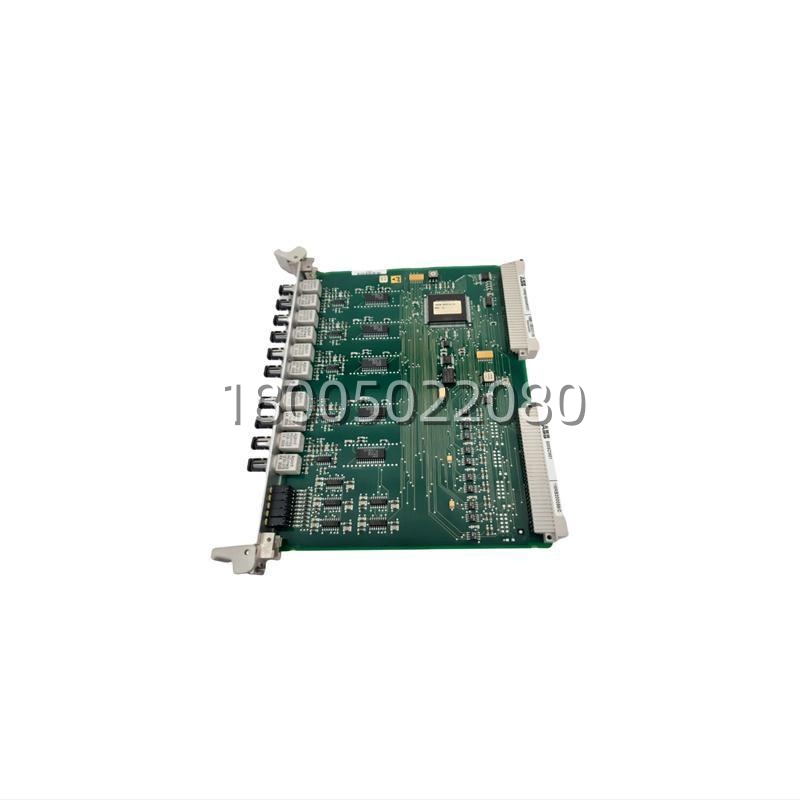
The ABB 1MRB150082R0103, also referenced as the 500CU-BIO01 Binary I/O Module, is an industrial-grade control circuit board / expansion I/O module designed for ABB 500CU-series controllers and compatible automation racks. It acquires 8–16 binary (digital on/off) field signals—such as limit switches, pushbuttons, and relay feedbacks—and provides digital output channels to drive indicators, pilot relays, or small solenoid loads, communicating status to the host controller via serial bus (typically RS-485 / Modbus RTU protocol).
Application Scenarios:
A food & beverage packaging line using an ABB 500CU controller had exhausted its original digital I/O allocation after a line-speed upgrade added four new guard-door interlocks and two stack-light segments. Rather than re-engineering the main control cabinet or adding a full-size PLC rack, the integrator plugged a ABB 1MRB150082R0103 (500CU-BIO01) into the system’s expansion slot, wired the new DI/DO points to the board’s screw terminals, and mapped the I/O in the existing application software. The expansion took less than one hour on the floor, required no changes to the main CPU hardware, and gave the line the extra points it needed with full optical isolation from the 24 V DC field circuits. This illustrates how the 1MRB150082R0103 solves the common plant-floor problem of “just a few more I/O points” without a major CAPEX outlay—keeping legacy systems viable and flexible.
Parameter:
| Main Parameters | Value/Description |
|---|---|
| Product Model | 1MRB150082R0103 (also marked 500CU-BIO01) |
| Manufacturer | ABB |
| Product Category | Binary I/O Module / Control Circuit Board (Expansion Board) |
| Compatible System | ABB 500CU Series Controllers & Compatible Automation Racks |
| I/O Configuration | Typically 8 Digital Inputs + 8 Digital Outputs (16 total channels) |
| Input Type | 24 V DC sinking/sourcing, optically isolated, software debounce capable |
| Output Type | Transistor (DC) or Relay Contact (per version), typically 0.5–1 A @ 30 V DC / 250 V AC |
| Supply Voltage | 24 V DC (±10%–20%), derived from backplane or external PSU terminal |
| Communication Interface | RS-485 Serial Bus / Modbus RTU (proprietary framing in 500CU context) |
| Isolation Voltage | ≥ 1500 V AC channel-to-system / channel-group isolation |
| Status Indication | Onboard LEDs for Power, Comm Activity, individual DI/DO states |
| Operating Temperature | -20 °C to +60 °C (some references -25 °C to +70 °C) |
| Storage Temperature | -40 °C to +85 °C |
| Humidity | 5%–95% RH, non-condensing |
| Mounting Method | Rack slot insertion with backplane connector or DIN rail (with carrier) |
| Protection Class | IP20 (cabinet interior installation) |
| Dimensions (approx.) | 160 × 100 × 30 mm (varies slightly by revision/enclosure) |
| Weight (approx.) | 0.15–0.50 kg |
Technical Principles and Innovative Values:
- Innovation Point 1 — Optically Isolated Binary I/O with Software Debounce. The ABB 1MRB150082R0103 uses galvanically isolated input stages (1500+ V AC) to reject ground loops and EMI from mechanically switched field devices. Programmable input debounce filters in the module firmware eliminate false triggers from contact bounce—critical for safety-interlock and guard-door monitoring.
- Innovation Point 2 — Native 500CU Bus Integration with Auto-Addressing. Once installed in the expansion slot or connected via RS-485, the 1MRB150082R0103 is automatically enumerated by the 500CU controller. I/O points appear at predetermined offsets in the process image, requiring no separate configuration tool or node-ID setting—true plug-and-play scaling of the control system.
- Innovation Point 3 — Dual-Role Diagnostic Feedback & Output Protection. The module’s digital outputs are protected against short-circuit and overload, with the status fed back to the controller for fault logging. Front-panel LEDs show per-channel activity and communication health, enabling maintenance staff to verify field wiring correctness without a laptop or test meter.