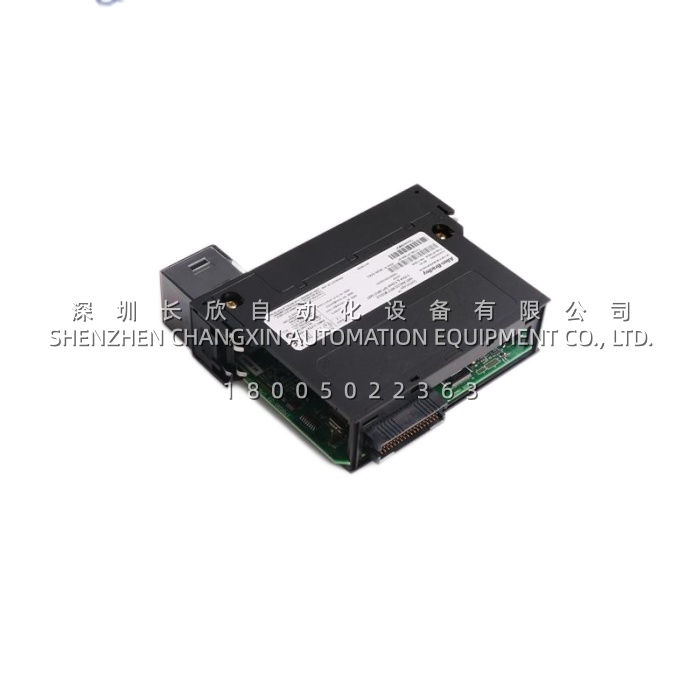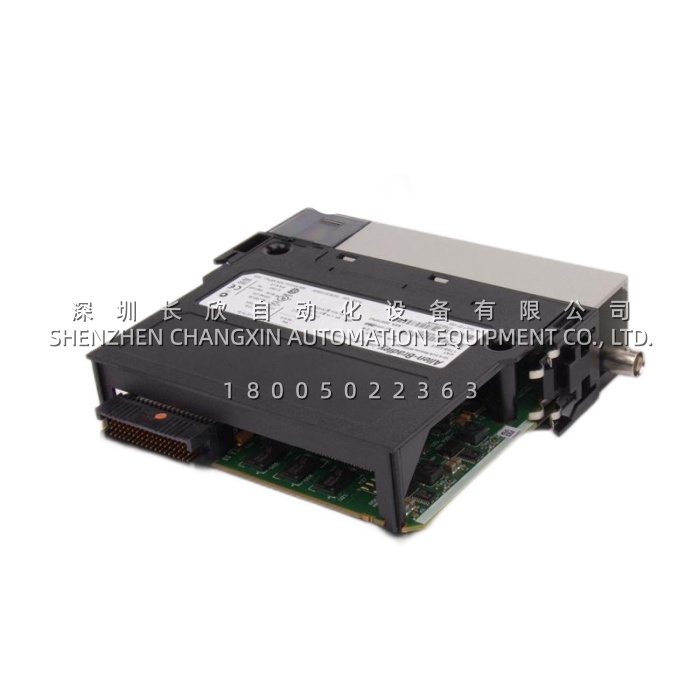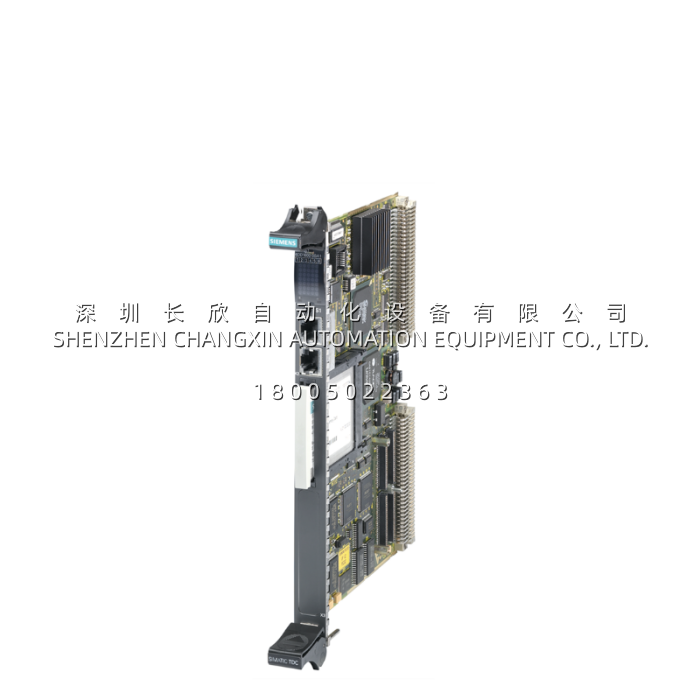
Product Overview
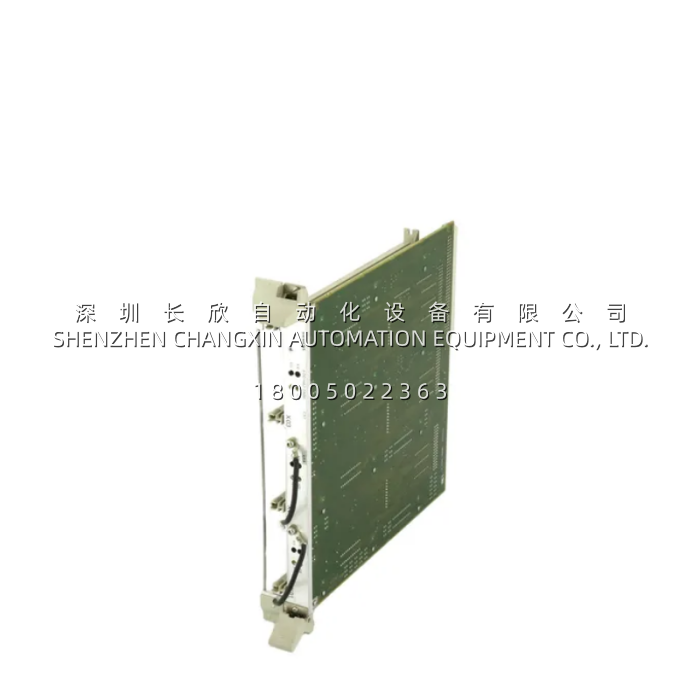
The Siemens 6DD1662-0AC0 is a SIMADYN D CS8 Communication Support Module — the communication gateway tier in Siemens’ SIMADYN D multi-drive control family, engineered to sit alongside a PM5 (6DD1600-0AJ0) or PM6 (6DD1600-0AK0) CPU in a forced-ventilation SIMADYN D subrack and bridge the high-speed C-bus/L-bus drive-world to the plant-level PROFIBUS DP and RS485/RS232 networks. The “CS” designation stands for Communication Support, and the CS8 (6DD1662-0AC0) succeeds the earlier CS7 (6DD1661-0xx) by raising the PROFIBUS DP port from 1.5 Mbit/s to 12 Mbit/s and adding a cleaner isolated RS485 path — a meaningful upgrade for plants pushing SIMADYN D + 6SE70 drive chains into S7-1500 modernized cells that demand 12 Mbit DP master/slave telegrams.Physically the Siemens 6DD1662-0AC0 occupies a single 20.32 mm Euro-card slot in the same forced-vent SIMADYN D subrack that hosts the PM6, drawing +5 V from the backplane (current class similar to PM-family, ~1–2 A range depending on port load) with 24 V DC system nominal. Internally the Siemens 6DD1662-0AC0 carries a 64-bit RISC processor (same architectural lineage as the PM6, though clocked for comms-duty rather than closed-loop math), DRAM for buffers, battery-backed SRAM (via subrack battery, shared with PM6 — the CS8 itself has no local battery), and an MS5 memory submodule socket where the D7-SYS communication configuration (DP node parameters, RS485 telegram mapping, C-bus exchange table) is stored. The front panel presents the communication ports: one PROFIBUS DP (Sub-D 9-pin, 12 Mbit/s master or slave), one isolated RS485 (clamped/screw terminal, for drive-side or SCADA ASCII/3964R/UPS telegrams), and one RS232 V.24 (DB9 or mini-DIN, for PG/service laptop or a local HMI/printer). Rear backplane hooks are L-bus (to local rack I/O/CPU) and C-bus (to sibling PM6 CPUs and to expansion racks).The canonical SIMADYN D rack architecture pairs one PM6 (does the 0.5 ms tension/vector/anti-surge CFC loop) + one Siemens 6DD1662-0AC0 CS8 (shuttles C-bus exchange data to PROFIBUS DP for the S7-400 cell PLC, and to RS485 for a drive-side logger or a third-party turbine controller). The PM6 owns the math; the Siemens 6DD1662-0AC0 owns the wire. Both share the same MS5 card family, same D7-SYS project (the CS8 appears as a “Communication CPU” in the D7-SYS HW Config, with C-bus send/receive blocks mapped to DP output areas and RS485 send/receive FBs). In a 5-stand tandem mill or a 6-compressor train, the Siemens 6DD1662-0AC0 is typically the single point where 20–40 C-bus exchange words per PM6 get packed into DP telegram 1/2/3 to the S7-400, and where alarm/event strings get pushed out RS485 to a SCADA or historian without consuming PM6 scan.
Technical Specifications
| Parameter Name | Parameter Value |
|---|---|
| Product Model | 6DD1662-0AC0 |
| Manufacturer | Siemens AG (SIMADYN D Series) |
| Product Type | CS8 Communication Support Module (Single-Slot) |
| Processor | 64-bit RISC (comms-optimized, SIMADYN D family) |
| Memory (DRAM / SRAM) | DRAM for buffers; SRAM battery-backed via subrack (shared with PM6) |
| Memory Card | MS5 submodule socket (D7-SYS comms config, C-bus↔DP mapping) |
| Interfaces – PROFIBUS DP | 1× Sub-D 9-pin, 12 Mbit/s, master/slave |
| Interfaces – RS485 | 1× isolated, screw terminal (ASCII/3964R/UPS protocols) |
| Interfaces – RS232 | 1× V.24 service port (PG/PC, printer, local HMI) |
| Backplane Bus | L-bus (intra-rack) + C-bus (inter-rack, DMA to PM6) |
| Programming | D7-SYS (CFC comms blocks, C-bus send/receive, DP parameterization) |
| Subrack Requirement | Forced-ventilation SIMADYN D subrack (same as PM6) |
| Backplane Supply | +5 V (via subrack), 24 V DC system nominal |
| Slot Width | 20.32 mm (1 slot) |
| Operating Temp | -25 … +70°C (within forced-vent subrack) |
| Protection | IP20 (rack-internal) |
Main Features and Advantages
C-bus DMA to PROFIBUS DP 12 Mbit/s bridge. The core job of the Siemens 6DD1662-0AC0 is moving data between the SIMADYN D C-bus (where PM6 CPUs exchange at backplane speed) and the outside world. The PROFIBUS DP port runs to 12 Mbit/s master or slave — meaning the Siemens 6DD1662-0AC0 can sit as DP slave under an S7-400 CPU (telegram 1 = stand speeds/actual torques, telegram 2 = tension setpoints/fault words, telegram 3 = alarm strings) at full 12 Mbit, or flip to DP master and poll third-party DP nodes (weigh scales, magnetic-flow meters, analyzer skids) into the C-bus for the PM6 to consume. The CS7 predecessor capped at 1.5 Mbit — the Siemens 6DD1662-0AC0 CS8 removes that bottleneck, which matters when a tandem mill pushes 200+ exchange words per scan to a cell SCADA.Isolated RS485 for drive-side or SCADA ASCII. The screw-terminal RS485 on the Siemens 6DD1662-0AC0 is galvanically isolated — important when the other end is a non-Siemens drive (DC drives, old ABB ACS, turbine governor) or a RS485 multidrop SCADA (Modbus RTU or Siemens 3964R/UPS protocol). In a compressor anti-surge train where the PM6 runs the surge model and the Siemens 6DD1662-0AC0 pushes “Surge Flag / Recycle Valve Position / Delta-P / Flow” as ASCII strings every 100 ms to a plant PI/Aspentech collector over RS485, the isolation prevents ground-loop noise from the turbine skid from walking back into the C-bus.RS232 V.24 service port for PG and local diagnostics. The DB9/mini-DIN RS232 on the Siemens 6DD1662-0AC0 front lands a PG/PC running D7-SYS for online diagnostics of the C-bus exchange table, DP node commissioning (set DP address, baud, watch slave-list), and firmware/service downloads to the CS8 without disturbing the PM6’s MS5 card. It can also land a small serial printer for hardcopy of alarm strings — old-school but still used in some validated pharma/compressor cells where the SCADA uplink is considered “untrusted” for audit-trail and a serial ticker is the fallback.Single-slot, shared MS5 ecosystem with PM6. The Siemens 6DD1662-0AC0 uses the same MS5 memory submodule family as the PM6 (6DD1600-0AK0) and PM5 (6DD1600-0AJ0) — the D7-SYS project contains both the PM6 CFC charts and the CS8 communication configuration (DP node defs, C-bus send/receive block addresses, RS485 protocol selection) on one MS5 card seated on the PM6, while the CS8’s own MS5 (if populated) or the shared C-bus config lets the CS8 boot its comms role. In practice most plants populate MS5 only on the PM6 and the CS8 picks up its config over C-bus on boot — but the socket exists on the Siemens 6DD1662-0AC0 for a standalone comms-project clone, enabling “PM6 MS5 + CS8 MS5” dual-spares strategy.Forced-vent subrack requirement matches PM6. The Siemens 6DD1662-0AC0 dissipates enough (64-bit RISC + DP PHY + RS485 drivers) that Siemens specifies forced-vent only — same subrack that hosts the PM6 (6DD1600-0AK0). This is consistent: a PM6+CS8 pair always lands in a forced-vent 3–6 slot SIMADYN D cubicle with fan tray, never in the natural-convection subrack that accepts only PM5/PM4. The spare-pool logic follows: if the rack has PM6, it already has forced vent, so adding or swapping a Siemens 6DD1662-0AC0 is plug-and-play.