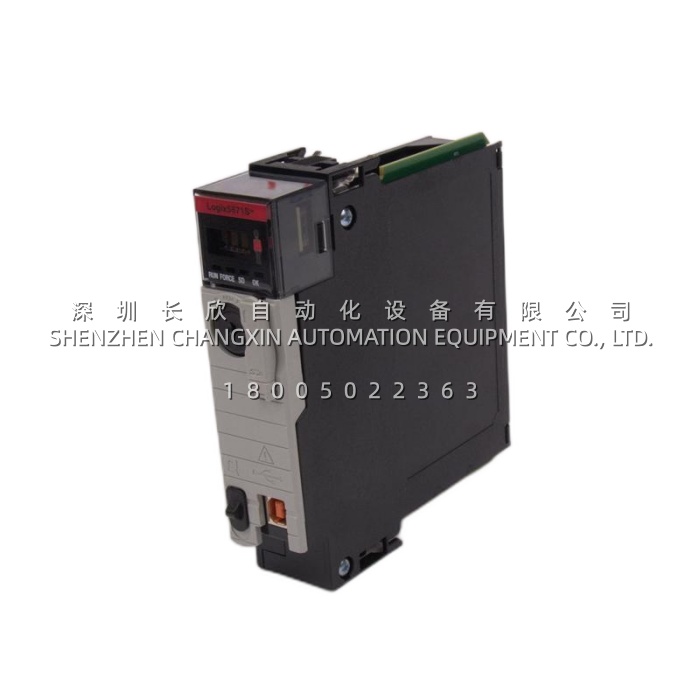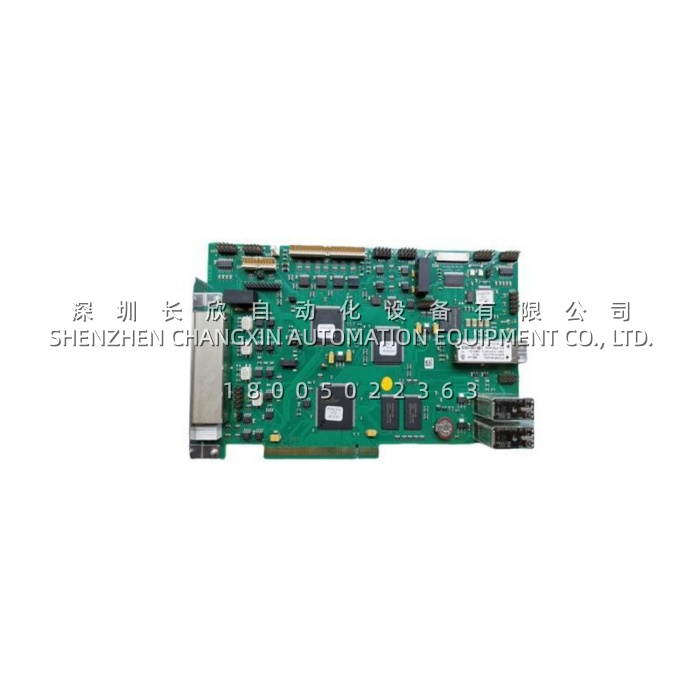
Application Scenarios
Consider a refinery where the fieldbus segment serving a critical distillation column suddenly loses communication with all its FBM I/O modules. The operator console shows “Bad Value” alarms for every temperature, pressure, and flow point on that segment. The root cause is identified as a failed 033-59-20-99G PCLF board—the entire fieldbus segment is effectively disconnected from the controller .
The maintenance team replaces the faulty board with a spare 033-59-20-99G of the same hardware revision. Communication is restored, process control resumes, and the plant avoids a shutdown. In this scenario, the board’s value lies in continuity—it is a mission-critical spare, not a performance upgrade .
For plants still operating legacy Foxboro I/A Series systems, the 033-59-20-99G is an essential inventory item. Without it, a single point of failure can paralyze a fieldbus segment, making the board a high-priority stock item for MRO departments .
Parameter
| Main Parameters | Value/Description |
|---|---|
| Product Model | 033-59-20-99G (also written 033-059-20-99G) |
| Manufacturer | Foxboro (now Honeywell Process Solutions) |
| Product Category | PCLF Board (Process Control Link Fieldbus interface) |
| Primary System | Foxboro I/A Series DCS |
| Primary Function | Protocol conversion between nodebus and fieldbus (Fbus) |
| Installation Location | Fieldbus Termination Assembly (FTA) or Fieldbus Processor rack |
| Redundancy Support | Yes, supports 1:1 redundant pairing |
| Fieldbus Support | I/A Series Fbus; connects to FBM201/202/203/204/206 series |
| Connection Method | Backplane connector (plug-in module) |
| Status Indication | Onboard LEDs for power, communication, and fault status |
| Compatibility Criticality | Hardware revision must match CP type, FBM type, and system software version |
| Failure Symptom | Loss of communication to entire Fbus segment; all FBMs on that segment unreachable |
| Replacement Policy | No direct substitute; typically full board replacement required; board-level repair possible but version matching is challenging |
Technical Principles and Innovative Values
Innovation Point 1: Protocol Gateway Between Nodebus and Fbus
The 033-59-20-99G performs real-time protocol conversion between the I/A Series nodebus and the fieldbus (Fbus). It takes command messages from the control processor (CP) on the nodebus, reformats them into Fbus protocol, and distributes them to the appropriate FBMs on the fieldbus segment. Conversely, it collects field data from FBMs and translates them back into nodebus format for the CP. This dedicated gateway architecture offloads protocol handling from the main controller, allowing the CP to focus on control algorithm execution .
Innovation Point 2: Deterministic Fieldbus Management
The board manages multiple Fbus channels, controlling the timing and sequencing of data exchanges between the controller and field I/O. It ensures deterministic communication—critical for time-sensitive process control loops where data must arrive within predictable time windows. This deterministic behavior is achieved through dedicated hardware scheduling rather than general-purpose software polling .
Innovation Point 3: Redundancy Architecture
The 033-59-20-99G supports 1:1 redundant pairing. In redundant configurations, two identical boards operate side-by-side on the same fieldbus segment. If the primary board fails, the secondary board assumes control with minimal disruption. This failover capability is critical for high-availability process applications where downtime is not an option .
Innovation Point 4: Non-Programmable, Application-Specific Design
Unlike general-purpose PLC modules, the 033-59-20-99G is a fixed-function board. Its logic is hardwired to perform specific fieldbus interface tasks. This design approach, typical of legacy DCS systems, offers predictable, deterministic performance without the overhead or potential instability of software-based protocol stacks. The trade-off is that the board cannot be reconfigured for other applications, reinforcing its role as a dedicated, application-specific component .