Application Scenarios
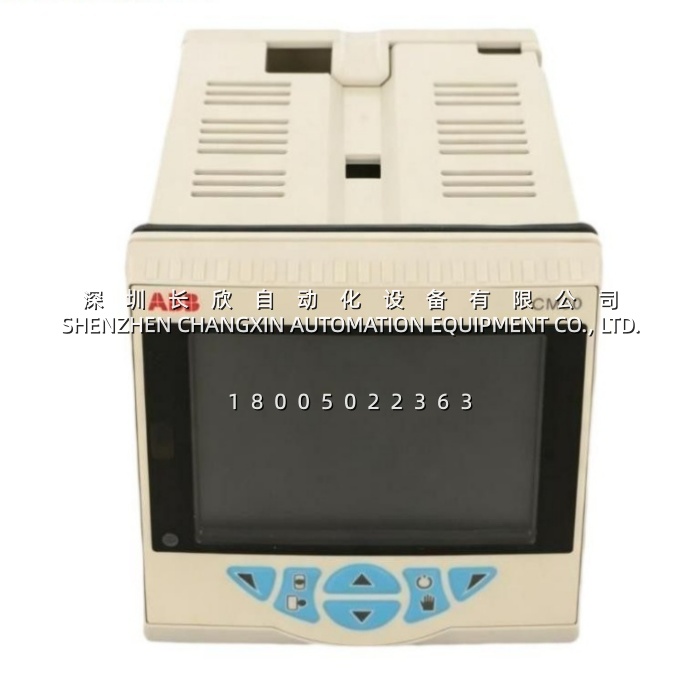
A food-packaging line running heated seal rollers is a good place to see the CM30 earn its keep. The rollers are heated in three zones and the only thing the operator can see on the cabinet door is a flickering set of old analogue pyrometers, each calibrated to a different transmitter, none of them readable from two metres away. Production complains that seal quality drifts with shift change, quality cannot prove what temperature a batch was run at, and maintenance spends half a day chasing a “thermometer fault” that turns out to be a broken analogue meter.The fix is unglamorous and that is the point. A CM30 is mounted in each door cut-out, wired to the existing thermocouple or Pt100 chain and the 4–20 mA signal from the zone controller, scaled to the real temperature range on site, and configured with a high alarm at the seal-integrity limit. The same value is retransmitted to the line PLC over the serial interface. Operators stop guessing at the reading, quality gets a recorded value per batch, and the next time a transmitter fails the alarm relay tells the operator immediately rather than letting a cold roller run through a shift.
Parameter
| Main Parameters | Value / Description |
|---|---|
| Product Model | CM30 |
| Manufacturer | ABB (ABB Measurement & Analytics / Control Products) |
| Product Category | Universal measuring and display unit (process indicator / signal conditioner) |
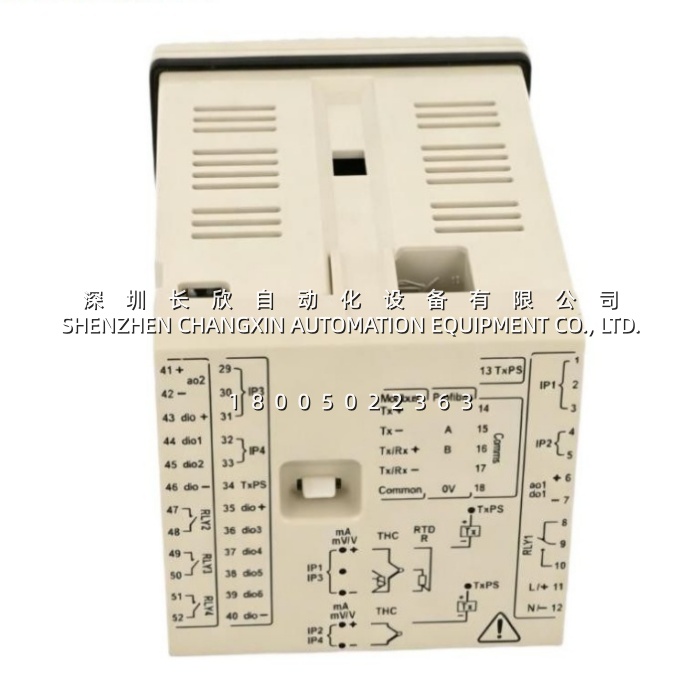
| Input Signal | Universal analogue input — thermocouples, RTD/Pt100, 0…10 V, 0/4…20 mA; input type selected by configuration, not by changing hardware |
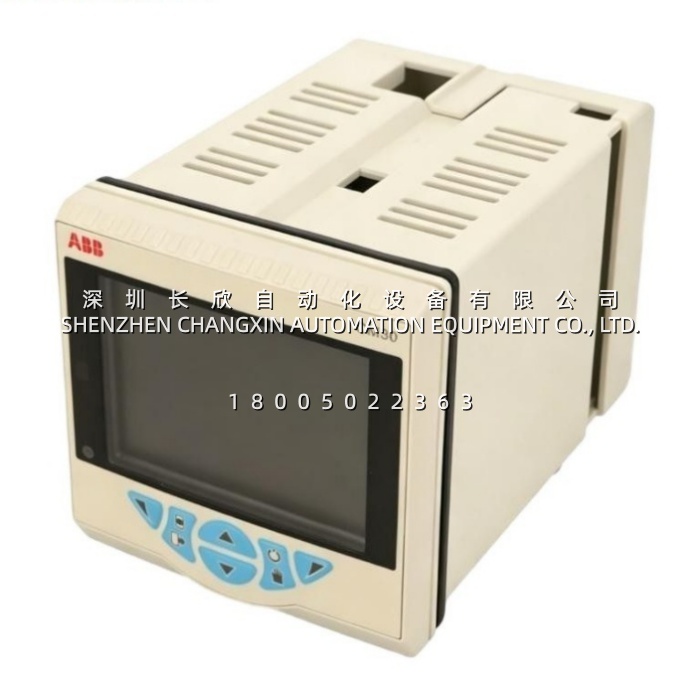
| Display | Large high-contrast LCD, clear reading at a distance — operator-facing local indication is the primary purpose of the unit |
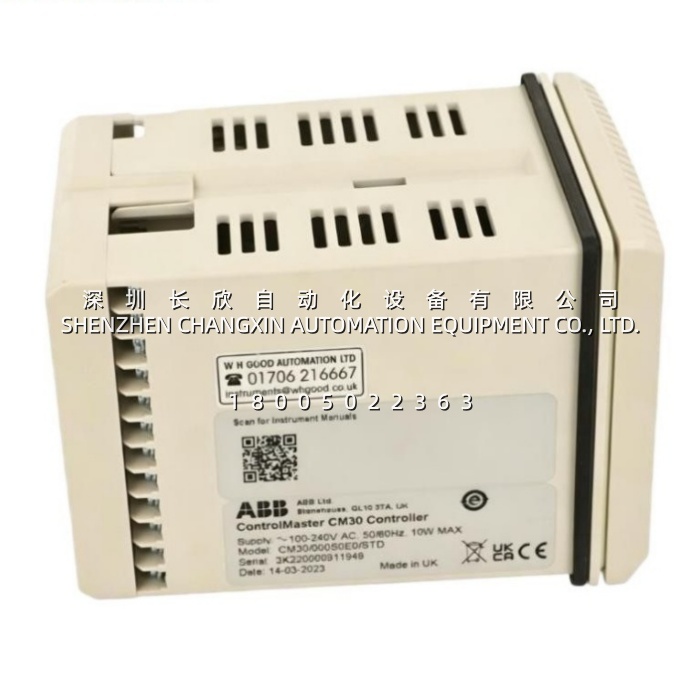
| Supply Voltage | 24 V DC (typical) and 100–230 V AC 50/60 Hz variants available across the range |
| Output / Retransmission | Configurable isolated analogue output (commonly 0/4…20 mA) for feeding a PLC, recorder or secondary controller |
| Alarm Function | Configurable alarm relay with adjustable setpoint and hysteresis; drives local alarm indication and external signaling |
| Communication | Serial interface for connection to PLC / RTU / PC — data exchange and remote parameter handling |
| Mounting | Panel mounting, standard 48 × 96 mm cut-out (DIN 43700 / IEC 61554 footprint) |
| Configuration | Via front keys and internal DIP switches / parameter menus; no specialist programming tool required for basic setup |
| Operating Temperature | 0…+55 °C (industry-standard industrial enclosure range) |
| Electrical Safety / EMC | To relevant industrial EMC and electrical safety requirements for panel-mounted control equipment |
| Protection | Front face IP54 / enclosure IP20 (typical panel-mount rating) |
| Replacement Series Note | The CM30 family was succeeded in ABB’s portfolio by the CM10 / CM30 next-generation line; spares and cross-checks should verify the exact ordering suffix |
Technical Principles and Innovative Values
- Innovation Point 1 — One input front end replaces a drawer of specialist meters. The CM30 accepts thermocouple, RTD, voltage and current signals through configuration rather than through a different instrument for each job. In a cabinet with mixed sensors, that means one spare type on the shelf and one commissioning routine, not four.
- Innovation Point 2 — The display is designed to be read, not just present. The large LCD and configurable scaling put the engineering unit and range on the door where an operator actually stands. This is the cheapest available upgrade to first-line process visibility, and it is the reason the CM30 still appears in cabinets long after the transmitter and PLC around it have been replaced.
- Innovation Point 3 — Measurement and retransmission in one device. The isolated analogue output carries the same value back to the control system, so the local readout is never a second, uncalibrated opinion about the process. Quality records and control actions come from one source.
- Innovation Point 4 — Alarm logic stays local to the point of measurement. The configurable relay and setpoint keep a temperature or level violation visible and signaled even when the SCADA link or the PLC is having a bad day, which is exactly when the operator needs it most.
- Innovation Point 5 — Commissioning without a laptop. Configuration through the front keys and internal switches makes the CM30 usable in a relay house where nobody has brought the engineering software, and it keeps the configuration visible to the people who will maintain it.
Application Cases and Industry Value
Case 1 — Food packaging, heated seal rollers. Facing the scenario above, the line replaced three ageing analogue indicators with CM30 units, one per heated zone. The measurable change was in rejects and response time: operators could read the zone temperature from the working position, seal-integrity alarms flagged a cold roller before product left the machine, and the PLC received the same value the operator was reading. Maintenance reported a different gain — fault isolation now starts at the alarm relay rather than with a meter swap and a hope.Case 2 — Water pumping station, bearing-temperature monitoring. A regional utility fitted CM30 units on the local control panels of three booster pump houses, each taking a Pt100 input from a bearing-temperature element and retransmitting 4–20 mA to the station RTU. The local display meant an operator walking the pumps could see bearing temperature without opening a cabinet or calling up a screen; the alarm relay was wired to the pump trip and alarm annunciation circuit. The site’s maintenance lead described the value in plain terms: “we got a warning before the bearing failed, and we got a number we believed.” Over two years the station recorded no unplanned bearing-related outage on the monitored pumps.