Application Scenarios
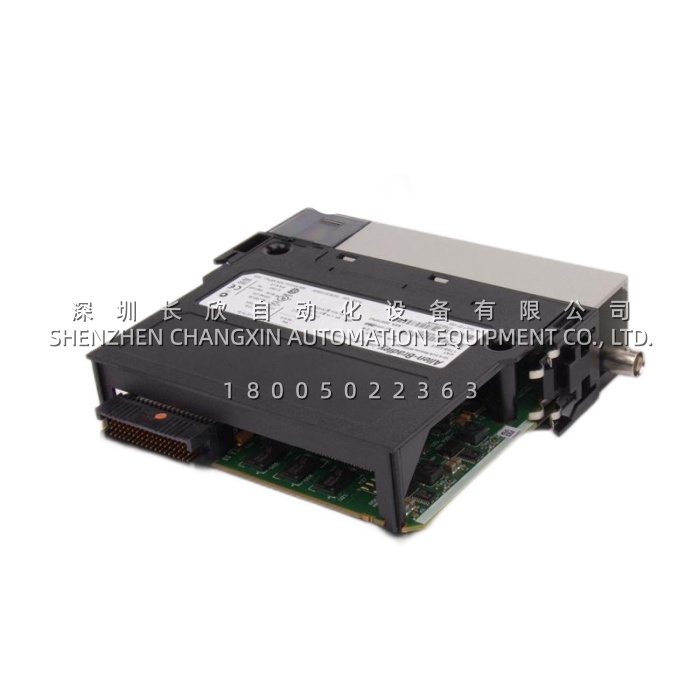
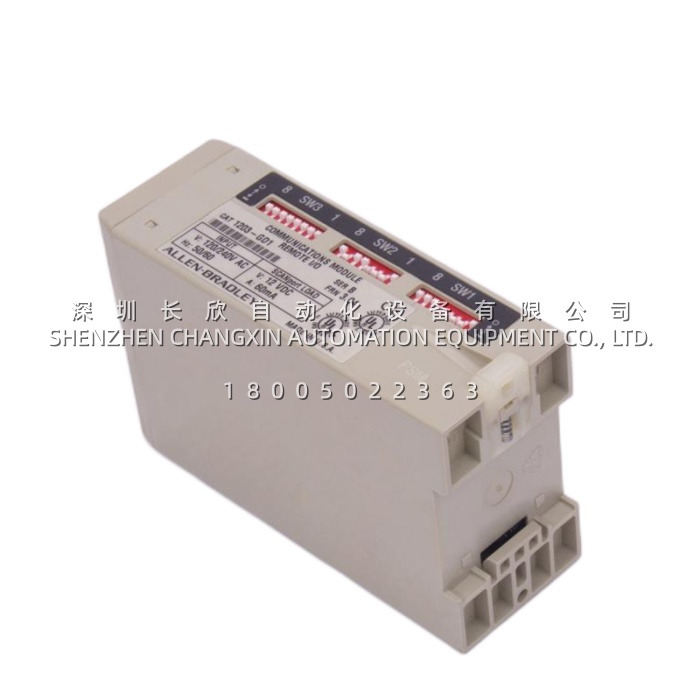
A municipal water plant runs a PLC-5 with a 1771-SN scanner and a row of 1336 PLUS drives on a Remote I/O trunk that has been in service since the 1990s. The drives are healthy, the process is stable, and nobody wants to re-engineer a working system just to add one more drive to the network. The problem is that a 1336 PLUS speaks SCANport, and the PLC only understands Remote I/O.The bridge in that cabinet is the 1203-GD1. It is clipped onto DIN rail next to the drive, wired to the drive’s SCANport connector with a 1202 cable, and dropped onto the RIO trunk with a three-pin connector. Once the DIP switches are set for rack address, rack size, and baud rate, the drive becomes a set of I/O words in the PLC image table, and start, stop, speed reference, and feedback all move over the existing network.The painful part is what happens when one fails. Because the 1203-GD1 sits directly in the control path, a dead module takes the drive offline even though the drive itself is fine. Plants that have learned this keep a configured spare on the shelf with the DIP switch settings written on the outside of the bag, which turns a multi-day waiting period into a ten-minute swap.
Parameter
| Main Parameters | Value/Description |
|---|---|
| Product Model | 1203-GD1 |
| Manufacturer | Allen-Bradley, Rockwell Automation; country of origin USA |
| Product Category | Remote I/O communications module, SCANport to Remote I/O gateway |
| Input Voltage | 85 to 264 V AC, single phase — wide range means no separate supply design for 115 or 230 V sites |
| Input Current | 35 mA maximum at 45 to 63 Hz |
| SCANport Load | 60 mA DC drawn by the module on the SCANport side |
| Interfaces | 1 × SCANport (8-pin mini-DIN) and 1 × Remote I/O (3-pin) — two networks, one module |
| Controller Side | Allen-Bradley Remote I/O: PLC-5 with 1771-SN, SLC 500 with 1747-SN, PLC-3, PLC-2/30, Logix5550 |
| Drive Side Compatibility | 1305, 1336 PLUS / PLUS II / IMPACT / FORCE / SPIDER, 1336 REGEN, 1394, 1397, 1557, SMC Dialog Plus, SMP-3, 2364F |
| Baud Rates | 57.6K, 115.2K, 230.4K, selected by DIP switch — must match every device on the trunk |
| Rack Sizes | 1/4, 1/2, 3/4, full — determines how much I/O image space the device occupies |
| Operating Temperature | 0 to +50 °C; storage -40 to +85 °C; 0 to 95 % humidity non-condensing |
| Mounting / Dimensions | 35 × 7.5 mm DIN rail; 76 × 45 × 123 mm; NEMA Type 1 (IP30), install inside a cabinet |
| Lifecycle Status | Discontinued by the manufacturer; supply is new surplus or tested pulled units |
Technical Principles and Innovative Values
Innovation Point 1: Protocol translation in one housing. The 1203-GD1 performs the conversion between the drive-side SCANport protocol and the controller-side Remote I/O scan, so a drive appears to the PLC as ordinary rack I/O rather than as a special device needing custom messaging.Innovation Point 2: Rack size flexibility. Not every drive needs a full rack of I/O. The 1203-GD1 can be set to occupy 1/4, 1/2, 3/4, or a full rack, so valuable I/O image space on an aging scanner is spent only where it is needed.Innovation Point 3: Datalinks for richer data. Beyond the basic command and reference words, the 1203-GD1 supports SCANport datalinks that move additional process values between controller and drive. Each enabled datalink consumes two words in the I/O image table, which lets a designer trade image space for diagnostic depth deliberately.Innovation Point 4: Configurable fault behaviour. User-selectable fault action DIP switches decide what the drive does when communication breaks: hold last state, coast, or go to a defined fault. The 1203-GD1 puts that decision in the hands of the plant rather than hard-coding it, which matters when a fan tripping is inconvenient but a pump tripping is dangerous.Innovation Point 5: Standalone mounting. Because the 1203-GD1 is DIN rail mounted and externally powered, it does not consume a slot in a 1771 rack. Drives can be added wherever the RIO trunk reaches, which is what makes distributed retrofits possible without re-racking the PLC.