Description
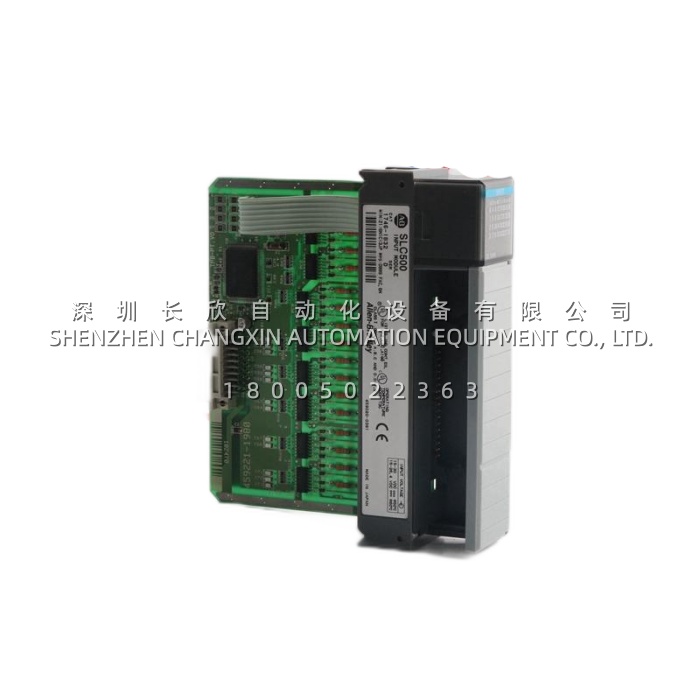
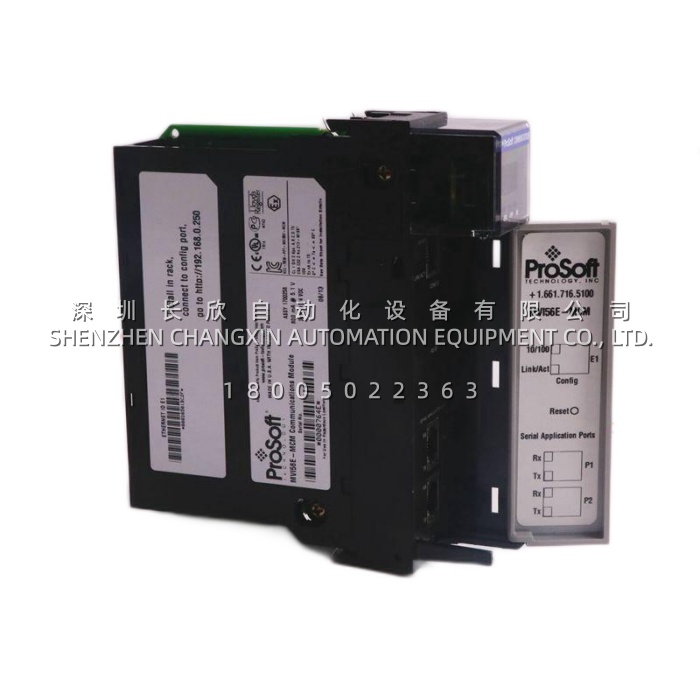
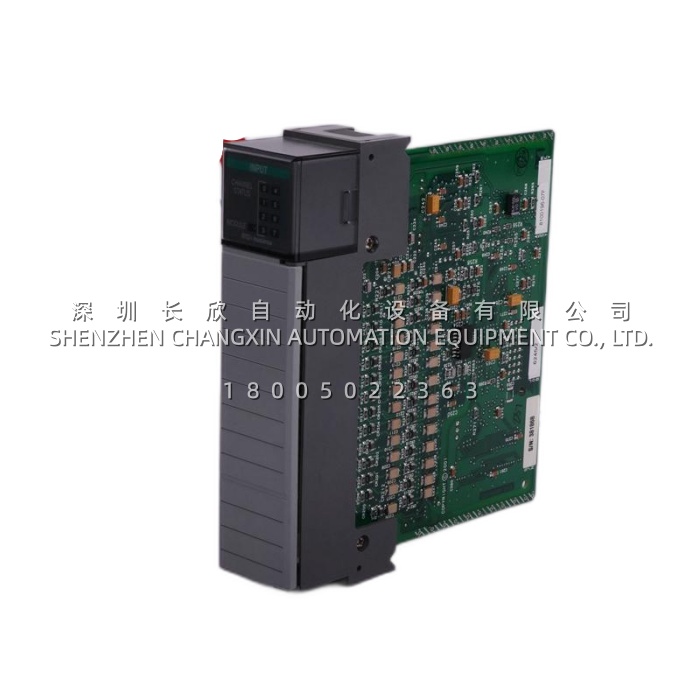
The Allen-Bradley 1756-EN2TXT is a chassis-based EtherNet/IP communication bridge for the ControlLogix-XT family, built by Rockwell Automation. It occupies a single slot in an XT-series rack and acts as the routing engine between the controller’s backplane and the plant’s Ethernet: real-time I/O, produced/consumed tags, explicit messages, HMI traffic and motion data all share the same two copper ports.Where the standard 1756-EN2T stops at 60 °C, the 1756-EN2TXT keeps going to 70 °C and down to −25 °C, with the XT conformal-coating and corrosion-resistance treatment that the “XT” suffix promises. It is the same dual-port, 10/100 Mbps, 256-CIP-connection module — just one that will still be passing packets after a summer heat-soak in an unventilated desert panel or a salty coastal compressor house.
Application Scenarios
An LNG terminal on the Bohai Gulf had its ControlLogix rack in a locally air-conditioned skid room that was anything but. On August afternoons the cabinet interior touched 66 °C, and the standard-temperature bridge would trip its internal thermal margin, drop the produced/consumed tag link to the gas-analysis skid, and hand the operator a stale-data alarm that looked exactly like a process upset. The operations team had learned to “cycle the switch” — which is another way of saying the network was being rebooted by the weather.The fix was a 1756-EN2TXT swapped into the same slot, same firmware family, same Studio 5000 module definition. No program changes, no new IP scheme, no re-run cable. The XT module sat through the next heat wave with the link LEDs steady and the port-crc counter clean. More usefully, the plant could now prove the instrument skid data was live, so a genuine process deviation stopped getting buried under false staleness. The panel tech’s verdict was characteristically short: “It used to die when the sun came up. Now it just gets warm.”That is the 1756-EN2TXT doing the job it was named for — not faster networking, but networking that refuses to notice the environment.
Parameter
| Main Parameters | Value / Description |
|---|---|
| Product Model | 1756-EN2TXT — ControlLogix-XT EtherNet/IP communication module; Series A through D in the field, D being the current common revision |
| Manufacturer | Allen-Bradley, Rockwell Automation — USA design origin, ControlLogix / Logix-XT platform |
| Product Category | Communication bridge module (EtherNet/IP, chassis-resident, 1-slot) |
| Protocol Stack | EtherNet/IP carrying CIP; explicit messaging, produced/consumed (implicit) I/O, CIP Sync, socket services and SNMP |
| Ethernet Ports | 2 × RJ45, 10/100 Mbps, auto-negotiating, auto-MDIX; use as linear daisy-chain, star leg or DLR-capable ring member (ring supervision depends on the paired module/controller revision) |
| Cable & Distance | Cat5e or better, 100 m per segment; shielded twisted pair recommended in high-noise panels, unshielded permitted by the standard |
| Logix / CIP Connections | 256 CIP connections, usable as all-explicit or all-implicit — this is the headroom that lets a rack talk to a large I/O tree without the “connection limit” fault |
| TCP/IP Sessions | 128 concurrent TCP sessions for HMI, MSG, OPC, FTP and diagnostic traffic |
| CIP Unconnected Messages | 128 + 128 (backplane side + Ethernet side) — the pool that buffered MSGs draw from, and the first place to look when a tag read times out |
| Packet Rate Capacity | 10,000 I/O pps / 2,000 HMI-MSG pps at firmware 2.x; 25,000 pps with a 1756-L7x controller and firmware 3.6 or later — numbers assume the other direction is idle, so budget generously |
| Integrated Motion | Up to 8 axes on EtherNet/IP when paired with a capable controller and firmware 3.6+; not a servo drive replacement, just the network path the motion task rides |
| Local Config Port | USB 1.1 full-speed (12 Mbps) for temporary laptop programming; not for permanent wiring and not for use in hazardous locations |
| Backplane Load | 1.0 A @ 5.1 VDC, plus 3 mA @ 24 VDC — 5.1 W dissipation (17.4 BTU/hr). The 24 V draw is tiny, but the 5.1 V budget is what decides whether your power supply has headroom |
| Isolation | 30 V continuous basic insulation: Ethernet-to-backplane, USB-to-backplane, USB-to-Ethernet; type-tested at 980 VAC, 60 s on the qualified series |
| Temperature | −25 to +70 °C (−13 to 158 °F) operating, −40 to +85 °C storage — the defining difference from a plain 1756-EN2T |
| Environmental Ratings | ANSI/ISA-S71.04 Class G1/G2/G3 resistance to salts, corrosives, humidity and fungal growth; ATEX Zone 2 / IECEx / Class I Div 2, UL 508, cUL, CE, C-Tick, KC; T4 / T4A temperature code |
| Mechanical | 139 × 30 × 140 mm (5.47 × 1.18 × 5.51 in), approx. 0.23–0.48 kg depending on coating and label set; open-style enclosure, no IP rating of its own — the cabinet supplies the protection |
| Chassis Fit | 1756-A4LXT, A5XT, A7XT, A7LXT (XT racks only); standard 1756-Ax chassis are physically compatible but defeat the environmental rating |
| Firmware Note | Series D ships at 11.002-class firmware; Series C and earlier sit at 5.008 / 5.028. The signed-firmware boundary matters — a C-or-earlier module cannot accept the D image |