
Product Overview
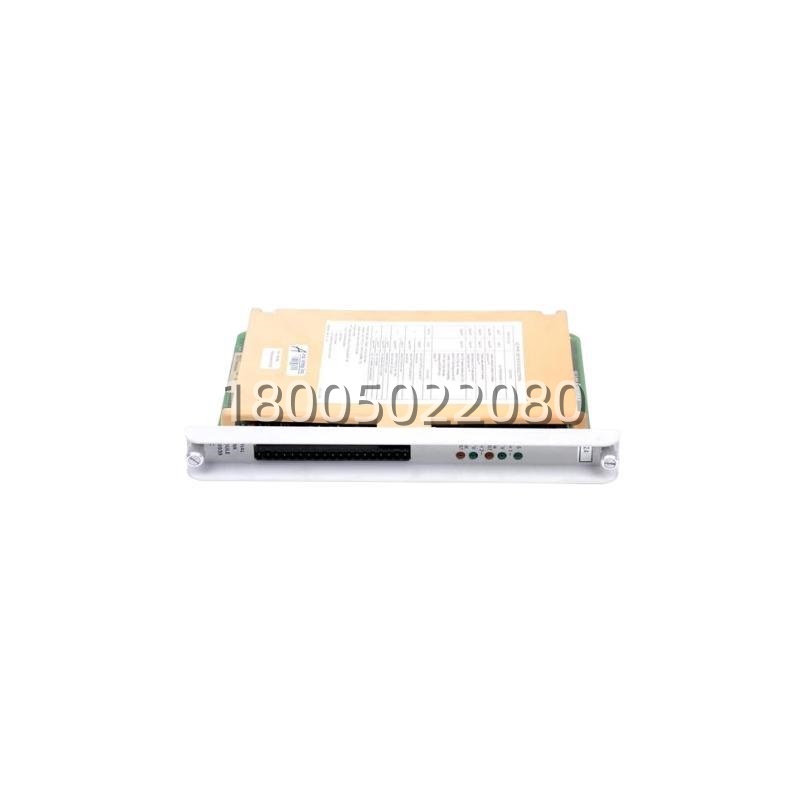
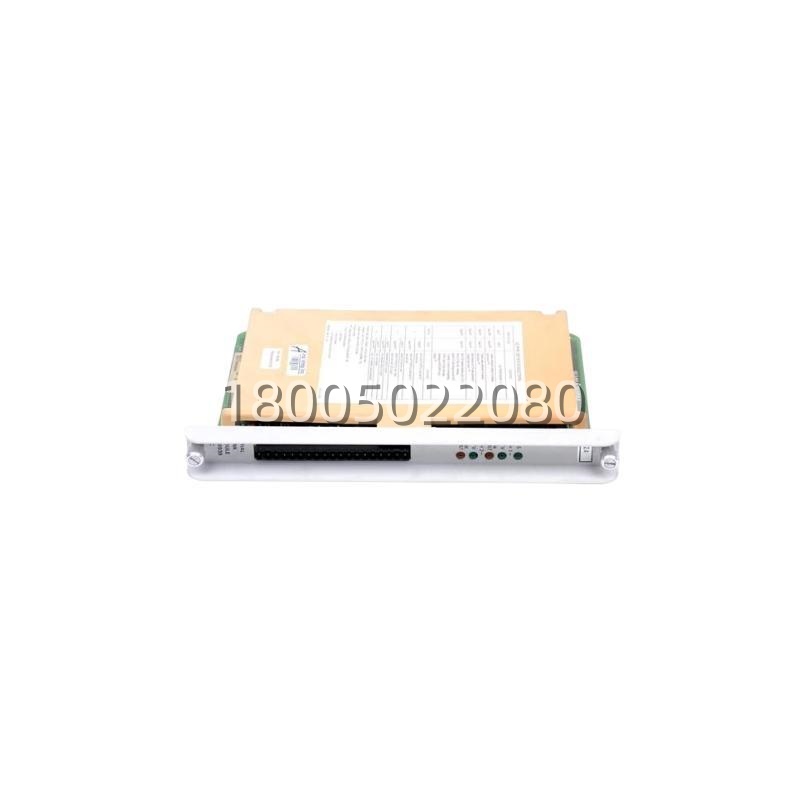
The Honeywell 621-9939C is a critical Serial Link Module (SLM) designed for the Honeywell TDC 3000 and Experion Process Knowledge System (PKS) distributed control systems. This module functions as a sophisticated gateway, bridging the high-speed, proprietary Local Control Network (LCN) or Experion Control Network (ECN) with the world of serial communication devices. The primary role of the Honeywell 621-9939C Serial Link Module is to enable bidirectional data exchange between the centralized DCS and a wide array of third-party or legacy field devices, PLCs, analyzers, and other subsystems that communicate via standard serial protocols such as Modbus RTU/ASCII, Honeywell Data Hiway, or other custom character-based protocols. It acts as a protocol translator and data concentrator, making serial device data appear as native points within the TDC/Experion database, accessible for control, display, alarming, and logging.Installed in a dedicated Honeywell High-Performance Process Manager (HPM) or similar control platform cabinet, the 621-9939C is more than a simple interface card; it is an intelligent processor-based module. It manages the intricacies of serial communication—including baud rate configuration, parity, data bits, stop bits, and message framing—offloading this task from the main control processors. This allows the DCS to efficiently communicate with devices that may have slower response times or unique command/response sequences. The value of the Honeywell 621-9939C module lies in its ability to extend the lifecycle and functionality of a TDC 3000 or Experion system by seamlessly integrating modern and legacy serial-based equipment. This capability is essential for plant modernization projects, where new analyzers or packaged skid PLCs need to be integrated, or for preserving investments in existing serial-based subsystems like compressor controls, turbine governors, or batch sequencers, ensuring all plant data is consolidated into a unified operator interface and historian.
Technical Specifications
| Parameter Name | Parameter Value |
|---|---|
| Product Model | 621-9939C |
| Manufacturer | Honeywell |
| Product System | TDC 3000 / Experion PKS |
| Product Type | Serial Link Module (SLM) |
| Form Factor | Circuit Card Assembly for installation in a Honeywell HPM or I/O shelf |
| Primary Function | Serial-to-LCN/ECN Communication Gateway |
| Supported Serial Protocols | Modbus RTU (Master/Slave), Modbus ASCII, Data Hiway, Custom ASCII |
| Number of Serial Ports | Typically 1 or 2 independent RS-232/RS-422/RS-485 ports (configurable) |
| Baud Rate | Software selectable, ranging from 300 to 115,200 bps |
| Data Format | Configurable (Data bits: 7/8, Parity: Even/Odd/None, Stop bits: 1/2) |
| Communication Media | LCN (Local Control Network) or Experion Control Network |
| Power Requirement | Derived from the HPM backplane (e.g., +5V, ±12V DC) |
| Operating Temperature | 0 to 60 °C (typical for control room environments) |
| Redundancy Support | Can be configured in redundant pairs for high-availability applications |
| Configuration Tool | Honeywell Control Builder or legacy TDC 3000 engineering tools |
Main Features and Advantages
The Honeywell 621-9939C Serial Link Module provides a robust and flexible solution for serial integration, characterized by its protocol versatility and data handling intelligence. A key feature is its support for multiple, industry-standard serial protocols, most notably Modbus RTU. The module can be configured to act as a Modbus Master, actively polling data from subordinate devices (PLCs, meters, drives), or as a Modbus Slave, responding to requests from a master system. This bidirectional capability makes the 621-9939C a versatile tool for both data acquisition and setpoint control. The module handles all low-level communication details, including timeouts, retries, and error checking (CRC/LRC for Modbus), ensuring data integrity and freeing the DCS controllers from this overhead. Data read from the serial devices is mapped into the DCS’ point database as Analog Input (AI), Digital Input (DI), or Custom Data points, and can be used in control strategies, displayed on workstations, and archived.


