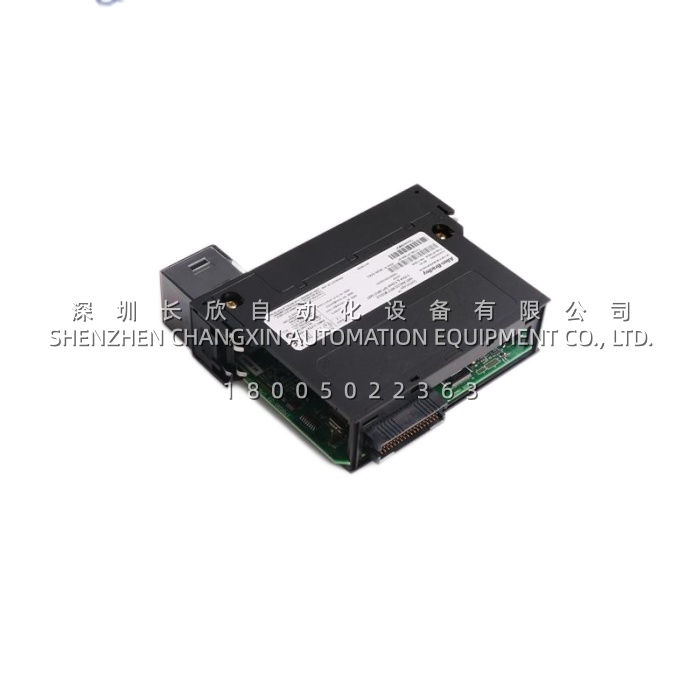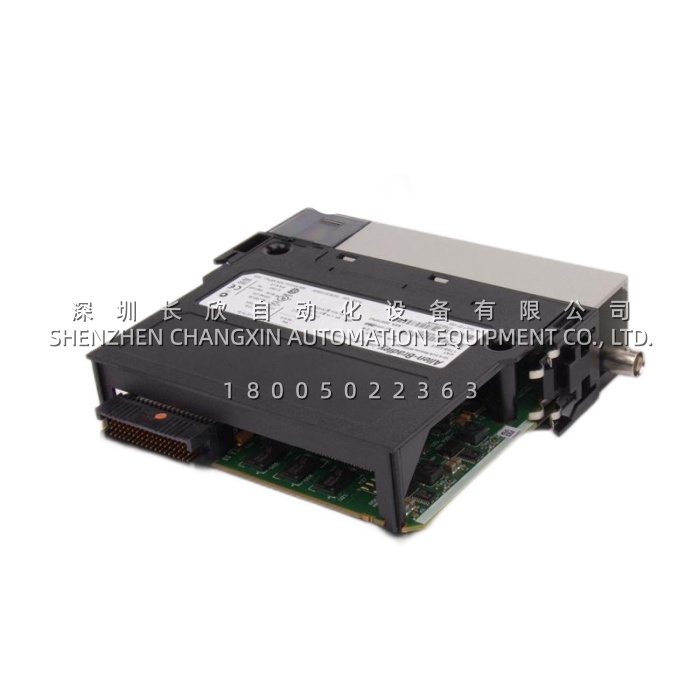
Technical Specifications
| Parameter Name | Parameter Value |
|---|---|
| Product Model | 6DD2920-3AW2 |
| Manufacturer | Siemens (Large Drives / SIMADYN D) |
| Product Type | Thyristor Electronics Submodule (Power-Section) |
| Designation | TAS21E (water-cooled variant, “FOR WATER”) |
| Product Series | Siemens 6DD2920 (SIMOVERT / SIMADYN D power accessories) |
| Voltage Rating | 5.00 kV / 3.90 kV (TAS21E class) |
| Cooling | Water-cooled (matches SIMOVERT D&S water power cubicle) |
| Electronic Thyristor Protection | No (“without electronic thyristor protection” — protection handled at higher level / separate card) |
| Compatible Systems | SIMADYN D, SIMOVERT D & S (water-cooled cabinet builds) |
| Control Interface | To/from SIMADYN D control rack (firing-angle reference, fiber/bus per cubicle build) |
| Pulse Output | Multi-channel isolated gate pulses via integral pulse transformers (per TAS21E architecture) |
| Mounting | SIMOVERT D&S water power rack, TAS21E slot (per cubicle BOM) |
| Siblings (same series) | 6DD2920-3AW0 (TAS21E water base), 6DD2920-3AW1 (4.00/2.80 kV), 6DD2920-3AW3 (6.80/5.60 kV), 6DD2920-3AW4 (7.30/6.00 kV); air-cooled parallel: 6DD2920-1AW1 (TAS21D, “FOR AIR”) |
| Lifecycle Status | Discontinued 01.04.2008, canceled without substitution |
| Commodity Context | High-power DC drive / HV rectifier power-section electronics |
Main Features and Advantages
The Siemens 6DD2920-3AW2 earns its keep as the gate-pulse “last mile” between a SIMADYN D control rack computing α (firing angle) at sub-ms resolution and a water-cooled thyristor stack pushing thousands of amps at 5 kV-class anode voltage. Its defining feature is the TAS21E pulse-driver architecture: multiple gate channels, each fed from the cubicle-level firing reference, shaped through the submodule’s pulse transformers and driven out to the thyristor gates with the isolation and drive strength the HV stack requires. In a water-cooled SIMOVERT D cubicle doing 4–10 kA rectifier duty (think potline rectifier for aluminum smelting, 5–10 MW DC), firing asymmetry of even 10–20 µs between series thyristors shows up as voltage imbalance across the string, localized thyristor heating, and accelerated derating. The Siemens 6DD2920-3AW2 keeps those pulses aligned — the submodule is the component the commissioning engineer checks first when a potline rectifier starts showing asymmetric ripple on the DC bus.The second advantage is the voltage-class positioning. At 5.00 kV / 3.90 kV, the Siemens 6DD2920-3AW2 sits in the mid-high tier of the TAS21E water ladder. The ladder exists because SIMOVERT D & S water-cooled cubicles were built across a range of DC-bus and thyristor-anode voltages — a zinc-electrolysis rectifier at ~700–1000 V DC doesn’t need the same TAS21E voltage class as a potline rectifier at 800–1500 V DC, and a large rolling-mill main drive (DC, 6–12 MVA) pushes further. The 3AW2 at 5.00/3.90 kV is the “sweet spot” for mid-mega-watt DC smelter potlines and large single-drive mill mains — which is exactly why it’s the one most smelter spares buyers hunt. If a plant accidentally buys a 3AW1 (4.00/2.80 kV) thinking it’s “close enough,” the voltage rating is mismatched to the cubicle’s thyristor string — not immediately fatal but outside Siemens spec, and the pulse-transformer turns ratio / isolation margin won’t match the original BOM.Third, the “no electronic thyristor protection” design choice deserves a paragraph because it’s the most misunderstood line on the datasheet. The Siemens 6DD2920-3AW2 does not carry overcurrent, di/dt watchdog, or snubber-fault detection — those live in the SIMOVERT D cubicle’s protection layer (often a separate 6DD2920 sibling or in the SIMADYN D control rack’s fault chain via fiber). The TAS21E’s job is trigger integrity, not protection tripping. This split-layer design means a TAS21E failure (pulse-transformer drift, gate-drive IC aging) will typically show up as firing asymmetry or a “missing pulse” fault reported by the protection layer, not as a self-tripped submodule. For maintenance teams, that means: if the SIMOVERT D cubicle throws a “thyristor firing fault” or “asymmetric commutation” alarm, the Siemens 6DD2920-3AW2 is the first pull-and-swap candidate, even though the protection that raised the alarm lives elsewhere.Fourth, ruggedness in water-cooled cubicle environment. The Siemens 6DD2920-3AW2 lives inside a cubicle where the ambient is dominated by the water-manifold heat, the transformer hum, and the EMI of kV/KA switching 6–12 times per AC cycle. The submodule’s pulse transformers and gate-drive stages are potted/configured for that EMI floor — a generic gate-drive card from a low-power drive wouldn’t survive a week in the same cubicle. That’s why there’s no “universal replacement” — the TAS21E is cubicle-specific, and the 2008 “canceled without substitution” line from Siemens means you can’t even buy a “new equivalent” from the OEM.
Application Field
The Siemens 6DD2920-3AW2 deploys exclusively in SIMOVERT D & S water-cooled power cubicles where the TAS21E 5.00/3.90 kV class matches the thyristor string. The single largest band is primary aluminum smelters — potline rectifiers, typically 5–15 MW DC per cubicle string, water-cooled thyristor stacks, 24-pulse or 12-pulse arrangements, feeding 800–1500 V DC potlines at 4–10 kA. In these plants the Siemens 6DD2920-3AW2 is the gate-pulse submodule in every water-cooled rectifier cubicle; a potline typically has 2–4 cubicles per potroom section, and a smelter with 200–400 pots has dozens of SIMOVERT D water cubicles. The TAS21E 3AW2 is the mid-voltage class here — not the highest (that’s 3AW3/3AW4 for the 1.5–2.0 kA/1.6–2.0 kV upper tier), not the lowest (3AW1 for smaller rectifier legs), but the volume SKU for the “standard” potline rectifier cubicle. When a smelter retainer plant decides “we’re running these pots 30+ years,” the Siemens 6DD2920-3AW2 becomes a strategic spare bought in lots of 4–8 per annual shutdown.Chlor-alkali and zinc-electrolysis rectifiers are the second band — same architecture (water-cooled SIMOVERT D cubicles, DC bus ~500–1200 V, currents 5–20 kA), TAS21E trigger submodule in each cubicle. The 5.00/3.90 kV rating of the Siemens 6DD2920-3AW2 maps to the mid-tier thyristor strings in these plants; higher-current/lower-voltage cells might drop to 3AW1, lower-current/higher-voltage cells go to 3AW3.Large DC rolling-mill main drives and mine-winder DC supplies are the third: a single-stand reversing roughing mill or a mine-winder 5–8 MW DC drive often uses a SIMOVERT D water-cooled cubicle (especially in retrofits where the original 1970s/80s mercury-arc or air-cooled thyristor cubicle was swapped for SIMOVERT D in the 1990s). The Siemens 6DD2920-3AW2 sits in that cubicle’s trigger section. These applications are more intermittent than smelter potlines (mills run 2-shift, winders cyclic), but the peak kA and the water-cooling mean the TAS21E sees the same EMI/thermal profile.Test-stand and research-cell HV DC supplies round out the map — university megawatt rectifier labs, national-lab pulsed-power supplies, shipyard DC test bays — anywhere a water-cooled SIMOVERT D cubicle was spec’d in the 1990s–2000s and the 5.00/3.90 kV TAS21E was the BOM choice.One buying note that keeps biting people: the Siemens 6DD2920-3AW2 is water-cooled cubicle only. If the plant’s SIMOVERT D cubicle is air-cooled (“FOR AIR”), the correct submodule is 6DD2920-1AW1 (TAS21D), not the 3AW2. Mixing them is a mechanical-non-fit (water-manifold vs. air-fin), not just an electrical mismatch. Always confirm “FOR WATER” vs. “FOR AIR” on the cubicle nameplate before ordering 6DD2920 spares.
Related Products
- 6DD2920-3AW0 – TAS21E water-cooled, base voltage class, without electronic thyristor protection; the entry-tier water sibling of the Siemens 6DD2920-3AW2 for lower-voltage SIMOVERT D&S water cubicles.
- 6DD2920-3AW1 – TAS21E water 4.00 kV / 2.80 kV; one step below the Siemens 6DD2920-3AW2, for mid-low water-cubicle voltage strings.
- 6DD2920-3AW3 – TAS21E water 6.80 kV / 5.60 kV; one step above the Siemens 6DD2920-3AW2, for higher-voltage potline / HVDC-adjacent SIMOVERT D water cubicles.
- 6DD2920-3AW4 – TAS21E water 7.30 kV / 6.00 kV; top of the water TAS21E ladder, highest-voltage SIMOVERT D&S water cubicles.
- 6DD2920-1AW1 – TAS21D air-cooled (“FOR AIR”), without electronic thyristor protection; the air-cooled parallel to the TAS21E water family — do NOT substitute for Siemens 6DD2920-3AW2 in a water cubicle (mechanical non-fit).
- 6DD1681-0AE2 / 6DD1681-0AFx – SIMADYN D accessory / terminal / mounting items often ordered alongside 6DD2920 power-section spares for full cubicle rebuilds.
- 6DD1607-0AA2 – FM458-1DP (SIMADYN D / TDC application module); the control-rack CPU that computes firing angle α and feeds the Siemens 6DD2920-3AW2 in the power cubicle via fiber/bus — not a substitute, called out so buyers see the control/power split.
- 6SE70 / 6RA70 – Not directly related (those are MasterDrive / DC-Master, lower power than SIMOVERT D&S), flagged here to prevent confusion: 6DD2920 lives in megawatt SIMOVERT D&S cubicles, not in 6SE70/6RA70 drive cabinets