Application Scenarios
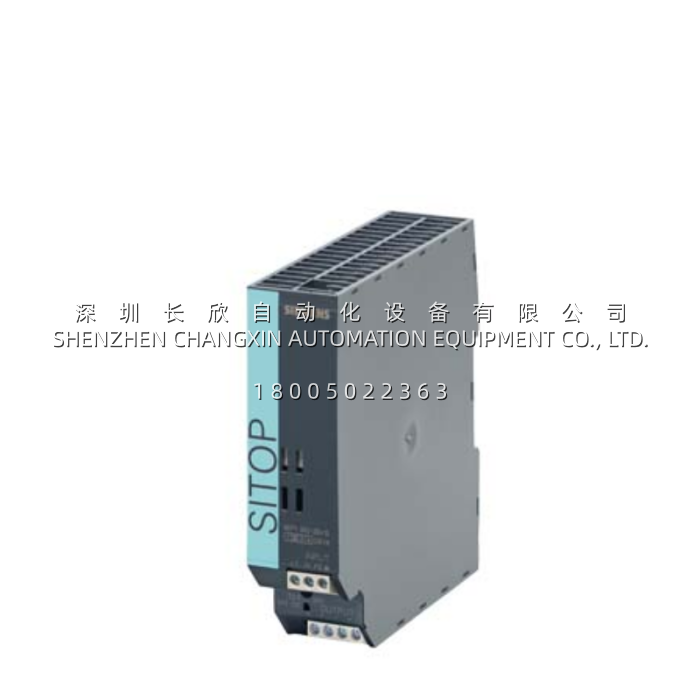
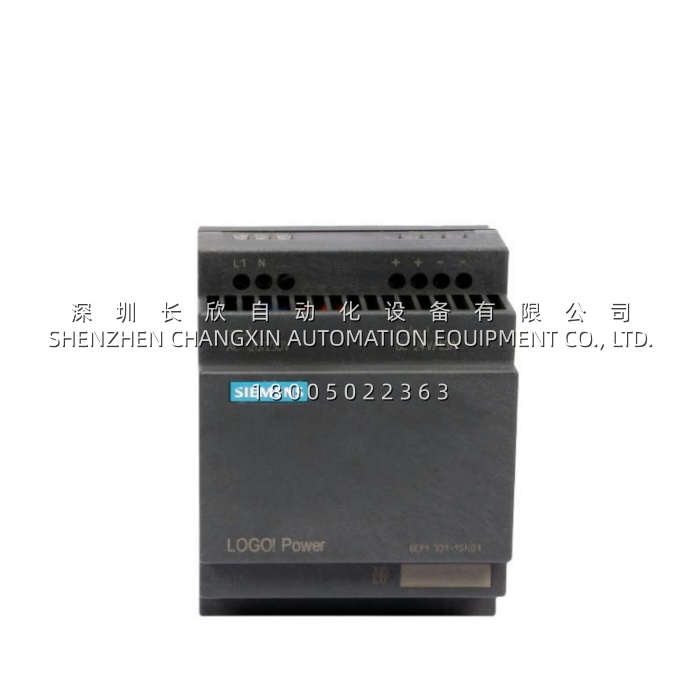
In a combined-cycle power plant’s TXP auxiliary cabinet — the one housing the 6DS1312-8BB IM modules and a string of 6DP1232-8AA FUM 232 temperature cards we covered earlier — the original PSU (a 15-year-old 6EP1332-2BA00) began showing its age. During a summer afternoon when the plant stepped a 6 kV feeder and the 230 V AC mains dipped to 187 V for ~40 ms, the old PSU’s hold-up expired, dragging the FUM rack into a brownout reset. The TXP OM lit up with a cascade: “IM bus lost,” “FUM 232 Ch.7 wire-break phantom,” “AP scan mismatch.” The real culprit wasn’t the FUM or the IM — it was the PSU’s 12 ms buffer falling short. The maintenance team swapped in a Siemens 6EP1332-2BA10: the new unit’s 20 ms mains buffering at Vin = 187 V (per the RS datasheet spec) held the 24 V rail through the same dip during a repeat test, and the selector switch was already set to 230 V position matching the cabinet’s European supply. More tangibly, the 6EP1332-2BA10 was then paralleled with a second unit (N+1, up to 2 units per Siemens spec) so that a future PSU fault would be transparent — the green LED on the degraded unit dimmed, the sister carried the 2.1 A combined load of the 6DS/6DP rack plus a few DI/DO carriers, and the plant logged zero TXP rack resets in the 18 months since. For this cabinet, the 6EP1332-2BA10 wasn’t a glamorous upgrade — it was the quietest 60 watts in the room.
Parameter
| Main Parameters | Value/Description |
|---|---|
| Product Model | 6EP1332-2BA10 |
| Manufacturer | Siemens (Factory Automation / Energy Automation) |
| Product Category | DIN-Rail Switched-Mode Power Supply (SITOP SMART / PSU100S family) |
| Input Voltage | 120 V AC / 230 V AC selectable via front switch; range 85–132 V / 170–264 V |
| Rated Output | 24 V DC, 2.5 A (60 W); up to 3 A to +45 °C |
| Output Adjustable Range | 22.8 – 28 V DC (front potentiometer) |
| Efficiency | ≈ 85 % at rated load; power loss ≈ 9 W |
| Mains Buffering | ≥ 20 ms at Iout rated, Vin = 93 / 187 V |
| Protection | Short-circuit (constant current, auto-recovery), overvoltage < 33 V, overload 3.2–3.4 A limit |
| Parallel Operation | Yes, up to 2 units for N+1 / enhanced current |
| Mounting | Snap-on 35 mm DIN rail (EN 60715); screw-type terminals |
| Dimensions (W×H×D) | 32.5 × 125 × 125 mm |
| Operating Temp. | 0 to +60 °C (derating above +45 °C; some datasheets extend to –25 / +70 °C storage/ambient) |
| Certifications | CE, UL 508, cULus, CSA C22.2, GL, ATEX II 3G Ex nA II T4 |
Technical Principles and Innovative Values
- Innovation Point 1 – Selector-Switch Wide-Range Input Without External Auto-Ranging. The 6EP1332-2BA10 takes a deliberately pragmatic approach: a physical slider lets the installer pick 120 V or 230 V AC, while each range covers a wide window (85–132 / 170–264 V). This avoids the complexity (and failure modes) of auto-ranging front-ends, yet still tolerates global site variances — a panel built in Germany (230 V) and shipped to a US skid (120 V) just needs a slider flip, not a rewire.
- Innovation Point 2 – 20 ms Mains Buffering at Deep Dip. Most compact 60 W PSUs spec 10–15 ms hold-up. The 6EP1332-2BA10 is rated ≥20 ms at Vin = 93/187 V (the IEC 61131-2 “brownout” threshold). In practice this means a downstream Teleperm M AP rack or S7-1500 won’t see a 24 V collapse during a feeder step, generator transfer, or minor grid disturbance — the kind of event that otherwise triggers phantom FUM/IM bus faults.
- Innovation Point 3 – Parallel-N+1 in a 32.5 mm Body. Despite its compact footprint, the 6EP1332-2BA10 supports parallel operation of up to two units (Siemens explicitly documents this for “enhanced performance”). In DCS aux-rail duty — where a single PSU feeds 6DS1-series modules, IM cards, and maybe a small ET 200 head — paralleling two 6EP1332-2BA10 units gives N+1 redundancy: one can fail (or be pulled for swap) while the other carries the steady load, with no scan interruption upstream.
- Innovation Point 4 – Constant-Current Short-Circuit with Auto-Recovery. Rather than a hiccup-mode or latch-off, the 6EP1332-2BA10 goes to constant-current limiting (~3.2–3.4 A) on short, retries automatically when the fault clears. For a cabinet where a field tech might inadvertently short a 24 V sense lead during commissioning, this means the PSU recovers silently once the screwdriver lifts — no circuit-breaker trip, no “why is the FUM rack dark” mystery.