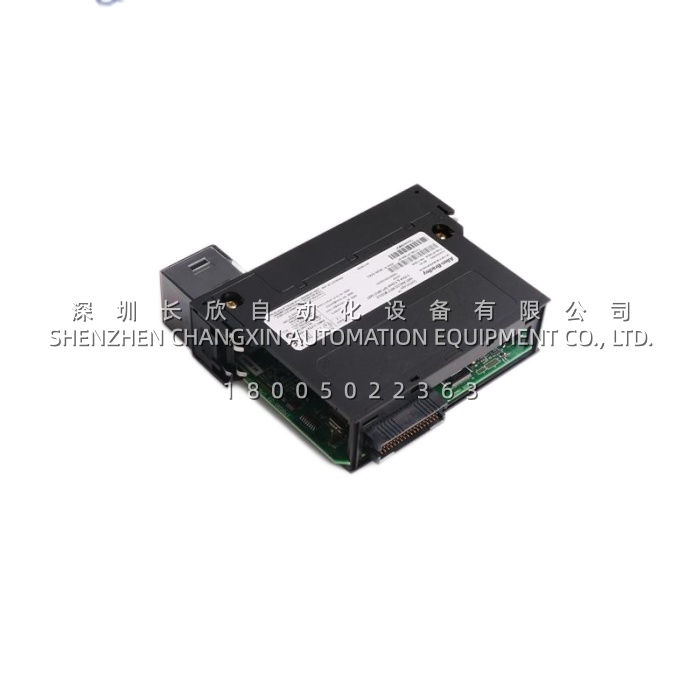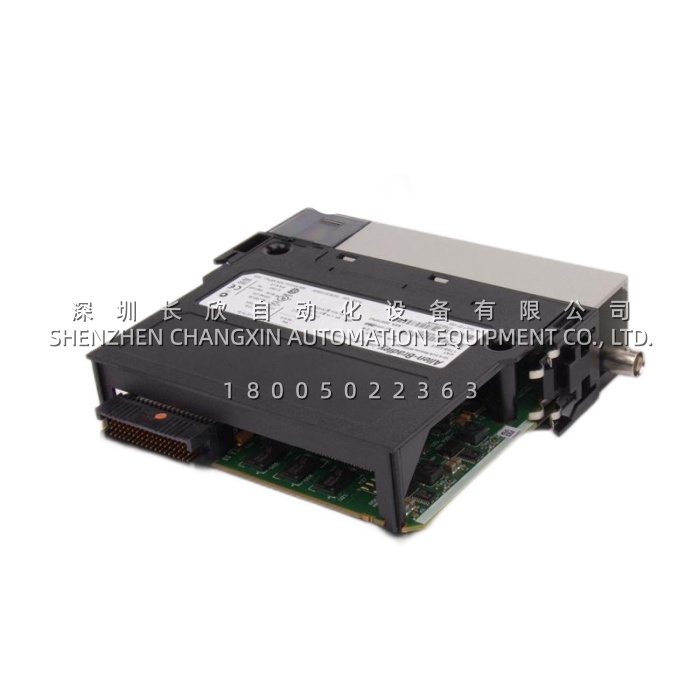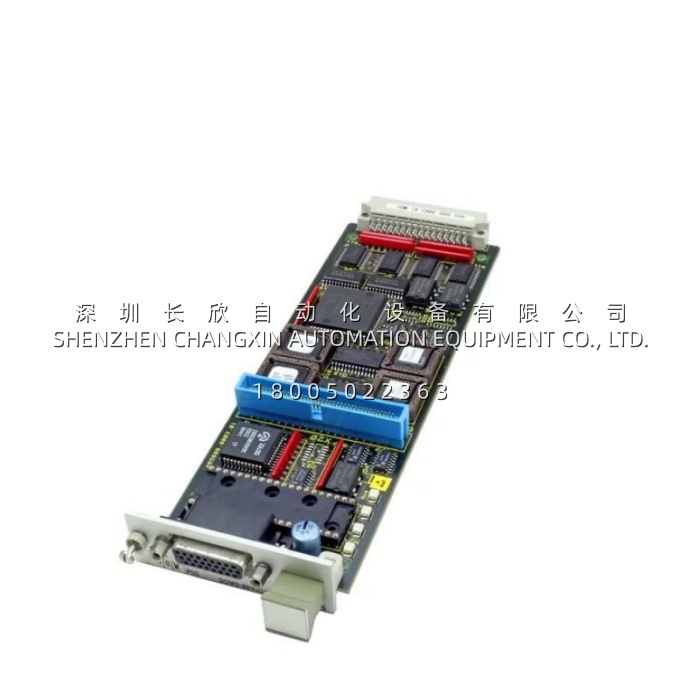
应用场景
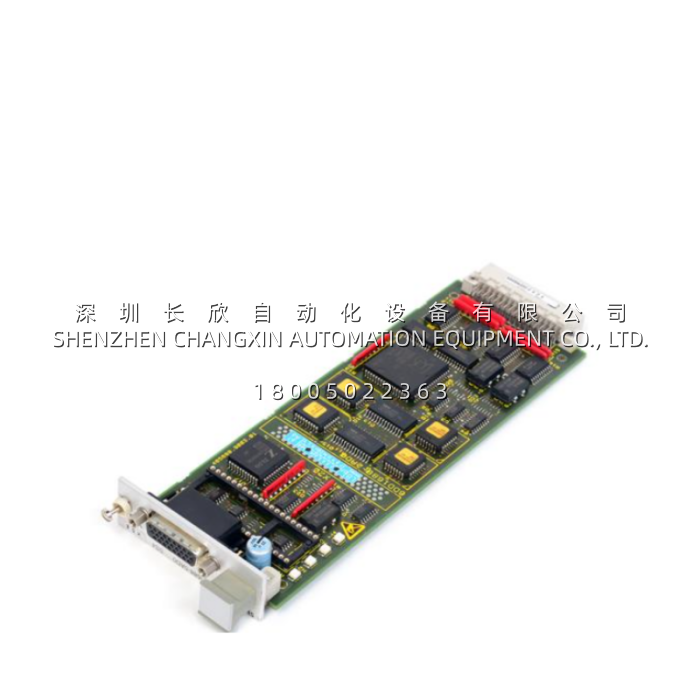
在传统的轧钢厂中,SIMADYN D 控制系统需要与基于 PC 的调试笔记本电脑和生产数据打印机建立可靠的串行连接。西门子6DD1688-0AD0 SS4 子模块提供这一关键接口,该子模块安装在 S7-400 机架内的 CS7 支持模块上。工程师可以使用 DUST1 协议,通过 PG 编程器调试和监控 FM 458 应用模块;同时,DUST2 协议支持用于打印生产报告的消息打印机。
6DD1688-0AD0解决的一个关键痛点是现代 PC 无法直接与传统的 SIMADYN D 控制总线连接。6DD1688-0AD0通过提供标准的 RS232 接口(或带 SS31 的RS485接口)来连接 PC,同时还支持远程设备的远距离 TTY 通信,从而解决了这一问题。在最近的一次系统升级中,维护团队更换了一条运行线路上的故障 SS4 模块,在几分钟内恢复了三个关键 USS 驱动器的通信,避免了预计 8 小时的计划外停机。6DD1688-0AD0直接支持这些传统系统的持续运行,而这些系统通常难以完全更换,成本过高。
参数
| 主要参数 | 值/描述 |
|---|---|
| 产品模型 | 6DD1688-0AD0(SS4 通信子模块) |
| 制造商 | 西门子(SIMADYN D / SIMATIC) |
| 产品类别 | 串行通信子模块 – CS7 支持模块的插件 |
| 支持的协议 | DUST1、DUST2、DUST3(PC调试、打印机、S5连接)、USS(驱动器、OP2、VD1) |
| 最大波特率 | 最高可达 187.5 kbaud(取决于协议和接口) |
| 标准接口 | RS 232(DE-9 连接器)——用于 PC/PG 通信 |
| 可选接口 | SS1(20 mA TTY,远距离),SS2(RS232,带 RTS/CTS),SS31(RS485,用于 USS) |
| 数据交换 | 16 KB 双端口 RAM(CS7 支持模块)——减轻 CPU 负担 |
| 电源 | 24V 直流(通过 CS7/背板),最大电流 100mA |
| 重量 | 约 0.18 – 0.22 千克(因来源而异) |
| 包装尺寸(宽×高×深) | 30.7 × 15.7 × 3.8 厘米 |
| 工作温度 | -40°C 至 +85°C |
技术原则与创新价值
6DD1688-0AD0在 SIMADYN D 和 S7-400 FM 458 生态系统中作为“串行通信协处理器”运行。当插入 CS7 支持模块时,6DD1688-0AD0通过位于 CS7 载板上的 16 KB 双端口 RAM 与系统 CPU 通信,而不是通过子模块本身的 RAM。这种架构将串行协议处理与主处理器隔离,确保对时间要求严格的运动或过程控制任务不会因速度较慢的串行数据传输而中断。
Innovation Point 1: Protocol and Physical Layer Independence
The 6DD1688-0AD0 addresses a critical challenge in legacy industrial communication: the need to support diverse devices with different electrical standards and protocols. By supporting DUST1 (PC commissioning), DUST2 (printer output), DUST3 (SIMATIC S5 connection), and USS (drive communication) protocols, the 6DD1688-0AD0 offers exceptional flexibility for integrating a wide range of devices into a SIMADYN D system. Furthermore, its ability to accept optional interface modules—SS1 for 20mA TTY over long distances, SS2 for full RS232 handshaking, or SS31 for multi-drop RS485—makes the 6DD1688-0AD0 adaptable to almost any serial communication requirement without changing the base module. This modularity reduces spare part inventory and simplifies system maintenance.
Innovation Point 2: Deterministic Data Exchange Architecture
Unlike simple serial converters, the 6DD1688-0AD0 leverages a dual-port RAM on the CS7 support module to exchange data with the CPU. This mechanism ensures that serial data is buffered and transferred in dedicated time slots, preventing serial bottlenecks from affecting the control system’s deterministic timing. This is particularly important in drive synchronization and process control applications where jitter or communication delays can cause product defects. The architecture of the 6DD1688-0AD0 ensures that slow serial I/O does not degrade the performance of the high-speed FM 458 application module.
Innovation Point 3: Flexible Programmer Connection
The 6DD1688-0AD0 can be used with PG740, PG750, or PG770 programmers via the SM8 parts set, providing a direct, standardized method for commissioning and diagnostics. This capability ensures that legacy SIMADYN D systems can continue to be maintained and reprogrammed using standard Siemens tools, preserving the significant engineering investment in these control solutions.
Application Cases and Industry Value
Case Study: Water Treatment Plant – SCADA Data Interface
A municipal water treatment plant was operating an aging SIMADYN D control system on its chemical dosing and filtering process. The facility needed to extract process data (flow rates, pH levels, tank levels) to a central SCADA system for regulatory reporting, but the SIMADYN D CPU had no modern network interface. The plant installed a Siemens 6DD1688-0AD0 communication submodule on a CS7 carrier in the S7-400 rack.
6DD1688-0AD0被配置为通过 DUST1 协议与一台协议转换 PC 通信,该PC 作为以太网 SCADA 网络的网关。其 16KB 双端口 RAM 缓冲区实现了 CPU 和网关之间的无缝数据交换,确保数据持续可用,用于生成报告,且不会中断实时控制回路。安装后,工厂实现了对 SIMADYN D 过程的全面 SCADA 可视性,从而能够更好地进行运营决策并简化合规流程。客户对6DD1688-0AD0的评价很高,因为它提供了一个非侵入式的通信网关,无需进行重大硬件更改或重新布线,从而延长了控制系统的使用寿命。