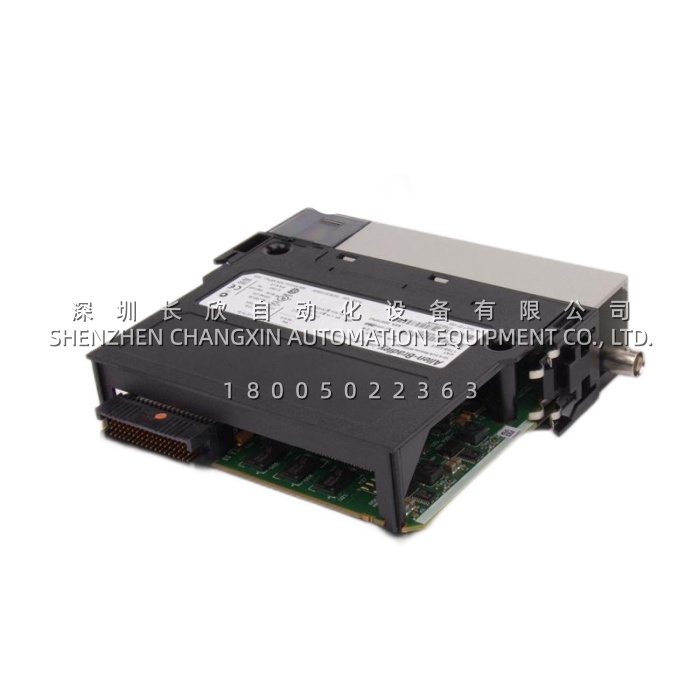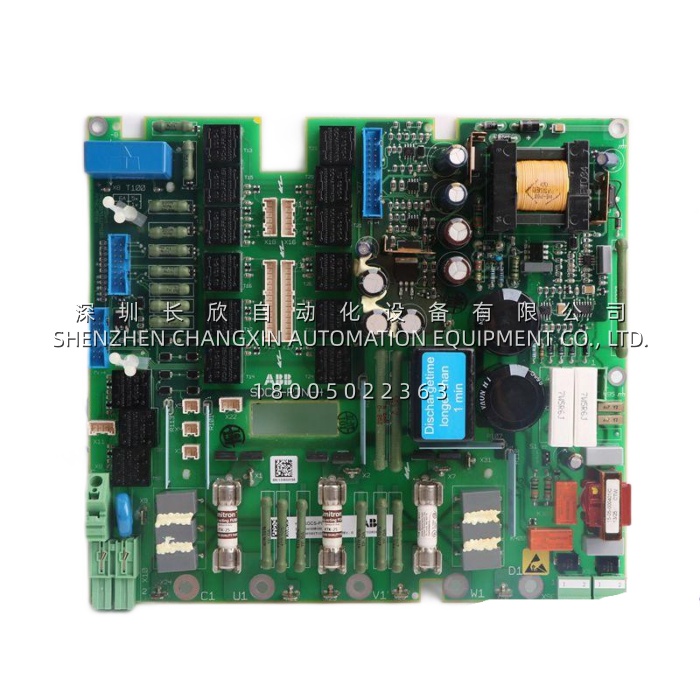
Description
A quick clarification before we dive in: the model you quoted is 5SGY4045L0004, and on the silk-screen of the device itself ABB often prints it as 5SHY4045L0004 — the two codes refer to the same 4.5 kV / 4000 A asymmetric IGCT (Integrated Gate-Commutated Thyristor) power module made by ABB (now Hitachi Energy). It is the flagship “muscle” device of the ABB ACS6000 medium-voltage drive family, and also shows up in HVDC Light VSC valves, STATCOM / SVC, mine winders, marine propulsion, and 1.5–5 MW wind converters. The 5SGY4045L0004 is a press-pack, double-sided water-cooled brick — no solder, no wire bonds, no external snubber — and it does not work alone: it needs its “nervous system,” a dedicated gate driver such as the GVC736BE101 (3BHE019719R0101) or 3BHB021400R0002, which fires it over fiber at +20 V / –20 V.h2 Application ScenariosIn a 6 MW plate-mill main drive on ABB ACS6000, the original 5SGY4045L0004 IGCTs had been in service eleven years, pushing 4000 A RMS through the inverter arms every time the stand reversed direction. During a scheduled roll-change outage, the maintenance crew pulled one phase-module for a torque-check on the press-pack clamp (spec is ~40–50 kN per ABB’s ACS6000 power-unit manual) and spotted micro-cracking on the ceramic edge of one device — classic end-of-life signature from thermal cycling. They swapped all six arms to fresh 5SGY4045L0004 units from the central store, re-torqued to spec, and flushed the deionized cooling loop (conductivity < 0.5 µS/cm is non-negotiable for this class). The mill went back online the same shift; six months later, the drive-side event log still shows zero “IGCT Desat” or “Gate-Fail” entries. The drive engineer’s comment: “The 5SGY4045L0004 itself almost never dies — what kills it is either the gate driver drifting, or someone letting the coolant conductivity creep. Treat those two, and this brick runs a decade.” For plants sitting on fleets of ACS6000, ACS5000, or HVDC Light poles, the 5SGY4045L0004 is the one line-item you want on the MRO matrix before a cracked ceramic forces a three-day unplanned stop.h2
arameters
| Main Parameters | Value / Description |
|---|---|
| Product Model | 5SGY4045L0004 (silkscreen also reads 5SHY4045L0004) |
| Manufacturer | ABB (Hitachi Energy) |
| Product Category | Asymmetric IGCT Power Module (Integrated Gate-Commutated Thyristor) |
| Voltage Rating | 4500 V VDRM / VRRM (4.5 kV class) |
| Continuous Current | 4000 A IT(RMS) / ~1500 A IT(AV) (depending on cooling) |
| Surge Current (10 ms) | ≥ 60 kA (some batches list 150 kA non-rep) |
| Turn-Off Time (tq) | ≤ 18 µs (typical, datasheet class); fast-switch batches < 1.5 µs |
| di/dt Tolerance | ≥ 2000 A/µs |
| dv/dt Tolerance | ≥ 5000 V/µs |
| On-State VTM | ≤ 3.8 V @ 4000 A / 85 °C (typical 1.8–3.1 V across batches) |
| Cooling | Double-sided forced water (deionized, < 0.5 µS/cm mandatory) |
| Package | Press-pack, ceramic, no solder / no wire bond |
| Gate Drive | +20 V / –20 V pulse, fiber-isolated (via GVC736BE101 or 3BHB021400R0002) |
| Operating Tj | –40 °C to +125 °C (short-term +140 °C on some batches) |
| Standards | IEC 60747-6 / IEC 60747-9, CE, UL |
h2 Technical Principles and Innovative ValuesInnovation Point 1 – Press-Pack, No Solder, No Wire Bonds. The 5SGY4045L0004 sandwiches the IGCT silicon between molybdenum discs and copper electrodes under ~40–50 kN clamp force. No solder = no fatigue crack path during 100 kA surge cycles. Failure mode is short (ceramic cracks → fuse/DC-breaker clears), not open — which is why plants choose IGCT over paralleled IGBTs for “stop-costs-six-figures-a-day” loads like LNG compressors and plate mills.Innovation Point 2 – Snubberless Turn-Off. Traditional GTOs need a bulky RCD snubber because they’re slow to turn off; the 5SGY4045L0004 switches in ≤18 µs (sub-µs on fast batches) with di/dt ≥ 2000 A/µs, so the ACS6000 phase leg skips the snubber entirely. That’s fewer parts, less PCB real estate, and one fewer thing to thermally age.Innovation Point 3 – Gate Driver Is Half the Story. A bare 5SGY4045L0004 is inert; it needs the GVC736BE101 (3BHE019719R0101) or 3BHB021400R0002 gate unit to fire it. The pairing matters: the driver pushes +20 / –20 V over fiber (EMI-immune), monitors VCE saturation, and hard-trips in microseconds on desat. Mismatched driver批次 (batch) = risk of “late turn-off” -> cascade failure across the arm. Always replace 5SGY4045L0004 + gate driver as a set if you’re into the 8–10 year window.Innovation Point 4 – 150 kA Surge Survival. The 5SGY4045L0004 is spec’d for short-circuit surges that would vaporize an IGBT module instantly. In mine-winder regen faults or HVDC pole faults, this rating is what keeps the DC-link fuse (not the semiconductor) as the clearing device — a deliberate design choice ABB made for grid-attached and motor-regeneration scenarios.Innovation Point 5 – Deionized-Water Mandate. The double-sided water jacket on the 5SGY4045L0004 isn’t decorative. Conductivity creeping above 0.5 µS/cm lets stray current leak through the ceramic to ground, slowly eroding the internal metallization. Plants that lose an IGCT “for no reason” usually trace it back to a resin bed that went unnoticed for two seasons.h2 Application Cases and Industry ValueA Nordic 3 MW ore-hoist (mine winder) running ACS6000 on a 6 kV supply had a “mystery” IGCT failure on Arm B — one 5SGY4045L0004 cracked ceramic, no obvious trigger in the drive log. Post-mortem showed the deionized loop’s conductivity probe had drifted to 1.2 µS/cm for three months (the alarm threshold was set at 1.0 but the DCS point wasn’t mapped to an operator alarm, classic config debt). After the swap, the plant added a “conductivity > 0.4 µS/cm = work order” rule and paired every 5SGY4045L0004 spare with a fresh GVC736BE101 gate driver, on the principle that the driver’s gate-emitter capacitance ages silently. Eighteen months on, zero repeat.In an Asian offshore wind 5 MW converter (ABB PCS6000 lineage, same IGCT family), the 5SGY4045L0004 valves run at ~2 kHz switching, pushing the “no snubber” advantage hard — the cabinet footprint for a 5 MW converter shrank ~30 % versus an IGBT-paralleled design because there’s no RCD forest. The O&M lead’s note: “The 5SGY4045L0004 lets us run hotter ambient (offshore enclosure +45 °C) without derating, because the press-pack spreads Tj evenly across the silicon. IGBT parallel sets would’ve needed one more parallel branch.”