Product Overview
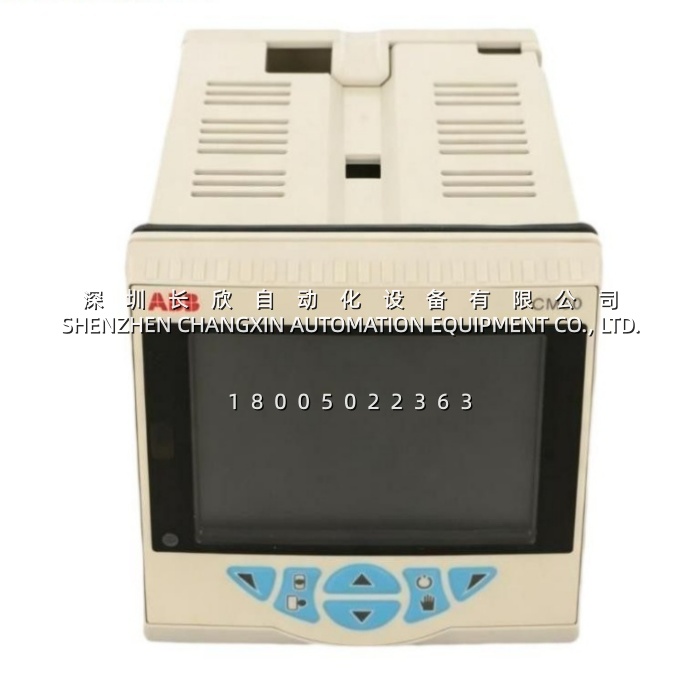
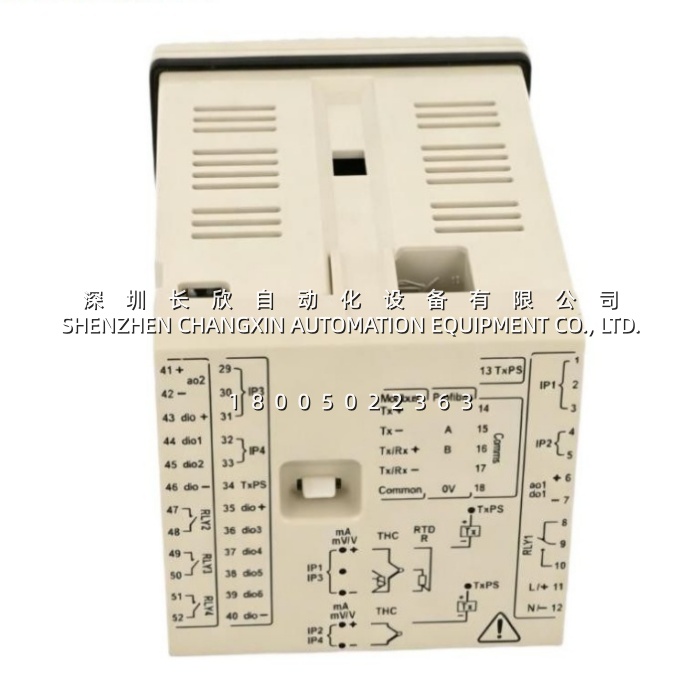
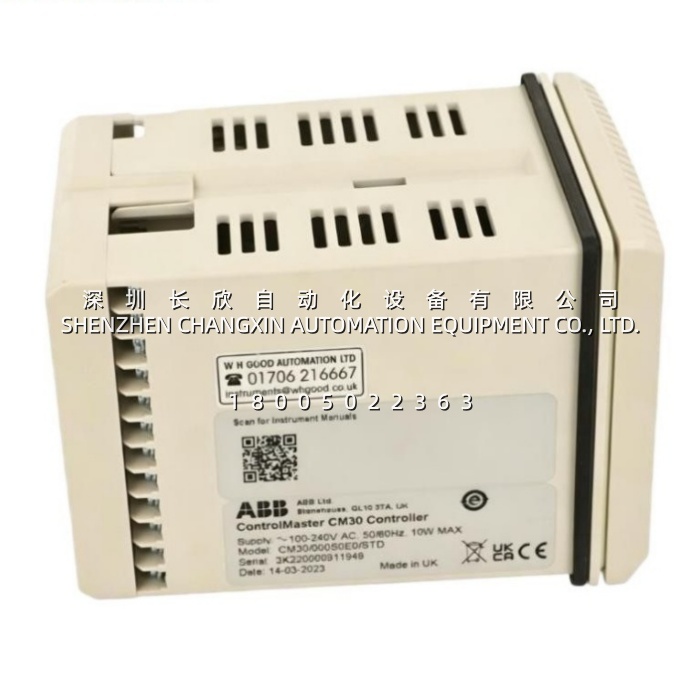
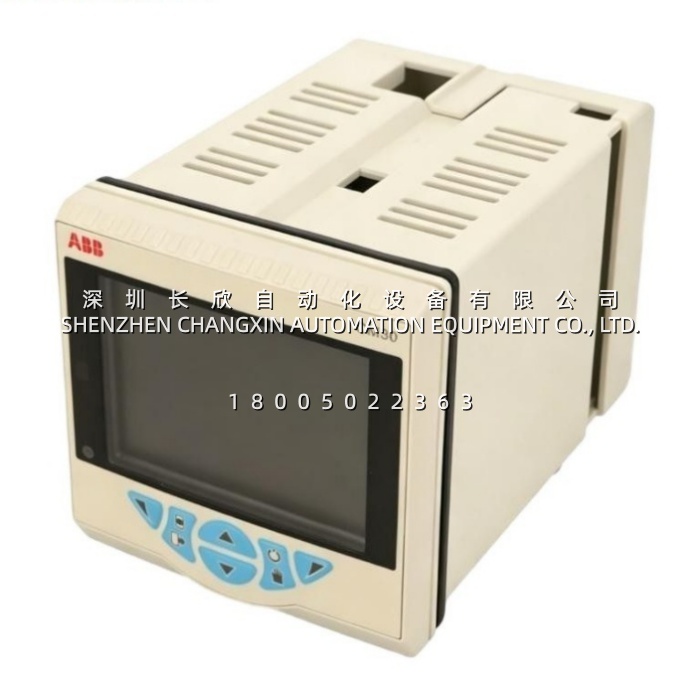
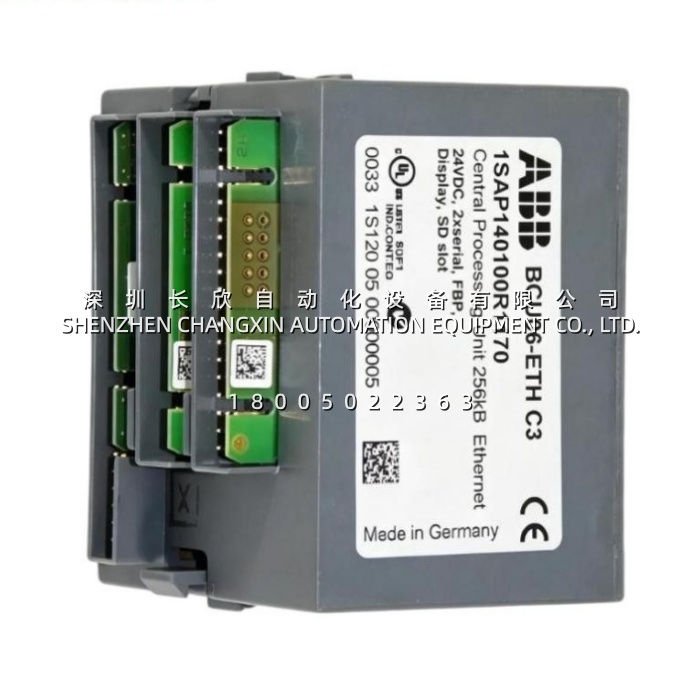
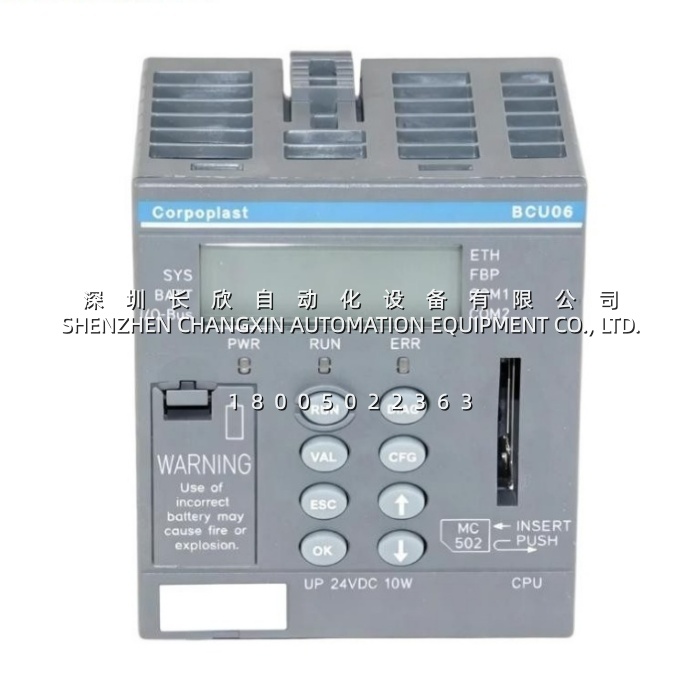
The ABB BCU06-ETH C3 (order code 1SAP140100R1170) is a compact central processing unit (CPU) module within ABB’s renowned AC500 programmable logic controller (PLC) platform. Engineered for small to medium-scale automation projects, the ABB BCU06-ETH C3 combines a 32-bit high-performance processor, 256 KB of user program memory, an integrated 10/100 Mbps Ethernet port, two independently configurable RS232/RS485 serial interfaces, and a built-in LCD display with function keys—all within a single DIN-rail-mountable housing. It represents a sweet spot in the AC500 family: offering substantially more communication flexibility and expansion capability than a micro-PLC, without the cost, footprint, or complexity of a full-size rack-based controller.The core proposition of the ABB BCU06-ETH C3 is integration. Ethernet is not an add-on card here—it is built into the module as standard, supporting Modbus TCP for direct connection to SCADA systems, HMIs, and peer controllers. The two serial ports can simultaneously handle Modbus RTU, ASCII free protocol, and ABB’s CS31 system bus, allowing one controller to bridge modern Ethernet networks and legacy serial field devices without external gateway hardware. This makes the ABB BCU06-ETH C3 exceptionally well-suited to brownfield retrofit projects where old and new equipment must coexist on the same control platform.With native support for the IEC 61131-3 programming standard across all five languages (LD, FBD, IL, ST, SFC) plus CFC, the ABB BCU06-ETH C3 gives engineers complete freedom in control program design. Its onboard LCD and keypad (RUN / DIAG / CFG / VAL) enable local commissioning and fault diagnosis without a laptop, while the SD card slot supports program backup and rapid CPU replacement. For OEM machine builders, water/wastewater plants, building management systems, and power generation auxiliaries, the ABB BCU06-ETH C3 delivers a compact, communication-rich, and highly maintainable control solution.
Technical Specifications
| Parameter Name | Parameter Value |
|---|---|
| Product Model | BCU06-ETH C3 |
| Order Code | 1SAP140100R1170 |
| Manufacturer | ABB |
| Product Type | Compact Programmable Logic Controller (CPU Module) |
| PLC Platform | ABB AC500 |
| Processor | 32-bit high-performance processor |
| Boolean Instruction Time | 12 μs (typical) |
| User Program Memory | 256 KB |
| Data Memory | SRAM with retention (supported by 24 VDC rail) |
| Ethernet Interface | 1 × RJ45, 10/100 Mbps, auto-MDIX |
| Ethernet Protocols | Modbus TCP, PROFINET device, EtherCAT master, UDP, SNMP, HTTP, FTP |
| Serial Ports | 2 × RS232/RS485 (switchable) |
| Serial Protocols | Modbus RTU / ASCII master or slave, CS31 system bus |
| Fieldbus Interface | FBP (FieldBusPlug) slave interface |
| Onboard I/O | 4 × digital inputs, 2 × digital outputs, 1 × analog input |
| Local I/O Expansion | Up to 10 S500 I/O modules |
| Integrated Display | LCD with RUN / DIAG / CFG / VAL keys |
| Storage Expansion | SD card slot (ABB MC502 card) for program backup and firmware update |
| Real-Time Clock | Battery-backed RTC for time-stamped events |
| Supply Voltage | 24 V DC (±10%) |
| Reverse Polarity Protection | Yes |
| Programming Standard | IEC 61131-3 (LD, FBD, IL, ST, SFC) + CFC |
| Engineering Software | ABB Automation Builder (formerly PS501) |
| Protection Rating | IP20 |
| Mounting | Standard DIN rail |
| Operating Temperature | +5 °C to +55 °C (typical) |
| Storage Temperature | -40 °C to +70 °C |
| Humidity | 5% to 95% RH, non-condensing |
| Dimensions (W × H × D) | Approx. 119 × 186 × 135 mm |
| Weight | Approx. 0.45 – 1.2 kg (variant dependent) |
| Certifications | CE |
| Country of Origin | Sweden |
Main Features and Advantages
Integrated Ethernet eliminates external gateway costs: The defining strength of the ABB BCU06-ETH C3 is that Ethernet connectivity is built in as standard. There is no need to purchase a separate communication module or software license—the onboard RJ45 port supports Modbus TCP, PROFINET device, EtherCAT master, UDP, SNMP, HTTP, and FTP services concurrently. This allows a single compact controller to sit directly on the plant Ethernet backbone, communicate with SCADA and HMI systems, exchange data with peer PLCs, and even serve web pages for remote diagnostics—all over one cable.Dual serial ports enable mixed-protocol control: The two RS232/RS485 interfaces on the ABB BCU06-ETH C3 are independently software-configurable, supporting Modbus RTU, ASCII free protocol, and ABB’s CS31 system bus. In a typical installation, one port can connect to a Modbus RTU variable-frequency drive while the other communicates with an ASCII weight indicator or legacy serial HMI. This eliminates the need for external protocol converters and reduces panel space, wiring complexity, and the number of potential failure points.Onboard LCD and keypad for laptop-free diagnostics: The front-panel LCD display and dedicated RUN, DIAG, CFG, and VAL keys transform the ABB BCU06-ETH C3 from a passive controller into an active diagnostic tool. Technicians can view I/O status, read error and diagnostic codes, and modify basic parameters directly from the module faceplate—without connecting a programming terminal. In distributed installations such as pump stations and remote skids, this local access can reduce mean time to diagnosis from hours to minutes.SD card recovery minimizes downtime: The ABB BCU06-ETH C3 supports program and configuration storage on an SD card (ABB MC502). When a CPU fails in the field, the replacement procedure is straightforward: insert the pre-loaded card into the new module and power up. The program restores automatically without requiring a laptop, engineering software, or network connection. For facilities with multiple identical machines, a single card image serves as a universal recovery tool, dramatically simplifying spare-parts management.Flexible I/O expansion protects your investment: The ABB BCU06-ETH C3 offers four digital inputs, two digital outputs, and one analog input onboard, with expansion for up to 10 S500 I/O modules—covering digital, analog, temperature, and specialty functions. This scalability means the same CPU can serve a simple standalone machine today and grow to handle a more complex process tomorrow, all while preserving the original control program and engineering investment.