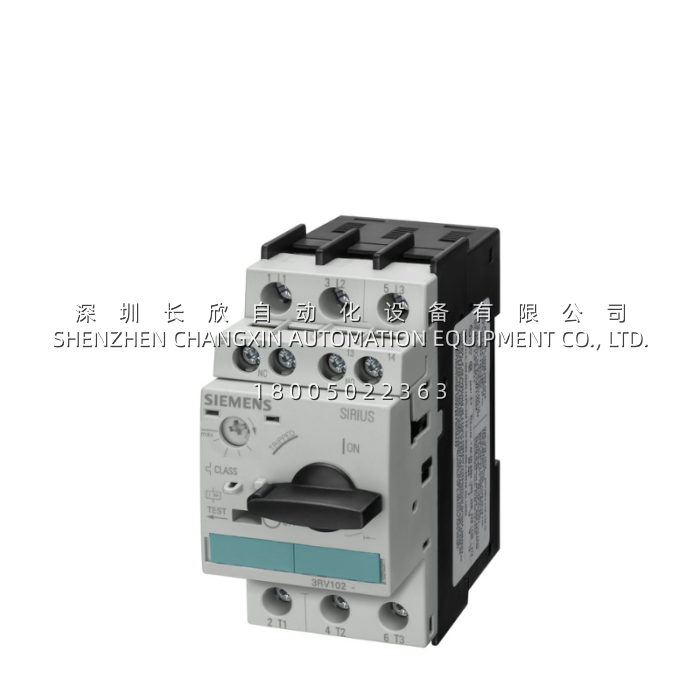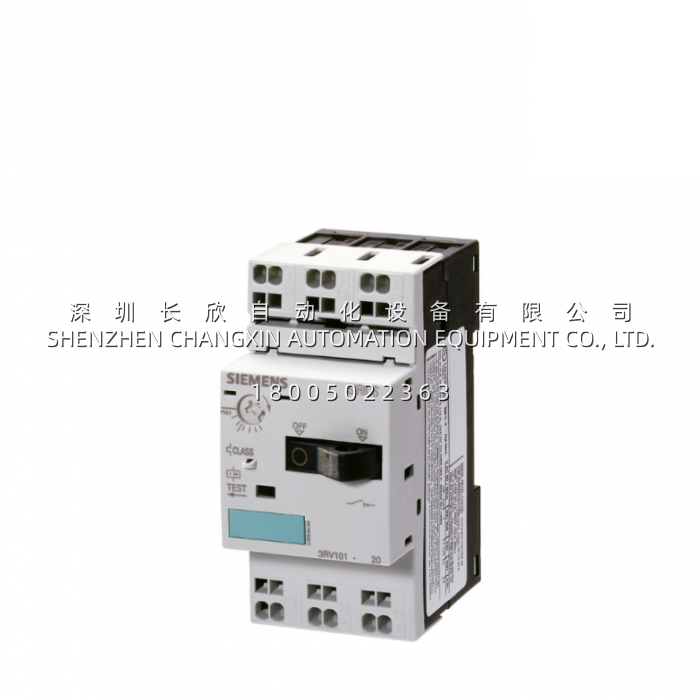
DescriptionThe 3RV1011-1GA20 is a Siemens SIRIUS 3RV1-series motor protection circuit breaker (MPCB) in Size S00, engineered for three-phase motor branch-circuit protection up to 4.5–6.3 A (adjustable thermal overload) with an 82 A magnetic instantaneous short-circuit release. Rated 690 V AC with a 100 kA breaking capacity at 400 V, this 3-pole unit combines a Class 10 thermal trip characteristic with a compact 45 mm wide S00 footprint, cage-clamp (spring-type) terminations, and native compatibility with SIRIUS 3RT contactors for built-up or combo starters. Although Siemens has transitioned the 3RV1 family toward the 3RV2 successor series, the 3RV1011-1GA20 remains widely specified in existing panels, retrofit projects, and spare-part workflows where form-fit-function with the original S00 cutout is non-negotiable.h2 Application ScenariosIn a regional water-treatment plant running 15 centrifugal lift pumps (each ~2.2 kW, 400 V AC-3) off a 630 A main, the maintenance team had originally protected each pump with a standard DIN-rail MCB + separate bimetallic overload relay. During monsoon season, a lightning-induced voltage dip on the utility feed caused several pumps to stall, and the generic MCBs didn’t coordinate — two upstream MCCB trips cascaded, darkening half the wet-well. After the rebuild, the plant standardized the pump branches on 3RV1011-1GA20 units: the Class 10 thermal curve was tuned to 5.5 A (matching the nameplate FLC), and the 82 A magnetic threshold caught stator shorts without nuisance-tripping on pump motor inrush (typically 6×FLC ≈ 33 A, well below 82 A). The 100 kA breaking capacity also mattered — the plant’s 800 kVA genset-backed standby network could source >65 kA fault current, and the older MCBs had only a 25 kA rating. Six months post-retrofit, the plant logged zero coordination misses on pump starts, and the cage-clamp terminals held solid despite the constant 100 % humidity in the MCC room — no retorquing required, unlike the screw-terminal MCBs that had worked loose twice.h2
Parameter
| Main Parameters | Value/Description |
|---|---|
| Product Model | 3RV1011-1GA20 |
| Manufacturer | Siemens (SIRIUS 3RV1 series) |
| Product Category | Motor Protection Circuit Breaker (MPCB), Size S00 |
| Rated Operating Voltage | 690 V AC max |
| Thermal Adjustable Range | 4.5 → 6.3 A (Class 10 trip curve) |
| Magnetic Short-Circuit Release | 82 A (undelayed) |
| Rated Power (AC-3, 400 V) | 2.2 kW |
| Poles | 3-pole |
| Breaking Capacity (lcu, 400 V AC) | 100 kA |
| Terminal Type | Cage-clamp / spring-type terminal |
| Dimensions (W × H × D) | 45 × 90 × 81 mm (Size S00) |
| Protection Class | IP20 (device), IP40 with cover accessory |
| Mounting | DIN rail (35 mm) |
| Lifecycle Status | Phased out (PM500, successor = SIRIUS 3RV2) |
h2 Technical Principles and Innovative ValuesInnovation Point 1: Class 10 Thermal + 82 A Magnetic in a 45 mm S00 Shell. Many compact MPCBs force a trade-off between adjustability and footprint. The 3RV1011-1GA20 gives you a calibrated dial (4.5–6.3 A) with Class 10 characteristic — meaning the bimetal trips in ≤10×FLC within 10 seconds, protecting the motor windings during stall — while the magnetic release sits at 82 A (≈13×FLC), high enough to ride through healthy DOL inrush without nuisance, low enough to clear a phase-to-phase fault before the stator cooks.Innovation Point 2: Cage-Clamp Terminals Designed for S00 Vibration. S00 devices in compressor skids or near VFD-loaded structures see constant low-frequency vibration. The 3RV1011-1GA20 uses Siemens’ spring-cage clamps on the main poles (and on the control-side extensions when aux blocks are added), which maintain constant contact pressure without retorquing. Compared to screw terminals that can back off 0.2–0.3 N·m per thermal cycle, the cage clamp is a “fit once, forget” detail that pays back on three-shift plants.Innovation Point 3: 100 kA lcu at 400 V in a “Standard Switching Capacity” Device. Despite being catalogued as “standard” (not “high-performance”), the 3RV1011-1GA20 still clears 100 kA at 400 V thanks to the SIRIUS arc-chute geometry and dual-break contacts per pole. That makes it suitable for utility-fed MCCs and generator-backed plants where prospective fault current exceeds 50 kA — no need to step up to a bulkier MCCB for most S00 motor loads.