Technical Specifications
| Parameter | Value |
|---|---|
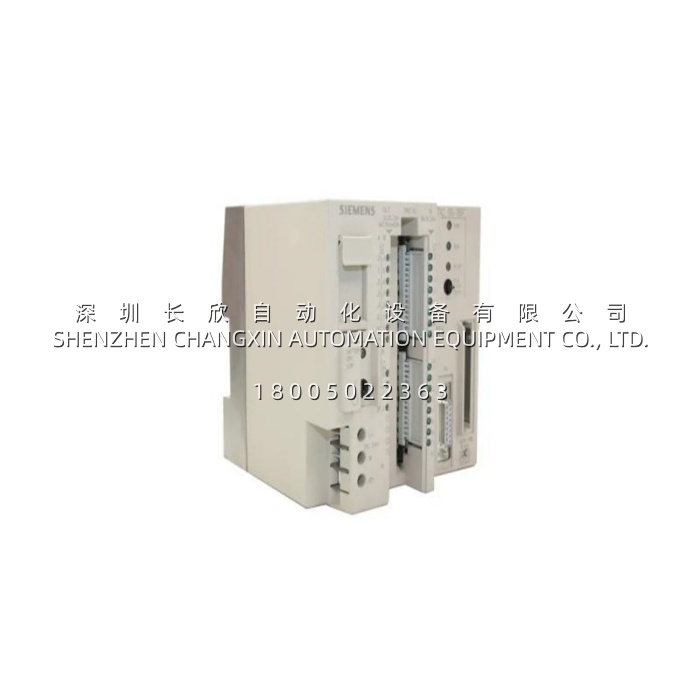
| Product Model | 6ES5095-8FA02 |
| Manufacturer | Siemens |
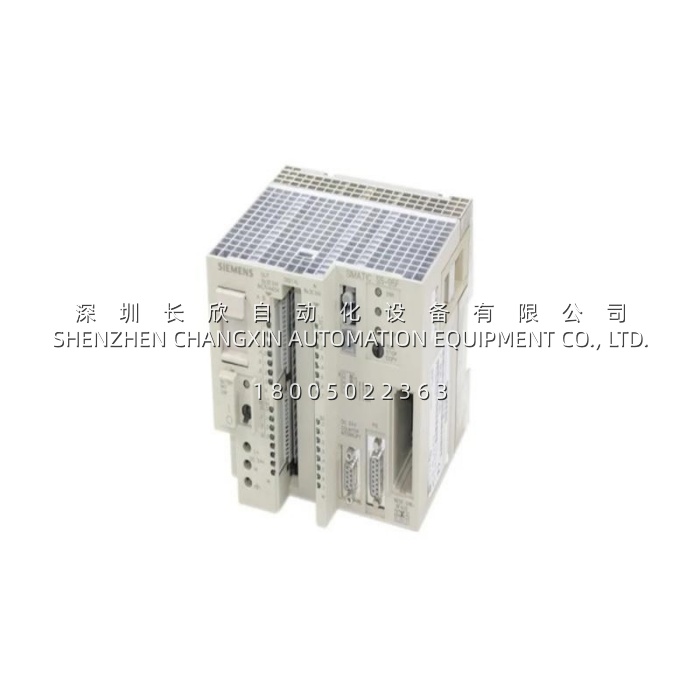
| Product Type | SIMATIC S5-95F Fail-Safe Compact CPU |
| Program Memory | 8 KB (of 16 KB total RAM) |
| Execution Time (binary) | ~2 µs / operation |
| Timers | 128 (0.01 … 9990 s) |
| Counters | 128 (0 … 999) |
| Integrated DI | 16 × 24 V DC, fail-safe, floating, group-isolated |
| Integrated DO | 8 × 24 V DC / 0.5 A, fail-safe single-channel, short-circuit protected |
| Integrated AI | 8 channels (±10 V / 0–20 mA / 4–20 mA) |
| Integrated AO | 1 channel |
| Alarm DI | 4 dedicated |
| Counter Inputs | 2 × 4 (high-speed, up to 30 kHz) |
| Supply Voltage | 24 V DC (20 … 30 V range) |
| Current Consumption | ~160 mA (CPU) + up to 1 A (external I/O distribution) |
| Backup Battery | 3.4 V / 850 mAh lithium, ~5 years service life |
| Communication | 1 × PG port (RS-485), 1 × PROFIBUS DP slave |
| Dimensions (W×H×D) | 145 × 135 × 146 mm |
| Weight | ~1.5 kg (CPU) / ~0.1 kg (memory submodule) |
| Operating Temperature | 0 … +60 °C |
| Protection Class | Class I, floating |
Main Features and Advantages
Fail-safe architecture with self-diagnostics. The defining trait of the Siemens 6ES5095-8FA02 is the “F” rating—every safety-relevant DI is tested for wire-break and cross-short during each cycle, the DO channels drive into a test-pulse pattern that detects solenoid-valve coil open, and the CPU itself runs a cyclic self-test; on detecting a CPU-internal fault, the DO fold to their safe state (typically de-energized, i.e., “E-STOP cleared, guard locked”) within the S5 scan. For plants whose safety loop was originally certified on S5-95F, this means the 6ES5095-8FA02 can remain in service without re-certifying on S7-1500F, provided the periodic proof-test and battery/EPROM-spare regime is maintained. The Siemens 6ES5095-8FA02 also supports 2-oo-2 or 1-oo-2 voting patterns via the 4 alarm DI and the 16 standard DI, letting the application layer implement TÜV-aligned emergency-stop or press-guard logic in STEP 5 with the dedicated F-function blocks.Redundant-pair capability. A single Siemens 6ES5095-8FA02 can operate standalone, but the S5-95F architecture is designed so that two 6ES5095-8FA02 CPUs can be paired—one active, one hot standby—with the safety program mirrored and the DO-side arbitrated so that if the primary CPU fails its self-test, the standby asserts the safe-state transition without relying on the primary’s DO drivers. This redundant topology is why the 6ES5095-8FA02 turns up in crane-overload panels, blast-furnace stove safety interlocks, and rail-yard hump-yard emergency chains—places where “single CPU fault → unsafe state” is not acceptable. In those cabinets you’ll typically see two Siemens 6ES5095-8FA02 side by side, one with the “MASTER” EPROM, one with the “SLAVE” EPROM, and a small arbitration wiring between them.Integrated I/O density on the CPU body. Like other S5 compact units, the Siemens 6ES5095-8FA02 avoids the need for a full S5 rack + SM 321/322/331/332 expansion for small safety cells. Sixteen DI handle E-STOP mushroom contacts, guard-door limit switches, light-curtain OSSD loops, and reset pushbuttons; eight DO drive the safety-rated enable contactors (through forced-guided relays, externally—the 6ES5095-8FA02 DO are semiconductor, so the force-guided relay sits downstream for true safety certification); eight AI pick up a pressure-transmitter (vessel PSV setpoint monitoring) and a couple of temperature probes; one AO drives a local visual annunciator or a VFD speed-limit reference; four alarm DI catch watchdog-telegram loss from an upstream DCS or a sister S5 CPU. For a standalone safety cell this is the whole I/O budget in one 145 mm wide box.RAM + EPROM storage with lithium backup. The Siemens 6ES5095-8FA02 stores the executing program in its 8 KB RAM portion, backed by the 3.4 V / 850 mAh lithium cell (≈5 years typical, ≥1 year even at end-of-life). For long-term archival and “golden copy” disaster recovery, the CPU accepts an EPROM submodule that can be burned from the STEP 5 PG and then seated—if the lithium dies or the RAM gets corrupted during a long power outage, the EPROM holds the last “burned” image and the CPU can be forced to boot from it. Plants that run S5-95F in rarely-accessed panels (crane cabs that power down in winter layup, remote pump-station E-Stop panels) routinely burn an EPROM once the safety logic is finalized and leave the RAM as the working copy—this two-tier storage is classic S5 and differs from the S7-300’s MMC approach.PROFIBUS DP slave for integration without abandoning safety autonomy. The Siemens 6ES5095-8FA02 includes a PROFIBUS DP slave port (9.6 k–12 Mbit/s), so the safety CPU can sit as a slave under a master—an S7-400 in the plant DCS, or an S5-155U in a larger S5 hierarchy—exchanging health-telegrams, alarm-bits, and status words without the master having write-access to the safety logic itself. This “safety island” pattern is common: the plant DCS sees “S5-95F rack healthy / E-STOP active / guard open” as four DP words, but cannot override the 6ES5095-8FA02’s DO safe-state—the safety loop remains autonomous even if the DCS goes offline. For EPCs who need to retrofit a certified safety cell into an existing PROFIBUS plant network without re-certifying the whole string, the Siemens 6ES5095-8FA02 hits the sweet spot.STEP 5 ecosystem and long-term sparing reality. Programming the Siemens 6ES5095-8FA02 requires STEP 5 (V7.x era for the -8FA02 firmware) on a PG-720/740 or a modern laptop with the STEP 5 USB adapter; the F-blocks are proprietary S5-95F library elements, not the S7-F runtime. For plants still running S5-95F, the bigger risk than the CPU itself is the vanishing pool of engineers who can navigate STEP 5 F-blocks—hence the “keep one cold-spare CPU + one pre-burned EPROM + one fresh lithium” storeroom kit has become standard for asset managers who’ve decided to run the S5-95F another 5–8 years rather than fund an S7-1500F migration + re-certification. The Siemens 6ES5095-8FA02 is no longer in active Siemens production, so lead times from the aftermarket tighten whenever a large crane fleet or a steel-mill batch decides to top up spares simultaneously.