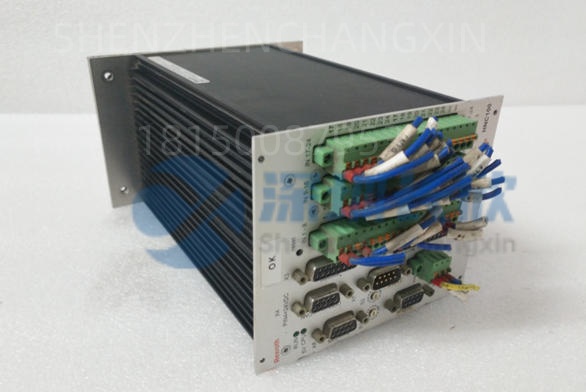
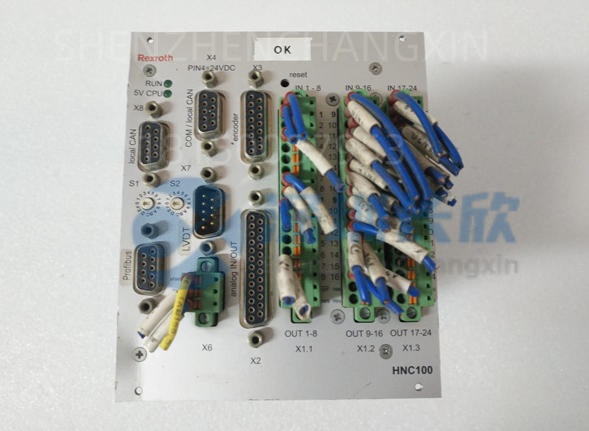
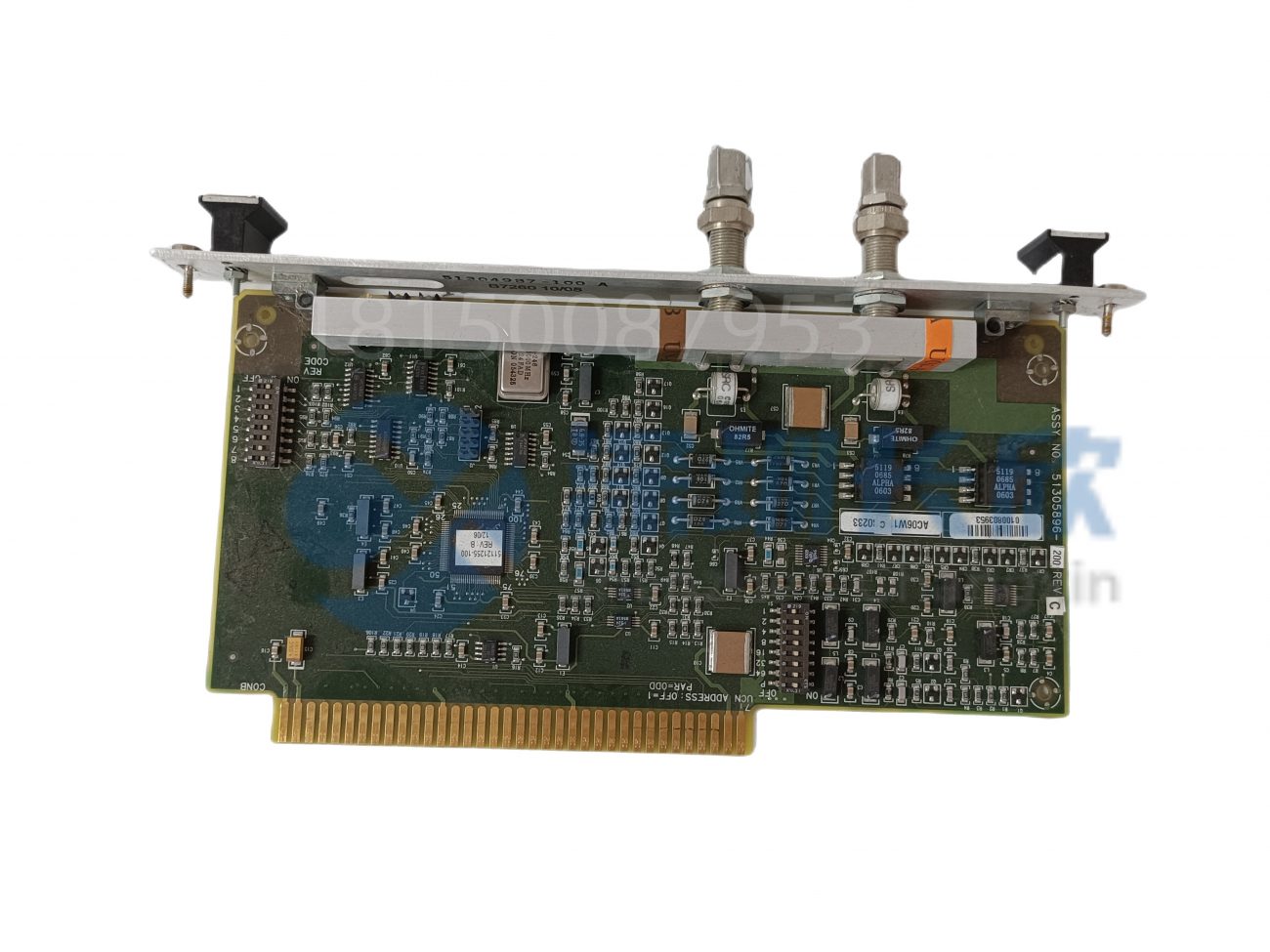
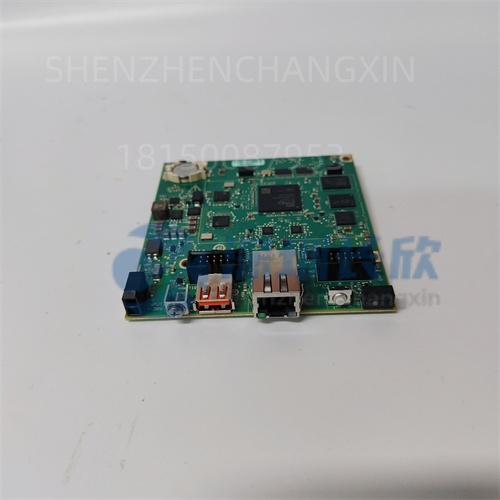
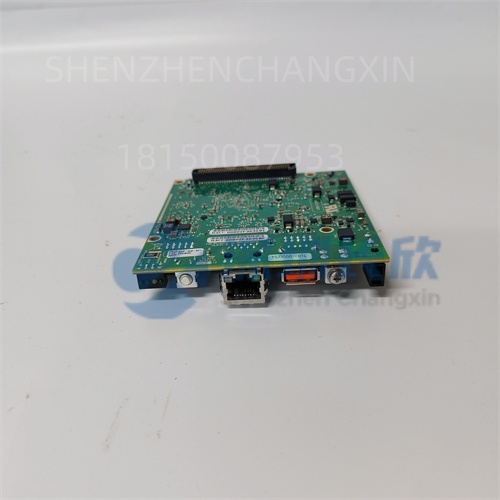
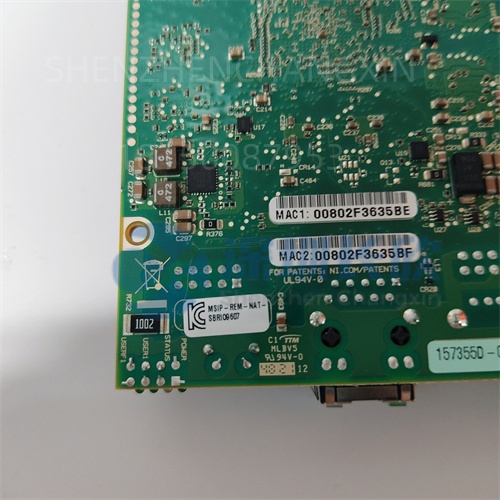
GE DS200SDCCG1AEC | Speedtronic SDCC Module缩略图

GE DS200SDCCG1AEC | Speedtronic SDCC Module

GE DS200SDCCG1AEC | Speedtronic SDCC Module插图
Description

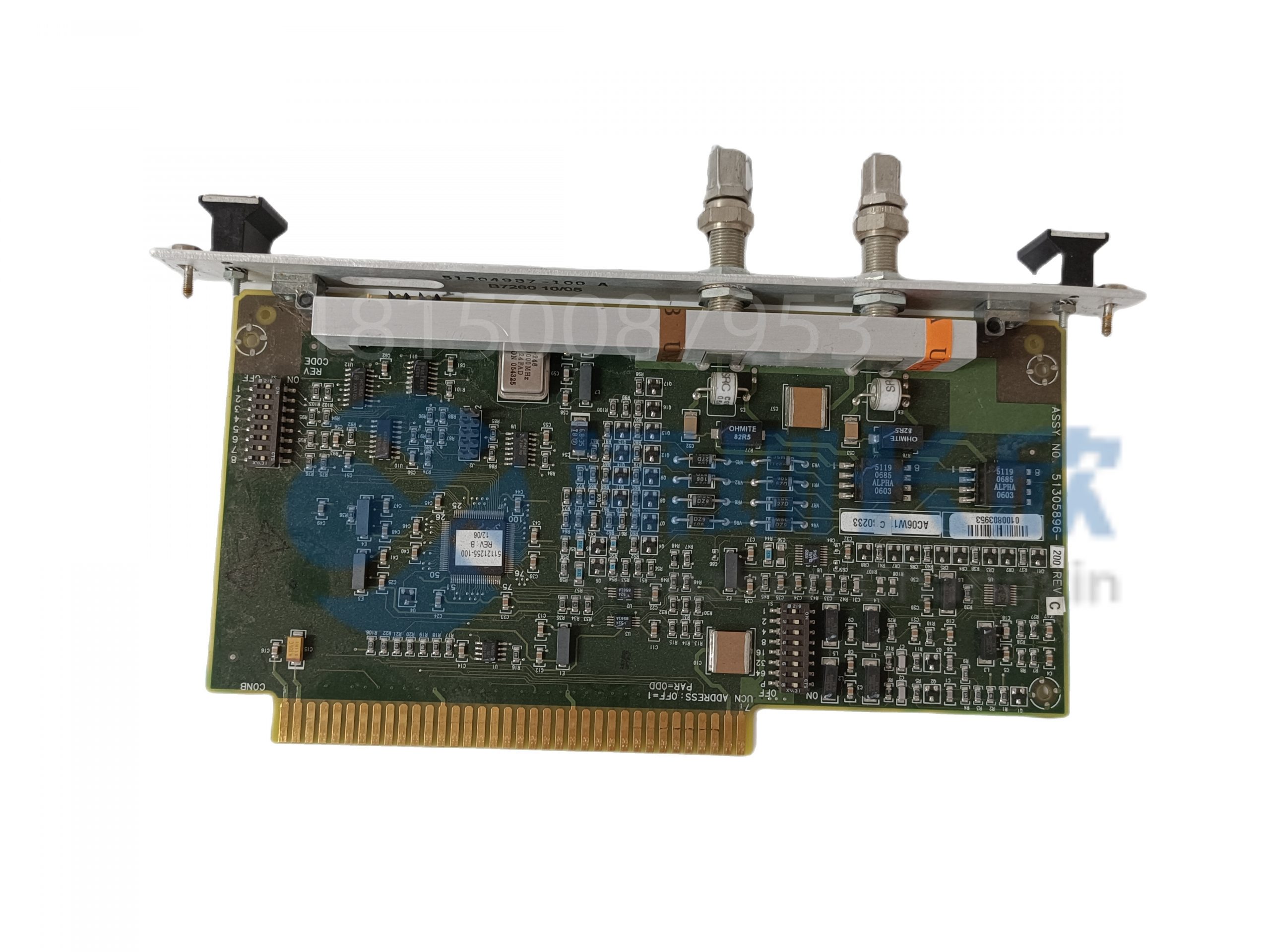
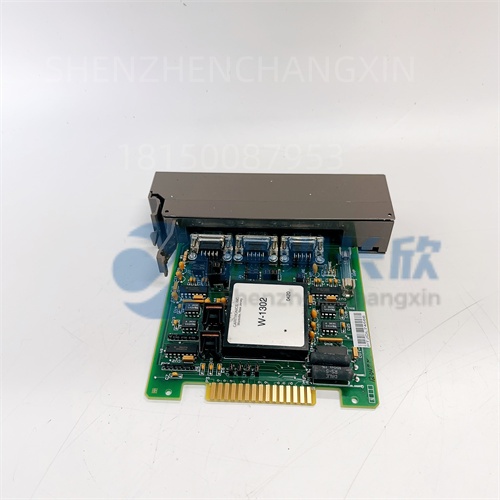
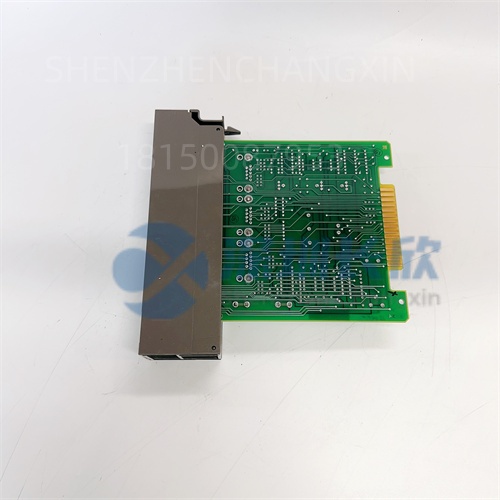
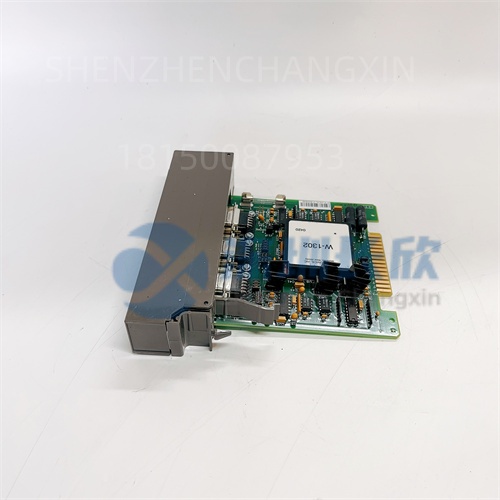
The GE DS200SDCCG1AEC​is a high-performance SDCC(Station Data Communications Controller)module designed for GE’s Mark V Speedtronic turbine control system,serving as a critical communication and control interface for gas and steam turbine operations.This advanced controller module forms an integral part of GE’s Speedtronic control architecture,providing essential I/O communication and processing capabilities for turbine control and protection functions.

Application Scenarios

In a combined-cycle power plant,precise coordination between the gas turbine,steam turbine,and auxiliary systems is essential for maximizing efficiency and ensuring a smooth transition between operating states.The DS200SDCCG1AEC​module acts as a vital communications hub within the Mark V control system,managing data exchange between the turbine’s protective devices,sensors,actuators,and the central control processors.During a critical event—such as a sudden load rejection—this module ensures that protective signals from overspeed detectors and vibration sensors are communicated without delay to the control logic,enabling millisecond-fast responses to safeguard expensive turbine components.For plant engineers,the reliability of the DS200SDCCG1AEC​translates directly into reduced forced outage rates and extended turbine life,addressing the perpetual challenge of balancing aggressive operational targets with long-term asset preservation.

Parameter

Main Parameters

Value/Description

Product Model​

DS200SDCCG1AEC​

Manufacturer​

GE Industrial Systems

Product Category​

Station Data Communications Controller

System Compatibility​

Mark V Speedtronic Turbine Control

Primary Function​

I/O Communication&Data Processing Coordinates data flow between field devices and main control processors.

Processor​

32-bit RISC-based Controller

Memory Configuration​

SRAM for real-time data buffering

Communication Ports​

Multiple RS-485/422 Serial Ports

Protocol Support​

GE Genius Bus,Custom Speedtronic Protocols

I/O Capacity​

Supports connection to multiple I/O packs and termination boards

Operating Temperature​

0°C to+70°C(Control Cabinet Environment)

Power Supply​

+5 VDC via System Backplane

Power Consumption​

Approximately 8-10 Watts

Certifications​

UL,CSA(Component Level for System Integration)

Technical Principles and Innovative Values

Innovation Point 1:Deterministic Real-Time Communication Fabric.The DS200SDCCG1AEC​is engineered not as a general-purpose computer,but as a specialized real-time communications processor.It implements GE’s proprietary high-speed data highway protocols,creating a deterministic network where critical I/O data—such as turbine speed,temperature,and valve positions—is exchanged with guaranteed latency and priority.This architectural choice ensures that time-sensitive protection functions always have access to fresh data,a non-negotiable requirement for preventing turbine damage during transients.

Innovation Point 2:Distributed Intelligence with Centralized Coordination.Unlike a system where all logic resides in a central CPU,the Mark V architecture delegates significant preprocessing and I/O management to modules like the DS200SDCCG1AEC.This distributes the computational load,increases system bandwidth,and enhances overall reliability.The module handles local I/O scanning,basic signal validation,and time-stamping before passing consolidated data packets to the main processors,making the control system more responsive and resilient to communication bottlenecks.

Innovation Point 3:Robust Environmental Hardening.Designed for the hostile environment of a turbine control cabinet—subject to heat,vibration,and electromagnetic interference from high-power equipment—the DS200SDCCG1AEC​employs military-grade components,conformal coatings on circuit boards,and rigorous thermal management.This built-in ruggedness ensures a mean time between failures(MTBF)measured in decades,which is critical for a component whose failure could necessitate an immediate turbine shutdown.

Application Cases and Industry Value

Case Study:Life Extension of a Fleet of Frame 7EA Gas Turbines.A power generation utility operating multiple GE Frame 7EA units faced increasing reliability issues and costly unplanned outages linked to aging Mark V control system components.A strategic decision was made to undertake a control system refurbishment program rather than a full replacement.As part of this,critical communication cards,including the DS200SDCCG1AEC,were systematically inspected and replaced with factory-remanufactured or new-old-stock units.

Post-refurbishment,data showed a dramatic reduction in communication-related alarms and unexplained trips.One specific unit had been experiencing intermittent”loss of I/O”faults that previously required lengthy troubleshooting and downtime.Replacing the aging DS200SDCCG1AEC​module resolved these faults completely.The plant engineering team estimated that the proactive refurbishment,centered on reliable core components like this controller,extended the viable service life of the control system by 10-15 years,deferring a multi-million dollar system upgrade and securing continued grid service contracts.The ROI was calculated not just in avoided capital expenditure,but in the millions saved from prevented forced outages.

Related Product Combination Solutions

DS200DCFG1AGC:Digital Control Module.Works in tandem with the DS200SDCCG1AEC​to execute specific control algorithms for sequencing and regulation.

DS200TBCAG1AFC:Terminal Board Controller.Acts as an intermediary I/O interface between field wiring and the communication network managed by the SDCC​module.

IS200 Series I/O Packs​(e.g.,IS200TPROH1A):The actual analog and digital input/output modules that connect to sensors and actuators.They report to and are commanded by the system via the DS200SDCCG1AEC​data highway.

Mark V Control Processors​(e.g.,various<CPU>cards):The central computing elements that rely on the data collected and distributed by the DS200SDCCG1AEC​to execute the overarching turbine control and protection logic.

DS200PDCAG1AFC:Power Distribution Controller.Manages and monitors power to the rack,ensuring clean and stable power for sensitive cards like the DS200SDCCG1AEC.

ToolboxST Software:GE’s engineering tool for configuring,monitoring,and troubleshooting Mark V/Vie systems,essential for setting up and diagnosing the DS200SDCCG1AEC​and its network.

Installation,Maintenance,and Full-Cycle Support

Installation of the DS200SDCCG1AEC​is a precise operation within the Mark V rack.It requires proper ESD handling,correct alignment with the backplane guides,and firm seating into the connector.Prior to installation,the module’s firmware version must be verified for compatibility with the rest of the system using ToolboxST.Wiring to associated termination boards must follow GE’s strict separation guidelines to avoid noise coupling between analog,digital,and communication signals.

Maintenance is primarily condition-based and predictive.Using ToolboxST,engineers can monitor the communication health statistics and error logs of the DS200SDCCG1AEC.Degrading performance or increasing error counts can signal an impending failure.There are no user-serviceable parts on the module itself.The standard practice is to keep a tested spare module on site.Replacement is a controlled process:the system is often placed in a restricted or manual mode,the faulty module is extracted,the spare is inserted,and upon system recognition,comprehensive communication tests are performed before returning to full automatic operation.

We provide comprehensive lifecycle support for the GE DS200SDCCG1AEC​and the broader Mark V system.Our services range from technical consulting for system health assessments and obsolescence management to supplying fully tested,guaranteed-functional replacement modules.We can support you with firmware version management and integration advice.Our goal is to help you maintain the legendary reliability of your Speedtronic controls,ensuring your turbines remain available,efficient,and protected.

Contact us for a control system health check,to source guaranteed Mark V components,or to discuss your turbine control support strategy.

选择深圳长欣,选择放心,售后无忧 大量现货,当天顺丰发货!!!
GE DS200SDCCG1AEC | Speedtronic SDCC Module插图1

GE DS200SDCCG1AEC | Speedtronic SDCC Module插图2

LENZE EPZ-10203 SIL 3 / PL e certified safety module for machinery automation缩略图

LENZE EPZ-10203 SIL 3 / PL e certified safety module for machinery automation

LENZE EPZ-10203 SIL 3 / PL e certified safety module for machinery automation插图Description

The LENZE EPZ-10203 is a compact,programmable safety controller from Lenze’s EPZ Safe PLC family,engineered to replace conventional safety relays in modern machinery while delivering full compliance with SIL 3(IEC 62061)and Performance Level e(EN ISO 13849-1).Designed for integration into automated production lines,the EPZ-10203 combines onboard safety-rated digital inputs and outputs with flexible communication interfaces,enabling intelligent,diagnostics-rich safety logic for motors,drives,and robotic cells.

Unlike fixed-function relays,the EPZ-10203 supports graphical programming via Lenze’s SafePLC Engineering Tool,allowing machine builders to implement complex safety functions—such as safe torque off(STO),safe stop,and muting sequences—with minimal wiring and maximum adaptability.

Application Scenarios

At a high-speed beverage bottling facility in Germany,a legacy safety relay panel caused repeated line stoppages due to undetected wiring faults in light curtain feedback loops.The OEM replaced it with a LENZE EPZ-10203 safety controller linked directly to Lenze i550 inverters via PROFIsafe over PROFINET.Now,when a palletizer guard door opens,the EPZ-10203 not only cuts motor power via STO but also logs the event timestamp,operator ID(from HMI),and diagnostic code for the specific input channel.During a recent audit,this granular data proved that all safety responses occurred within 18 ms—well below the 100 ms requirement.Downtime dropped by 60%,and maintenance teams now resolve issues remotely using the controller’s web-based diagnostics interface.

Parameter

Main Parameters Value/Description

Product Model EPZ-10203

Manufacturer Lenze SE

Product Category Programmable Safety Controller(Safe PLC)

Safety Certification SIL 3(IEC 62061),PL e/Category 4(EN ISO 13849-1),TÜV Rheinland certified

Integrated I/O 8 safety inputs+4 safety outputs(transistor,24 V DC)

Expandable I/O Yes–up to 32 additional safety I/O via EPZ bus modules

Communication Interfaces 2×Ethernet(RJ45):1 for engineering,1 for PROFINET/PROFIsafe or EtherNet/IP CIP Safety

Programming Environment Lenze SafePLC Engineering Tool(based on CODESYS Safety)

Response Time<20 ms(typical for 16 I/O safety logic)

Mounting DIN rail(35 mm),IP20 protection

Operating Temperature 0°C to+55°C

Certifications CE,UL 61010-2-201,CSA C22.2 No.61010-2-201

Technical Principles and Innovative Values

Innovation Point 1:True Programmable Safety Logic

The EPZ-10203 executes certified safety programs written in FBD(Function Block Diagram)or LD(Ladder Diagram),enabling dynamic responses like conditional muting,zone control,or speed-dependent safety—impossible with electromechanical relays.

Innovation Point 2:Native Drive Integration via Safe Fieldbus

Through PROFIsafe or CIP Safety,the EPZ-10203 communicates directly with Lenze and third-party inverters to trigger Safe Torque Off(STO),Safe Stop 1(SS1),or Safely Limited Speed(SLS)without extra wiring—reducing cabinet space and commissioning time.

Innovation Point 3:Embedded Web Server for Remote Diagnostics

Technicians access real-time status,fault logs,and I/O states via any browser—no software needed.This feature slashes mean time to repair(MTTR)in distributed production environments.

Innovation Point 4:Modular Scalability Without Compromise

While compact,the EPZ-10203 can expand to 32+safety I/O using plug-in EPZ modules(e.g.,EPZ-10211 for analog safety inputs),making it suitable for both small machines and large assembly lines—all under one safety program.

Application Cases and Industry Value

An automotive parts supplier in Mexico integrated the LENZE EPZ-10203 into a new robotic welding cell featuring dual-arm robots and servo-driven positioners.The safety logic included perimeter guarding,emergency stops,and safe speed monitoring during manual teaching mode.Thanks to the EPZ-10203’s ability to validate safe robot kinematics via encoder feedback over PROFIsafe,the cell achieved PL e without physical fencing in collaborative zones.OSHA inspectors approved the design,and the OEM reduced safety hardware costs by 35%compared to a relay-based approach.Over 18 months,zero safety-related incidents were recorded.

Related Product Combination Solutions

LENZE EPZ-10211:4-channel analog safety input module—extends EPZ-10203 for safe torque or temperature monitoring.

LENZE i550/i750 inverters:Support PROFIsafe—receive STO/SS1 commands directly from EPZ-10203.

LENZE EPM-10201:Power supply module—provides redundant 24 V for EPZ-10203 safety circuits.

LENZE SafePLC Engineering Tool:Official programming suite—enables drag-and-drop safety function blocks for EPZ-10203.

LENZE EPZ-10221:8-channel safety output relay module—for high-current contactor control beyond transistor limits.

Siemens ET 200SP F-DQ:Third-party PROFIsafe output—interoperable with EPZ-10203 in mixed-vendor lines.

Rockwell GuardLogix:Alternative architecture—but EPZ-10203 offers lower cost and Lenze drive synergy.

Pilz PNOZmulti:Competitor safety controller—yet EPZ-10203 provides deeper integration with Lenze motion systems.

Installation,Maintenance,and Full-Cycle Support

Installing the LENZE EPZ-10203 begins with DIN-rail mounting in the control cabinet,followed by connecting safety devices(e.g.,emergency stops,light curtains)to its screw terminals.The Ethernet port links to the plant network for configuration and monitoring.Using the SafePLC Engineering Tool,engineers import pre-certified safety function blocks,assign I/O tags,and download the program—all validated by Lenze’s built-in compiler for IEC 61508 compliance.

Maintenance is streamlined through the onboard web server:simply enter the IP address to view live I/O status,error history,and safety program execution flow.Failed modules are hot-replaceable in non-redundant setups,and firmware updates can be deployed remotely.All safety logic remains intact during power cycles thanks to non-volatile memory.

As a certified Lenze partner,we supply only genuine EPZ-10203 units with full factory traceability,pre-loaded firmware,and validation test reports.Each module undergoes functional safety verification before shipment.We offer technical onboarding,programming templates for common applications(e.g.,palletizers,conveyors,presses),and lifecycle management to support your machinery for 10+years.

Contact us for a customized solution—whether you’re an OEM designing next-gen equipment,a system integrator upgrading legacy safety panels,or a plant engineer seeking reliable spares with expert backup.

选择深圳长欣,选择放心,售后无忧 大量现货,当天顺丰发货!!!

GE VMIVME-1150 Motorola MVME162 Embedded Computer缩略图

GE VMIVME-1150 Motorola MVME162 Embedded Computer

GE VMIVME-1150 Motorola MVME162 Embedded Computer插图
Description

The GE VMIVME-1150​is a high-performance,ruggedized single board computer(SBC)manufactured by GE Intelligent Platforms(formerly VMIC and now part of Abaco Systems)for the VMEbus architecture.Based on the Motorola MC68040 or MC68LC040 microprocessor,this board serves as a powerful system controller or compute node in demanding real-time industrial automation,military,and telecommunications systems where reliability and deterministic performance are paramount.

Application Scenarios

In a nuclear power plant’s non-safety critical monitoring system,a network of VMEbus crates collects and processes vast amounts of sensor data on vibration,temperature,and radiation levels.The GE VMIVME-1150​acts as the crate’s master controller in several of these racks.Its role is not just to gather data but to perform complex,time-sensitive preprocessing and anomaly detection before forwarding information to the main plant computer.The board’s deterministic performance,ensured by its real-time operating system(RTOS)and direct memory access(DMA)capabilities,guarantees that critical data packets are processed within strict time windows,even under heavy load.When a technician needs to upgrade the system’s analysis algorithms,the board’s onboard flash memory and robust mezzanine module support allow for a secure,in-field firmware update without replacing the entire hardware platform.This extends the lifecycle of critical monitoring infrastructure that must operate reliably for decades,protecting a multi-billion dollar asset.

Parameter

Main Parameters

Value/Description

Product Model

GE VMIVME-1150

Manufacturer

GE Intelligent Platforms(Abaco Systems)

Product Type

VMEbus Single Board Computer(SBC)

Microprocessor

Motorola MC68040 or MC68LC040,25MHz or 33MHz

FPU

Integrated(MC68040)or absent(MC68LC040)

DRAM

Onboard 4MB,8MB,or 16MB DRAM(expandable via SIMMs)

SRAM

256KB or 512KB of battery-backed SRAM for critical data

Boot Memory

512KB or 1MB of Flash EPROM

VMEbus Interface

System Controller capable,supports VME64 extensions

Local I/O

Two RS-232/422/485 serial ports,Centronics parallel port,keyboard port

Ethernet

10BASE-T(AAUI)interface via mezzanine module(optional)

Expansion

Supports IP and IndustryPack(IP)mezzanine modules

Real-Time Clock

Battery-backed with watchdog timer

Operating Temperature

0°C to 55°C(Commercial)or-40°C to 70°C(Extended)

Technical Principles and Innovative Values

Innovation Point 1:Deterministic Architecture for Real-Time Control.The GE VMIVME-1150​is built around the Motorola 68040 CPU,renowned for its simplicity and predictability in interrupt handling and context switching—a critical requirement for real-time systems.Unlike modern speculative architectures,its execution timing is more deterministic.Combined with a real-time operating system(like VxWorks or pSOS+),this allows developers to guarantee worst-case execution times for critical tasks,which is essential in automation systems where a missed deadline can mean a crashed machine or a spoiled batch.

Innovation Point 2:Ruggedized,Modular Design for Harsh Environments.This SBC is engineered beyond commercial-grade computing.Its components are selected for extended temperature ranges,and the board layout is designed for high resistance to vibration and shock.The use of the IndustryPack(IP)mezzanine standard is a key innovation.It allows users to customize the board’s I/O capabilities—adding discrete I/O,analog I/O,additional communication ports(like ARINC 429 for aerospace),or even another processor—by plugging in standardized modules without redesigning the core computer,creating a highly adaptable and long-lifecycle solution.

Innovation Point 3:Integrated System Controller for VMEbus Integrity.The VMIVME-1150​isn’t just a compute card;it is designed to be the VME system controller(Slot 1).In this role,it provides essential bus services:generating the system clock,handling bus arbitration,and distributing system reset signals.This centralized control is crucial for the stability of multi-card VME systems,ensuring orderly communication between processor,memory,and I/O cards in a backplane,preventing data collisions and system hangs in complex,multi-processor setups.

Application Cases and Industry Value

Case Study:Legacy Rolling Mill Control System Modernization.A steel mill operated a 1980s-era rolling mill controlled by a VME-based system.The original proprietary computer boards were obsolete and failing,threatening to halt a production line worth tens of thousands of dollars per hour.Instead of a multi-million dollar full system rip-and-replace,engineers implemented a strategic retrofit.They replaced the failing master controller with a GE VMIVME-1150​running a ported version of the original control software.The board’s compatibility with the existing VME backplane and its ability to interface with the mill’s proprietary I/O cards via custom IndustryPack modules made it an ideal”brain transplant.”The project was completed in a scheduled 72-hour outage.The mill manager reported not only a return to full reliability but also gained new capabilities:the Ethernet port on the VMIVME-1150​allowed for the first-time integration of mill data into the plant’s modern network for production tracking and predictive maintenance analytics,breathing new life into a legacy asset at a fraction of the cost of a new system.

Related Product Combination Solutions

GE VMIVME-5565 Reflective Memory Card:A ultra-low latency,fiber-optic network card that allows multiple VMIVME-1150​SBCs(or other VME computers)to share a common memory space across long distances for synchronized,real-time multi-processor applications.

GE IP-Unique IndustryPack Modules:A vast array of mezzanine cards(e.g.,VMIPMC-5565​for analog I/O,VMIPMC-6713​for digital I/O)that plug directly into the VMIVME-1150​to expand its functionality for specific control tasks.

GE VMEbus Chassis&Backplanes(e.g.,SBS Technologies):The rugged enclosures and passive backplanes that house and interconnect the VMIVME-1150​with other VME cards to form a complete system.

Wind River VxWorks Real-Time Operating System:The industry-standard RTOS frequently deployed on the VMIVME-1150,providing the deterministic kernel and development tools needed for hard real-time applications.

GE VMIC PCI Mezzanine Card(PMC)Carriers:Adapter cards that allow newer PMC modules to be used in a VME system controlled by the VMIVME-1150,bridging technology generations.

Legacy I/O Cards(Various Manufacturers):The multitude of existing VME analog input,digital output,or communication cards that the VMIVME-1150​can command as the system controller in a retrofit scenario.

Battery Backup Units(BBUs):Critical for maintaining the SRAM and real-time clock on the VMIVME-1150​during power interruptions,preserving process data and system configuration.

Installation,Maintenance,and Full-Cycle Support

Installation and Commissioning:Deploying the GE VMIVME-1150​requires careful system planning.It must be installed in Slot 1 of the VME backplane to function as the system controller.Proper seating in the card guides and securing with front panel screws is vital to withstand vibration.Initial commissioning involves configuring the board’s dual-port memory address space,interrupt levels,and VMEbus timeout settings via DIP switches or software to prevent conflicts with other cards in the crate.Loading the RTOS and application software is typically done via the serial console or network boot.

Maintenance and Lifecycle Support:Long-term reliability hinges on preventative maintenance of the system environment—ensuring clean,cool airflow across the card cage and periodically checking/replacing the battery for the SRAM and clock.The board’s health is often monitored via the watchdog timer and status LEDs.We provide comprehensive,long-tail support for the GE VMIVME-1150,including sourcing of genuine new-old-stock(NOS)and professionally refurbished units,technical documentation for configuration and cross-generation compatibility,and expert assistance for software migration and driver development.We understand that these boards are often the irreplaceable heart of legacy systems.

Contact our legacy systems specialists for a compatibility assessment and to secure the genuine GE VMIVME-1150 components needed to sustain your mission-critical VME-based automation infrastructure for years to come.

选择深圳长欣,选择放心,售后无忧 大量现货,当天顺丰发货!!!
GE VMIVME-1150 Motorola MVME162 Embedded Computer插图1

GE VMIVME-1150 Motorola MVME162 Embedded Computer插图2

High-Density EPRO PR6424/012-000 – DIN Rail Digital I/O Module for Turbomachinery Protection缩略图

High-Density EPRO PR6424/012-000 – DIN Rail Digital I/O Module for Turbomachinery Protection

High-Density EPRO PR6424/012-000 – DIN Rail Digital I/O Module for Turbomachinery Protection插图
Description

The EPRO PR6424/012-000 is a high-precision 4-channel analog input module designed for the EPRO MMS 6000 series machinery monitoring and protection systems.It serves as the frontline interface for critical vibration,displacement,and position sensors—such as eddy-current probes,accelerometers,and LVDTs—used in turbines,compressors,pumps,and generators.With 16-bit resolution,galvanic isolation,and real-time signal conditioning,the EPRO PR6424/012-000 ensures accurate,noise-immune acquisition of dynamic machine behavior,enabling early fault detection and compliance with API 670 standards for rotating equipment protection.

Application Scenarios

At a large LNG compression facility in Qatar,recurring bearing failures on centrifugal compressors led to costly unplanned shutdowns.The root issue was traced to inadequate vibration data resolution from legacy monitoring hardware,which masked subtle subsynchronous instabilities.After upgrading to the EPRO PR6424/012-000,engineers gained access to high-fidelity,time-synchronized waveforms across all four channels per module.Within three months,spectral analysis revealed a 0.4×rotor frequency whirl pattern—indicative of oil whirl instability.By adjusting lube oil temperature and journal clearance during the next maintenance window,the plant eliminated the vibration mode entirely.Over the following year,mean time between failures(MTBF)increased by 300%,and insurance premiums were reduced due to improved risk classification.This case highlights how the EPRO PR6424/012-000 transforms raw sensor signals into actionable mechanical intelligence.

Parameter

Main Parameters Value/Description

Product Model EPRO PR6424/012-000

Manufacturer EPRO GmbH(now part of Baker Hughes)

Product Category 4-Channel Analog Input Module for MMS 6000 Monitoring System

Input Channels 4 differential analog inputs

Input Range±10 VDC(configurable via software)

Resolution 16-bit ADC

Sampling Rate Up to 10 kHz per channel(system-dependent)

Sensor Compatibility Eddy-current probes(displacement),accelerometers,velocity sensors,LVDTs

Signal Conditioning Anti-aliasing filter,programmable gain,offset correction

Isolation Galvanic isolation(≥500 Vrms channel-to-backplane)

Communication Interface Backplane connection to MMS 6811/6851 CPU modules

Diagnostic Features Open-circuit detection,sensor bias voltage monitoring,overload indication

Mounting Plug-in module for MMS 6000 rack(e.g.,MMS 6811 base unit)

Operating Temperature 0°C to+60°C

Certifications CE,UL,CSA,IEC 61010-1,API 670 compliant

Technical Principles and Innovative Values

Innovation Point 1:True Differential Inputs with Bias Monitoring

The EPRO PR6424/012-000 provides true differential amplification for each channel,rejecting common-mode noise from variable-frequency drives(VFDs)and switchgear.Simultaneously,it monitors probe bias voltage—critical for detecting open or shorted eddy-current sensors before they cause false alarms.

Innovation Point 2:Synchronized Multi-Channel Sampling

All four channels are sampled simultaneously(not multiplexed),preserving phase relationships essential for orbit plots,balance calculations,and modal analysis—unlike cost-reduced sequential-sampling alternatives.

Innovation Point 3:Software-Configurable Input Types

Through the MMS 6000 configuration tool,users can define each channel as displacement,acceleration,or velocity—automatically applying the correct scaling,filtering,and integration/differentiation in firmware.

Innovation Point 4:Embedded Diagnostics for Predictive Maintenance

Beyond basic health checks,the EPRO PR6424/012-000 logs sensor impedance trends and excitation current deviations—early indicators of cable degradation or probe aging—feeding this data into enterprise asset management(EAM)systems.

Application Cases and Industry Value

In a European hydroelectric power station,six Francis turbines exhibited increasing shaft runout during seasonal load swings.The plant’s MMS 6000 system,equipped with EPRO PR6424/012-000 modules,captured high-resolution radial displacement data over a full operational cycle.Analysis showed asymmetric thermal bow correlated with guide vane timing errors.Corrective actions—based entirely on PR6424/012-000 data—extended overhaul intervals from 3 to 5 years,saving€1.2M per turbine.Operators now use real-time orbit displays derived from this module during startup/shutdown,ensuring safe passage through critical speeds.The EPRO PR6424/012-000 thus became not just a monitor—but a cornerstone of operational strategy.

Related Product Combination Solutions

EPRO MMS 6811:Base monitoring unit—hosts up to 8 PR6424/012-000 modules for 32-channel systems.

EPRO PR9268/20-000:Velocity sensor—commonly paired with PR6424/012-000 for seismic monitoring.

EPRO MMS 6851:Redundant CPU module—enables high-availability configurations with PR6424/012-000.

BENTLY 3500/42:Competing 4-channel monitor—but EPRO PR6424/012-000 offers deeper integration with MMS analytics suite.

ABB AC 800M CI854A:PROFIBUS communication module—can integrate PR6424/012-000 data into ABB DCS via gateway.

EPRO MMS 6110:Operator workstation—visualizes data from PR6424/012-000 in real-time trend and spectrum views.

HIMA FSC AI810:Safety-rated analog input—used in SIL applications where PR6424/012-000 handles non-safety monitoring.

GE IS210WSVOH1AE:Turbine servo controller—often co-located with PR6424/012-000 in combined control&monitoring skids.

Installation,Maintenance,and Full-Cycle Support

The EPRO PR6424/012-000 installs directly into an MMS 6000 rack(e.g.,MMS 6811)without tools—simply slide into the backplane connector and secure with the front latch.Field wiring connects via removable terminal blocks,supporting shielded twisted-pair cables for noise immunity.Configuration is performed through the MMS 6000 Setup Tool,where input type,engineering units,alarm thresholds,and filtering are defined graphically.

Maintenance is simplified by front-panel LEDs indicating power,communication status,and channel faults.The module supports hot removal in redundant systems,allowing replacement without powering down the entire rack.Our company stocks fully tested EPRO PR6424/012-000 units,each validated on live MMS 6000 systems for channel accuracy,noise rejection,and diagnostic reporting.We provide 12-month warranty,wiring diagrams,sample configuration files,and remote support for integration with historians or cloud platforms.

Contact us for a customized solution—whether you’re deploying a new condition monitoring system,expanding an existing MMS 6000 installation,or securing spares for critical infrastructure,the EPRO PR6424/012-000 delivers precision,reliability,and insight you can trust.

选择深圳长欣,选择放心,售后无忧 大量现货,当天顺丰发货!!!
High-Density EPRO PR6424/012-000 – DIN Rail Digital I/O Module for Turbomachinery Protection插图1

GE 369-HI-0-0-0-0 | High-Impedance Differential Protection Relay缩略图

GE 369-HI-0-0-0-0 | High-Impedance Differential Protection Relay

GE 369-HI-0-0-0-0 | High-Impedance Differential Protection Relay插图
Description

The GE 369-HI-0-0-0-0​is a high-impedance differential protection relay from the GE Multilin 369 series,manufactured by General Electric(now part of GE Vernova).This specialized relay is engineered to provide ultra-sensitive and high-speed protection for critical motors,generators,and busbars by detecting internal faults that other protection schemes might miss.

Application Scenarios

In a large petrochemical complex,a 5000 HP induced draft fan motor is critical for furnace pressure control.A developing turn-to-turn fault within the motor stator winding might initially draw only a small unbalanced current,insufficient to trigger standard overcurrent relays,but it will generate destructive heat.Left unchecked,this fault can rapidly escalate into a ground fault or phase-to-phase fault,causing catastrophic motor failure,prolonged production loss,and potential safety hazards.The GE 369-HI-0-0-0-0​is deployed precisely for this scenario.Connected to Current Transformers(CTs)on both sides of the motor windings,it continuously compares the incoming and outgoing current.Any imbalance,indicating current leaking through an internal fault,is detected with extreme sensitivity.The relay can issue an alarm at the earliest sign of trouble for investigation or trip the motor instantaneously for a more severe internal fault,thereby preventing extensive damage and preserving both the valuable motor asset and continuous process operation.

Parameter

Main Parameters

Value/Description

Product Model​

GE 369-HI-0-0-0-0

Manufacturer​

GE Multilin(General Electric)

Product Category​

High-Impedance Differential Protection Relay

Protection Type​

High-Impedance(87)Differential Protection.The core function for detecting internal faults.

Application​

Protection of Motors,Generators,Busbars,Reactors.Guards high-value rotating and static electrical assets.

Inputs​

Current inputs from multiple sets of CTs(typically two or three).Measures current entering and leaving the protected zone.

Sensitivity​

Extremely High(can be set down to milliampere range relative to CT secondary).Capable of detecting incipient faults.

Operating Speed​

Very Fast(typically 1 to 2 cycles).Minimizes damage by clearing faults almost instantaneously.

Stability​

High stability through external stabilizing resistor.Remains secure during external faults with heavy through-fault currents and CT saturation.

Outputs​

Form-C relay contacts for Trip,Alarm,Auxiliary.Provides direct control and status signals.

Communications​

Optional serial communication modules(RS485,Ethernet)for integration.Enables remote monitoring and data retrieval.

Setting Adjustments​

Plug-in setting resistors or adjustable potentiometers for pickup and slope.Allows precise calibration for the specific application.

Technical Principles and Innovative Values

Innovation Point 1:Principle of High-Impedance Differential Protection.The GE 369-HI-0-0-0-0​operates on a classic yet supremely effective principle.The relay is connected in series with a stabilizing resistor across the differential junction point of the CT secondaries.Under normal load or during an external fault,the currents from the CTs on both sides of the protected equipment circulate and cancel out,resulting in minimal voltage across the relay.However,an internal fault creates an imbalance,causing a spill current to flow through the high-impedance path of the relay.This generates a significant voltage,quickly operating the relay.This design’s elegance lies in its simplicity,speed,and inherent immunity to CT saturation during external faults,making it exceptionally secure and reliable.

Innovation Point 2:Unmatched Sensitivity for Incipient Fault Detection.Unlike standard overcurrent relays that require a fault current magnitude of several hundred percent of motor full-load current,the 369-HI-0-0-0-0​can be set to detect imbalances as low as a few percent.This allows it to identify developing faults like turn-to-turn shorts in their earliest stages.This early warning capability is the cornerstone of predictive protection,enabling maintenance to be scheduled proactively to rewind or repair a motor before a minor fault escalates into a complete burnout,offering tremendous savings in repair costs and downtime.

Innovation Point 3:Inherent Security and Simplicity.The high-impedance scheme provides natural security against maloperation.The stabilizing resistor ensures that even if one set of CTs saturates completely during a severe external fault(a common cause of false trips in other differential schemes),the voltage developed across the relay remains below its operating threshold.This makes the GE 369-HI-0-0-0-0​incredibly dependable.Furthermore,its design is largely based on passive components and simple voltage supervision,resulting in a robust device with fewer potential points of failure compared to complex numerical relays for the same function,which is often a desired trait for a last-line-of-defense protection element.

Application Cases and Industry Value

Case Study:Protecting a Critical Circulating Water Pump Motor in a Power Plant.A nuclear power plant relied on massive circulating water pump motors to provide condenser cooling.A failure of one motor could force a unit derate.The plant installed GE 369-HI-0-0-0-0​relays on these critical 4000 HP motors.During a routine start of one motor,the relay issued an instantaneous trip.Initial checks of standard overcurrent and ground fault relays showed no cause.Investigation guided by the differential relay’s action focused on the motor itself.Testing revealed a developing short between turns in one phase of the stator winding—a fault that occurred during the high-stress starting period but had not yet evolved into a major fault.Because the 369-HI-0-0-0-0​acted so sensitively and quickly,the damage was localized.The stator was repaired in a workshop during a planned outage window at a fraction of the cost of a full rewind or a new motor.More importantly,it prevented a forced outage that would have had significant financial and grid reliability implications.This case underscores the relay’s value as a”financial insurance policy”for irreplaceable rotating assets.

Related Product Combination Solutions

Complete motor protection and control often involves layering the GE 369-HI-0-0-0-0​with other devices:

GE Multilin 469:A comprehensive motor management relay providing thermal overload,unbalance,ground fault,and starting protection.The 369-HI​provides dedicated internal fault backup.

GE Multilin 869:A high-end motor protection relay with advanced communications and diagnostics,often used as the primary protector with the 369-HI​as a dedicated differential backup.

GE 269Plus:A versatile motor protection relay for less critical applications where a standalone 369-HI​might be used.

Current Transformers(CTs):Matched sets of high-quality,low-reactance CTs with identical ratios are absolutely critical for the proper operation of the 369-HI-0-0-0-0.

External Stabilizing Resistor:A precision power resistor calculated for the specific application to ensure stability.

GE F650:A bay controller or feeder protection relay that could receive a trip signal from the 369-HI​via hardwired contacts or communication.

Test Switches&Blocks:Specialized test equipment for safely isolating and testing the differential circuit without disturbing the CT connections

选择深圳长欣,选择放心,售后无忧 大量现货,当天顺丰发货!!!
GE 369-HI-0-0-0-0 | High-Impedance Differential Protection Relay插图1

GE 369-HI-0-0-0-0 | High-Impedance Differential Protection Relay插图2

TRICONEX 3604E | TMR Digital Input Module缩略图

TRICONEX 3604E | TMR Digital Input Module

TRICONEX 3604E | TMR Digital Input Module插图Description

The TRICONEX 3604E​is a high-integrity,Triple Modular Redundant(TMR)digital input module engineered for critical safety instrumented systems(SIS).Designed to provide the utmost reliability and fault tolerance,this module serves as the primary interface for acquiring discrete field signals—such as emergency stop buttons,pressure switches,and valve limit switches—within a Triconex safety system,ensuring that safety actions are always based on accurate and validated data.

Application Scenarios

In a large ethylene cracker furnace,dozens of critical safety parameters—flame presence,fuel pressure,skin temperature—must be monitored continuously to prevent a runaway reaction or explosion.A single faulty sensor or a glitch in a standard input card could provide a false”safe”signal,disabling vital shutdown logic.This is where the 3604E​proves its worth.Installed in a Triconex safety controller,three independent input channels within the module simultaneously read the status of a single field contact(e.g.,a high-pressure switch).Sophisticated voting logic inside the main processor compares these three readings.Only if at least two channels agree is a valid input state passed to the safety logic solver.This means a transient spike on one wire or a failure of one internal channel cannot cause a spurious trip or,more dangerously,inhibit a necessary shutdown.For the plant safety engineer,deploying the 3604E​translates to an astronomically lower probability of dangerous undetected failures,directly meeting the core demand of Safety Integrity Level(SIL)3 certification for the most hazardous loops.

Parameter

Main Parameters

Value/Description

Product Model​

3604E​

Manufacturer​

TRICONEX(Schneider Electric)

Product Category​

TMR Digital Input Module

Architecture​

Triple Modular Redundant(TMR)Three isolated input circuits per point for fault tolerance.

Number of Channels​

Typically 8 or 16 points(configurable in groups)Defines how many discrete field devices can be connected.

Input Type​

Dry Contact/Voltage-Sourcing(e.g.,24-48 VDC)Accepts signals from switches,relays,or solid-state outputs.

Input Voltage Range​

10-60 VDC(Typical,for high-threshold models)Wide range accommodates various plant DC supply voltages.

ON-State Current​

Typically 5-10 mA per channel Low current draw minimizes heating and allows use with dry contacts.

Isolation​

1500 Vrms Channel-to-Channel and Channel-to-Backplane Prevents fault propagation and ensures signal integrity.

Diagnostic Coverage​

>99%(Supports SIL 3)Continuous self-checks detect internal faults like stuck-at conditions.

Response Time​

<50 ms(including voting)Fast enough to meet safety response time requirements for most processes.

Communication​

Via dedicated TMR bus to main processors Ensures synchronized data transfer to all three voting legs.

Hot Swap Support​

Yes Allows replacement without shutting down the safety system.

Certifications​

TÜV Rheinland(IEC 61508 SIL 3),ATEX/IECEx(for hazardous areas)Mandatory for use in certified safety systems.

Technical Principles and Innovative Values

Innovation Point 1:True Triple-Channel Sensing with Midpoint Voting.Unlike redundant systems that merely duplicate hardware,the 3604E​implements genuine TMR at the component level.Each field input is connected to three physically separate and optically isolated sensing circuits on the module.These circuits are powered from independent sources within the system.The”2-out-of-3″voting happens not on the module itself,but in the main TMR processors.This architecture ensures that a common-mode failure(like a power surge on the field wiring)affecting one or even two channels can be identified and masked,guaranteeing that a valid signal is still available to initiate the safety function.

Innovation Point 2:Comprehensive Online Diagnostics(IooD).The module continuously performs Internal Diagnosis(IooD),a concept critical for high SIL ratings.It doesn’t just read the input;it tests the entire measurement path.This includes checking for field wire breaks(by monitoring loop current),detecting shorts to ground or voltage,and verifying the health of its own internal opto-isolators and circuitry.Any discrepancy or fault is immediately reported to the main processors and can be configured to drive the input to a predefined safe state(e.g.,de-energized),preventing a dangerous”fail-undetected”scenario.

Innovation Point 3:Defined Failure Modes and Hot-Swapability.The 3604E​is designed with predictable failure modes.If a fault is detected,the module can clearly communicate its failure state.Combined with hot-swap capability,this allows a maintenance technician to identify and replace a faulty module during a plant’s online operation without compromising the safety system’s protection.The remaining two good channels in other modules continue to provide the required fault tolerance during the swap,maximizing system availability—a crucial balance between safety and production continuity.

Application Cases and Industry Value

Case Study:Offshore Gas Compression Platform Safety Upgrade.An aging offshore platform’s fire and gas(F&G)detection system,along with its emergency shutdown(ESD)system,relied on single-channel input cards.A risk assessment mandated an upgrade to a SIL 2/SIL 3 system.A new Triconex safety system was installed,with the 3604E​modules chosen as the digital input interface for all critical initiators:flame detectors,gas detectors,manual emergency stops,and process pressure switches.

During commissioning,a previously undetectable intermittent ground fault on a gas detector circuit was immediately flagged by the 3604E’s diagnostics,preventing what could have been a nuisance trip or a blind spot later.In operation,the system provided unmatched visibility:operators could see not just the state of each switch,but also the health of the wiring and the input module itself.Several months post-installation,a lightning-induced surge damaged one channel on a module monitoring a wellhead pressure switch.The system remained operational(due to the other two good channels),logged the fault clearly,and allowed the module to be replaced at the next planned maintenance window without an unplanned production shutdown.The platform manager cited the diagnostic capability and fault tolerance of the 3604E​as key factors in achieving both higher safety integrity and improved operational uptime.

Related Product Combination Solutions

3603E:The complementary TMR Digital Output Module.It receives voted commands from the safety logic solvers and drives final elements(solenoid valves,motor starters)with the same high level of redundancy and diagnostics.

3805E/3806E/3808E:The TMR Main Processors.These are the brains that execute the safety logic and perform the voting on the input data provided by the 3604E.

3503E:The TMR Communication Module.Facilitates communication between the main processors and I/O modules like the 3604E,and can also handle peer-to-peer communication with other Tricon systems or DCS.

4351B:A TMR Analog Input Module.Used when the safety function requires monitoring of continuous variables(e.g.,pressure,temperature)alongside the discrete signals handled by the 3604E.

9753-810/9753-410:Redundant Power Supplies.Provide the isolated,high-quality DC power required by the 3604E​and other system components,completing the fault-tolerant architecture.

Trilogger/TriStation 1131:The engineering software suite.Used to configure the I/O mapping,diagnostics,and voting parameters for the 3604E,and to program the safety logic in the main processors.

Installation,Maintenance,and Full-Cycle Support

Installation of the 3604E​requires meticulous attention to the principles of safety system engineering.Field wiring must be segregated from other cabling,properly shielded,and grounded at a single point to prevent noise and ground loops.Each field device should be connected to the three independent terminal blocks on the module as per the detailed wiring diagrams.Configuration is done using TriStation 1131 software,where each channel is assigned properties like debounce time,fault state(0 or 1),and included in the appropriate voting group.

Maintenance is heavily reliant on the system’s powerful diagnostic tools.Routine tasks involve reviewing system diagnostics logs to identify any developing issues like increasing channel disagreement or intermittent faults.The modules themselves require no periodic calibration.The hot-swap procedure is well-defined:using the software,the specific module is placed in a”remove”state,its LED indicators confirm it is safe to extract,it is replaced,and the new module is automatically recognized and integrated by the system.

We provide end-to-end support for TRICONEX 3604E​and Triconex safety systems.Our services encompass initial system design consultation,SIL verification support,installation supervision,and comprehensive training for your engineering and maintenance teams.We maintain a stock of genuine Triconex modules and can provide expedited delivery for critical spares.Our technical experts are available to assist with troubleshooting,system audits,and migration projects from legacy systems,ensuring your safety instrumented functions remain robust and compliant throughout their lifecycle.

Contact us for a safety system audit,to discuss your SIL compliance needs,or for reliable supply of Triconex safety components.

选择深圳长欣,选择放心,售后无忧 大量现货,当天顺丰发货!!!

ABB GCC960C103 redundant network adapter for AC 800M with dual RJ45 ports缩略图

ABB GCC960C103 redundant network adapter for AC 800M with dual RJ45 ports

ABB GCC960C103 redundant network adapter for AC 800M with dual RJ45 ports插图
Description

The ABB GCC960C103 is a high-performance,dual-port Ethernet communication module designed for the AC 800M programmable automation controller within the System 800xA distributed control architecture.It enables secure,real-time data exchange between controllers,engineering stations,HMI systems,and third-party devices over industrial Ethernet networks.

Equipped with advanced networking features—including hardware-based redundancy,protocol flexibility,and embedded cybersecurity—the GCC960C103 serves as the digital backbone for modern automation systems requiring high availability,interoperability,and compliance with functional safety standards.

Application Scenarios

At a 500 kV smart substation in Scandinavia,legacy serial-based protection relays needed integration into a new ABB System 800xA SCADA platform.Engineers deployed ABB GCC960C103 modules in redundant AC 800M controllers to establish a secure IEC 61850 GOOSE and MMS network.One GCC960C103 handled station-level HMI traffic via VLAN-segmented Modbus TCP,while the second port synchronized trip commands between dual controllers using PRP(Parallel Redundancy Protocol).During a simulated fiber cut,failover occurred in<10 ms—well below the 4 ms threshold required for breaker coordination.The utility credited the GCC960C103’s deterministic performance and native IEC 61850 support for achieving full compliance with ENTSO-E cybersecurity and reliability mandates.

Parameter

Main Parameters Value/Description

Product Model GCC960C103

Manufacturer ABB

Product Category Industrial Ethernet Communication Module

Compatible Controllers AC 800M(PM86x series)

Network Interfaces 2×10/100/1000BASE-T Ethernet(RJ45),auto-negotiating

Redundancy Protocols PRP,HSR,RSTP,MRP(Media Redundancy Protocol)

Supported Protocols IEC 61850(GOOSE,MMS),Modbus TCP,OPC UA,Profinet IO(Controller mode),EtherNet/IP

Cybersecurity Features Built-in firewall,VLAN tagging(IEEE 802.1Q),MAC filtering,secure boot

Functional Safety Suitable for SIL 2 applications per IEC 61508(when used in certified architecture)

Mounting Plug-in module for AC 800M CPU rack(DIN rail compatible)

Operating Temperature–25°C to+70°C(industrial grade)

Certifications CE,UL 61010-1,IEC 61850-3,IEEE 1613(substation environments)

Technical Principles and Innovative Values

Innovation Point 1:Hardware-Accelerated Redundancy

The GCC960C103 implements PRP/HSR at the FPGA level,enabling zero-recovery-time network failover—critical for protection and fast shutdown systems where even 50 ms of downtime is unacceptable.

Innovation Point 2:Multi-Protocol Coexistence

Unlike single-protocol cards,the GCC960C103 runs IEC 61850,Modbus TCP,and OPC UA simultaneously on isolated logical channels,eliminating the need for external protocol gateways and reducing system complexity.

Innovation Point 3:Embedded Cyber Defense

With configurable firewall rules and VLAN segmentation directly on the module,the GCC960C103 enforces“defense-in-depth”without burdening the CPU—meeting NERC CIP and IEC 62443 requirements out of the box.

Innovation Point 4:Seamless System 800xA Integration

Auto-discovery in Control Builder M allows drag-and-drop configuration of communication tasks.Diagnostics such as port status,packet loss,and CRC errors are visible in real time within the operator workplace.

Application Cases and Industry Value

A Middle Eastern desalination plant upgraded its aging DCS to ABB System 800xA to meet ISO 50001 energy management standards.The project relied on GCC960C103 modules to connect 12 AC 800M controllers across three pump stations via a fiber-optic ring using MRP.Each GCC960C103 also published real-time energy consumption data via OPC UA to a corporate analytics platform.Within one year,the plant reduced specific energy consumption by 12%,attributing the success to the GCC960C103’s reliable data pipeline and low-latency controller synchronization—proving that robust communications directly enable sustainability outcomes.

Related Product Combination Solutions

ABB PM864:Primary AC 800M CPU—requires GCC960C103 for high-speed network connectivity.

ABB CI854:Profibus DP module—complements GCC960C103 in hybrid networks with legacy field devices.

ABB TB840:Power distribution base—supplies stable power to GCC960C103 in I/O racks.

ABB REF615:Protection relay—communicates natively with GCC960C103 via IEC 61850 GOOSE.

ABB 800xA Asset Optimization:Software suite—relies on GCC960C103’s OPC UA stream for predictive maintenance.

ABB GCOM960:Legacy serial gateway—used alongside GCC960C103 during phased migration from Modbus RTU.

ABB NSD800:Network security appliance—extends GCC960C103’s firewall to zone boundaries.

ABB TU811:S800 I/O terminal base—feeds process data to AC 800M,which GCC960C103 then publishes securely.

Installation,Maintenance,and Full-Cycle Support

Installing the ABB GCC960C103 involves inserting it into an available slot in the AC 800M controller rack and connecting shielded Cat 6 cables to its dual RJ45 ports.Configuration is performed in Control Builder M,where engineers assign IP addresses,enable redundancy protocols,and map data sets for each supported protocol.No external switches or converters are needed for basic PRP/HSR topologies.

Maintenance is proactive and efficient.The module’s front-panel LEDs indicate link status,activity,and fault conditions.In System 800xA,network diagnostics—including bandwidth utilization,error counters,and redundancy state—are continuously monitored.If replacement is required,the GCC960C103 supports hot-swap in redundant configurations,minimizing service interruption.

As an ABB-authorized solutions provider,we ensure every GCC960C103 is factory-new,sealed,and tested for full protocol interoperability,thermal stability,and redundancy switchover performance.Units undergo 72-hour burn-in and network stress testing before shipment.We provide firmware validation reports,lifecycle advisories,and global logistics support—including expedited delivery for critical infrastructure projects.

Contact us for a customized solution—whether you’re deploying a new substation automation system,modernizing a refinery DCS,or securing long-term spares for your ABB AC 800M infrastructure.

选择深圳长欣,选择放心,售后无忧 大量现货,当天顺丰发货!!!
ABB GCC960C103 redundant network adapter for AC 800M with dual RJ45 ports插图1

HITACHI LPA302A IGBT Power Module缩略图

HITACHI LPA302A IGBT Power Module

HITACHI LPA302A IGBT Power Module插图Description

The HITACHI LPA302A​is a high-power insulated gate bipolar transistor(IGBT)module manufactured by Hitachi,Ltd.This module serves as the core power switching component in medium to high-capacity variable frequency drives(VFDs),motor controllers,and industrial power conversion systems,responsible for generating the precise pulse-width modulated(PWM)waveforms that control AC motor speed and torque.

Application Scenarios

Within a large HVAC system for a commercial high-rise,multiple 100HP centrifugal chillers are responsible for cooling the entire building.The heart of each chiller’s efficiency is a variable frequency drive that precisely controls the compressor motor speed to match the cooling demand.Inside that drive,the HITACHI LPA302A​power module is the workhorse.It switches hundreds of amperes at high frequency to synthesize the variable voltage and frequency output for the motor.After years of continuous operation,thermal cycling can stress the internal solder joints of such a module.When one drive finally fails with an”Overcurrent”or”Short Circuit”fault,the root cause is often a degraded LPA302A​module.Replacing it with a genuine,factory-specified module is not just a repair;it’s a restoration of the system’s designed efficiency and reliability.Using a non-OEM or mismatched part risks improper switching characteristics,leading to premature failure,increased motor heating,or even catastrophic damage to the expensive compressor,turning a 3,000componentreplacementintoa30,000 system rebuild.

Parameter

Main Parameters

Value/Description

Product Model

HITACHI LPA302A

Manufacturer

Hitachi,Ltd.

Product Category

IGBT Power Transistor Module(3-Phase Inverter Bridge)

Circuit Configuration

6-pack or 7-pack(6 IGBTs with anti-parallel diodes,possibly+brake IGBT)

Collector-Emitter Voltage(Vces)

Typically 600V or 1200V class(specific to variant)

Collector Current(Ic)

Rated for several hundred Amperes(e.g.,300A,400A-specific to variant)

Module Technology

IGBT(Insulated Gate Bipolar Transistor)with Free-Wheeling Diode

Isolation Voltage

High isolation voltage(≥2500V AC)between baseplate and circuitry

Mounting

Stud or screw mounting onto a heatsink with thermal interface material

Terminal Type

Large screw terminals or bus bar connections for main power

Gate Driver Interface

Requires external gate driver circuit with appropriate voltage/current

Weight

Significant(several kilograms),indicating robust construction for high power

Technical Principles and Innovative Values

Innovation Point 1:Advanced IGBT Chip Technology for Low Losses.The HITACHI LPA302A​incorporates Hitachi’s proprietary IGBT silicon chips.These are engineered to optimize the trade-off between saturation voltage(Vce(sat))and switching speed.A lower Vce(sat)reduces conduction losses when the device is on,directly improving drive efficiency and reducing heat generation.Controlled switching speed minimizes turn-on and turn-off losses,which is critical at high PWM frequencies.This balance is key to building compact,efficient,and cool-running drives.

Innovation Point 2:Robust Package and Internal Bonding for High Reliability.Power modules fail not just from semiconductor breakdown,but from mechanical stress.The LPA302A​uses a pressurized,hermetically sealed or highly robust plastic case to protect the delicate silicon dies and internal aluminum bond wires from moisture and contaminants.The internal interconnection design is critical to handle the tremendous thermal expansion and contraction forces from repeated power cycling.Hitachi’s packaging technology aims to maximize the module’s lifetime under the strenuous conditions of industrial motor control.

Innovation Point 3:Integrated Design Simplifies System Assembly.By packaging six IGBTs and their companion flyback diodes into a single,isolated module,the LPA302A​provides a complete 3-phase inverter bridge in one unit.This dramatically simplifies the assembly of the drive’s power stage compared to using discrete transistors.It ensures matched electrical characteristics between phases,improves power loop layout for lower stray inductance(which causes voltage spikes),and provides a single,easy-to-cool thermal mass for the heatsink design.

Application Cases and Industry Value

Case Study:Mining Conveyor Drive Overhaul.At a copper mine,a critical 2km-long overland conveyor is driven by multiple synchronized 500kW motors,each controlled by a large cabinet drive.A drive failure halts ore transport,idling hundreds of workers.During a preventive maintenance shutdown,thermographic imaging revealed abnormal heating on one drive’s power module heatsink.Investigation pointed to a failing HITACHI LPA302A​module within.The mine’s maintenance team had a genuine spare on hand.Replacing the module,along with its thermal paste and checking the gate driver board,was completed within the planned 8-hour window.Upon restart,the drive operated with balanced temperatures and normal current draw.The mine’s electrical superintendent noted that using the exact OEM-specified LPA302A​ensured perfect compatibility with the existing gate drivers and control logic,preventing weeks of potential tuning and troubleshooting associated with a substitute part.This proactive replacement,guided by thermal trending,prevented an unplanned outage estimated to cost over$250,000 per hour in lost production.

Related Product Combination Solutions

Hitachi SJ/SJ-P Series Drives:The complete variable frequency drives in which the LPA302A​module is originally installed as the core power component.

Gate Driver Boards(Specific to Drive Model):The essential circuit board that provides the isolated,amplified signals to turn the IGBTs in the LPA302A​on and off correctly and safely.

Heatsink&Cooling Assembly:The custom extruded aluminum heatsink,fans,and thermal interface material(thermal grease or pad)required to keep the LPA302A​within its safe operating temperature.

DC Bus Capacitors(e.g.,5600µF,900V):The bank of electrolytic capacitors that smooth the rectified DC voltage which the LPA302A​inverter bridge switches from.

Braking Resistor Units:External resistor banks that are switched by an optional brake IGBT(sometimes inside a 7-pack LPA302A​variant)to dissipate regenerative energy from slowing motors.

Current Sensors(LEM/HTAS type):Hall-effect sensors that measure the output phase currents from the LPA302A​for the drive’s control and protection algorithms.

Snubber Circuits or RC Networks:Sometimes added across the LPA302A​terminals to suppress voltage spikes caused by circuit stray inductance during fast switching.

Installation,Maintenance,and Full-Cycle Support

Installation and Replacement:Replacing a HITACHI LPA302A​is a high-precision task.It requires first safely discharging the DC bus capacitors.The old module must be carefully unmounted from the heatsink,its terminals disconnected,and the thermal interface cleaned.Installing the new module requires applying the correct amount and type of thermal compound,torquing the mounting screws to the exact specification in a cross pattern to ensure even pressure and optimal heat transfer,and meticulously reconnecting all power and gate drive terminals to the correct torque.Incorrect mounting torque is a leading cause of premature failure due to overheating.

Maintenance and Lifecycle Support:Preventive maintenance for systems using the LPA302A​focuses on cooling system integrity(clean air filters,functioning fans)and periodic thermal imaging to spot abnormal heating.Monitoring DC bus ripple and output current harmonics can also indicate deteriorating capacitors or aging power semiconductors.We provide full lifecycle support for the HITACHI LPA302A,including guaranteed genuine Hitachi or certified-equivalent modules,detailed mechanical and electrical specifications,and guidance on proper installation procedures.Our sourcing ensures you receive a module with the correct voltage/current rating and pinout for your specific drive model.

Contact our power electronics specialists for verification of your exact module requirements and to secure a genuine HITACHI LPA302A for your critical drive repair,ensuring performance and longevity match the original design.

选择深圳长欣,选择放心,售后无忧 大量现货,当天顺丰发货!!!

GE IS210WSVOH1AE Servo Controller Module for Mark VIe Turbine Control Systems缩略图

GE IS210WSVOH1AE Servo Controller Module for Mark VIe Turbine Control Systems

GE IS210WSVOH1AE Servo Controller Module for Mark VIe Turbine Control Systems插图
Description

The GE IS210WSVOH1AE is a high-performance servo output module engineered by General Electric for its Mark VIe turbine control platform.As a core component of the Speedtronic™system,it delivers precise,closed-loop electro-hydraulic control to critical actuators such as fuel valves,inlet guide vanes,and steam stop valves.The GE IS210WSVOH1AE integrates command generation,LVDT feedback processing,and fault diagnostics into a single ruggedized board—ensuring millisecond-level response for both normal regulation and emergency trip sequences in gas,steam,and combined-cycle power plants.

Application Scenarios

During a repowering project at a Midwest peaker plant,engineers replaced aging Mark V controls with the modern Mark VIe system but faced instability in fuel valve positioning during rapid load changes.The root cause?Inadequate servo resolution and slow LVDT sampling in legacy hardware.After installing the GE IS210WSVOH1AE,the system achieved±0.1%position accuracy thanks to its 16-bit DACs and 1 kHz feedback loop.More critically,during a simulated grid fault,the GE IS210WSVOH1AE triggered a full fuel cutoff in under 80 ms—well within API 612 safety margins.Plant operators now report smoother ramp rates and zero spurious trips over 18 months of operation.This transformation underscores how the GE IS210WSVOH1AE turns actuator control from a mechanical bottleneck into a digital precision asset.

Parameter

Main Parameters Value/Description

Product Model GE IS210WSVOH1AE

Manufacturer General Electric(GE Power/Baker Hughes)

Product Category Servo Output I/O Module for Mark VIe Turbine Control System

Channels 4 independent servo output channels

Output Type±10 VDC command signal to servo valves

Feedback Input Dual LVDT(Linear Variable Differential Transformer)per channel

Sampling Rate Up to 1 kHz per channel

Resolution 16-bit digital-to-analog conversion

Redundancy Support Full TMR(Triple Modular Redundant)compatibility in Mark VIe architecture

Diagnostic Features Open-circuit/short-circuit detection,LVDT health monitoring,output current sense

Power Supply+5 VDC,±15 VDC(from Mark VIe I/O terminal board)

Operating Temperature 0°C to+60°C

Mounting Plugs into IS200/IS210 series terminal boards(e.g.,IS210VTUH1A)in Mark VIe rack

Certifications CE,UL,CSA,API 670,IEC 61508(SIL2 capable)

Technical Principles and Innovative Values

Innovation Point 1:Integrated Closed-Loop Control per Channel

Unlike generic analog output cards,the GE IS210WSVOH1AE runs independent PID loops for each actuator,continuously comparing LVDT feedback against turbine controller setpoints—eliminating external loop controllers and reducing latency.

Innovation Point 2:Fail-Safe Trip Logic Embedded in Hardware

The GE IS210WSVOH1AE includes hardwired trip paths that bypass software during emergencies,ensuring valve closure even if the main processor fails—critical for compliance with API 612 and NFPA 85.

Innovation Point 3:Self-Calibrating LVDT Interface

The module auto-detects LVDT excitation frequency and phase,then compensates for cable resistance and temperature drift—maintaining accuracy without manual null adjustments.

Innovation Point 4:Real-Time Health Scoring

Using built-in current and voltage sensors,the GE IS210WSVOH1AE calculates“actuator health indices”(e.g.,stiction,hysteresis)and reports them via the Mark VIe network—enabling predictive maintenance before failures occur.

Application Cases and Industry Value

At a European combined-cycle plant running two 9FB gas turbines,recurring IGV(Inlet Guide Vane)oscillations caused combustion instability alarms.Analysis revealed degraded LVDT linearity in the old servo cards.After upgrading to the GE IS210WSVOH1AE,the enhanced feedback resolution stabilized vane positioning across all load ranges.Over the next year,NOx emissions variability dropped by 22%,and hot gas path inspections showed reduced thermal fatigue—extending blade life by an estimated 15,000 hours.Maintenance staff also leveraged the module’s diagnostic logs to schedule a valve rebuild during a planned outage,avoiding an unscheduled$500K forced downtime.The GE IS210WSVOH1AE thus delivered not just control—but longevity and compliance.

Related Product Combination Solutions

GE IS210VTUH1A:Terminal board that hosts the GE IS210WSVOH1AE and provides field wiring interfaces.

GE IS220PDIOH1A:Discrete I/O module—often used alongside GE IS210WSVOH1AE for valve limit switch feedback.

GE IC698CRE030:Mark VIe controller CPU—generates servo setpoints consumed by the GE IS210WSVOH1AE.

GE IS210SVAOH1A:Alternative servo module for non-LVDT actuators—complements GE IS210WSVOH1AE in mixed systems.

BENTLY 3500/42:Vibration monitor—data often correlated with GE IS210WSVOH1AE actuator behavior for root-cause analysis.

ABB AC 800PEC:Third-party turbine controller—can interface with GE IS210WSVOH1AE via custom terminal adaptations in hybrid retrofits.

HIMA H51q:Safety PLC—receives trip signals derived from GE IS210WSVOH1AE diagnostics in SIL2 shutdown systems.

GE IS200SSV0H1A:Legacy Mark VI servo card—GE IS210WSVOH1AE is its direct Mark VIe successor with enhanced diagnostics and redundancy.

Installation,Maintenance,and Full-Cycle Support

The GE IS210WSVOH1AE installs directly onto a compatible terminal board(e.g.,IS210VTUH1A)within a Mark VIe I/O chassis.No jumpers or calibration pots are required—configuration is handled entirely through ToolboxST™software,where engineers define LVDT scaling,loop gains,and alarm thresholds.The module supports online replacement in redundant systems,minimizing turbine downtime.

Routine maintenance involves reviewing diagnostic trends in ToolboxST for signs of increasing drive current or LVDT noise—early indicators of mechanical wear.In the event of failure,the unit can be swapped in under 10 minutes,with automatic parameter reload from the controller.Our company maintains a ready inventory of factory-tested GE IS210WSVOH1AE modules,each verified for output accuracy,LVDT response,and trip functionality on live Mark VIe test benches.We offer 12-month warranty,pinout documentation,and remote support for commissioning and troubleshooting.

Contact us for a customized solution—whether you’re commissioning a new turbine,modernizing legacy controls,or securing spare parts for your Mark VIe system,the GE IS210WSVOH1AE ensures your critical actuators respond with precision,speed,and unwavering reliability.

选择深圳长欣,选择放心,售后无忧 大量现货,当天顺丰发货!!!
GE IS210WSVOH1AE Servo Controller Module for Mark VIe Turbine Control Systems插图1

GE IS210WSVOH1AE Servo Controller Module for Mark VIe Turbine Control Systems插图2

BENTLY 125680-01 | Vibration Monitoring Module缩略图

BENTLY 125680-01 | Vibration Monitoring Module

BENTLY 125680-01 | Vibration Monitoring Module插图
Description

The BENTLY 125680-01​is a high-performance radial vibration monitoring module manufactured by Bently Nevada,a Baker Hughes business,for its industry-leading 3500 series machinery protection system.This specialized module serves as a critical interface for proximity probe systems,converting raw sensor signals into precise vibration and position measurements for protecting valuable rotating assets.

Application Scenarios

Picture a critical synthesis gas compressor in a petrochemical plant running 24/7.A sudden increase in shaft vibration,undetected,could lead to catastrophic bearing failure,resulting in weeks of downtime and millions in lost production.In this high-stakes environment,the BENTLY 125680-01​acts as the vigilant guardian.Installed in a 3500 system rack near the compressor,it continuously processes signals from eddy-current proximity probes mounted on the compressor’s bearings.It doesn’t just measure vibration;it provides early warning by detecting subtle changes in the dynamic motion of the shaft(amplitude and phase),enabling maintenance teams to investigate issues during planned turnarounds rather than facing emergency shutdowns.Its role is pivotal in transitioning from reactive repairs to predictive maintenance,directly safeguarding operational continuity and capital investment.

Parameter

Main Parameters

Value/Description

Product Model​

BENTLY 125680-01

Manufacturer​

Bently Nevada(Baker Hughes)

Product Category​

Radial Vibration Monitor Module

Compatible System​

3500 Series Machinery Protection System

Channels per Module​

Typically 2 channels(monitors two XY probe pairs for one radial position).Enables comprehensive radial vibration monitoring at a single measurement point.

Input Sensor Type​

Compatible with Bently Nevada 3300 XL 8mm or 11mm Proximity Probes and proximitors.Industry-standard sensor interface for displacement measurement.

Measured Parameters​

Vibration Amplitude(peak-to-peak in mils orµm),Phase(relative to a Keyphasor®reference),and Gap Voltage(average probe distance).Provides a complete picture of shaft dynamics.

Frequency Response​

Typically 0.4 Hz to 10,000 Hz.Captures both slow-roll and high-frequency vibration components.

Dynamic Range​

High(e.g.,120 dB).Accurately measures both very small and large vibration signals.

Alarm Outputs​

Multiple programmable alert and danger alarm setpoints per channel.Triggers pre-warning and shutdown signals based on configurable thresholds.

Outputs​

Buffered sensor signals,4-20mA proportional outputs,relay contacts.Provides data for DCS/PLC systems and direct trip circuits.

Keyphasor®Reference​

Required input for phase measurement.Synchronizes vibration data to shaft rotation for diagnostic purposes.

Technical Principles and Innovative Values

Innovation Point 1:Dual-Channel Vector Measurement for Accurate Diagnosis.The BENTLY 125680-01​doesn’t just report a single vibration level.Each module typically handles two orthogonal probes(X and Y)at a single radial plane.By processing both channels simultaneously,it can calculate the true shaft centerline position and orbit.This vector-based approach is crucial because it reveals the direction of vibration,which is a key diagnostic indicator for problems like unbalance(heavy spot),misalignment,or oil whirl.This rich data set,accessible via the 3500 system software,turns the module from a simple alarm device into a powerful diagnostic tool.

Innovation Point 2:Integration of Protection and Diagnostics.The module seamlessly blends mandatory protection functions with advanced condition monitoring.While its primary role is to trigger alarms and trips to prevent machine damage(protection),it also outputs continuous,high-fidelity vibration waveforms and processed parameters(1X,2X amplitude,phase).This allows the same hardware to feed both the safety-critical protection system and the plant’s predictive maintenance software,providing a single source of truth and eliminating the cost and complexity of separate systems.

Innovation Point 3:Robust Signal Integrity and Self-Diagnostics.Operating in electrically noisy plant environments,signal integrity is paramount.The BENTLY 125680-01​incorporates high-quality filtering,isolation,and signal conditioning to ensure the measured vibration reflects true mechanical motion,not electrical interference.Furthermore,it continuously performs self-diagnostics,monitoring its own health,the integrity of the probe and cable system(via Gap Voltage),and the validity of the Keyphasor signal.This”watchdog”function ensures the protection system itself is always functional,maintaining the integrity of the safety loop.

Application Cases and Industry Value

Case Study:Steam Turbine Generator Protection in a Power Plant.A utility company was experiencing unexplained,non-repeatable high-vibration trips on a 300 MW steam turbine-generator.Traditional troubleshooting was inconclusive.Engineers utilized the detailed waveform and orbit data provided by the BENTLY 125680-01​modules installed on the turbine bearings.Analysis revealed transient shaft motions characteristic of steam whirl,a stability issue caused by steam forces in the turbine seals,not a mechanical fault.Based on this precise diagnosis from the monitor’s data,the plant implemented an operational adjustment to steam conditions rather than a costly mechanical overhaul.This intervention eliminated the trips,securing hundreds of hours of additional generation annually.The case demonstrated how the 125680-01’s diagnostic capability transformed an operational nuisance into a solvable problem,preventing unnecessary maintenance and maximizing asset availability.

Related Product Combination Solutions

A complete machinery protection point using the BENTLY 125680-01​requires several synergistic components:

BENTLY 330103-00-05-10-02-00:An 8mm or 11mm Proximity Probe(transducer)that senses shaft position.

BENTLY 330180-50-05:A Proximitor(sensor power supply and signal conditioner)that powers the probe and provides the raw signal to the monitor.

BENTLY 3500/25:A Keyphasor®Module,essential for providing the once-per-revolution timing pulse for phase measurement.

BENTLY 3500/15:A TMR(Triple Modular Redundant)Power Supply for the 3500 rack,ensuring ultra-high availability.

BENTLY 3500/92:A Communication Gateway module to interface the 3500 system with plant DCS or asset management software.

BENTLY 125792-01:A similar axial position monitoring module for thrust bearing protection,often used alongside radial vibration monitors.

BENTLY 3500/22M:A transient data interface module for capturing high-speed waveform data during startup or trips.

BENTLY System 1®Software:The advanced analytics platform that turns data from the 125680-01​into actionable maintenance insights.

Installation,Maintenance,and Full-Cycle Support

Installation and Commissioning:Proper installation of the BENTLY 125680-01​is a precision task.It begins with the correct mechanical installation and gap setting of the proximity probes on the machinery,which is critical for accurate measurement.The module is then installed in a designated slot in the 3500 series rack.Wiring from the proximitors must use shielded,twisted-pair cables,routed away from power lines to minimize noise.Commissioning involves configuring the module via dedicated software:setting measurement ranges(mils/µm),defining alarm setpoints(Alert,Danger),calibrating the 4-20mA outputs,and verifying the Keyphasor signal.A”bump test”or controlled machine run is typically performed to validate the entire measurement chain’s response.

Maintenance and Lifecycle Support:These modules are designed for long-term,stable operation.Routine maintenance involves verifying calibration during scheduled outages,checking cable and connector integrity,and monitoring system health indicators.The modular design allows for straightforward replacement if necessary.We provide comprehensive support for the BENTLY 125680-01​throughout its service life.This includes supplying genuine,factory-certified new or refurbished modules,technical assistance for configuration and troubleshooting,and guidance on best practices for system health checks.Given the critical nature of machinery protection,we ensure the components we supply meet the original performance specifications to maintain the integrity of your safety system.Our expertise helps you maximize the diagnostic value of your investment while ensuring relentless protection for your most valuable rotating assets.Contact us for compatibility verification,system audits,and reliable spare parts supply.

选择深圳长欣,选择放心,售后无忧 大量现货,当天顺丰发货!!!
BENTLY 125680-01 | Vibration Monitoring Module插图1

BENTLY 125680-01 | Vibration Monitoring Module插图2

Back to Top

Search For Products

Product has been added to your cart