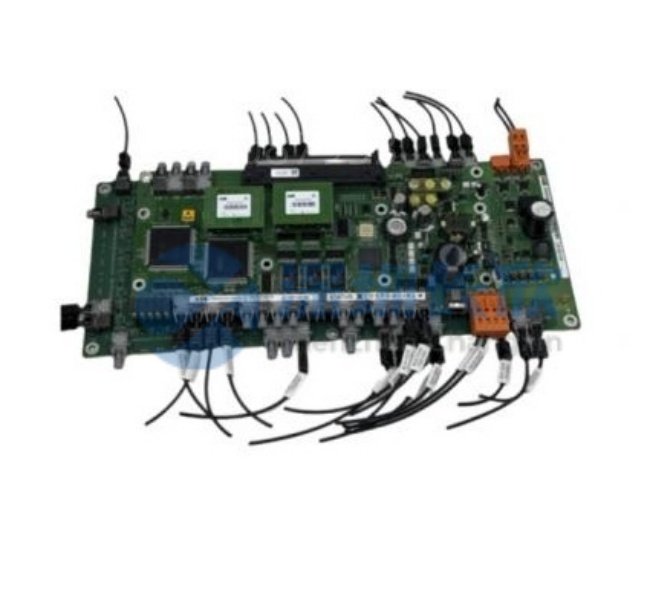
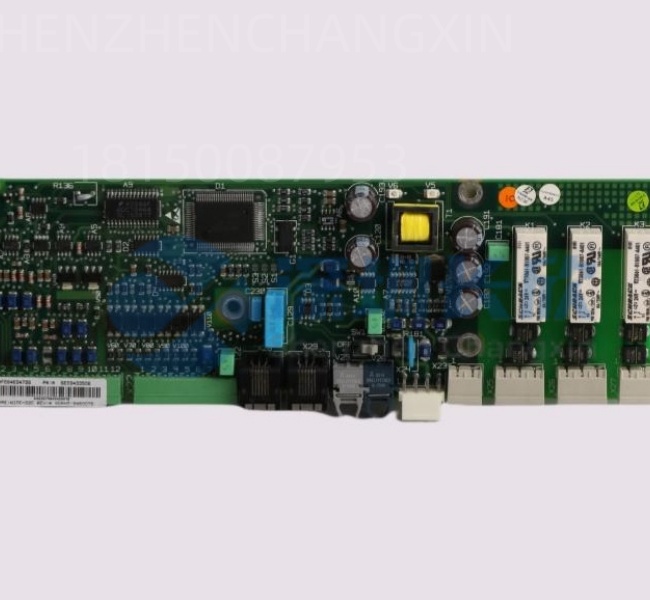
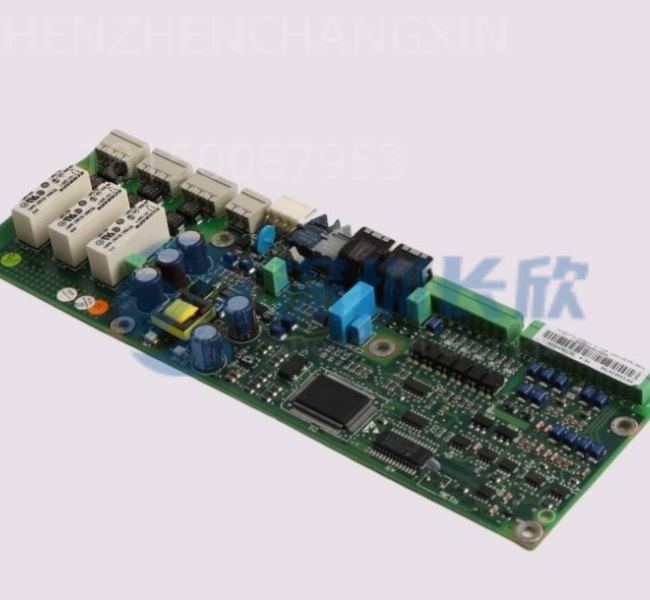
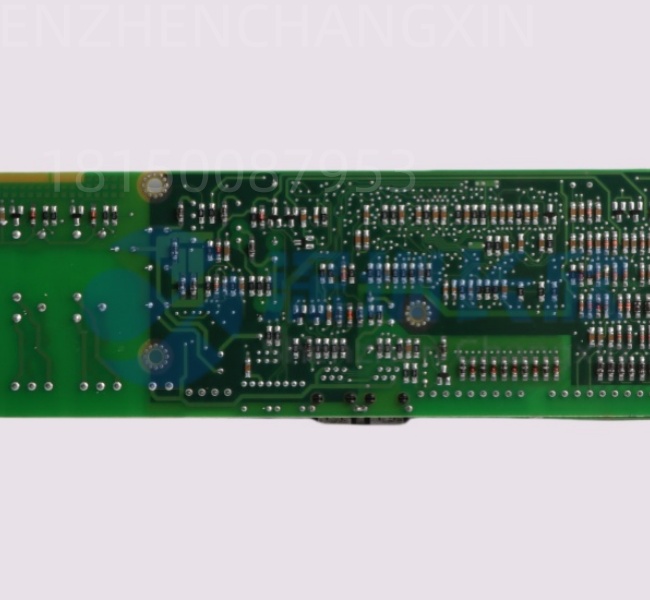
TRICONEX 4352AN: 16-Channel High-Integrity Digital Output Module for TMR Safety Systems缩略图

TRICONEX 4352AN: 16-Channel High-Integrity Digital Output Module for TMR Safety Systems

Description

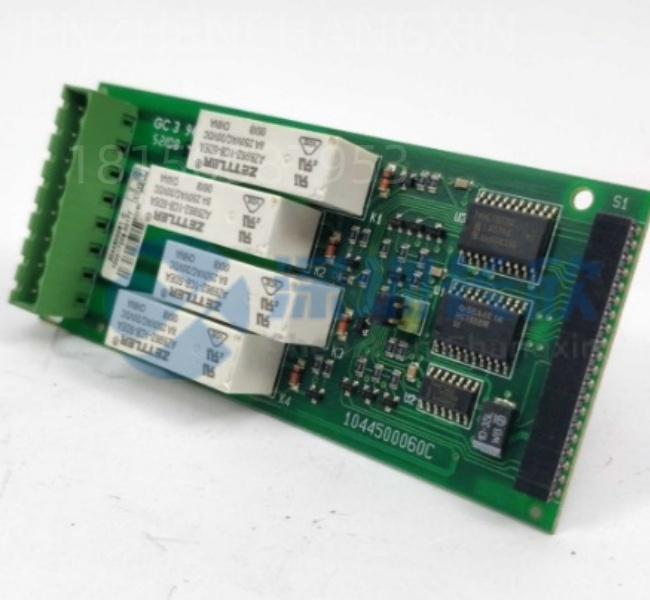
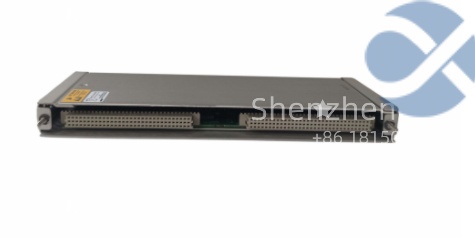
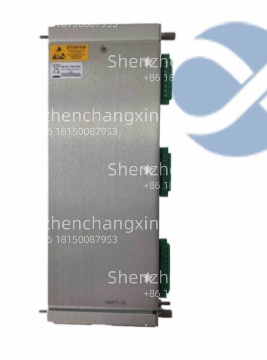
The TRICONEX 4352AN​ is a 16-channel, high-integrity digital output module from Triconex, a leading brand in safety instrumented systems (SIS) and triple modular redundant (TMR) automation solutions. Designed for use in mission-critical applications, this module provides reliable, fault-tolerant control of final elements such as solenoid valves, motor starters, and circuit breakers. It is engineered to meet the stringent requirements of Safety Integrity Level (SIL) 3 applications, ensuring that safety functions are executed without compromise.

Application Scenarios

In a large offshore oil and gas production platform, the emergency shutdown (ESD) system is the last line of defense against uncontrolled hydrocarbon release. A failure in the digital output module controlling the wellhead shut-off valves could have catastrophic consequences. The platform’s safety system relied on the TRICONEX 4352AN​ to drive these critical valves.

During a routine test, one channel of the module detected an internal fault and automatically de-energized the corresponding valve actuator, while the other two channels in the TMR configuration maintained control of the remaining valves. The system logged the fault, alerted operators, and initiated a safe shutdown sequence without any spurious trips. The ability of the 4352AN​ to detect and isolate faults in real time preserved both safety and operational continuity, demonstrating why Triconex modules are the gold standard in high-risk industries.
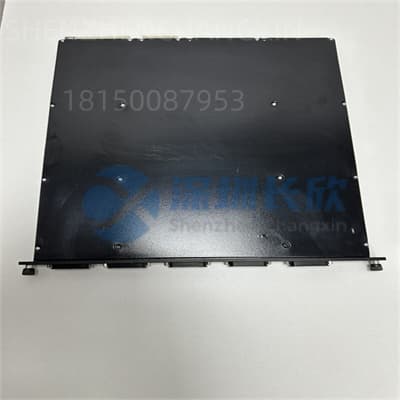
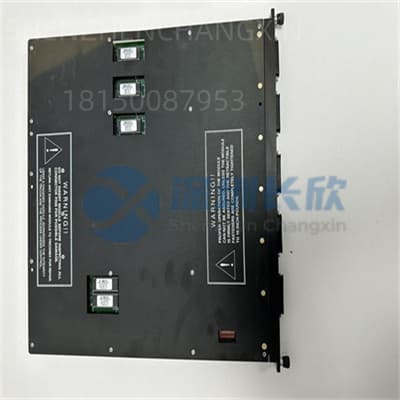
TRICONEX 4352AN: 16-Channel High-Integrity Digital Output Module for TMR Safety Systems插图 TRICONEX 4352AN: 16-Channel High-Integrity Digital Output Module for TMR Safety Systems插图1

Technical Principles and Innovative Values

Innovation Point 1: Triple Modular Redundancy (TMR) Architecture – The TRICONEX 4352AN​ is designed to operate in a TMR configuration, where three identical modules process the same output commands in parallel. A hardware voter determines the correct output state by a 2-out-of-3 majority logic, masking any single module failure and ensuring continuous, safe operation.

Innovation Point 2: Advanced Fault Detection & Diagnostics – Each output channel is continuously monitored for faults such as open circuits, short circuits, and contact welding. Diagnostic information is transmitted to the Triconex controller, enabling predictive maintenance and reducing the risk of undetected failures.

Innovation Point 3: Galvanic Isolation – The relay-based output design provides complete electrical isolation between the control logic and field wiring. This prevents high-energy transients or ground loops from propagating back into the safety system, enhancing reliability and protecting sensitive electronics.

Innovation Point 4: High-Integrity Signal Processing – The module uses pulse testing and dynamic self-checking techniques to verify the integrity of its internal circuitry and communication paths. This ensures that the output state is always consistent with the voted command, even in the presence of electromagnetic interference (EMI).

Application Cases and Industry Value

A major refinery in the Middle East upgraded its fire and gas (F&G) system to a Triconex TMR platform to comply with updated safety regulations. The TRICONEX 4352AN​ modules were deployed to control the actuation of deluge valves, firewater pumps, and emergency isolation dampers.

During a plant-wide F&G test, a spurious signal from a faulty field sensor was detected. The TMR system, including the 4352AN​ modules, correctly identified the anomaly and prevented an unnecessary activation of the deluge system, avoiding a $500.000 loss in production downtime. Simultaneously, the system’s diagnostics pinpointed the faulty sensor, allowing for its replacement during the next scheduled maintenance window. The refinery’s safety manager stated, “The Triconex system, and specifically the 4352AN modules, gave us the confidence that our safety functions are not only effective but also immune to false trips.”

Related Product Combination Solutions

To implement a complete TMR safety system with the TRICONEX 4352AN, these components are often used together:

TRICONEX 3721 Analog Input Module: For acquiring process variables (e.g., pressure, temperature) to determine trip conditions.

TRICONEX 3008 Main Processor: The TMR controller that executes safety logic and sends commands to the 4352AN​ modules.

TRICONEX 8312 Power Supply: Provides redundant, regulated 24 VDC power to the I/O modules and mainframe.

TRICONEX 3805E Digital Input Module: For monitoring status of field devices (e.g., limit switches, pushbuttons) in the safety loop.

TRICONEX MP3008 Rack: The chassis that houses the main processor, I/O modules, and power supplies in a TMR configuration.

Triconex TriStation Software: Engineering and configuration tool for programming, testing, and maintaining the TMR system.

Field Wiring Devices (Terminal Blocks, Isolators): Ensure proper signal conditioning and protection for field connections to the 4352AN​ outputs.

Installation, Maintenance, and Full-Cycle Support

Installation and Commissioning: The TRICONEX 4352AN​ is installed into a Triconex MP3008 chassis alongside other TMR modules. Proper seating and locking of the module are critical for reliable operation. Field wiring connects to screw terminals for each relay output, with careful attention to load ratings and polarity. Commissioning involves configuring the module’s parameters via TriStation software, performing channel tests, and validating fault detection logic.

Maintenance and Lifecycle Support: Routine maintenance includes inspecting relay contacts for wear (especially in high-cycle applications), verifying terminal tightness, and reviewing diagnostic logs for intermittent faults. Triconex modules support hot-swapping in many configurations, allowing replacement without shutting down the system.

We provide full lifecycle support for the TRICONEX 4352AN, including sourcing genuine modules with traceable certification, technical assistance with system integration, and obsolescence management. Our team ensures your safety-critical systems remain compliant, reliable, and ready to respond when it matters most.
ALSTOM AL132 AL132A STO0982E01 Digital Input Module – 16-Channel, 24 VDC, for Alspa DCS & T100/T200 Systems缩略图

ALSTOM AL132 AL132A STO0982E01 Digital Input Module – 16-Channel, 24 VDC, for Alspa DCS & T100/T200 Systems

ALSTOM AL132 AL132A STO0982E01 Digital Input Module – 16-Channel, 24 VDC, for Alspa DCS & T100/T200 Systems插图
Description

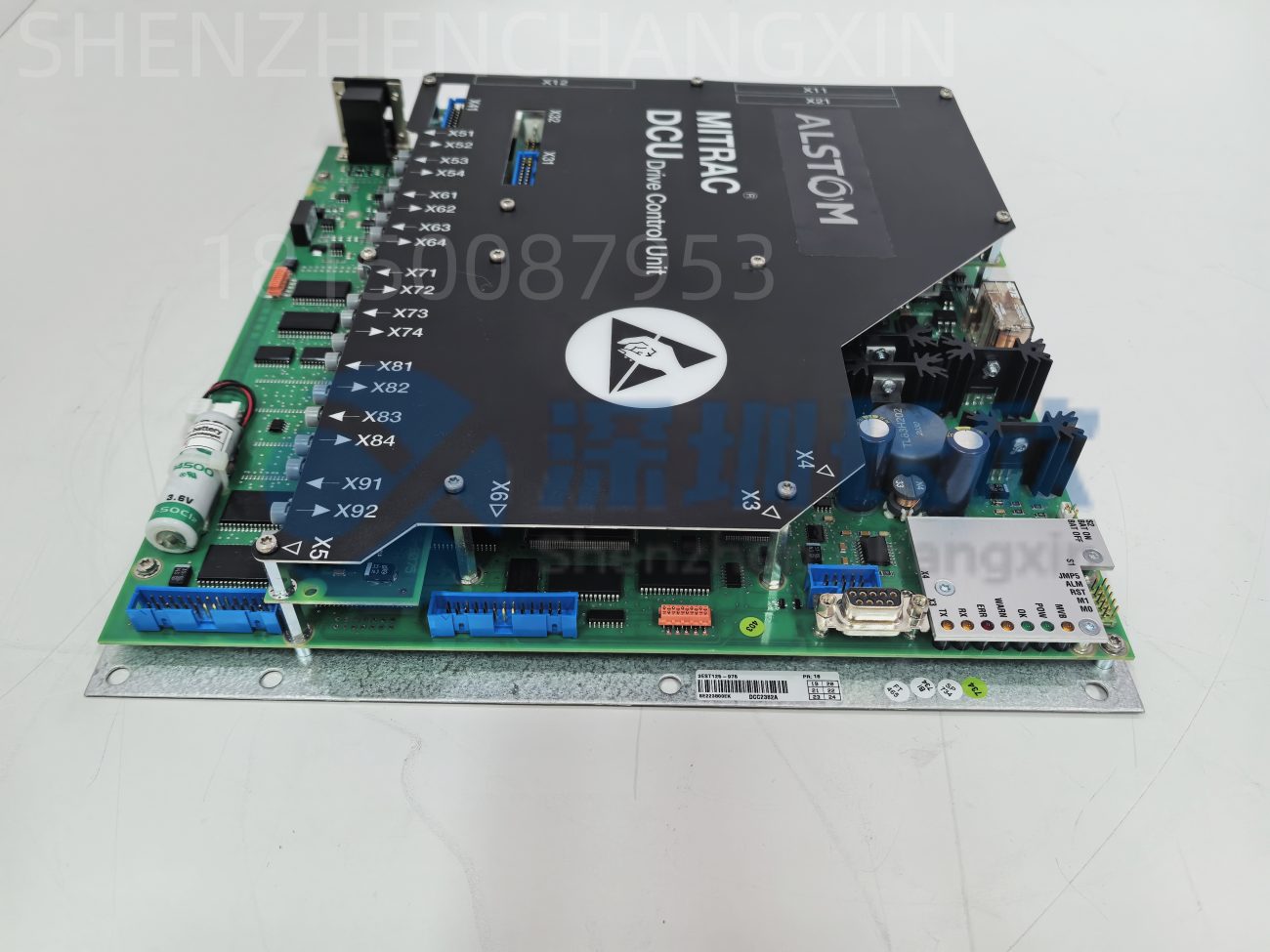
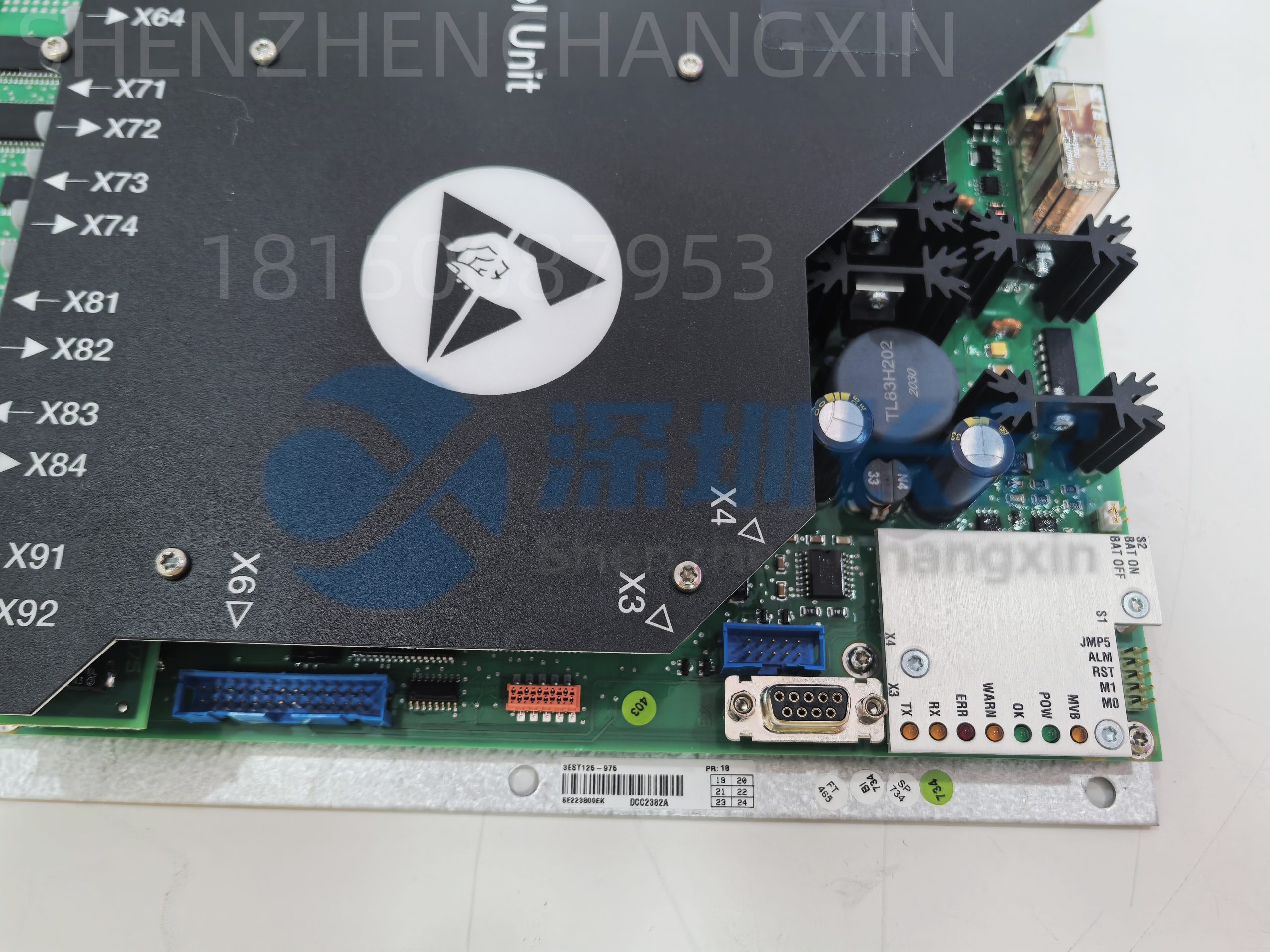
The ALSTOM AL132 AL132A STO0982E01 is a 16-channel digital input (DI) module developed by Alstom (now part of GE Power and later spun into various entities including Andritz and independent service providers) for use in the Alspa series of distributed control systems (DCS), particularly the T100. T200. and Series 6000 platforms. It converts field-level dry contacts or 24 VDC signals into logic-level data for turbine control, boiler safety interlocks, and auxiliary system monitoring.

Designed for high-reliability power generation environments, the ALSTOM AL132 AL132A STO0982E01 delivers robust electrical isolation, real-time diagnostics, and seamless integration into legacy Alspa architectures—ensuring decades-old plants continue operating safely and efficiently.

Application Scenarios

At a 900 MW combined-cycle power station in France, aging turbine emergency shutdown (ESD) signals were intermittently missed due to degraded input cards in the Alspa T200 system. After replacing faulty modules with the ALSTOM AL132 AL132A STO0982E01. all 16 channels reliably captured trip commands from pressure switches and vibration sensors—even during grid faults with severe ground noise. “This module restored our confidence in the safety system,” said the control engineer. In mission-critical applications like generator protection or boiler flame failure detection, the ALSTOM AL132 AL132A STO0982E01 isn’t just hardware—it’s a guardian of operational integrity.

Technical Principles and Innovative Values

Innovation Point 1: Group-Based Isolation for Cost-Effective Noise Immunity

Rather than isolating all 16 channels individually (which increases cost), the ALSTOM AL132 AL132A STO0982E01 uses four isolated banks of four inputs each. This balances EMI resilience with affordability—ideal for large-scale installations where hundreds of DI points are needed.

Innovation Point 2: Field-Proven in Extreme Electromagnetic Environments

Tested in substations and near large generators, the ALSTOM AL132 AL132A STO0982E01 withstands fast transients (IEC 61000-4-4 Level 4) and surges without false triggering—a critical trait for safety-related inputs.

Innovation Point 3: Plug-and-Play Compatibility Across Alspa Generations

The ALSTOM AL132 AL132A STO0982E01 maintains pin-compatible form, fit, and function with earlier AL132 variants, allowing direct replacement without rewiring or software changes—essential for minimizing outage windows during upgrades.

Innovation Point 4: Diagnostic Transparency via Front-Panel LEDs

Each channel features a dedicated LED, enabling technicians to verify signal presence without multimeters or system logs. Combined with system-level health reporting in Alspa engineering tools, this supports rapid troubleshooting during outages.

Application Cases and Industry Value

In a hydroelectric facility in Canada, the ALSTOM AL132 AL132A STO0982E01 was deployed to monitor guide vane position limit switches on six turbine units. Operating in a damp, high-vibration environment, the module maintained 100% signal integrity over five years—preventing false “open” indications that previously triggered unnecessary shutdowns. Maintenance costs dropped by 35% due to reduced diagnostic time.

Similarly, a district heating plant in Sweden used the ALSTOM AL132 AL132A STO0982E01 to interface burner flame detectors into its Alspa C370 safety PLC. During a winter peak load event, a flame failure was detected within 3 ms, initiating a safe purge sequence before gas accumulated. “That response time saved us from a potential explosion,” noted the plant safety officer.

Related Product Combination Solutions

ALSTOM AL133: 16-channel digital output (DO) module—complements ALSTOM AL132 AL132A STO0982E01 for full discrete I/O

ALSTOM AL232: Analog input module—used alongside ALSTOM AL132 AL132A STO0982E01 for hybrid process monitoring

Alspa C470 Controller: Main processor—communicates with ALSTOM AL132 AL132A STO0982E01 via proprietary backplane bus

ALSTOM T200 I/O Chassis: Modular rack system—hosts up to 8 I/O modules including ALSTOM AL132 AL132A STO0982E01

GE Mark VIe: Modern successor platform—where ALSTOM AL132 AL132A STO0982E01 data may be migrated during DCS modernization

Phoenix Contact MINI MCR-SL-R-UI-45: Signal conditioner—can be used upstream of ALSTOM AL132 AL132A STO0982E01 for noisy 48 VDC fields

ABB TK811V015: AC 800M baseplate—sometimes used in hybrid retrofits where Alspa I/O is interfaced via gateways

Installation, Maintenance, and Full-Cycle Support

Installation of the ALSTOM AL132 AL132A STO0982E01 requires insertion into a powered-off Alspa I/O chassis until the mechanical latch engages. Field wiring should use shielded cable, with shields grounded at the cabinet entry point. Ensure input devices (e.g., limit switches, relay contacts) meet the 18–30 VDC ON threshold to avoid marginal sensing. No configuration jumpers are needed—the module is auto-detected by the Alspa controller upon boot.

Maintenance is exceptionally low-effort. Quarterly visual inspections of channel LEDs can identify stuck or intermittent signals. If a bank fails, the entire module is replaced as a unit—no internal repairs are recommended. Despite Alstom’s exit from the DCS market, the ALSTOM AL132 AL132A STO0982E01 remains in global demand, with authorized service centers offering refurbished, tested, and warrantied units. Our team provides full lifecycle support, including cross-reference validation, functional testing reports, and rapid delivery for emergency spares.
ALSTOM AL132 AL132A STO0982E01 Digital Input Module – 16-Channel, 24 VDC, for Alspa DCS & T100/T200 Systems插图1

EMERSON KJ2221X1-BA1: 高性能冗余模拟量输出模块 for DeltaV DCS Systems缩略图

EMERSON KJ2221X1-BA1: 高性能冗余模拟量输出模块 for DeltaV DCS Systems

EMERSON KJ2221X1-BA1: 高性能冗余模拟量输出模块 for DeltaV DCS Systems插图
Description

The EMERSON KJ2221X1-BA1​ (also referenced as KJ2201X1-BA1​ in some sources) is a high-performance, redundant analog output module designed specifically for Emerson’s DeltaV Distributed Control System (DCS). Engineered for critical process control applications, this module provides two independent analog output channels with high precision and reliability, making it suitable for controlling final control elements such as control valves, variable frequency drives, and other actuators in demanding industrial environments .

Application Scenarios

In a large-scale chemical processing plant, precise control of reactor temperature is crucial for product quality and safety. The plant’s existing analog output cards were experiencing occasional drift and lacked redundancy, risking process upsets during maintenance or failures.

The engineering team upgraded to EMERSON KJ2221X1-BA1​ modules for all critical control valve loops. The module’s redundant design meant that if one channel experienced an issue, the backup channel could seamlessly take over without interrupting the control signal to the valve. This redundancy proved invaluable during a scheduled maintenance window when technicians needed to replace a faulty positioner while keeping the process running. The KJ2221X1-BA1​ maintained stable 4-20 mA output to the valve’s I/P converter, ensuring consistent reactor pressure control throughout the maintenance activity, preventing potential product quality deviations.

Parameter

Based on available technical specifications, the EMERSON KJ2221X1-BA1​ offers robust performance characteristics suitable for industrial automation .

Note: Some sources describe this module as a controller module with different specifications (110-240V AC, RS232/USB interfaces). The above parameters are based on the most consistent technical descriptions from industrial automation sources .

Technical Principles and Innovative Values

Innovation Point 1: Redundant Channel Design – The EMERSON KJ2221X1-BA1​ features two completely independent analog output channels. This redundancy ensures continuous operation even if one channel fails, providing exceptional availability for safety-critical applications where process interruption is unacceptable .

Innovation Point 2: High Precision & Fast Response – With ±0.1% full-scale accuracy and 1 ms response time, the module delivers precise control signals to final elements. This combination of accuracy and speed enables tighter process control, reducing variability and improving product quality in applications like chemical dosing or temperature regulation .

Innovation Point 3: HART Communication Integration – The module supports HART protocol, allowing for remote configuration, calibration, and diagnostics of connected field devices. This capability reduces maintenance time and costs by enabling technicians to troubleshoot and configure devices without physical access to hazardous or hard-to-reach locations .

Innovation Point 4: Wide Environmental Tolerance – Operating across a temperature range of -40°C to +85°C and 5-95% humidity (non-condensing), the KJ2221X1-BA1​ is built to withstand the challenging conditions found in industrial plants, from freezing outdoor installations to hot control rooms .

Application Cases and Industry Value

A pharmaceutical manufacturing facility implemented EMERSON KJ2221X1-BA1​ modules in their bioreactor control systems. These bioreactors require precise control of nutrient feed rates, pH adjustment chemicals, and temperature to maintain optimal conditions for cell culture growth.

Previously, analog output failures had caused several batch losses when control valves failed to respond correctly. After installing the KJ2221X1-BA1​ modules, the facility experienced zero control-related batch failures over 18 months. During one incident, a primary output channel developed a fault, but the redundant channel immediately took over without any disruption to the bioreactor control. The quality control manager reported, “The redundancy and reliability of these modules have given us confidence in our batch processes. We’ve seen a measurable improvement in batch consistency and yield.”

Related Product Combination Solutions

To build a complete DeltaV control solution around the EMERSON KJ2221X1-BA1. consider these complementary components:

EMERSON DeltaV Controllers (e.g., EMERSON DeltaV S-series): The central processing units that execute control strategies and communicate with KJ2221X1-BA1​ modules.

EMERSON DeltaV Analog Input Modules (e.g., VE4012S2B1): For acquiring process measurements from field sensors to complete the control loop.

EMERSON DeltaV Digital I/O Modules: For discrete signal handling alongside analog control.

EMERSON DeltaV CHARMs I/O System: For intrinsically safe applications in hazardous areas.

EMERSON DeltaV Operate Stations: Operator interfaces for monitoring and controlling processes using data from KJ2221X1-BA1-controlled devices.

EMERSON DeltaV Engineering Stations: Configuration and programming tools for the entire DeltaV system, including KJ2221X1-BA1​ modules.

Control Valves with HART-enabled Positioners: Field devices that can be configured and diagnosed through the KJ2221X1-BA1’s HART communication capability.

EMERSON AMS Device Manager: Asset management software that works with HART-enabled devices connected to KJ2221X1-BA1​ modules for predictive maintenance.

Installation, Maintenance, and Full-Cycle Support

Installation and Commissioning: The EMERSON KJ2221X1-BA1​ module installs into a DeltaV I/O subsystem chassis. Proper installation involves securing the module in its slot, connecting field wiring to the appropriate terminals, and configuring the module parameters through DeltaV engineering software. Commissioning includes verifying output signals with a calibrated multimeter, testing redundancy switching, and validating HART communication with connected field devices.

Maintenance and Lifecycle Support: Routine maintenance involves periodic verification of output accuracy and checking module status indicators. The HART diagnostic capabilities allow for remote monitoring of module health and connected field devices. If a module requires replacement, DeltaV systems typically support hot-swapping, allowing replacement without system shutdown. We provide comprehensive support for EMERSON KJ2221X1-BA1​ modules, including sourcing genuine parts, technical assistance with integration, and guidance on maintenance best practices to ensure long-term reliability of your control systems.
EMERSON KJ2221X1-BA1: 高性能冗余模拟量输出模块 for DeltaV DCS Systems插图1

DEIF DLQ144-PC-NB: Advanced Multifunction Protection and Control Relay for Power Generation and Distribution Systems缩略图

DEIF DLQ144-PC-NB: Advanced Multifunction Protection and Control Relay for Power Generation and Distribution Systems

DEIF DLQ144-PC-NB: Advanced Multifunction Protection and Control Relay for Power Generation and Distribution Systems插图
In the intricate world of electrical power systems—where grid stability, equipment protection, and operational continuity intersect—the DEIF DLQ144-PC-NB stands out as a high-performance, multifunction protection and control relay engineered for modern generator sets, switchgear, and distributed energy resources. Designed by DEIF A/S, a global leader in power management solutions, this compact yet powerful device integrates generator protection, synchronization, load sharing, and breaker control into a single platform. With its robust IEC 61850 compliance, intuitive configuration interface, and field-proven reliability, the DLQ144-PC-NB has become a trusted component in mission-critical applications ranging from hospital backup generators and data center microgrids to offshore platforms and renewable hybrid plants.

Comprehensive Protection Suite Tailored for Generators and Feeders

At its core, the DLQ144-PC-NB is a 3-phase, 4-wire digital relay offering over 50 protection functions, meticulously calibrated for generator and mains-side applications. Key protective features include:

Generator differential protection (87G) with harmonic restraint to prevent false tripping during inrush or CT saturation

Reverse power (32R) and vector shift (59V/78V) detection for islanding and loss-of-mains scenarios

Over/under frequency (81O/U) and rate-of-change of frequency (81R) for grid instability response

Thermal overload (49) with customizable heating/cooling curves matching generator winding characteristics

Ground fault (50N/51N) using residual current or external CT inputs

Unlike generic relays that apply one-size-fits-all logic, the DLQ144-PC-NB allows engineers to tailor settings based on machine type—whether a 2 MW biogas generator, a 15 MW diesel genset, or a synchronous condenser. This adaptability ensures optimal coordination with upstream/downstream devices while minimizing nuisance trips.

Moreover, all protection elements operate with deterministic response times (<25 ms for instantaneous functions), critical during fault conditions where every millisecond affects arc flash energy and equipment stress.

Integrated Control and Synchronization Capabilities

Beyond protection, the DLQ144-PC-NB functions as a full-featured generator controller and synchronizer. It can automatically:

Ramp voltage and frequency to match the bus

Calculate closing angle and issue breaker close commands within ±2 electrical degrees

Manage load sharing via kW/kVAR droop or isochronous/synchronous modes

Execute black-start sequences in islanded microgrids

This integration eliminates the need for separate synchronizers, PLCs, or analog governors in many applications—reducing panel space, wiring complexity, and single points of failure. The unit supports both manual and auto-synchronization, with real-time synchroscope display on its front-panel LCD or via remote HMI.

In multi-generator installations, the DLQ144-PC-NB communicates with peer units over Modbus RTU/TCP or IEC 61850 GOOSE to coordinate load distribution and sequencing—essential for facilities requiring N+1 redundancy, such as semiconductor fabs or telecom hubs.

Real-World Reliability Across Diverse Energy Landscapes

Data Center Microgrid – Western Europe

A Tier III facility deployed eight 2.5 MW natural gas generators, each controlled by a DLQ144-PC-NB. During a regional blackout, the system autonomously formed an island, synchronized all units within 8 seconds, and restored critical IT loads without interruption. “The relay’s vector shift detection prevented reconnection to a dead grid, while its load-sharing logic kept frequency stable under dynamic UPS recharge currents,” said the site’s power engineer.

Offshore Wind Support Platform – North Sea

Diesel generators on a maintenance vessel use DLQ144-PC-NB units to power cranes and HVAC during turbine servicing. Harsh marine conditions—salt spray, vibration, and wide temperature swings—demanded extreme reliability. Over three years, zero failures occurred, even during frequent start-stop cycles. “It handles transients from crane motors better than our old relays,” noted the electrical supervisor. “No more tripping on harmless inrush.”

Municipal Wastewater Plant – North America

Biogas-fueled cogeneration units feed both thermal and electrical loads. The DLQ144-PC-NB’s reverse power protection prevents back-feeding during low biogas production, while its thermal modeling avoids unnecessary shutdowns during diurnal load swings. “We’ve cut false trips by 90% since switching,” reported the plant manager.

Seamless Integration and Cyber-Secure Communication

The DLQ144-PC-NB supports modern communication standards essential for SCADA and energy management:

IEC 61850 Edition 2 with MMS and GOOSE for substation automation

Modbus TCP/RTU for legacy DCS integration

DNP3 for utility telemetry

Built-in web server for remote monitoring via standard browsers

Critically, it includes role-based access control, audit logging, and optional TLS encryption—aligning with NERC CIP and ISO 27001 cybersecurity requirements. Firmware updates are signed and verified, preventing unauthorized code execution.

Configuration is streamlined via DEIF’s DEIFconnect software, which offers graphical logic editors, template libraries, and automatic setting validation—reducing engineering errors during commissioning.

Expert Guidance for Optimal Deployment

“Don’t just copy settings from your old relay. Use the DLQ144’s thermal model to match your generator’s actual time constants—it makes a huge difference during repeated starts.”

— Senior Power Systems Engineer, Independent Consultant

Best practices include:

Verify CT polarity and ratio accuracy—mismatched CTs are the #1 cause of differential misoperation.

Enable event recording with pre- and post-fault waveforms; invaluable for root-cause analysis.

Use GOOSE for fast interlocking between relays in multi-breaker schemes (e.g., bus tie + incomers).

Test synchronization logic under worst-case voltage/frequency offsets during FAT.

Conclusion: Intelligence, Protection, and Control in One Compact Unit

The DEIF DLQ144-PC-NB exemplifies the convergence of protection, control, and connectivity in modern power systems. By unifying traditionally separate functions into a single, cyber-secure, and highly configurable platform, it not only reduces hardware footprint but enhances system-wide resilience. For engineers designing or upgrading power generation and distribution infrastructure—especially in environments where uptime is non-negotiable—the DLQ144-PC-NB delivers more than compliance. It delivers confidence that when the grid falters or a fault strikes, protection will act swiftly, accurately, and intelligently.
DEIF DLQ144-PC-NB: Advanced Multifunction Protection and Control Relay for Power Generation and Distribution Systems插图1

BENTLY 3500/15 127610-01 Rack Interface Module – Core Backbone for 3500 Monitoring System缩略图

BENTLY 3500/15 127610-01 Rack Interface Module – Core Backbone for 3500 Monitoring System

BENTLY 3500/15 127610-01 Rack Interface Module – Core Backbone for 3500 Monitoring System插图
Description

The BENTLY 3500/15 127610-01 is the foundational Rack Interface Module (RIM) for the Bently Nevada 3500 machinery protection and condition monitoring system. Developed by Baker Hughes (formerly part of GE and originally Bently Nevada), it serves as the central communication, power distribution, and timing coordinator for all modules installed in a 3500 rack.

More than just a passive backplane interface, the BENTLY 3500/15 127610-01 actively manages data flow between I/O modules, external control systems, and diagnostic software—ensuring real-time, reliable monitoring of critical rotating equipment in high-risk industrial environments.

Application Scenarios

At a liquefied natural gas (LNG) export terminal in Qatar, a catastrophic compressor trip during peak production threatened millions in lost revenue. Post-event analysis revealed that legacy monitoring hardware lacked synchronized timestamping across vibration channels, delaying fault detection. The facility upgraded to a full Bently Nevada 3500 system centered on the BENTLY 3500/15 127610-01. With its integrated Keyphasor distribution and Modbus TCP gateway, the new system provided microsecond-accurate phase data and instant alarm relay to the DCS. Within six months, it predicted a bearing defect in a main refrigeration compressor—allowing planned shutdown and avoiding $12M in potential downtime. “The 3500/15 isn’t just a module—it’s the nervous system of our protection strategy,” said the reliability engineer. In mission-critical turbomachinery, the BENTLY 3500/15 127610-01 turns raw sensor data into actionable intelligence.
BENTLY 3500/15 127610-01 Rack Interface Module – Core Backbone for 3500 Monitoring System插图1

ABB AI845 3BSE023675R1: High-Performance 8-Channel Analog Input Module for AC800M缩略图

ABB AI845 3BSE023675R1: High-Performance 8-Channel Analog Input Module for AC800M

Description

The ABB AI845 3BSE023675R1​ is a high-quality, 8-channel analog input module from ABB’s extensive I/O portfolio, specifically designed for seamless integration with the AC800M series of programmable logic controllers (PLC) and distributed control systems (DCS). Engineered for precision signal acquisition, this module is ideally suited for capturing analog measurements such as temperature, pressure, flow, and level from industrial field sensors, translating them into high-resolution digital data for real-time process monitoring and control.

Application Scenarios

Consider a large-scale petrochemical facility where dozens of reactors require precise temperature monitoring to maintain optimal reaction conditions and ensure product quality. Previously, intermittent noise and grounding issues led to erratic readings from thermocouple inputs, triggering unnecessary alarms and process interruptions.

The engineering team standardized on the ABB AI845 3BSE023675R1​ for all reactor temperature loops. Thanks to its robust signal conditioning and high common-mode rejection ratio (CMRR), the module effectively eliminated electrical interference from nearby motors and drives. Each of its eight isolated channels reliably acquired accurate 4–20 mA signals from RTDs and transmitters. The result was a dramatic improvement in measurement consistency, fewer false alarms, and tighter control over reactor temperatures—boosting yield while reducing maintenance headaches.

ABB AI845 3BSE023675R1: High-Performance 8-Channel Analog Input Module for AC800M插图 ABB AI845 3BSE023675R1: High-Performance 8-Channel Analog Input Module for AC800M插图1


Technical Principles and Innovative Values

Innovation Point 1: Superior Noise Immunity – The ABB AI845 3BSE023675R1​ employs advanced analog front-end circuitry with high CMRR and differential inputs. This isolates sensitive measurement circuits from electrical noise generated by variable frequency drives (VFDs), welders, or long cable runs, delivering cleaner and more stable signals to the controller.

Innovation Point 2: Flexible Signal Handling – While optimized for 4–20 mA loops, the module supports configurable input ranges and filtering options. Engineers can tailor response times and smoothing algorithms per channel to suit slow-changing temperature signals or faster pressure fluctuations.

Innovation Point 3: Intelligent Diagnostics – Built-in self-diagnostics continuously monitor for open circuits, over-range conditions, and internal faults. Diagnostic flags are communicated to the AC800M controller, enabling proactive maintenance before field failures impact production.

Innovation Point 4: Seamless Integration – Designed exclusively for ABB’s AC800M ecosystem, the AI845 3BSE023675R1​ mounts directly onto TB840/TB841 baseplates and communicates via the high-speed HD Bus. This eliminates compatibility concerns and simplifies configuration within Control Builder M engineering software.

Application Cases and Industry Value

A European municipal water treatment plant upgraded its dosing control system to improve pH and chlorine residual monitoring. The legacy analog input cards suffered from drift and lacked diagnostic visibility, leading to overdosing and increased chemical costs.

By deploying ABB AI845 3BSE023675R1​ modules, the plant gained precise 16-bit resolution on each sensor input. Combined with automatic filtering and real-time diagnostics, operators could trust the displayed values. Within six months, chemical consumption dropped by 12%, and regulatory compliance reporting became far simpler. The plant supervisor noted, “These modules gave us confidence that our measurements are accurate and our controls are responsive.”

Related Product Combination Solutions

To build a comprehensive analog signal acquisition solution around the ABB AI845 3BSE023675R1. consider these complementary components:

ABB AO845 3BSE045774R1: Analog output module for sending control signals to valves or drives, completing the I/O loop.

ABB DI810 / DI811: Digital input modules for acquiring discrete signals like limit switches or alarms.

ABB TB840 / TB841 Baseplate: Rack mounting and communication backplane for AI845 3BSE023675R1​ and other I/O modules.

ABB CI854A / CI858: Communication interface modules to connect the AC800M system to fieldbus networks and supervisory systems.

ABB S800 I/O Modules: For distributed I/O architectures, extending the reach of the AI845 3BSE023675R1-based control system.

ABB Control Builder M: Engineering tool for configuring, calibrating, and commissioning the AI845 3BSE023675R1​ and the entire AC800M system.

ABB 800xA DCS System: A human-machine interface and process control platform that displays data from AI845 3BSE023675R1​ modules in real time.

Installation, Maintenance, and Full-Cycle Support

Installation and Commissioning: The ABB AI845 3BSE023675R1​ mounts easily onto a TB840 or TB841 baseplate within an AC800M rack. Field wiring connects to screw terminals for each channel, with color-coded markings for polarity. Before powering up, verify that the 24 VDC supply is stable and that transmitter wiring is shielded and grounded properly. Commissioning is handled via Control Builder M, where engineers assign signal types, scaling parameters, and alarm thresholds for each channel.

Maintenance and Lifecycle Support: Routine maintenance involves inspecting terminal connections for tightness and corrosion, and verifying LED status indicators on the module. Diagnostics provided by the AC800M controller flag potential issues such as sensor open circuits or signal saturation. If a module fails, it can be replaced without interrupting the rest of the I/O rack, thanks to the system’s hot-swappable design.

We provide full lifecycle support, from authentic ABB AI845 3BSE023675R1​ sourcing to engineering assistance, configuration backups, and obsolescence management. Our goal is to keep your critical analog signal chains accurate, reliable, and supported for the long term.

ABB CS513 3BSE000435R1 Serial Communication Module – RS-232/RS-485 for AC 800M & System 800xA缩略图

ABB CS513 3BSE000435R1 Serial Communication Module – RS-232/RS-485 for AC 800M & System 800xA

ABB CS513 3BSE000435R1 Serial Communication Module – RS-232/RS-485 for AC 800M & System 800xA插图
Description

The ABB CS513 3BSE000435R1 is a dual-channel serial communication module designed for the ABB AC 800M programmable logic controller (PLC) platform, serving as a critical bridge between modern control systems and legacy field devices. It supports multiple industrial protocols—including Modbus RTU, Allen-Bradley DF1. and Siemens 3964R—over isolated RS-232 or RS-485 interfaces.

Engineered for reliability in harsh environments, the ABB CS513 3BSE000435R1 eliminates the need for external protocol converters, enabling direct, secure, and deterministic data exchange within the native ABB System 800xA architecture.

Application Scenarios

At a hydroelectric dam in Scandinavia, operators struggled to integrate aging turbine governors—equipped only with RS-485 Modbus ports—into their new ABB System 800xA control room. Third-party gateways introduced latency and dropped packets during peak load changes, risking grid instability. The solution? Install the ABB CS513 3BSE000435R1 directly into the AC 800M rack alongside a UAC389 CPU. Within hours, real-time speed, guide vane position, and fault status streamed reliably at 38.4 kbps—enabling closed-loop control that met national grid compliance. “This module turned obsolete hardware into smart assets,” said the site’s lead engineer. In brownfield modernization, the ABB CS513 3BSE000435R1 doesn’t just connect devices—it unlocks decades of embedded intelligence.

Technical Principles and Innovative Values

Innovation Point 1: Native Protocol Handling Without Middleware

Unlike generic serial cards that require OPC servers or custom drivers, the ABB CS513 3BSE000435R1 processes protocols directly in firmware. Modbus registers appear as standard I/O tags in Control Builder M—no scripting, no latency-inducing layers.

Innovation Point 2: True Dual-Channel Independence

Each port on the ABB CS513 3BSE000435R1 can run a different protocol at a different baud rate (e.g., Port 1: Modbus RTU @ 9600 bps to a flow meter; Port 2: DF1 @ 19.2 kbps to a legacy PLC). This flexibility avoids the need for multiple modules.

Innovation Point 3: Hardware-Grade Electrical Protection

The ±2.5 kV isolation isn’t just for compliance—it’s a field-proven defense against lightning-induced transients common in outdoor substations and pumping stations. This prevents cascading failures that could take down an entire AC 800M rack.

Innovation Point 4: Seamless Redundancy Integration

When used with redundant UAC389 controllers, the ABB CS513 3BSE000435R1 automatically synchronizes communication states during failover, ensuring uninterrupted polling of critical field devices—a rare capability among serial modules.

Application Cases and Industry Value

A wastewater treatment plant in Australia deployed the ABB CS513 3BSE000435R1 to connect 18 legacy sludge pumps (with Modbus RTU) and 6 chemical dosing skids (using DF1 protocol) to a centralized AC 800M system. Previously, manual checks consumed 20+ labor hours weekly. After integration, all data flowed into 800xA dashboards, enabling predictive maintenance and reducing chemical overuse by 22%. “We cut operational costs and improved compliance—all with one module,” noted the facility manager.

In a European steel mill, the ABB CS513 3BSE000435R1 enabled real-time monitoring of cooling tower fan VFDs located 800 meters from the control room. The RS-485 interface with proper termination delivered error-free communication despite high EMI from arc furnaces—proving its robustness where wireless or Ethernet would have failed.

Related Product Combination Solutions

ABB UAC389: Primary AC 800M CPU—processes data from ABB CS513 3BSE000435R1 in real time

ABB TK811V015: Standard I/O baseplate—hosts ABB CS513 3BSE000435R1 and other modules

ABB Control Builder M: Engineering environment—used to configure protocol blocks and map I/O for ABB CS513 3BSE000435R1

ABB CI854: Profibus DP module—complements ABB CS513 3BSE000435R1 for hybrid fieldbus networks

ABB DI810 / AI810: Digital and analog I/O modules—often installed in same rack as ABB CS513 3BSE000435R1

ABB 800xA System: Full DCS platform—where data from ABB CS513 3BSE000435R1 appears in HMI, historian, and alarm systems

ABB CS514: Higher-performance successor with faster processor and extended protocol support

ABB RCU (Remote Communication Unit): For long-distance serial extension—pairs with ABB CS513 3BSE000435R1 in distributed sites

Installation, Maintenance, and Full-Cycle Support

Installation of the ABB CS513 3BSE000435R1 begins with inserting it into a powered-off AC 800M baseplate until the latch clicks. Use shielded twisted-pair cable for RS-485 (e.g., Belden 3105A), grounding the shield at the controller end only. Termination resistors (120 Ω) must be enabled at the farthest device on each bus. Configuration is done entirely in Control Builder M using pre-certified function blocks—no DIP switches or hex editors required.

Maintenance is minimal: the module has no moving parts or batteries. Monthly checks should include verifying front-panel LEDs (green = active, red = fault) and reviewing communication error counters in 800xA. If a channel fails, the issue is typically cabling or field device—not the module itself. Should replacement be needed, hot-swap capability (with HS baseplate) allows live extraction. ABB guarantees support for the CS513 series through 2030+, and our technical team provides lifetime compatibility validation, configuration templates, and rapid-response troubleshooting.
ABB CS513 3BSE000435R1 Serial Communication Module – RS-232/RS-485 for AC 800M & System 800xA插图1

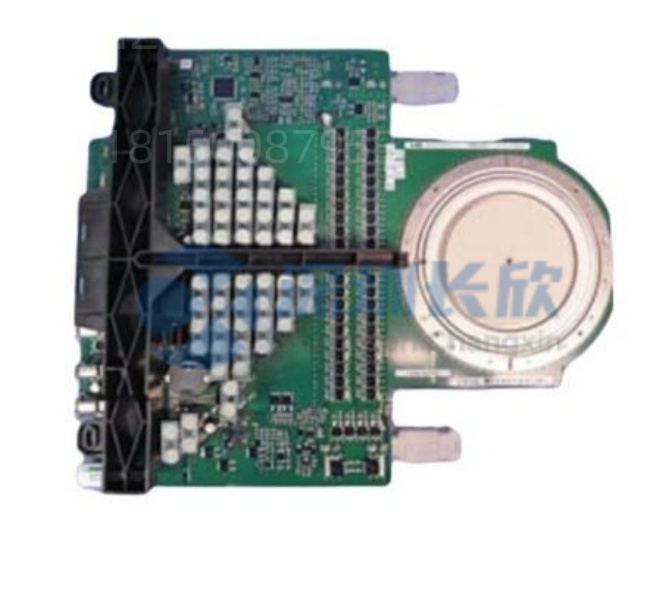
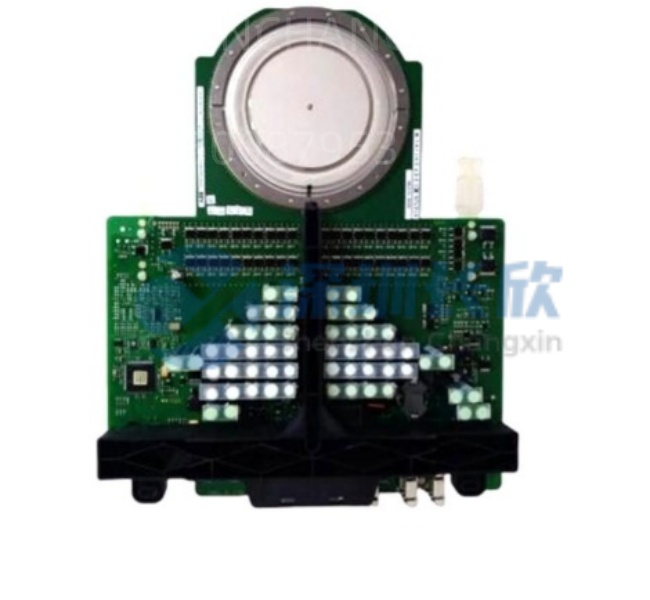
ABB 5SDF1045H0002: High-Reliability 4500V/1000A Thyristor Module for Industrial Power Control缩略图

ABB 5SDF1045H0002: High-Reliability 4500V/1000A Thyristor Module for Industrial Power Control

ABB 5SDF1045H0002: High-Reliability 4500V/1000A Thyristor Module for Industrial Power Control插图
Description

The ABB 5SDF1045H0002​ is a high-performance, disc-type thyristor (silicon-controlled rectifier) module from ABB’s renowned power semiconductor portfolio. Designed as a critical switching component in high-power conversion and control circuits, this module is engineered to manage extreme voltages and currents with precision and reliability. It serves as the workhorse in applications requiring robust and efficient power handling, from industrial motor drives to large-scale renewable energy inverters.

Application Scenarios

Within the control cabinet of a massive electric arc furnace at a steel mill, the precise regulation of immense electrical power is paramount for efficient melting. Traditional contactors and breakers were causing voltage spikes and excessive wear during the frequent switching cycles required for temperature control. The engineering team integrated the ABB 5SDF1045H0002​ thyristor modules into a new solid-state power controller. These modules, arranged in an anti-parallel configuration, enabled smooth, phase-angle control of the current supplied to the furnace electrodes. The 5SDF1045H0002’s high surge current capability handled the intense inrush currents during scrap charging, while its fast switching characteristics minimized harmonic distortion on the plant’s power grid. The result was a 15% reduction in energy consumption per ton of steel, smoother furnace operation, and a dramatic decrease in maintenance downtime related to mechanical contactor failures.

Parameter

The ABB 5SDF1045H0002​ is defined by its exceptional electrical and thermal ratings, suitable for the most demanding power control environments.

Technical Principles and Innovative Values

Innovation Point 1: Hermetically Sealed Rugged Construction: The ABB 5SDF1045H0002​ utilizes a robust, hermetically sealed ceramic package. This design is not merely for protection; it ensures a stable internal environment for the silicon die, preventing degradation from humidity and contaminants. This translates to a proven operational lifespan exceeding 100.000 hours in continuous, harsh industrial service, a key differentiator from plastic-encapsulated modules .

Innovation Point 2: Optimized for Fast Switching and Low Losses: The module’s design minimizes internal inductance and capacitance, achieving high di/dt (150 A/µs) and dv/dt (1000 V/µs) ratings. This allows for very fast turn-on and enables it to block voltage quickly after commutation. The benefit is a significant reduction in switching losses—up to 15% compared to conventional thyristors—which directly improves system efficiency and reduces cooling requirements .

Innovation Point 3: Symmetrical Design for Easy Scalability: The 5SDF1045H0002​ features a symmetrical electrical and thermal design. This is crucial for high-power applications where multiple devices must be connected in parallel or series to handle higher currents or voltages. The symmetry ensures current sharing is more even between paralleled devices, preventing one module from overheating and failing prematurely, thereby enhancing system reliability and power scalability.

Application Cases and Industry Value

A hydroelectric power plant was upgrading its static excitation system for its large synchronous generators. The existing thyristor bridges were aging, causing unreliable generator field control and risking unit instability during grid disturbances. The plant selected the ABB 5SDF1045H0002​ for the new excitation system’s six-pulse bridge.

During commissioning, the new system demonstrated exceptional performance. The fast and consistent switching of the 5SDF1045H0002​ modules provided smoother DC output to the generator field, improving the dynamic response to grid frequency changes. Plant engineers noted that the system maintained tighter voltage regulation and provided better damping of power oscillations. After two years of operation, there have been zero failures attributed to the thyristor modules. The chief engineer reported, “The upgrade has not only restored reliability but has given us a more responsive and efficient excitation system. The low thermal losses of the ABB modules have also reduced the cooling load in the excitation cubicle.” This case underscores the module’s value in critical infrastructure where reliability and performance are non-negotiable.

Related Product Combination Solutions

A complete power conversion solution often involves several complementary components to the ABB 5SDF1045H0002:

ABB Gate Drive Units (e.g., ABB 5SXE/GDU series): Specifically designed trigger units that provide the precise, high-power gate pulses required to reliably turn on the 5SDF1045H0002​ thyristor.

ABB Snubber Circuits & Protection Modules: RC snubber networks and voltage clamping devices (like MOVs) are essential to protect the 5SDF1045H0002​ from voltage spikes during switching and from network-borne surges.

ABB Heatsinks & Thermal Interface Materials: Given its high current rating, pairing the module with an appropriately sized forced-air or liquid-cooled heatsink (with high-quality thermal grease) is critical to maintain the junction temperature within safe limits.

ABB 5SDF Series Complementary Modules: Other members of the 5SDF family with different voltage/current ratings (e.g., 5SDF0860H0003. 5SDF10H4502) can be used in the same system for different phases or arms of a bridge, ensuring compatibility.

Fast Recovery Diodes (e.g., ABB 5SDF 10H4502): In inverter or chopper circuits, fast recovery diodes are used in antiparallel or series configuration with the 5SDF1045H0002​ to handle freewheeling or reverse recovery currents.

Current Sensors & Hall Effect Transducers: Accurate current measurement is vital for control and protection. Sensors feed back current information to the controller managing the 5SDF1045H0002’s firing angles.

Fuses & DC Link Capacitors: High-speed semiconductor fuses protect the module and wiring from short-circuit faults, while DC link capacitors provide local energy storage and smooth the input voltage.

Installation, Maintenance, and Full-Cycle Support

Installation and Commissioning: Proper installation of the ABB 5SDF1045H0002​ is critical for performance and longevity. The module must be mounted onto a flat, clean heatsink using the specified torque for bolt-down types or the correct pressure for press-fit types. A thin, even layer of thermal grease is essential to minimize thermal resistance. Electrical connections must be made with busbars or heavy-gauge cables to handle the high current, ensuring low inductance and secure terminations. During commissioning, the gate drive circuitry must be verified to deliver pulses with sufficient amplitude, rise time, and duration. It is also crucial to test the snubber and protection circuits before applying full power.

Routine Maintenance and Lifecycle Support: The module itself requires no routine maintenance, but the system it resides in does. Periodic thermal imaging of the heatsink and connections can identify hot spots indicating poor contact or failing thermal paste. Monitoring the cooling system (fans, pumps) is vital. In the event of a failure, the cause (e.g., overcurrent, overvoltage, loss of cooling) must be diagnosed and rectified before replacing the module. We provide comprehensive support, from supplying genuine ABB 5SDF1045H0002​ modules with traceable documentation to offering technical guidance on system design, protection, and troubleshooting. Our services extend to legacy system support, helping you manage obsolescence and ensure the continued operation of your critical power electronics.
ABB 5SDF1045H0002: High-Reliability 4500V/1000A Thyristor Module for Industrial Power Control插图1

FOXBORO RH928AW: High-Density Remote I/O for Scalable and Reliable Process Automation缩略图

FOXBORO RH928AW: High-Density Remote I/O for Scalable and Reliable Process Automation

FOXBORO RH928AW: High-Density Remote I/O for Scalable and Reliable Process Automation插图
In the evolving landscape of distributed control systems (DCS), the ability to extend I/O capacity reliably—without compromising performance or increasing engineering complexity—is a critical requirement for modern process facilities. The FOXBORO RH928AW remote I/O module, part of Schneider Electric’s (formerly Invensys) FOXBORO I/A Series ecosystem, addresses this need with a robust, high-density design tailored for demanding applications in power generation, chemical processing, oil & gas, and water/wastewater treatment. As a 16-channel isolated analog input module supporting both voltage and current signals, the RH928AW delivers precision measurement, advanced diagnostics, and seamless integration into existing DCS architectures—enabling engineers to scale their control strategies while maintaining signal integrity across long distances and harsh environments.

Precision Measurement in Challenging Industrial Environments

The FOXBORO RH928AW is engineered for accuracy and resilience. Each of its 16 channels provides galvanic isolation (up to 500 VAC) between field devices and the system backplane, effectively eliminating ground loops—a common source of noise-induced drift in analog measurements. This isolation is particularly valuable in facilities with extensive cabling runs, such as combined-cycle power plants or pipeline compressor stations, where potential differences between grounding points can corrupt low-level sensor signals.

The module supports a wide range of input types:

Current: 4–20 mA (with optional 0–20 mA)

Voltage: ±10 V, 0–10 V, 1–5 V

With 16-bit resolution and an accuracy of ±0.1% of span (typical), the RH928AW captures subtle process variations—essential for applications like boiler drum level control, reactor temperature profiling, or effluent pH monitoring. Its built-in open-wire detection automatically flags broken sensor loops, reducing troubleshooting time and preventing undetected measurement failures that could lead to unsafe conditions or product quality issues.

Moreover, the module operates reliably across an industrial temperature range (0°C to +60°C) and features conformal coating options for deployment in high-humidity or corrosive atmospheres—common in offshore platforms or coastal water treatment plants.

Seamless Integration into the FOXBORO I/A Series Architecture

One of the RH928AW’s greatest strengths lies in its native compatibility with the FOXBORO I/A Series DCS. It mounts directly into RH9xx-series remote I/O bases, which connect to the main controller (e.g., CP60 or CP80) via redundant FOXNET or Ethernet-based communication links. This allows I/O to be distributed close to field devices—reducing cable costs, minimizing signal degradation, and simplifying cabinet layouts.

Configuration is handled through FOXBORO’s Engineering Studio or legacy Composer software, where each channel is assigned engineering units, scaling parameters, alarm limits, and diagnostic thresholds. Once deployed, all data—including real-time values, quality status (e.g., “GOOD,” “BAD”), and fault flags—appears natively in operator displays, trends, and alarm summaries without custom scripting or OPC tunneling.

This tight integration also enables hot-swap capability: if a module fails, it can be replaced during live operation. The system automatically reinitializes the new unit and restores I/O mapping—minimizing downtime in continuous processes.

Real-World Deployments: From Refineries to Renewable Energy

Petrochemical Crude Unit – Gulf Coast USA

A major refinery upgraded its atmospheric distillation column instrumentation using RH928AW modules to monitor tray temperatures, reflux flow, and pressure differentials. With over 200 analog inputs consolidated into just 13 RH928AW units, the team reduced marshaling panel complexity by 60%. More importantly, open-wire detection caught a failing thermocouple extension cable before it caused a false low-temperature reading that could have triggered an unnecessary shutdown. “It turned passive wiring into an active diagnostic layer,” said the senior controls engineer.

Biomass Power Plant – Northern Europe

In a facility burning wood chips for district heating, flue gas oxygen and temperature sensors are exposed to high particulate loads and thermal cycling. Previous I/O systems suffered from intermittent signal dropouts due to connector corrosion. After installing RH928AW modules in sealed enclosures with conformal-coated PCBs, the plant achieved 18 months of uninterrupted operation. “Even during winter startups with condensation risks, the readings stayed stable,” reported the automation manager.

Municipal Wastewater Facility – Australia

A treatment plant used RH928AW units to digitize analog signals from dissolved oxygen probes, sludge blanket detectors, and chemical feed meters across three remote pump stations. By locating I/O racks near the sensors and communicating back to the central DCS over fiber-optic Ethernet, they eliminated over 5 km of analog cabling. Maintenance crews now receive automatic alerts when a DO probe fouls—based on implausible rate-of-change detected at the module level. “We’re not just measuring—we’re interpreting,” noted the SCADA coordinator.

Expert Recommendations for Optimal Performance

“Don’t treat the RH928AW like a generic AI card. Leverage its per-channel diagnostics—they’re your first line of defense against silent sensor failures.”

— DCS Specialist, Global EPC Firm

Field-tested best practices include:

Use shielded, twisted-pair cables for all analog inputs; ground shields at the I/O rack only.

Enable open-wire detection during commissioning—it adds negligible overhead but prevents undetected faults.

Avoid mixing high-power AC and low-level analog signals in the same conduit; EMI can induce offsets even in isolated modules.

Label spare channels clearly in configuration software to prevent accidental reuse during future modifications.

Long-Term Value in a Legacy-to-Modern Transition Era

Although the FOXBORO I/A Series is a mature platform, Schneider Electric continues to support the RH928AW with firmware updates, spare parts, and migration paths to newer systems like EcoStruxure Foxboro DCS. Many operators choose to retain RH928AW-based remote I/O during partial upgrades because of its reliability and the high cost of replacing field wiring.

This longevity makes the module a strategic asset—not just a component. For facilities balancing operational continuity with digital transformation, the FOXBORO RH928AW offers a proven, scalable way to extend the life of existing infrastructure while laying groundwork for future enhancements.

Conclusion: Intelligence at the Edge of the Control Loop

The FOXBORO RH928AW exemplifies how thoughtful I/O design can elevate system-wide performance. By combining high-density analog capture, galvanic isolation, and embedded diagnostics within a trusted DCS framework, it transforms raw sensor data into actionable, trustworthy information. In an age where data quality underpins everything from predictive maintenance to regulatory compliance, this module remains a quiet but vital enabler of safe, efficient, and resilient industrial operations.
FOXBORO RH928AW: High-Density Remote I/O for Scalable and Reliable Process Automation插图1

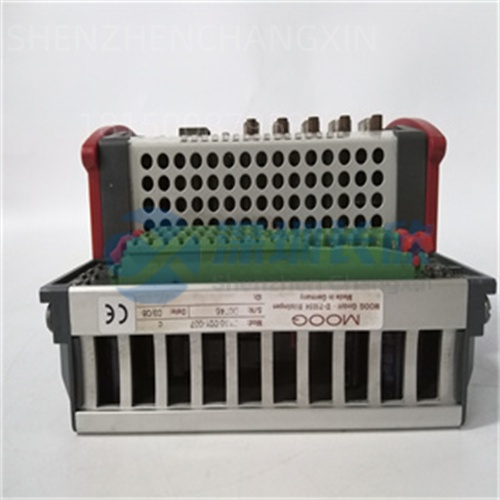
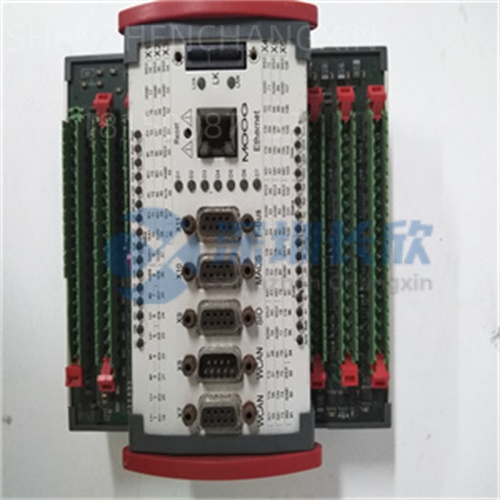
MOOG D136-001-007 Servo Valve – High-Response Electrohydraulic Control for Industrial & Mobile Hydraulics缩略图

MOOG D136-001-007 Servo Valve – High-Response Electrohydraulic Control for Industrial & Mobile Hydraulics

MOOG D136-001-007 Servo Valve – High-Response Electrohydraulic Control for Industrial & Mobile Hydraulics插图
Description

The MOOG D136-001-007 is a high-performance, two-stage electrohydraulic servo valve engineered by Moog Inc. for precise flow and pressure control in demanding industrial, mobile, and test applications. As part of Moog’s legendary D-Series family, it combines analog electrical input with hydraulic amplification to deliver exceptional dynamic response, stability, and repeatability.

Designed for systems requiring fast, accurate actuator positioning—such as material testing machines, flight simulators, or metal forming presses—the MOOG D136-001-007 sets the benchmark for reliability in harsh environments where failure is not an option.

Application Scenarios

At a leading automotive crash test facility in Germany, engineers struggled with inconsistent deceleration profiles during sled tests due to sluggish valve response in their hydraulic system. After replacing legacy valves with the MOOG D136-001-007. they achieved repeatable acceleration curves within ±0.5% across 500+ test cycles—critical for validating airbag deployment algorithms. “The linearity and bandwidth of this valve transformed our data quality,” said the lead test engineer. In high-stakes applications like structural validation, aerospace simulation, or steel mill roll gap control, the MOOG D136-001-007 doesn’t just move fluid—it moves precision forward.
MOOG D136-001-007 Servo Valve – High-Response Electrohydraulic Control for Industrial & Mobile Hydraulics插图1

Back to Top

Search For Products

Product has been added to your cart