
GE DS200SLCCG1ACC Mark V CPU Card – Executes Control, Protection & Sequencing in Real Time
 Description
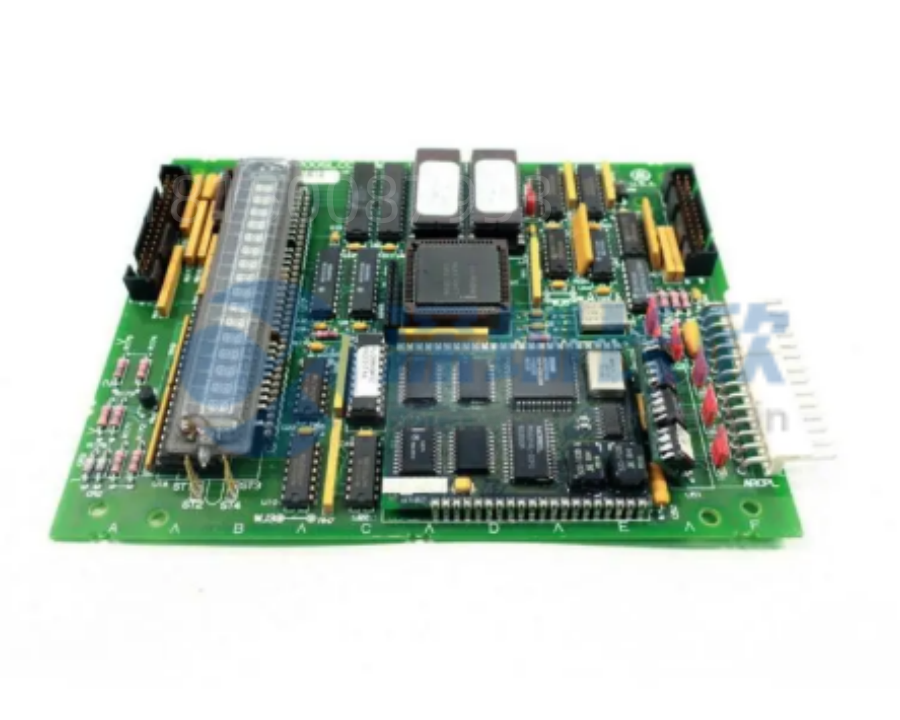
The GE DS200SLCCG1ACC is a Slot Logic Control Card (SLCC)—serving as the primary CPU/controller module in GE’s Speedtronic™ Mark V turbine control system. It is the computational heart of the Mark V’s Triple-Modular Redundant (TMR) architecture, responsible for executing real-time control algorithms, protection logic, startup/shutdown sequences, and communication with I/O modules, operator interfaces, and plant DCS.
Each Mark V system typically uses three DS200SLCCG1ACC cards (one per lane: A, B, C) that operate in parallel, continuously comparing results via hardware voting to detect and isolate faults—ensuring ultra-high availability and fail-safe operation in mission-critical power and industrial applications.
Application Scenarios
At a 500 MW combined-cycle plant in Arizona, aging Mark V controllers began experiencing intermittent sync errors during grid frequency swings. Diagnostics pointed to marginal timing drift in one SLCC module. After replacing all three DS200SLCCG1ACC units with fresh, matched sets, the system achieved sub-microsecond lane alignment—even under 60 Hz ±0.5 Hz grid stress. During a subsequent black-start event, the turbine synchronized to the islanded grid in 92 seconds, meeting NERC reliability standards. For the controls team, the DS200SLCCG1ACC wasn’t just a processor—it was the guarantor of grid resilience.
Technical Principles and Innovative Values
Innovation Point 1: Hardware-Voted TMR Execution
All three DS200SLCCG1ACC modules execute identical logic simultaneously. A dedicated voter circuit compares outputs every scan cycle (~10 ms). If one lane disagrees, it’s automatically voted out—keeping the turbine online with 2oo3 redundancy.
Innovation Point 2: Deterministic Real-Time Performance
Unlike commercial operating systems, the SLCC runs a bare-metal, interrupt-driven firmware optimized for <1 ms response to critical events like overspeed or flame loss—meeting API 670 requirements without jitter.
Innovation Point 3: Integrated I/O & Communication Management
The DS200SLCCG1ACC directly manages data flow to analog/digital I/O cards (e.g., DS200AIOA, DS200DIOA), servo valve drivers, and trip processors—eliminating external gateways and reducing latency.
Innovation Point 4: Field-Upgradeable Firmware
Application logic and diagnostics can be updated via ToolboxST software over serial or Ethernet, allowing performance enhancements or bug fixes without hardware replacement.
Application Cases and Industry Value
A refinery in Singapore used DS200SLCCG1ACC modules to control a critical hydrogen compressor train. During a seismic event, the Mark V system detected abnormal vibration via its I/O network and initiated a controlled ramp-down—avoiding a catastrophic shaft failure. Post-event analysis confirmed all three SLCC lanes remained synchronized throughout the disturbance, validating the TMR design’s robustness.
In another case, a U.S. municipal utility extended the life of its 30-year-old Frame 5 gas turbine by refreshing the Mark V controllers with new DS200SLCCG1ACC cards. The upgrade restored full diagnostic visibility and enabled remote support—delaying a $15M repower by 8+ years.
Related Product Combination Solutions
DS200PCCAG1ABB: Power Connect Card – supplies regulated power to DS200SLCCG1ACC
DS200CPRB: Core Processor Board – works alongside SLCC in some Mark V variants
TBQC Chassis: Main control rack – houses up to 3 DS200SLCCG1ACC modules (A/B/C lanes)
DS200TCMC: Terminal Board – provides field wiring interface for SLCC serial ports
ToolboxST Software: GE’s engineering suite – used to configure, monitor, and troubleshoot DS200SLCCG1ACC
DS200AIOA / DS200DIOA: Analog & Digital I/O Modules – controlled by SLCC logic
DS200SSRK: Serial Communications Card – extends SLCC connectivity to DCS or historian
DS200TRGL / DS3800XTFP1E1C: Trip Logic Modules – receive safety commands from SLCC
Installation, Maintenance, and Full-Cycle Support
Installing the GE DS200SLCCG1ACC requires powering down the Mark V rack, aligning the card with guide rails, and inserting it firmly until the retention latch engages. The module draws power and communicates exclusively via the backplane—no field wiring.
After installation, use ToolboxST to verify:
Lane ID (A, B, or C) matches chassis labeling
Firmware version is consistent across all three lanes
SYNC LED is solid green (indicating TMR alignment)
Routine maintenance includes checking for dust accumulation (clean with dry air), verifying LED status, and monitoring for “lane mismatch” alarms. While highly reliable, SLCC modules should be proactively replaced every 15–20 years in high-duty-cycle environments.
We supply only genuine DS200SLCCG1ACC units—either new surplus from GE-authorized channels or professionally refurbished with full functional testing, including:
TMR synchronization validation
Memory integrity check
Serial/Ethernet communication test
LED and watchdog timer verification
Each unit includes a test report and compatibility assurance for your specific Mark V serial number. Our engineering team offers firmware version guidance, migration planning to Mark VIe, and 24/7 technical support from veteran GE turbine controls specialists.